
Pruning your rose bushes is an essential part of their care, but many gardeners are unsure about when to do it. The timing of pruning can significantly impact the growth cycle and overall health of your roses. With so many variables to consider, including type, climate, and region, it’s no wonder that this topic can be overwhelming.
In this guide, we’ll break down everything you need to know about pruning your rose bushes. We’ll cover how different types of roses respond to pruning, the best tools and techniques to use, and expert advice on when to prune based on your specific climate and region. Whether you’re a seasoned gardener or just starting out, our comprehensive guide will help you make informed decisions about when to prune your roses for optimal growth and health.
Understanding Rose Types and Growth Cycles
Understanding rose types is crucial when deciding how and when to prune, as different varieties have unique growth patterns and requirements. Let’s take a closer look at how various types of roses grow and respond to pruning.
Hybrid Tea and Floribunda Roses: Dormancy Patterns
Hybrid tea and floribunda roses have distinct pruning needs, primarily due to their dormant periods. These rose types typically go dormant during the winter months, although the exact timing varies depending on your location and climate.
In general, hybrid teas tend to be more sensitive to cold temperatures and may drop their leaves in response to frost, signaling the start of dormancy. Floribunda roses, on the other hand, often retain some of their foliage throughout the winter but will still experience a period of reduced growth and activity.
To accommodate these dormant periods, it’s essential to prune your hybrid tea and floribunda roses during the spring when new growth begins. Aim to prune in late March or early April, just before new buds start to swell. This timing allows you to remove dead wood, shape the plant, and promote healthy new growth without causing unnecessary stress.
Keep in mind that these pruning windows can vary depending on your specific climate and weather conditions. Be sure to monitor your plants’ response to the changing seasons and adjust your pruning schedule accordingly. By prunning at the right time, you’ll be able to enjoy a beautiful display of blooms throughout the growing season.
Climbing and Rambling Roses: Pruning for Support
Climbing and rambling roses require special attention when it comes to pruning for support. Unlike other rose types, these varieties need regular pruning to maintain their structure and encourage growth up the trellis or arbor. Without proper pruning, climbing and rambling roses can become leggy and unsupported, which not only affects their appearance but also their overall health.
When pruning climbing and rambling roses, focus on removing any weak or dead wood that’s not contributing to the plant’s structure or blooming cycle. This will help direct the plant’s energy towards producing new growth and stems. Remove any growth that’s rubbing against the trellis or arbor, as this can cause damage and create an entry point for disease.
Regular pruning also helps maintain the rose’s natural shape and encourages it to spread evenly up the support structure. Prune climbing roses in late winter or early spring, removing about one-third of the plant’s stems. For rambling roses, prune in late winter or after flowering, cutting back long canes to about 12 inches from the ground. This will help control the plant’s size and encourage new growth throughout the season.
Shrub and Knock Out Roses: Low-Maintenance Options
If you’re new to rose gardening, it’s worth considering shrub and Knock Out roses for their remarkably low-maintenance needs. These types of roses are perfect for busy gardeners who want to enjoy beautiful blooms without the fuss.
Shrub roses are a great option because they’re compact, repeat-bloomers that require minimal pruning. They produce clusters of flowers in shades of pink, red, and white, and can thrive with just an annual trim to maintain their shape. For shrub roses, it’s essential to prune them right after the blooming period is over, around late spring or early summer. Remove any dead, diseased, or damaged branches, and cut back about one-third of the plant’s stems to encourage new growth.
Knock Out roses are another low-maintenance choice that produce long-blooming flowers with minimal pruning required. They’re a cross between a floribunda and a shrub rose, offering disease resistance and an abundance of blooms in various colors. For Knock Out roses, prune them lightly after the blooming period to maintain their shape and encourage new growth.
Some key tips to keep in mind: prune your shrub or Knock Out rose about 6-8 inches off the ground, making clean cuts just above a bud eye (where a leaf meets the stem). This will help prevent disease and promote healthy regrowth. With these easy-to-maintain roses, you can focus on enjoying their beauty rather than worrying about regular pruning sessions!
Identifying Pruning Needs Based on Climate and Region
Understanding your local climate is crucial when deciding when to prune roses, as certain regions have specific pruning needs based on temperature and precipitation patterns. Your region’s unique conditions will dictate the best time for pruning your rose garden.
Determining Dormancy Periods by Climate Zone
As we’ve discussed climate and region’s impact on pruning needs, it’s essential to consider how different zones affect rose dormancy periods. Rose dormancy is triggered by winter chill hours, which vary significantly across the country.
The USDA Plant Hardiness Zone Map divides the US into 11 zones based on average annual extreme minimum temperature. For rose growers in warmer climates (Zone 10 and above), roses are often evergreen or semi-evergreen, requiring minimal pruning except to maintain shape. In these areas, it’s common for roses to bloom year-round.
In contrast, zones with colder winters (Zones 3-5) experience a more pronounced dormant period, lasting around 4-6 months. Gardeners in these regions should prune their roses immediately after the last frost date, usually in late March or early April. In areas with moderate winter temperatures (Zones 6-9), rose dormancy typically lasts for 2-3 months. Prune your roses as soon as new growth appears in spring, around late February to early March.
Consider your specific climate and choose the pruning schedule that suits your region’s conditions.
Pruning in Warm and Cool-Season Areas
Roses in warm-season areas, such as those found in USDA zones 9-11, have distinct pruning requirements compared to cool-season areas like USDA zones 3-5. In regions with mild winters and hot summers, rose growth cycles are prolonged, resulting in more frequent pruning needs.
For warm-season roses, it’s essential to prune during the dormant season (winter or early spring), typically between January and March, depending on your location. Prune canes that have been damaged or diseased to prevent infection from spreading to other parts of the plant. Remove any dead wood to promote healthy growth and encourage new blooms.
In contrast, cool-season roses in areas with cold winters require more vigorous pruning during their active growth phase (spring-fall). Cut back canes by one-third to one-half in late winter or early spring before new growth begins. This helps control the plant’s size and directs energy towards producing more flowers. Regular monitoring of your rose bush‘s progress will ensure optimal care and desired results, regardless of your region’s climate.
Timing and Techniques for Pruning Roses
When it comes to pruning roses, getting the timing right can make all the difference. This next part of our guide will walk you through some essential techniques to keep in mind.
Pruning in Early Spring: Removing Deadwood and Encouraging New Growth
Pruning roses in early spring is an essential task that offers numerous benefits for the health and vitality of your rose bushes. One of the primary advantages of pruning in early spring is removing deadwood, which can be a significant challenge if left unchecked. Deadwood refers to branches or stems that have died due to disease, pests, or environmental stress. By cutting out these dead sections, you’re not only improving the overall appearance of your rose bush but also preventing the spread of diseases and promoting healthy growth.
Removing deadwood also encourages new growth by stimulating the production of hormones that promote cell division and expansion. This process is particularly crucial during early spring when roses are naturally awakening from their winter dormancy. By pruning out deadwood, you’re giving your rose bushes a head start on the growing season, allowing them to focus their energy on producing lush foliage and vibrant blooms.
In terms of practical advice, consider removing any dead or damaged branches as soon as they become evident. Use sharp, clean pruning tools to make precise cuts just above a bud eye (the small, swollen area from which new growth emerges). This will help your rose bush recover quickly and promote healthy regrowth throughout the season.
Late Spring and Summer Pruning: Maintaining Shape and Promoting Blooms
Late spring and summer pruning is often overlooked, but it’s an essential step in maintaining your rose garden’s health and beauty. During this period, the focus shifts from rejuvenating the plant to refining its shape and promoting blooms.
In late spring, after the initial flush of new growth has slowed down, it’s time to remove any weak or damaged stems that may have developed since pruning in the dormant season. This will help maintain the rose bush’s balance and prevent disease from taking hold. Simply cut back these stems to about 6-8 inches above a healthy bud.
As summer progresses, you’ll want to focus on deadheading – removing spent blooms – to encourage repeat flowering. Remove only the flower head, leaving the stem intact. This will direct the plant’s energy towards producing new flowers instead of seed production.
Regular summer pruning also helps control the rose bush’s overall size and encourages a fuller growth habit. Cut back any leggy stems or canes that are growing outside the desired shape.
Pruning Tools and Safety Precautions
To prune roses safely and effectively, you’ll need the right tools and a few essential precautions to avoid injuries. Let’s take a look at the must-haves for your pruning toolkit and top safety tips.
Choosing the Right Pruning Tools
When it comes to pruning roses, having the right tools can make all the difference. The type of rose you’re working with will dictate which pruning tool is best suited for the job.
For hybrid tea and grandiflora roses, loppers are a great choice due to their long handles and sharp cutting blades. They allow for easy access to thicker stems and can help you get through heavy pruning jobs more efficiently. For example, if you’re looking to prune back your rose bush by several feet, loppers would be an ideal option.
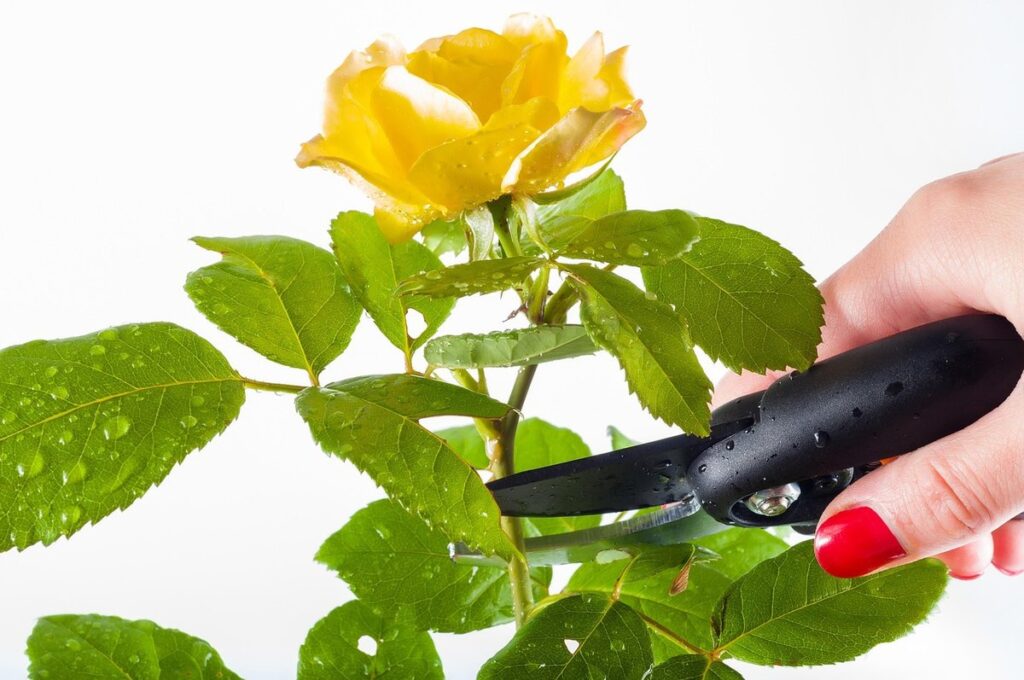
For shrub roses, English roses, and climbing roses, secateurs are often the preferred choice. These versatile tools allow for precise cuts on smaller stems and can be used for detailed work like deadheading or shaping. When using secateurs, make sure to use a sharp blade and cut just above a bud eye to promote healthy growth.
Lastly, pruning saws are best reserved for larger rose bushes that require more aggressive pruning. These saws have sturdy blades designed for cutting through thicker stems and can help you tackle tough pruning jobs with ease.
Safety Considerations: Protecting Yourself and Your Roses
When working with pruning tools around roses, safety should always be your top priority. First and foremost, maintain proper hand positioning to avoid accidental cuts or slashes. Hold the tool at a 45-degree angle, with the blade facing away from you, and keep your fingers curled under for protection. This will prevent any potential harm in case the tool slips.
It’s also crucial to wear protective gear while pruning. A pair of gloves can safeguard your hands against thorns and splinters, as well as provide grip on slippery handles. Safety glasses or goggles are essential for protecting your eyes from flying debris. In addition, a long-sleeved shirt and pants will shield you from scratches and cuts.
Avoid over-pruning, which can cause more harm than good. Prune only the necessary sections to maintain the health and appearance of your roses. Cutting too much foliage at once can leave your plants vulnerable to disease and pests. Instead, focus on removing dead or damaged wood, encouraging new growth, and shaping the plant to its desired form.
Frequently Asked Questions
How often should I inspect my roses after pruning to ensure they’re recovering well?
It’s essential to check on your roses regularly after pruning, especially during the initial growth stages. Inspect them every week or two for signs of disease, pests, or nutrient deficiencies. Monitor their foliage, looking for any discoloration, droopy leaves, or black spots. Addressing issues promptly can prevent further damage and promote healthy recovery.
Can I prune my roses in the fall, even if they’re not yet dormant?
While it’s generally recommended to prune roses during their dormant period, you can still prune them in the fall if necessary. However, be cautious not to remove too much foliage, as this can weaken the plant before winter. Prune only what’s necessary to maintain shape and promote healthy growth.
What are some common mistakes to avoid when pruning my roses for the first time?
When starting with rose pruning, it’s easy to make mistakes that can harm your plants. Be careful not to over-prune, as this can stress the plant and lead to disease or pests. Also, avoid cutting too close to buds or stems, as this can damage tissue and reduce blooming. Start by removing deadwood and any diseased or damaged areas.
How do I determine the ideal pruning schedule for my specific climate zone?
The best way to determine your pruning schedule is to research the average last frost date in your area. This will help you plan when to prune, as roses typically require a certain amount of chill hours before they can produce new growth. You can also consult with local nurseries or gardening experts who are familiar with your region’s specific climate and rose varieties.
Can I use regular garden shears for pruning my roses, or do I need specialized tools?
While regular garden shears can be used in a pinch, it’s highly recommended to invest in dedicated rose pruning tools. These typically have curved blades that allow for more precise cuts and reduce the risk of crushing stems or branches. Look for sharp, high-quality tools specifically designed for rose pruning, as these will make the process much easier and less damaging to your plants.