
If you’re looking to squeeze more fruit from your trees, you’ve come to the right place. Espalier and cordon training methods can help maximize your yield by controlling the tree’s growth and directing it towards a single point or a wall. This technique not only adds visual interest to your garden but also makes the most of space. With the right varieties chosen for these types of systems, you’ll be enjoying fresh produce sooner rather than later. In this article, we’ll cover choosing the perfect fruit tree varieties for espalier and cordon training, planning a system that suits your needs, and providing tips on caring for your trees to ensure they thrive under their new structure. By following these guidelines, you can create a bountiful harvest in no time.
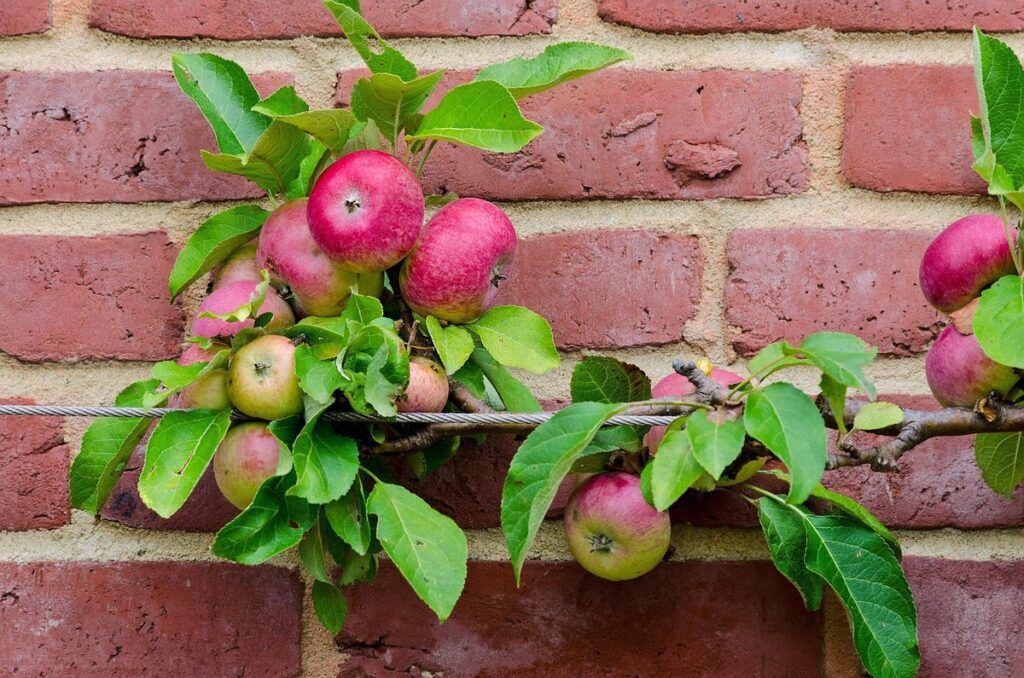
What is Espalier and Cordon Training?
Let’s dive into what you need to know about espaliers and cordon training, two techniques that can help maximize your fruit tree yields. We’ll explore how they work.
Understanding the Basics of Espaliering
Espaliering is a technique that involves training fruit trees to grow against a support, such as a wall or trellis. This method allows for maximum space efficiency and can increase yields significantly. When done correctly, espaliering enables growers to train their fruit trees to grow in a compact, symmetrical shape, making it ideal for small-scale gardens.
One of the primary benefits of espaliering is that it encourages vertical growth, which helps to prevent disease and pests from spreading easily. This technique also allows for better air circulation around the tree, further reducing the risk of fungal diseases. By training your fruit trees in this manner, you can enjoy a bountiful harvest while keeping your garden healthy.
To get started with espaliering, begin by selecting a suitable fruit tree variety that is naturally inclined to grow compactly. Next, choose a sturdy support system and install it near the tree’s planting location. Once your tree has reached 2-3 feet in height, carefully train its branches against the support using wire or twine ties. With regular pruning and training, your espaliered fruit tree will thrive, providing you with an abundance of fresh produce for years to come.
Choosing the Right Fruit Tree Varieties for Espaliers
When choosing fruit tree varieties for espalier and cordon training, it’s essential to select dwarf or semi-dwarf options that thrive under this type of pruning. These compact trees are ideal for small gardens or spaces where a regular-sized tree would be too large.
For example, the ‘Dwarf Washington’ nectarine is a popular choice for espaliers due to its naturally compact growth habit and high yield potential. Another excellent option is the ‘Bartlett’ pear, which grows up to 10-15 feet tall when trained as an espalier, but can be kept much smaller with regular pruning.
Other fruit tree varieties that perform well under espalier and cordon training include dwarf apple trees like ‘Red Delicious’ and ‘Gala’, as well as semi-dwarf citrus trees like the ‘Dwarf Meyer’ lemon. When selecting a variety, consider factors such as mature size, fruit quality, and disease resistance to ensure you’re getting the most out of your espalier or cordon system.
In general, look for tree varieties that have been bred specifically for compact growth habits or are naturally smaller in stature. With proper care and pruning, these trees can thrive in a variety of conditions and produce delicious fruit year after year.
Planning Your Espalier or Cordon System
When planning your espalier or cordon system, consider the available space and the mature size of your chosen fruit tree variety to ensure a successful outcome. Choose a suitable support structure accordingly.
Selecting a Support System: Trellis, Arbour, or Obelisk
When it comes to supporting your espalier or cordon system, the type of support you choose is crucial. A sturdy and well-designed trellis, arbour, or obelisk will help keep your fruit trees upright and encourage healthy growth.
A trellis is a popular choice for espaliers and cordons as it provides a solid framework for training your fruit tree’s branches. Look for one with horizontal wires spaced about 6-8 inches apart to accommodate the spread of your tree’s growth. You can also use a combination of vertical and horizontal wires to create a more complex support system.
An arbour, on the other hand, offers a more rustic charm while still providing ample space for your fruit tree to grow. Consider using an obelisk as a standalone support or in conjunction with a trellis to add extra stability to your espalier or cordon system. When choosing any of these options, make sure they’re at least 2-3 feet taller than the mature height of your tree to allow for proper growth and air circulation.
When selecting a support system, consider factors such as durability, maintenance requirements, and adaptability to ensure it meets your specific needs.
Space and Layout Considerations
When planning an espalier or cordon system, it’s essential to consider the space where your fruit trees will thrive. This means thinking about sunlight, wind direction, and accessibility – all crucial factors that impact plant growth and maintenance.
Start by assessing the amount of direct sunlight your chosen location receives. Fruit trees generally require at least six hours of direct sunlight per day for optimal production. Consider orienting your espalier or cordon system to face south or southwest, providing ample sunlight throughout the day.
Another critical factor is wind direction. Wind can damage fruit trees by breaking branches and reducing yields. If possible, position your espalier or cordon system in a location that provides some protection from harsh winds. Consider planting dense shrubs or trees nearby to act as natural windbreaks.
Accessibility is also vital when creating an espalier or cordon system. Ensure you can easily reach all areas for pruning, harvesting, and maintenance. Leave enough space between rows for comfortable access, taking into account the mature size of your fruit trees.
Training Your Fruit Tree
Let’s dive into the hands-on part of fruit tree training, where we’ll cover how to shape your trees into espaliers and cordons for optimal growth. You’ll learn the techniques necessary for successful fruit tree training.
Establishing a Strong Leader Branch
Identifying the leader branch is crucial when training an espalier or cordon fruit tree. This central stem will provide support for the lateral branches and ultimately determine the overall shape of your trained tree. To identify a strong leader, look for a straight, vigorous shoot that arises from the graft union or the trunk of the tree. Avoid choosing a weak or forked branch, as this can lead to an uneven or unbalanced structure.
When selecting a leader, consider the mature size and spread of your fruit tree variety. For example, a dwarf apple tree like ‘Red Delicious’ will require a smaller leader branch than a larger variety like ‘Gala’. Once you’ve identified your leader, gently prune any competing shoots or growth to encourage the development of a single, dominant stem.
Pruning at this stage will also help prevent water sprouts and other weak growth that can compromise the structural integrity of your espalier or cordon. By establishing a strong leader branch early on, you’ll be setting yourself up for success in creating a well-balanced and productive fruit tree.
Pruning Techniques for Espaliers and Cordons
When pruning an espalier or cordon-trained fruit tree, the goal is to maintain its desired shape while promoting healthy growth and maximum yield. To achieve this, you’ll need to prune regularly throughout the growing season. For espaliers, focus on maintaining a balanced structure with evenly spaced branches. Remove any weak or dead wood, cutting at a 45-degree angle just above a bud or lateral branch.
For cordons, the primary goal is to create a single stem that’s allowed to grow vertically, with fruiting branches growing from the sides. Prune your cordon in late winter or early spring, removing any dead, diseased, or damaged wood, and cutting back side shoots to about two buds. Throughout the growing season, continue to prune regularly, removing any weak or spindly growth and encouraging fruiting branches to develop.
Remember to inspect your espalier or cordon regularly for signs of pests, diseases, or nutrient deficiencies, addressing these issues promptly to prevent damage. With consistent pruning and regular care, you’ll be rewarded with a thriving, productive fruit tree that’s perfectly suited to its training method.
Caring for Your Trained Fruit Tree
Now that your espalier or cordon is established, it’s essential to provide regular care to keep your trained fruit tree healthy and thriving throughout its productive life. This includes pruning, watering, and pest management practices.
Watering and Fertilization Needs
When it comes to caring for your trained fruit tree, proper watering and fertilization are crucial for optimal growth and maximum yield. As a general rule, espalier and cordon-trained trees require more frequent watering than their untrained counterparts due to the increased surface area exposed to wind and sun.
Aim to water your trained fruit tree when the top 2-3 inches of soil feel dry to the touch, which is typically every 7-10 days during the growing season. However, this frequency may vary depending on weather conditions – avoid watering during periods of prolonged drought or heavy rainfall. To ensure your tree receives the right amount of moisture, check the soil regularly by inserting a finger into the soil up to the knuckle.
When it comes to fertilization, a balanced, fruit-tree specific fertilizer is recommended for maximum yield. Feed your trained fruit tree in early spring with a 10-10-10 NPK formula, followed by another application in late summer to promote healthy growth and fruit development. Avoid over-fertilizing, as this can lead to weak growth and reduced yields.
Pest and Disease Management
Trained fruit trees are prone to common pests and diseases that can significantly reduce yields. Regular monitoring is crucial to identify potential issues early on.
Some common pests affecting trained fruit trees include:
• Aphids: These small, soft-bodied insects feed on sap, causing curled or distorted leaves.
• Spider mites: Tiny, spider-like creatures that suck plant juices, leading to yellowing or bronzing of leaves.
• Codling moths: Their larvae can burrow into fruits, causing damage and reducing quality.
Organic management methods for these pests include introducing beneficial insects like ladybugs, lacewings, or parasitic wasps. Neem oil, horticultural soap, or insecticidal soap can also be used to control infestations.
Diseases such as powdery mildew, scab, and fire blight commonly affect trained fruit trees. These diseases often thrive in humid environments with poor air circulation. To manage diseases organically, remove any infected wood, improve airflow around the tree, and apply sulfur or copper-based products to prevent the spread.
Keep in mind that prevention is key; maintain a clean environment, prune regularly, and ensure good air circulation to reduce the risk of pest and disease issues. Regular monitoring and quick action can save your trained fruit trees from significant damage.
Monitoring Progress and Harvesting
Now that you’ve successfully trained your fruit trees as espaliers or cordons, it’s time to monitor their progress and prepare for a bountiful harvest. This involves keeping an eye on growth and making any necessary adjustments to ensure maximum yield.
Regular Inspections for Optimal Growth
Regular inspections are crucial to monitor your trained fruit tree’s progress and identify potential issues early on. As you nurture your espalier or cordon, keep a watchful eye out for signs of disease, pests, or nutrient deficiencies that could impact yields.
Check the tree’s foliage regularly, looking for any unusual discoloration, curling, or shedding leaves. Inspect the bark for cracks, splits, or fungal growths that can compromise the tree’s health. Be aware of changes in branch growth patterns, as uneven development can indicate underlying issues.
During inspections, also check for signs of pests like aphids, spider mites, or codling moths, which can be detrimental to fruit production. Monitor soil moisture levels and adjust irrigation schedules accordingly to avoid over-watering or under-watering. Regular pruning and training sessions are also essential to maintain the tree’s optimal structure and promote healthy growth.
By staying vigilant and catching potential problems early on, you’ll be able to make timely interventions and ensure your espalier or cordon continues to thrive and produce maximum yields.
Timing Fruit Harvests from Espaliers and Cordons
Timing is everything when it comes to harvesting fruit from espalier and cordon-trained trees. The key signs to look out for are changes in color, texture, and sweetness. For apples and pears, a slight softening of the skin is a good indicator that they’re ready to be picked.
For citrus fruits like lemons and oranges, the rind will begin to soften and give slightly when pressed. You can also check the stem end for a slight opening or separation from the fruit. This indicates that the sugars inside are ripening.
Another way to determine if your espalier or cordon tree is ready for harvest is by taste testing. Try eating a small, representative sample from each branch. If it’s sweet and tender, with no bitterness, then it’s likely time to pick.
Timing-wise, most fruit trees will be ready for harvest between late summer and early fall, depending on the specific variety and climate. For example, apples typically ripen in September or October, while pears are usually ready in August or September. Keep an eye out for these peak seasons to ensure you catch your fruit at its best flavor and texture.
Overcoming Challenges in Espalier and Cordon Training
Espaliers and cordons can be a bit finicky, but don’t worry, we’re here to guide you through common challenges and provide practical solutions. From pruning problems to pest control concerns, let’s tackle them together.
Common Mistakes to Avoid
When training fruit trees as espaliers or cordons, it’s easy to get caught up in the excitement of creating a beautiful and productive space. However, making some common mistakes can hinder successful training and ultimately impact yields. Poor pruning techniques are one such mistake that can have far-reaching consequences.
For instance, pruning too much foliage at once can shock the tree, leading to reduced fruit production or even death. It’s essential to prune in stages, focusing on a few branches each season to allow the tree to adapt gradually. Not taking into account the direction of growth and allowing suckers to develop can also cause problems.
To avoid these mistakes, it’s crucial to plan ahead and consider factors like sunlight, soil quality, and wind patterns when selecting and training your espalier or cordon. Regularly monitoring your trees’ progress and making adjustments as needed will help you stay on track and achieve maximum yields.
Troubleshooting Tips for Problematic Fruit Trees
When encountering problems with fruit trees grown using espalier or cordon training methods, it’s essential to identify and address the issue promptly. Common issues include reduced yields, pest infestations, disease outbreaks, and structural damage to the support system.
To troubleshoot these problems, start by inspecting your fruit tree regularly for signs of stress, pests, or diseases. Regular pruning can help maintain a healthy balance between foliage growth and fruit production. Consider factors such as soil quality, water availability, and temperature fluctuations that might be contributing to the issue.
For example, if you notice reduced yields, check for evidence of nutrient deficiencies or pest infestations. Apply targeted fertilizers or pesticides as needed, ensuring you follow integrated pest management (IPM) strategies to minimize harm to beneficial insects and the environment. If structural damage occurs due to extreme weather conditions or tree growth, inspect the support system and make adjustments to prevent further damage.
Some key points to keep in mind when troubleshooting problematic fruit trees:
* Monitor temperature fluctuations to ensure optimal growing conditions for your specific fruit variety
* Maintain a balanced nutrient profile through regular soil testing and targeted fertilizer applications
* Inspect your tree regularly for signs of pest or disease infestations, taking prompt action if necessary
* Consider consulting with an arborist or experienced fruit tree grower for personalized advice and guidance
Frequently Asked Questions
Can I use espalier training for any type of fruit tree?
Espaliering can be applied to a wide range of fruit trees, but it’s most effective with varieties that are naturally compact or have a strong leader branch. Look for specific recommendations for your region and climate. Apple, pear, peach, and cherry trees are popular choices for espalier training.
How long does it take for an espalier-trained tree to start producing fruit?
The time it takes for an espalier-trained tree to produce fruit depends on factors like the variety, growing conditions, and care. Generally, you can expect 2-5 years from planting to first harvest with proper pruning and training.
Can I train multiple fruit trees together in a single espalier system?
While possible, training multiple trees together requires careful planning to ensure each tree receives enough space and support. Consider factors like mature size, growth habits, and pruning needs when deciding which varieties to combine in a single system.
How often should I water my espalier-trained fruit tree during its first year of growth?
Newly planted espalier trees require consistent moisture during their first year. Water them regularly, keeping the soil moist but not waterlogged. Aim for about 1-2 inches of water per week, either from rainfall or irrigation.
What are some common mistakes to watch out for when training a fruit tree as an espalier?
Common errors include insufficient pruning, inadequate support system installation, and neglecting regular inspections. Be mindful of these potential pitfalls to ensure your espalier-trained tree thrives and produces well.