
If you’re a bee enthusiast or just looking to create a haven for local pollinators in your garden, then this is an exciting topic for you. Thyme flowers are a hidden gem when it comes to supporting bees and other beneficial insects. These tiny, fragrant blooms not only attract bees but also require minimal maintenance and care, making them perfect for busy bee lovers like yourself.
In this article, we’ll explore the world of thyme flowers and how they can be used to create a thriving ecosystem in your garden. We’ll dive into choosing drought-tolerant varieties that thrive with minimal watering, share tips on overwintering plants to ensure their return next season, and discuss other best practices for cultivating bee-friendly gardens. Whether you’re a seasoned gardener or just starting out, this guide will walk you through the process of incorporating thyme flowers into your gardening routine.
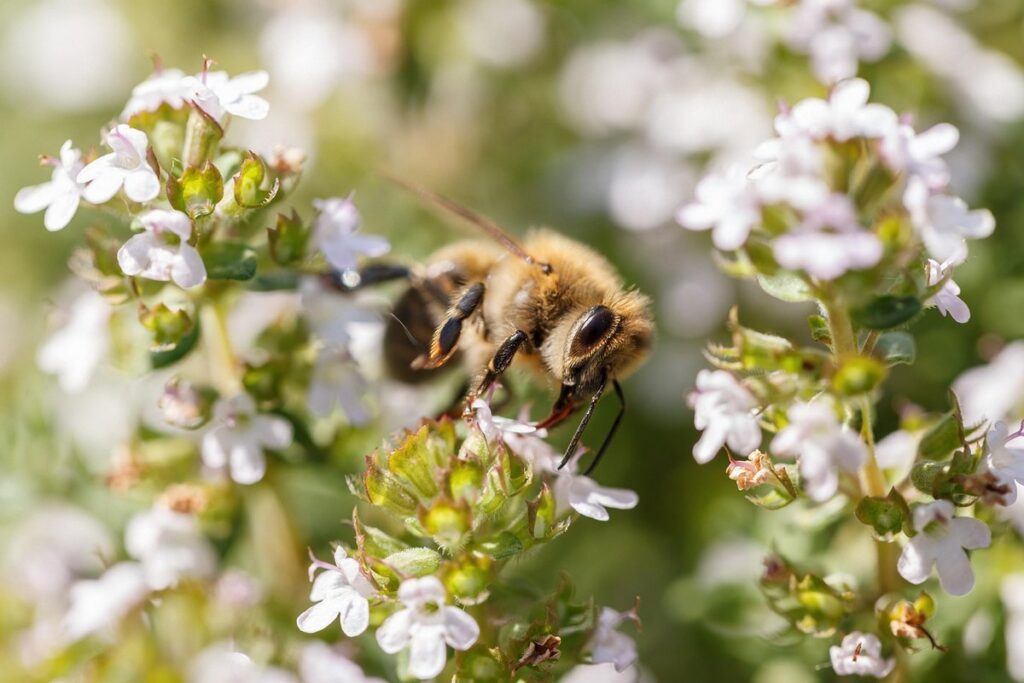
The Importance of Thyme Flowers for Bees
Thyme flowers are a vital resource for local bee populations, providing a rich source of nectar and pollen that’s crucial for their survival. Let’s explore why thyme flowers are so essential to these tiny pollinators.
Attracting Bees to Your Garden
When it comes to attracting bees to your garden, thyme flowers are an excellent choice. Not only do they provide a rich source of nectar and pollen, but they’re also relatively low-maintenance and can thrive in poor soil conditions. There are several types of thyme that are particularly attractive to pollinators, including creeping thyme (Thymus serpyllum), lemon thyme (Thymus x citriodorus), and wild thyme (Thymus polytrichus).
To attract bees to your thyme flowers, plant them in a spot that receives full sun and has well-draining soil. Bees are also drawn to the fragrance of thyme, so consider planting it near a path or seating area where you can enjoy its scent. Additionally, try intercropping thyme with other bee-friendly plants like lavender or rosemary to create a pollinator paradise in your garden.
By incorporating thyme flowers into your garden, you’ll be providing a vital source of food and habitat for local bees, which is especially important given the declining bee populations worldwide.
Benefits of Thyme for Bee Health
When it comes to supporting local pollinators, thyme flowers are an excellent choice. Not only do they provide a vital source of nectar and pollen for bees, but their high content also offers essential nutrients for their health. Bees rely on these energy-rich compounds to fuel their daily activities, from collecting nectar to building hives.
Thyme flowers boast an impressive nectar content, which is particularly beneficial during times of drought or when other plant sources are scarce. This makes them a vital lifeline for bees, allowing them to maintain their strength and resilience. Furthermore, the pollen contained within thyme flowers is rich in protein and micronutrients, providing bees with the necessary building blocks for growth and development.
Incorporating thyme into your garden or bee-friendly landscape can have a significant impact on local pollinator populations. Consider planting thyme in clusters to create a nectar-rich hotspot that will attract bees and other beneficial insects. By doing so, you’ll be providing these vital pollinators with the nutrients they need to thrive, while also supporting their overall health and well-being.
Choosing the Right Thyme Varieties for Bees
When it comes to creating a bee-friendly thyme garden, choosing the right varieties is crucial. Let’s explore some popular options that will attract and delight these busy pollinators.
Drought-Tolerant Thymes for Low-Maintenance Gardens
If you’re looking to create a low-maintenance garden that still attracts pollinators like bees, consider planting drought-tolerant thyme varieties. These hardy plants require minimal watering and care, making them perfect for areas with limited watering schedules or busy gardeners.
Some popular drought-tolerant thyme varieties include ‘Elfin’ and ‘Creeping Thyme’ (Thymus serpyllum). These compact plants spread quickly to form a mat-like growth habit, filling gaps between stones or pavers. They also produce small, fragrant flowers that bees adore, providing a valuable source of nectar and pollen.
To incorporate these thymes into your garden design, start by selecting an area with well-draining soil. Plant the thyme in the spring or fall, about 6-8 inches apart. Water them lightly during their first growing season to establish a strong root system. After that, they can withstand moderate drought and require only occasional watering.
By choosing these low-maintenance thymes, you’ll not only support local pollinators but also reduce your own gardening workload.
Fragrant Thymes for Attracting Pollinators
When it comes to attracting pollinators like bees to your garden, fragrant thyme varieties are an excellent choice. These plants release a strong scent that is particularly attractive to bees and other pollinators, drawing them in from afar.
Thymus x citriodorus, also known as lemon thyme, is one such variety that is sure to entice bees with its citrusy fragrance. Similarly, Thymus pulegioides, or wild thyme, has a strong, herbal scent that is irresistible to pollinators.
To incorporate these fragrant thymes into your garden, start by planting them in a spot that receives full sun and well-draining soil. This will allow the plants to thrive and release their potent scents at their most intense. You can also plant them alongside other bee-friendly flowers like lavender or rosemary to create a pollinator haven.
Some of these fragrant thymes, such as Thymus herba-barona, are also low-maintenance and can tolerate dry conditions, making them perfect for areas with limited watering access. By incorporating these fragrant varieties into your garden, you’ll be creating a welcoming space for local pollinators like bees to visit and thrive.
Growing Thyme Flowers for Bees in Your Garden
To support local pollinators, consider growing thyme flowers that provide a rich source of nectar and pollen for bees. We’ll cover the steps to successfully grow these bee-friendly blooms in your garden.
Planting and Spacing Thyme for Maximum Bloom
When planting thyme flowers specifically for bees, it’s essential to focus on creating an environment that promotes maximum bloom and attracts these vital pollinators. Thyme is a low-maintenance, drought-tolerant herb that can thrive in containers or directly in the ground.
To encourage thyme flowers to bloom abundantly, plant them in well-draining soil with full sun exposure. Aim for at least six hours of direct sunlight per day, as this will stimulate blooming and fragrance production. Space thyme plants 6-12 inches apart, depending on their growth rate and desired spread.
In a container garden, use a minimum depth of 6-8 inches to accommodate the plant’s taproot. This will ensure it can absorb nutrients effectively. Water newly planted thyme regularly until established, then reduce watering frequency as needed. A consistent moisture level will promote healthy growth and blooming.
When planting in clusters or groupings, leave sufficient space between plants for air circulation and easy access for bees. Planting multiple varieties together can also encourage cross-pollination, resulting in a more diverse range of blooms and fragrance.
Soil Preparation and Fertilization for Healthy Thyme Growth
To ensure healthy thyme growth that supports bee health, proper soil preparation and fertilization are essential. Thyme is a low-maintenance herb, but it still requires well-draining soil with a pH between 6.0 and 7.0. Before planting, test the soil to determine its nutrient levels and structure.
For optimal growth, add organic matter like compost or well-rotted manure to improve soil fertility and drainage. A balanced fertilizer with equal nitrogen-phosphorus-potassium (NPK) ratio can also promote healthy root development and leaf growth. However, be cautious not to over-fertilize, as this can lead to weak and leggy plants.
A general rule of thumb is to fertilize thyme lightly in the spring when new growth appears, and again after flowering has finished. This approach encourages strong root systems and promotes robust blooming. Additionally, consider using natural or organic fertilizers that are free from chemicals and toxins, which can harm beneficial pollinators like bees.
How Bees Use Thyme Flowers in Their Ecosystem
Bees play a crucial role in pollinating thyme flowers, which provides them with a rich source of nectar and pollen to sustain their colonies. Let’s take a closer look at how they utilize these valuable resources.
The Role of Thyme in Bee Communication
Bees use thyme flowers as a vital component of their communication systems. Scent marking is one of the ways bees utilize thyme to convey information. Bees release pheromones on thyme flowers, which serve as a signal for other bees in the colony. This scent marking allows bees to communicate essential details about the quality and quantity of nectar and pollen available.
When collecting nectar from thyme flowers, bees inadvertently pick up these pheromones and deposit them onto other flowers they visit. This transfer of scents enables bees to convey information to their colony members about the best sources of food. Thyme flowers with higher quantities of these pheromones are often prioritized by foraging bees.
It’s essential to note that this communication system is a crucial aspect of bee social hierarchy, enabling them to coordinate efforts and optimize resource gathering. By supporting local pollinators like thyme flowers in your garden or community space, you’re indirectly contributing to the development of these complex communication systems.
Thyme’s Impact on Local Pollinator Populations
Thyme flowers have a significant impact on local pollinator populations, providing a vital source of food and shelter for these essential creatures. As a bee-friendly flower, thyme offers a rich supply of nectar and pollen, making it an attractive option for bees and other pollinators.
In terms of food sources, thyme’s nectar is particularly valuable to bees as it contains a high concentration of sugars, which are used to fuel their activities. This is especially important during the summer months when flowers with rich nectar sources are scarce. By planting thyme in your garden, you can provide a vital source of energy for local pollinators.
In addition to food, thyme flowers also offer shelter and protection from harsh weather conditions. Bees often nest on thyme plants, using their leaves and stems as a safe haven from the elements. This not only provides them with a place to rest but also offers protection from predators and other threats.
By incorporating thyme into your bee-friendly garden, you can create a welcoming environment for local pollinators, supporting their populations and contributing to a healthier ecosystem.
Common Challenges and Solutions for Growing Thyme for Bees
Growing thyme for bees can be a bit tricky, especially when it comes to common challenges like pests, diseases, and poor soil quality. Let’s explore some practical solutions to help you overcome these obstacles.
Overwintering Thyme: Tips for Winter Hardiness
As you work towards creating a thyme garden that supports local pollinators like bees, it’s essential to consider overwintering your thyme plants. Thyme can be sensitive to frost and cold temperatures, but with the right care, it can survive and even thrive throughout the winter months.
To ensure your thyme remains healthy and productive, start by preparing your plants for winter in late fall. Cut back the stems to about 1 inch from the ground, removing any dead or damaged foliage. This will help prevent damage from snow and ice and encourage new growth come spring. Next, mulch around the base of the plants to retain moisture and regulate soil temperature.
In regions with mild winters, you can also consider bringing your potted thyme plants under cover to protect them from extreme temperatures. In colder climates, apply a layer of winter protection like burlap or straw to shield your plants from harsh winds and frost. By taking these simple steps, you’ll be able to enjoy a thriving thyme garden throughout the year, providing a valuable source of nectar and pollen for local pollinators.
Dealing with Pests and Diseases in Your Thyme Garden
As you tend to your thyme garden, it’s not uncommon for pests and diseases to arise, threatening the health of your plants. Thyme is particularly susceptible to a few common problems that can have a significant impact on its growth and ability to attract pollinators like bees.
Aphids, whiteflies, and spider mites are all potential invaders that feed on thyme’s sap, weakening the plant and reducing its nectar production. To control these pests, try introducing beneficial insects like ladybugs or lacewings, which prey on aphid populations. You can also use neem oil or insecticidal soap to directly target the pests.
Fungal diseases such as root rot and leaf spot are also common threats to thyme gardens. To prevent these, ensure good air circulation around your plants and avoid overwatering. If you do notice signs of disease, remove affected areas and treat with a fungicide specifically designed for thyme. Regular pruning will also help promote healthy growth and reduce the risk of disease.
In addition to pests and diseases, thyme is occasionally affected by weeds that compete for resources like water and nutrients. Keep your garden free from weeds by mulching around your plants and removing any unwanted growth regularly. By taking these steps, you can protect your thyme plants and maintain a healthy, thriving environment for local pollinators.
Conclusion: Creating a Bee-Friendly Environment with Thyme Flowers
Now that you’ve learned how to grow and care for thyme flowers, it’s time to put your knowledge into action by creating a bee-friendly environment in your garden. Let’s bring it all together with some practical tips!
Recap of Key Takeaways
As we conclude our exploration of thyme flowers for bees, let’s take a moment to review the key takeaways from this article. Thyme flowers are not only a popular culinary herb but also an essential resource for local pollinators.
We discussed the crucial role that thyme flowers play in supporting bee populations, including their rich source of nectar and pollen. These vital resources enable bees to gather energy and collect nutrients necessary for colony growth and survival. By incorporating thyme into your garden or landscape, you’re providing a critical food source for these busy pollinators.
In particular, the following practices can make a significant difference: Planting thyme in clusters to create bee-friendly hotspots Choosing varieties like creeping thyme, which are particularly attractive to bees * Avoiding pesticides and other chemicals that harm pollinators By implementing these simple strategies, you’ll be well on your way to creating a bee-friendly environment that supports the health and well-being of local pollinator populations.
Encouraging Further Action to Support Local Pollinators
As you’ve learned about the benefits of thyme flowers for bees and how to incorporate them into your garden, we hope you’re inspired to take further action. Your support is crucial in creating a bee-friendly environment that not only attracts these vital pollinators but also contributes to their conservation.
Start by sharing your knowledge with friends and family who may be interested in gardening for wildlife. Encourage them to consider planting thyme flowers or other nectar-rich plants that attract bees. You can also share articles, videos, or social media posts about the importance of pollinator conservation to raise awareness within your community.
Consider reaching out to local organizations, such as beekeeping associations or environmental groups, and offer your support in their conservation efforts. You could volunteer for a project, donate funds, or spread the word about the need for pollinator-friendly habitats. Every small action counts, and collective efforts can lead to significant positive change.
Frequently Asked Questions
Can I grow thyme flowers in containers or do they require a lot of space?
Yes, you can grow thyme flowers in containers, making them an excellent choice for small gardens or balconies. Choose compact varieties like ‘Elfin’ or ‘Pink Chintz’, and ensure good drainage to prevent waterlogged soil.
How often should I water my thyme plants during hot summer months?
Thyme is drought-tolerant, but it still requires regular watering, especially during prolonged heatwaves. Water your thyme plants every 7-10 days, or when the top inch of soil feels dry to the touch. Avoid overwatering, which can lead to root rot.
Are there any specific pest management techniques for thyme gardens that I should be aware of?
Yes, thyme is susceptible to pests like spider mites and mealybugs. Regularly inspect your plants for signs of infestation, and use neem oil or insecticidal soap to control outbreaks. Encourage beneficial insects by planting companion flowers like marigolds and nasturtiums.
Can I divide and propagate my thyme plants during the fall season?
Yes, you can divide and propagate thyme plants in the fall, typically after they have finished flowering. Simply dig up the plant, separate the roots, and replant the divisions in well-draining soil. This will help promote new growth and encourage more blooms.
What’s the best way to overwinter thyme plants that are not hardy in my region?
Yes, if you live in a region with harsh winters, consider bringing potted thyme plants indoors or mulching them heavily to protect from frost damage. You can also take cuttings of your thyme plant and propagate them in a greenhouse or indoor potting mix. This will ensure their survival through the winter months.