
Strawberry growers know that dealing with pests can be a constant battle. Among the most insidious invaders are the tiny, yet mighty strawberry spider mites. These microscopic arachnids feed on plant sap, weakening your crop and threatening yields. If left unchecked, they can quickly get out of hand, causing widespread damage to your strawberry plants.
As a gardener or greenhouse operator, you’re likely no stranger to pest management strategies. But even with experience, it’s not uncommon for spider mites to catch you off guard. That’s why we’ve put together this expert guide on managing strawberry spider mite infestations using integrated pest management (IPM) techniques. In this article, we’ll walk you through how to identify the problem, prevent future outbreaks, and control existing populations – so you can protect your strawberries and enjoy a healthy harvest.
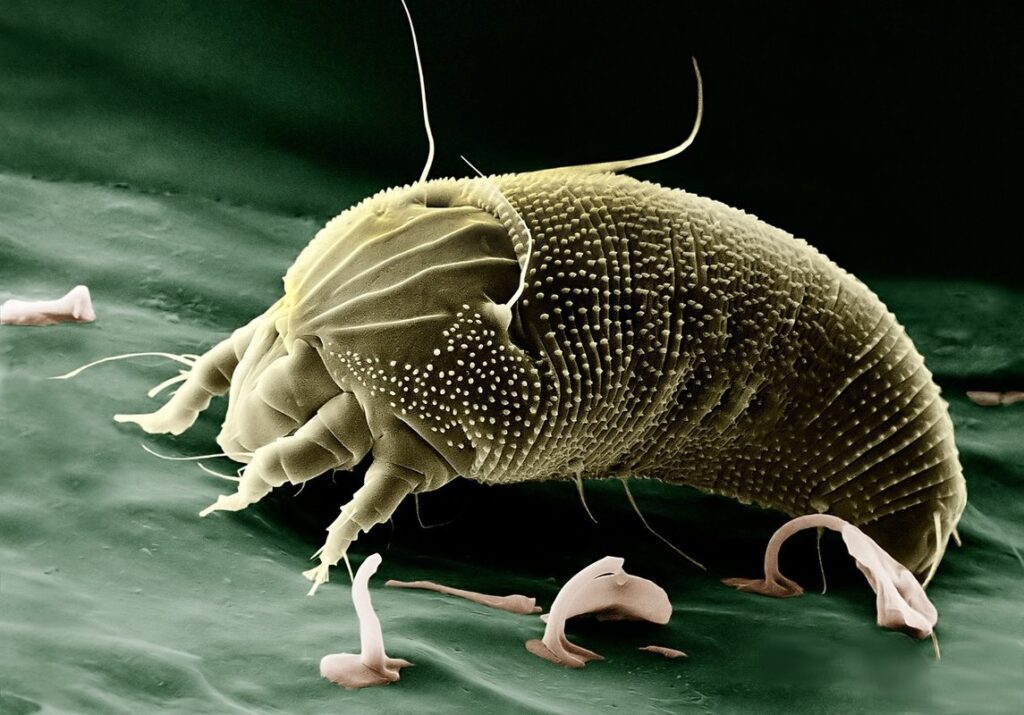
Understanding Strawberry Spider Mites
To effectively manage strawberry spider mites, it’s essential to understand their behavior and habits, including how they spread and thrive on your plants. Let’s dive into the specifics of these tiny pests.
What Are Strawberry Spider Mites?
Strawberry spider mites are tiny, eight-legged arachnids that belong to the family Tetranychidae. These pests are known for their distinctive web-spinning behavior and are a common problem for strawberry growers worldwide. They are so small that you may need a hand lens or magnifying glass to spot them on your plants.
The life cycle of strawberry spider mites typically takes around 7-10 days, with females laying up to 20 eggs at a time. The eggs hatch into six-legged larvae, which then molt twice before becoming adults. Female spider mites can lay multiple batches of eggs throughout their lifespan, allowing populations to grow rapidly.
Strawberry spider mites feed on plant sap, causing yellowing or bronzing of leaves and stunted growth. They are particularly damaging during hot and dry weather when plants are under stress. To manage the problem, it’s essential to understand that these pests can be incredibly resilient and require a multi-faceted approach.
It’s worth noting that the presence of spider mites can also attract other pests like thrips and aphids, creating an even bigger problem for your strawberry crop.
Signs and Symptoms of Infestation
When you notice signs of strawberry spider mites on your plants, it’s essential to take prompt action. Common indicators of infestation include yellowing leaves, fine webbing, and actual mites on the plant. As a general rule, inspect your plants regularly for these telltale signs.
Yellowing leaves are often the first sign that something is amiss. If you notice multiple leaves turning yellow or pale green, it may be due to spider mite infestation. These pests feed by sucking sap from the leaves, causing them to discolor and wilt. Check the undersides of leaves for tiny white dots, which are actual eggs laid by the females.
Fine webbing is another common symptom. Spider mites produce silk threads that create a fine network on the plant’s surface. This can be particularly evident in the joints between stems and leaves or on the underside of leaves. Look out for a sticky substance, known as honeydew, which they also secrete while feeding.
It’s worth noting that actual mites themselves are usually too small to see with the naked eye. They’re often mistaken for dust particles or whiteflies. However, if you use a magnifying glass or hand lens, you may be able to spot them moving around on your plant’s leaves.
Causes and Contributing Factors
To effectively manage strawberry spider mites, it’s essential to understand what triggers infestations, including environmental and biological factors that contribute to their presence.
Environmental Factors
Environmental factors play a significant role in the management of strawberry spider mite populations. Temperature is one of the most critical environmental factors that can impact mite infestations. Strawberry spider mites are typically active at temperatures between 65°F to 80°F (18°C to 27°C), making it essential to monitor temperature fluctuations during peak mite activity periods.
Humidity levels also affect strawberry spider mite populations, with ideal conditions for mite reproduction and survival ranging from 40% to 70% relative humidity. Crop rotation is another environmental factor that should be considered when managing strawberry spider mites. Leaving a crop field fallow or rotating it to a non-host crop can help reduce the risk of mite infestations in subsequent seasons.
For example, if you’re using a fungicide to manage powdery mildew on your strawberries, consider incorporating an acaricide that targets mites as well. This will not only control mites but also minimize the risk of resistance development. By understanding and managing these environmental factors, you can reduce the risk of strawberry spider mite infestations and create a more sustainable pest management strategy for your strawberry fields.
Crop Stressors
When it comes to managing strawberry spider mites, it’s essential to consider the overall health of your plants. Crop stressors can significantly weaken your strawberry crops, making them more susceptible to mite infestations.
Water stress is a primary crop stressor that can have devastating effects on strawberry plants. When water scarcity occurs, plants may experience reduced growth rates, lower yields, and increased susceptibility to pests like the strawberry spider mite. For instance, research has shown that drought-stressed strawberry plants are more attractive to spider mites, as they have higher levels of certain volatile organic compounds (VOCs) in their leaves.
Nutrient deficiencies can also weaken strawberry plants, making them more vulnerable to mite infestations. Deficiencies in macronutrients like nitrogen, phosphorus, and potassium can impede plant growth, reduce photosynthesis rates, and increase the production of VOCs that attract spider mites. To mitigate this risk, ensure your strawberry plants receive balanced fertilization according to their specific needs.
By addressing these crop stressors through proper irrigation and fertilization practices, you can significantly reduce the likelihood of a spider mite infestation on your strawberry crops.
Integrated Pest Management (IPM) Strategies
Now that you know the basics of strawberry spider mite identification and damage, let’s dive into effective IPM strategies for long-term management and minimization of chemical use.
Monitoring for Mites
Monitoring for strawberry spider mites is an essential step in effective management. To catch infestations early on, regular inspections are crucial. Set aside time each week to visually inspect plants, paying close attention to the underside of leaves and stems where mites tend to congregate. Look for signs such as yellowing or bronzing of leaves, webbing, and actual mites.
For more targeted monitoring, use sticky traps or other detection methods. Sticky traps coated with a sweet-tasting substance can be placed near infested areas to capture adult mites. These traps provide valuable information on the presence and numbers of mites in a specific area.
It’s also essential to monitor for mite eggs and nymphs by gently brushing the underside of leaves with a soft-bristled brush. This will dislodge any mites or eggs that are present, allowing you to assess the infestation level more accurately. By combining regular visual inspections with targeted monitoring methods, you’ll be well-equipped to detect strawberry spider mite infestations before they get out of hand.
Cultural Controls
Cultural controls are an essential part of integrated pest management (IPM) strategies for strawberry spider mite populations. By modifying growing conditions and maintaining a clean environment, you can create an unfavorable habitat for these pests to thrive.
Start by practicing crop sanitation: remove weeds, debris, and infested plants from the area to prevent the spread of spider mites. Regular pruning is also crucial, as it helps control the growth of strawberry plants and reduces humidity levels, making it harder for mites to survive.
Adjusting irrigation schedules can also make a significant difference. Overwatering creates an ideal environment for spider mites, while underwatering causes stress that makes plants more susceptible to infestations. Aim for a balance by watering your strawberry plants when the top 2-3 inches of soil feel dry to the touch.
Maintain a clean and well-maintained growing area by removing any fallen leaves or flowers, as these can harbor spider mites and eggs. Regularly inspect your plants for signs of infestation and implement cultural controls before the problem escalates.
Chemical Control Options
When it comes to chemical control options for strawberry spider mite management, understanding your choices is key to effective treatment and minimizing risks to your crop. Here, we’ll break down the most common methods used to control infestations chemically.
Organic and Conventional Pesticides
When it comes to managing strawberry spider mites, chemical control options are often considered. However, not all pesticides are created equal, and choosing between organic and conventional options can be overwhelming.
Conventional pesticide options for strawberry spider mite management typically contain active ingredients such as hexythiazox (e.g., Acaril), propineb, or pyridaben. These chemicals can provide quick knockdown of spider mites but may have lingering effects on beneficial insects and the environment. For example, research has shown that repeated applications of hexythiazox can lead to the development of resistant populations.
On the other hand, organic pesticide options often rely on natural active ingredients like pyrethrin, neem oil, or sulfur. While these alternatives may be gentler on the environment, their efficacy and application timing are crucial for successful management. For instance, applying neem oil during hot temperatures can lead to phytotoxicity.
To make informed decisions about chemical control options, it’s essential to consider factors like crop stage, weather conditions, and potential environmental impacts. Always read labels carefully, follow recommended application rates, and take necessary precautions to minimize exposure.
Resistance Management
When using chemical controls to manage strawberry spider mites, it’s crucial to implement resistance management strategies. This is because repeated exposure to the same pesticides can lead to the development of pesticide-resistant mite populations. To prevent this from happening, rotate between different classes of miticides.
For example, if you’ve been using organophosphates or pyrethroids for a while, it’s time to switch to a different class like tetronic/tetramethrin or formamidines. Make sure to follow the recommended label instructions and application rates to avoid further resistance development.
Another effective way to manage resistance is through Integrated Pest Management (IPM). This involves combining physical controls such as fine-mesh screens, yellow traps, and fine-spray applications with chemical controls. Regular monitoring of your strawberry crop can help you detect mite infestations early on, reducing the need for frequent chemical treatments.
Finally, consider adopting an integrated approach that incorporates crop rotation, sanitation practices, and biological control agents to create a balanced ecosystem in your strawberry field. This not only reduces pesticide use but also minimizes the likelihood of developing resistant mite populations.
Biological Controls and Predators
Biological controls can be a valuable tool in managing strawberry spider mite populations, but which methods are most effective? Let’s explore some of the best biological controls and predators.
Introduction to Natural Enemies
Natural enemies play a vital role in managing strawberry spider mite populations. These beneficial organisms can be just as effective, if not more so, than chemical controls. One of the most common natural enemies is the predatory mite, which preys on spider mites by injecting them with toxins or consuming their eggs and young.
In addition to predatory mites, certain species of spiders are known to feed on strawberry spider mites. The web-building spider, in particular, can be an effective biological control agent. These spiders spin intricate webs that trap spider mites, preventing them from reproducing and spreading.
When introducing natural enemies into your strawberry field, it’s essential to select the right species for your region and climate. Some predatory mite species are temperature-sensitive, while others may be more susceptible to pesticide residues. Research local options and work with a knowledgeable supplier or consultant to ensure successful implementation.
Encouraging Beneficial Organisms
Encouraging beneficial organisms is crucial for maintaining a balanced ecosystem and reducing the reliance on pesticides. By creating a welcoming environment for these helpful insects, you can promote natural spider mite control. One of the most effective ways to encourage beneficial organisms is to minimize pesticide use. Chemicals can be detrimental to the very creatures that help control pest populations.
Instead, adopt integrated pest management (IPM) strategies that incorporate biological controls and cultural practices. For example, introduce natural predators like lady beetles or lacewings, which feed on spider mites. You can also encourage beneficial mites, such as phytoseiulus persimilis, by providing them with a suitable habitat and food source.
Maintain a balanced ecosystem by creating a diverse environment that supports a wide range of species. This includes planting a variety of flowers and herbs that attract pollinators and other beneficial insects. By adopting these strategies, you can promote a natural balance in your garden or greenhouse, reducing the need for pesticides and promoting healthy strawberry plants.
Post-Infestation Management and Prevention
Once you’ve managed a strawberry spider mite infestation, it’s essential to take steps to prevent future outbreaks by adopting effective post-infestation management strategies. We’ll walk you through these crucial measures next.
Cleaning Up After an Infestation
After an infestation has been confirmed and treatment has taken place, it’s essential to thoroughly clean up the affected area to prevent re-infestation. This step is crucial in breaking the life cycle of the spider mite and preventing the spread of the pest.
Firstly, dispose of any infected plants that are beyond saving. Inspect each plant carefully for signs of infestation, such as white or yellow speckling on leaves. If a plant is severely infested, it’s best to err on the side of caution and discard it to prevent the mites from spreading to other plants.
Remove all debris, including dead leaves, stems, and any soil that may have come into contact with the infected plants. Disinfect all tools and equipment used during treatment, as spider mites can survive for short periods off-host.
Dispose of any infested materials, such as potting mix or gardening gloves, to prevent re-infestation. Sterilize containers and other items by washing them in hot water or soaking them in a solution of 1 part bleach to 9 parts water.
Long-Term Prevention Strategies
To prevent future infestations of strawberry spider mites, it’s essential to adopt long-term strategies that go beyond immediate treatment. Good garden hygiene is a crucial aspect of prevention. Regularly remove weeds and debris from the surrounding area, as these can harbor pests and diseases that can spread to your plants. Inspect your garden regularly for signs of infestation, such as yellowing leaves or fine webbing on stems.
Implementing integrated pest management (IPM) techniques is another effective approach. This involves using a combination of methods to manage pests, including cultural controls (like crop rotation and pruning), physical barriers, and biological controls (such as introducing beneficial insects). For example, you can introduce natural predators like ladybugs or lacewings, which feed on spider mites.
By adopting these long-term strategies, you’ll be better equipped to prevent future infestations and maintain a healthy strawberry plant. Keep in mind that prevention is often more effective than treatment, so make it a habit to monitor your plants regularly and take proactive measures to prevent pest issues from arising.
Frequently Asked Questions
What are some common mistakes strawberry growers make when managing spider mites?
When managing strawberry spider mites, it’s easy to overlook the importance of monitoring for eggs and nymphs, leading to a resurgence of the infestation. To avoid this mistake, make sure to inspect your plants regularly, looking for fine webbing and egg sacs on the underside of leaves.
Can I use neem oil to control strawberry spider mite populations?
Yes, neem oil can be effective in controlling strawberry spider mites by disrupting their hormone systems and preventing them from reproducing. However, make sure to follow the label instructions carefully and combine it with other IPM strategies for optimal results.
How long does it take to see results after implementing cultural controls like removing weeds and pruning infested areas?
Cultural controls can start showing results within a few days to a week, depending on the severity of the infestation. For best results, make sure to remove weeds, prune infested areas, and maintain good air circulation around your strawberry plants.
Are there any specific varieties of strawberries that are more resistant to spider mite infestations?
Yes, some strawberry varieties have shown higher resistance to spider mites than others. Look for cultivars with built-in resistance or tolerance, such as ‘Camarosa’ or ‘Ventana’, which can help reduce the risk of infestation.
Can I use biological controls like lady beetles and lacewings in greenhouses?
No, due to the closed environment and controlled temperature of greenhouses, introducing beneficial insects may not be effective. Instead, consider using chemical control options or integrated pest management strategies that are tailored for greenhouse conditions.