
Are you ready to take your strawberry growing skills to the next level? Whether you’re a seasoned farmer or just starting out, choosing the right variety of strawberries can be overwhelming. With so many options available, it’s essential to pick one that thrives in your specific climate and soil conditions.
In this comprehensive growers guide, we’ll walk you through everything you need to know to grow delicious and bountiful strawberry crops. From preparing your soil to managing common pests and diseases, we’ve got expert tips to share. We’ll also cover how to extend the harvest season, so you can enjoy fresh strawberries for months to come. With our help, you’ll be well on your way to becoming a successful strawberry grower, and we’re excited to share our knowledge with you.
Choosing the Right Variety
When selecting a strawberry variety, you’ll want to consider factors like climate suitability, disease resistance, and desired flavor profile to ensure optimal growth. This section will walk you through these key considerations.
Understanding Strawberry Types
When it comes to growing strawberries, understanding the different types is crucial for success. There are three main categories: June-bearing, everbearing, and day-neutral varieties.
June-bearing strawberries produce one large crop in the spring, typically from May to July. These plants require a period of cold winter dormancy to induce flowering, making them well-suited for cooler climates. They tend to be more productive than other types but have a shorter harvest season. If you live in an area with a moderate climate and want a high yield, June-bearing strawberries might be the best choice.
Everbearing varieties, on the other hand, produce multiple crops throughout the growing season, often from spring to fall. They are less sensitive to cold temperatures and can thrive in warmer climates. While they may not produce as much fruit as June-bearing plants, everbearers offer a longer harvest period and can be a good option for areas with mild winters.
Day-neutral strawberries are the most adaptable of all, producing flowers and fruits continuously throughout the growing season regardless of temperature or daylight hours. They require minimal care and can thrive in containers or poor soil, making them perfect for beginners or those with limited space.
Factors Influencing Strawberry Selection
When selecting a strawberry variety, growers need to consider several key factors that can impact the crop’s performance and profitability. Climate is one of the most significant influencers, as different varieties thrive in various temperature ranges and humidity levels. For example, some popular varieties like ‘Festival’ and ‘Chandler’ are well-suited for warm climates, while others like ‘Camarosa’ and ‘Albion’ prefer cooler temperatures.
Soil type is another crucial consideration, as strawberries require a specific pH range to grow optimally. Growers should choose varieties that are tolerant of their local soil conditions to avoid costly amendments or relocations. Market demand also plays a significant role in variety selection, with growers often opting for popular cultivars like ‘Earliglow’ and ‘Monterey’. To make an informed decision, consider factors like disease resistance, yield potential, and post-harvest quality when choosing the right strawberry variety for your operation.
Keep in mind that local regulations and certifications may also influence your selection. Some growers may prioritize varieties with built-in traits like Integrated Pest Management (IPM) or non-GMO status to meet market requirements.
Researching New Varieties
When researching new strawberry varieties, it’s essential to gather as much information as possible about their performance. Start by visiting the websites of reputable nurseries and seed companies that specialize in strawberry plants. These websites often provide detailed descriptions of the variety, including its growth habits, disease resistance, and fruit production.
You can also check out online forums and social media groups dedicated to strawberry growers. These platforms are great resources for learning about new varieties from other growers who have hands-on experience with them. Be sure to ask questions and seek advice from experts in the field.
To evaluate a variety’s performance, consider factors such as its adaptability to your climate and soil type, resistance to common diseases like powdery mildew and botrytis, and fruit quality and yields. Look for varieties that have been tested and proven to perform well in similar conditions to yours. Some nurseries also provide trial data on their website, which can give you a better idea of how the variety will do in your area.
Keep in mind that different varieties excel under specific growing conditions, so it’s crucial to choose one that is suitable for your region and climate.
Preparing the Soil and Climate
Before you start planting, it’s essential to prepare your soil for a bountiful strawberry harvest by considering factors like pH levels and nutrient content. Let’s explore how to create an optimal growing environment.
Assessing Your Growing Conditions
Before you start planting, it’s essential to understand your growing conditions. This will help you choose the right strawberry variety that will thrive in your area. To assess your climate and soil type, let’s break down the key factors to consider.
Start by checking the average temperature and rainfall in your region. Strawberries are typically grown in temperate climates with mild winters and cool summers. They require around 30-40 inches of annual rainfall, but can tolerate some drought. If you live in an area with high temperatures or low rainfall, look for varieties that are heat-tolerant or drought-resistant.
Next, consider your soil type. Strawberries prefer well-draining, fertile soil with a pH between 5.5 and 6.5. Test your soil to determine its nutrient levels and adjust accordingly. If you have heavy clay or sandy soil, amend it with organic matter like compost to improve drainage and fertility.
You can also observe the sunlight pattern in your garden. Strawberries need at least six hours of direct sunlight per day, but some varieties are more tolerant of shade than others. Research the specific needs of the variety you’re interested in growing to ensure they’ll thrive in your conditions. By understanding your climate and soil type, you’ll be better equipped to select the right strawberry variety for a successful harvest.
Soil Testing and Preparation
Proper soil testing and preparation are crucial steps for strawberry growers to ensure optimal plant growth and fruit production. The pH level of your soil plays a significant role in determining the availability of essential nutrients for your strawberry plants.
Strawberries prefer a slightly acidic to neutral soil pH, ranging from 5.5 to 6.5. If your soil’s pH is too high or too low, it can affect nutrient uptake and lead to reduced yields. For example, if your soil has a high pH, it may require additional sulfur to lower the pH.
In terms of nutrient requirements, strawberries need a balanced diet of nitrogen (N), phosphorus (P), potassium (K), and other micronutrients like calcium and magnesium. A typical fertilizer application for strawberries includes:
* 10-20-10 N-P-K ratio: This provides an adequate supply of nitrogen, phosphorus, and potassium.
* Additional micronutrients: Calcium and magnesium are essential for strawberry plant growth.
Before planting, consider getting your soil tested to determine its pH level and nutrient content. Based on the test results, you can adjust the pH by adding lime or sulfur, and fertilize accordingly to provide a balanced nutrient mix. This will help create an optimal growing environment for your strawberry plants, setting them up for success throughout their growth cycle.
Microclimate Management
Creating microclimates on your farm can be a game-changer for strawberry growers. By manipulating the environment to create ideal conditions, you can boost yields and improve fruit quality. One way to achieve this is through the strategic placement of windbreaks, such as rows of trees or shrubs. These barriers protect strawberries from harsh winds that can damage plants and reduce growth.
Another tactic is to use mulch to warm up the soil in the spring. By applying a thick layer of organic matter, you can retain moisture and regulate soil temperature, creating an optimal environment for strawberry roots to thrive.
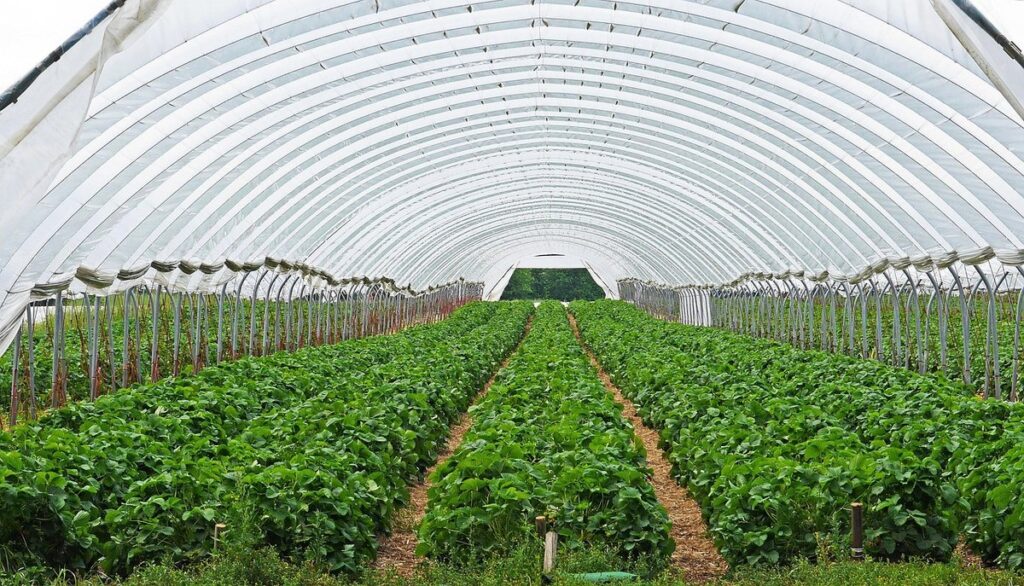
Consider incorporating cold frames or hoop houses into your farm design as well. These structures allow you to extend the growing season, providing protection from extreme temperatures and frost. This enables you to grow strawberries in areas with shorter seasons, increasing your harvest potential.
In terms of practical implementation, start by observing your farm’s unique conditions and identifying areas that can benefit from microclimate management. Then, experiment with different techniques to see what works best for your specific climate and soil type. With patience and persistence, you’ll be able to fine-tune your approach and reap the rewards of improved strawberry growth.
Planting and Establishing a Strawberry Patch
To get started on your strawberry patch, first you need to choose the right location and prepare the soil, ensuring it’s rich in nutrients and has good drainage. This will give your strawberries a healthy start.
Preparing the Bed
Before planting strawberries, it’s essential to prepare the bed properly. This step will ensure that your plants get off to a healthy start and are more likely to thrive throughout their growth cycle.
To begin, you’ll need some basic tools such as a shovel or spade for digging, a rake for leveling the soil, and a garden fork for loosening compacted areas. A soil test kit can also come in handy to determine your soil’s pH level and nutrient content.
Here are the steps involved in preparing the bed:
* Clear the area of any debris, rocks, or weeds.
* Loosen the top 8-10 inches of soil using a garden fork, working it into a rough tilth. This will help improve drainage and air circulation around your strawberry plants’ roots.
* Use a rake to level the soil, creating a smooth surface for planting. Aim for a slight slope to prevent water from accumulating near the base of your plants.
Remember to check your local climate and adjust your preparation accordingly to ensure optimal growing conditions.
Planting Techniques
When it comes to planting strawberry crowns or seedlings, getting the spacing and layout just right is crucial for a bountiful harvest. As a general rule of thumb, plant crowns 18-24 inches apart in rows that are 3-4 feet apart. This allows for good air circulation, which can help prevent disease and promote healthy growth.
If you’re planting seedlings, space them about 12-18 inches apart. Keep in mind that strawberries are perennials, so they’ll produce new crowns each year. To encourage the plant to produce runners (long stems with leaves and flowers), plant multiple varieties together. This will not only add diversity to your patch but also promote healthy pollination.
Consider a layout where you alternate between two or three different varieties in each row. This staggered approach can help reduce disease pressure, as some varieties are more susceptible than others. Don’t overcrowd – leave about 6-8 inches of space between the crowns for easy maintenance and harvesting.
Irrigation Strategies
When developing an irrigation plan for young strawberry plants, it’s essential to strike the right balance between providing enough moisture and preventing overwatering. This is a critical period for the plants as they establish their root systems and begin producing new growth.
One effective strategy is to water newly planted strawberries lightly but frequently. Aim for about 1-2 inches of water per week, either from rain or irrigation. To achieve this, you can set up a drip irrigation system that delivers water directly to the roots, minimizing evaporation and runoff.
Consider using a soaker hose or micro-sprinkler system, which applies water gently but thoroughly. These systems are often more efficient than traditional sprinklers, reducing waste and saving you time in the process. As plants grow and mature, you can adjust your irrigation schedule to accommodate their changing needs.
Remember to monitor soil moisture levels by inserting a finger into the soil up to the knuckle. If the top 2-3 inches feel dry, it’s time for another watering session. Keep an eye on weather forecasts as well, adjusting your plan accordingly to avoid overwatering during periods of heavy rain.
Managing Pests and Diseases
As you care for your strawberry plants, it’s essential to know how to identify and address common pests and diseases that can damage your crop, affecting its yield and quality. We’ll walk you through ways to prevent and treat these issues.
Common Strawberry Pests
As a strawberry grower, you’re likely no stranger to pests that can ravage your crop. From slugs and snails to aphids and more, these unwanted visitors can quickly turn a lush strawberry patch into a barren wasteland. To protect your investment, it’s essential to identify common strawberry pests and employ integrated pest management (IPM) techniques.
Some of the most notorious strawberry pests include:
• Slugs and snails: These slimy creatures can devour entire plants in a single night, leaving behind a trail of damage.
• Aphids: These tiny insects feed on sap, weakening plants and reducing yields.
• Spider mites: These tiny arachnids suck plant juices, causing yellowing leaves and reduced growth.
To manage these pests effectively, adopt an IPM approach that combines physical barriers, cultural controls (e.g., removing weeds), biological controls (e.g., introducing beneficial insects), and chemical controls as a last resort. Regularly inspect your plants, and take action early to prevent pest populations from getting out of hand. Remember, prevention is key – keep your soil healthy, water wisely, and maintain a balanced ecosystem to reduce the risk of pest infestations.
Fungal and Bacterial Diseases
As a strawberry grower, you’re likely aware that fungal and bacterial diseases can decimate your crop if left unchecked. These types of diseases are often caused by factors such as excess moisture, poor air circulation, and contaminated soil or water.
Common fungal diseases affecting strawberries include powdery mildew, leaf spot, and crown rot. Powdery mildew is characterized by a white, powdery coating on the leaves, while leaf spot causes small, circular lesions to form on the leaves. Crown rot, on the other hand, affects the plant’s crown, causing it to soften and turn brown.
Prevention methods include ensuring good air circulation around plants, removing weeds that can harbor disease-causing pathogens, and using resistant varieties whenever possible. Regularly inspecting your plants for signs of disease is also crucial, as catching issues early on will make them much easier to manage. To prevent bacterial diseases such as angular leaf spot, use a fungicide specifically labeled for this purpose.
It’s also essential to maintain proper soil conditions by avoiding overwatering and ensuring good drainage. This will help prevent the spread of water-borne pathogens that can cause bacterial diseases.
Integrated Pest Management Strategies
As strawberry growers, you’re likely no stranger to dealing with pests and diseases that can wreak havoc on your crop. One effective way to manage these threats is through Integrated Pest Management (IPM) strategies. IPM combines cultural, chemical, and biological controls to minimize harm to the environment while maximizing yields.
Start by implementing cultural practices such as proper irrigation management, crop rotation, and sanitizing equipment regularly. This can help reduce pest populations and prevent disease spread. For example, removing weeds around your strawberry plants can deny pests like aphids and whiteflies a food source.
Chemical controls may also be necessary, but use them judiciously. Opt for targeted sprays that address specific pest or disease issues rather than broad-spectrum chemicals. Biological controls like introducing beneficial insects or using natural predators can also be effective. Consider introducing parasitic wasps to control aphid populations or using neem oil to manage fungal diseases.
By combining these different approaches, you can create a robust IPM strategy tailored to your specific growing conditions and pest threats. Monitor your crop regularly, adjusting your tactics as needed to ensure the best possible outcome. With practice and patience, you’ll develop an effective IPM plan that keeps pests and diseases under control while protecting the environment and promoting healthy yields.
Post-Harvest Handling and Storage
Now that you’ve harvested your strawberries, it’s time to ensure they stay fresh and healthy throughout the storage process. We’ll walk you through the best practices for handling and storing your crop.
Harvest Timing and Techniques
Timing is everything when it comes to harvesting strawberries. To ensure optimal flavor and texture, growers should monitor their strawberry fields closely for signs of ripeness. Typically, berries are ready to harvest within 60-90 days of planting, but this can vary depending on factors like weather conditions and specific cultivar.
To determine if your strawberries are ripe, gently grasp the fruit near the stem and twist it slightly. If it comes off easily, it’s likely ready for harvest. For optimal flavor and aroma, pick strawberries in the morning when they’re still cool from the night.
Proper handling is crucial to maintain quality during transportation and storage. Use clean containers with adequate ventilation to prevent moisture buildup and promote air circulation. Avoid washing strawberries before storing them, as excess moisture can lead to spoilage. Instead, gently brush off any dirt or debris and store them in a dry, refrigerated area at 32°F (0°C) for up to five days. Regularly inspect your stored berries for signs of decay or mold and remove any affected fruit promptly to prevent contamination.
Packaging and Transportation
When it comes time to transport strawberries from the farm to market, proper packaging and handling are crucial to prevent damage and ensure a fresh product arrives at its destination. There are several packaging options available, including clamshell containers, punnets, and bulk bins.
Clamshells provide excellent protection for individual berries, while punnets are ideal for packing multiple berries together. Bulk bins, on the other hand, allow for efficient transportation of larger quantities. When selecting a packaging option, consider factors such as durability, ease of cleaning, and moisture management.
In terms of transportation, strawberries require careful handling to prevent bruising and spoilage. This can be achieved by using temperature-controlled trucks or trailers equipped with refrigeration units. Regular monitoring of temperature and humidity levels during transport is also essential to maintain optimal conditions for the berries. To minimize damage, it’s recommended to keep strawberries upright and away from direct sunlight during transportation.
Tips for Extending Strawberry Season
Extending strawberry season requires careful planning and management. One approach is to plant multiple varieties with different maturity dates, allowing for a continuous harvest from early spring to late summer. For example, planting a mix of day-neutral, everbearing, and June-bearing strawberries can provide a staggered harvest period.
Another strategy is to use techniques like mulching and row covers to extend the growing season. Mulch helps regulate soil temperature and retain moisture, while row covers protect plants from frost and promote growth. Growers can also consider using cold frames or hoop houses to create a protected environment for their strawberries.
Timing is also crucial when it comes to harvesting strawberries. Regular picking encourages new flowers to form, extending the harvest period. Additionally, removing any weeds or debris around the plants helps maintain air circulation and reduces disease risk. By implementing these strategies, growers can enjoy a longer strawberry season and make the most of their crop’s potential.
Frequently Asked Questions
What are the key factors to consider when selecting a strawberry variety for my specific climate?
When choosing a strawberry variety, it’s essential to consider factors like temperature tolerance, frost hardiness, and day length requirements to ensure optimal growth. This will help you select a variety that thrives in your local climate. Research the specific needs of different varieties to make an informed decision.
How often should I inspect my strawberry plants for pests and diseases?
Regular inspections are crucial for catching pest and disease issues early on. We recommend checking your plants every 7-10 days during peak growth periods, paying attention to signs of infestation or infection like white powdery patches, black spots, or tiny eggs on the leaves.
What’s the best way to extend the strawberry harvest season?
To extend the harvest season, consider planting multiple varieties with different maturity dates, using row covers to protect against frost, and providing supplemental irrigation during dry spells. You can also try growing under hoops or in containers to create a longer growth period.
Can I grow strawberries in containers if I don’t have suitable soil on my property?
Yes, you can grow strawberries in containers! Choose a container with good drainage, use a well-draining potting mix, and provide adequate sunlight (at least 6 hours of direct sun). Container-grown strawberries will require more frequent watering, but they’re perfect for small spaces or areas with poor soil.
How do I know if my strawberry plants are getting enough water?
Check the soil moisture by inserting your finger into the soil up to the knuckle. If the soil feels dry, it’s time to water. Also, observe your plants’ leaves – if they’re wilted or yellowing, it may indicate underwatering. Adjust your irrigation schedule accordingly based on weather conditions and plant response.