
The pungent aroma of onions can be a real nuisance in your compost pile, but don’t worry, you’re not alone. Many gardeners struggle with minimizing onion smell while still getting the nutrient-rich benefits from their compost. The key lies in understanding how to balance the carbon-to-nitrogen ratio and incorporating strategies that neutralize odor-causing compounds. With the right approach, you can compost onions without the stench taking over your backyard. In this article, we’ll explore expert advice on using activated charcoal, mixing in high-carbon materials, and other techniques for effectively composting onions while keeping the smell at bay. Whether you’re a seasoned composter or just starting out, our methods will help you tackle onion smell and create a thriving compost pile that’s both odor-free and nutrient-rich.
Understanding Onion Compost Odors
When working with onion scraps, it’s common for compost piles to develop strong, pungent odors. In this section, we’ll explore why onions make your compost smell so bad and what you can do about it.
The Science Behind Onion Smell in Compost
Onions release sulfur compounds when they break down, causing a strong smell. This is due to the presence of sulfur-containing amino acids like methionine and cysteine. When these amino acids are broken down during decomposition, they release hydrogen sulfide gas, which has a characteristic “rotten egg” odor.
The composting process accelerates the breakdown of these sulfur compounds, leading to an intensified smell. The heat generated within the compost pile also contributes to this process, causing the sulfur compounds to vaporize and release even more pungent odors. This can be especially problematic when composting large quantities of onions or other sulfur-rich materials.
To minimize onion smell in your compost, consider adding carbon-rich materials like straw or coconut coir to balance out the nitrogen content. These materials will help absorb some of the sulfur compounds, reducing their impact on the compost pile’s aroma. Additionally, turning the compost regularly can also help dissipate the odors by introducing oxygen and speeding up the decomposition process.
Identifying Onion-Related Odors in Compost
When you start composting onions, it’s not uncommon to notice some unwanted odors emanating from your pile. One of the most telltale signs is a strong gas release, often accompanied by a pungent smell that can be overwhelming. This unpleasant odor is usually caused by the high sulfur content in onions, which breaks down into hydrogen sulfide gas during the composting process.
If you’re experiencing this issue, look for these common symptoms: a strong, sulfurous smell wafting from your compost pile, especially after it’s been turned or when adding new materials; visible signs of mold or mildew growth on the surface of the pile; and an acidic pH reading, which can indicate that the sulfur compounds are dominating the decomposition process.
To identify onion-related odors in your compost, pay attention to these key indicators. If you notice any of these symptoms, it’s likely that your compost is undergoing a sulfur-rich breakdown. This can be managed by adding more carbon-rich materials, such as dried leaves or straw, to balance out the sulfur content and promote healthier decomposition.
Reducing Onion Smell in Your Compost Pile
When onion peels and scraps start breaking down, they can release potent sulfur compounds into your compost pile, causing a strong odor that’s hard to ignore. In this section, we’ll explore ways to minimize onion smell in your compost.
Balancing Carbon to Nitrogen Ratios
Maintaining the right balance of carbon-rich materials and nitrogen-rich materials in your compost pile is crucial for managing onion smell. A well-balanced mix helps to neutralize odors by providing sufficient oxygen for aerobic decomposition, which breaks down volatile compounds responsible for pungent smells.
The ideal carbon-to-nitrogen ratio (C:N) ranges between 25:1 and 30:1, but it can vary depending on the materials you’re composting. For instance, if you have a high volume of nitrogen-rich onion scraps, balance them with carbon-rich materials like dried leaves, shredded newspaper, or coconut coir.
To ensure a balanced C:N ratio in your onion compost pile:
* Start by adding a mix of 2/3 “brown” materials (high-carbon) and 1/3 “green” materials (high-nitrogen). Monitor the pile’s moisture levels, temperature, and odor.
* Regularly add carbon-rich materials to balance out nitrogen spikes from onion scraps.
* Maintain adequate aeration by mixing the pile every few days or using a compost turner.
By paying attention to your C:N ratio, you can significantly reduce onion smell in your compost pile.
Adding Activated Charcoal or Zeolite
If you’re finding that the onion smell is overpowering your compost pile, there are some additional steps you can take to absorb sulfur compounds and minimize odor. One of these methods involves adding activated charcoal or zeolite to your compost.
Activated charcoal, specifically designed for use in gardening and composting, can be added directly to your compost pile at a rate of about 1-2% of the total volume. It’s essential to note that not all activated charcoals are created equal; look for products specifically labeled as “compost-safe” or “garden-grade.” These have been tested to ensure they won’t leach heavy metals into your soil.
Zeolite, a naturally occurring mineral with absorbent properties, can also be used to neutralize sulfur compounds. It’s often available in powdered form and can be added at a rate of about 1-2% of the compost pile volume. A good rule of thumb is to mix zeolite or activated charcoal into the compost material as you add it to your pile, rather than adding large amounts all at once.
These materials can help reduce onion smell by absorbing sulfur compounds before they have a chance to break down and release odor-causing particles into the air. By incorporating them into your composting process, you can create a more balanced ecosystem that’s less likely to harbor strong odors.
Managing Onion Waste for Composting
Now that you’ve got a handle on reducing onion odors, let’s talk about what to do with all those leftover scraps – composting them effectively is key!
Choosing the Right Type of Onions for Composting
When it comes to composting onions, not all types are created equal when it comes to reducing odors. Sweet onions, like Vidalia and Maui, tend to have a naturally sweeter flavor and aroma, which can translate to a less pungent smell in the compost pile.
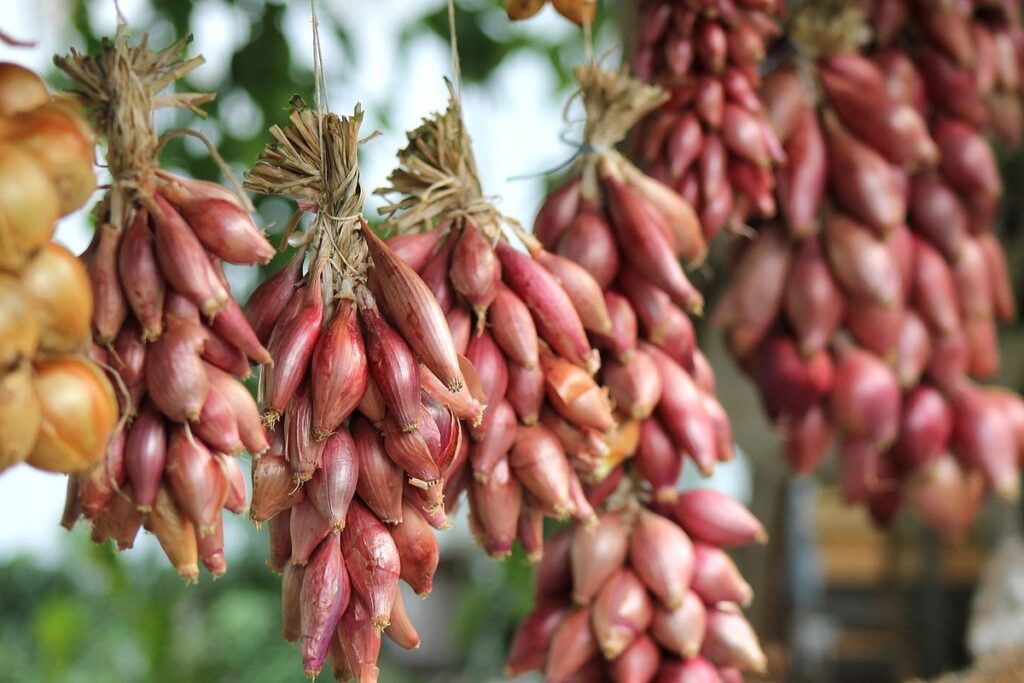
On the other hand, red onions and shallots are often higher in sulfur compounds, making them more potent contributors to compost odor. This is because they contain a higher concentration of volatile organic compounds (VOCs), which are responsible for the characteristic “rotten egg” smell associated with onion waste.
If you’re looking to minimize odors, consider using sweet onions or shallots that are specifically bred to be low-pungency varieties. These types tend to break down faster in the compost pile and produce less VOCs.
Remember, it’s not just about choosing the right type of onion – proper balance, moisture, and aeration in your compost pile will also play a significant role in reducing odors. By considering both these factors, you can create a balanced compost that minimizes unpleasant smells while maximizing nutrient-rich soil for your garden.
Preparing Onion Waste Before Adding It to Your Compost Pile
When chopping onion waste for composting, it’s essential to take certain steps to prevent the spread of odor and ensure a balanced compost. First, make sure to separate the onion scraps from the rest of the kitchen waste as soon as possible to prevent cross-contamination. Chop or process the onions into small pieces using a sharp knife or a food processor.
To minimize odors, add the processed onion waste to the compost pile in moderation – about 10% of the total content. You can also mix it with other carbon-rich materials like dried leaves, straw, or shredded newspaper to dilute its potency. Avoid adding large quantities at once as this will overwhelm the beneficial microbes and lead to unpleasant odors.
As a general rule, balance out high-nitrogen onion waste by mixing it with an equal amount of low-nitrogen materials, such as brown leaves or grass clippings. This ratio ensures that the microorganisms in your compost pile can break down the onions efficiently without creating excessive odors.
Alternative Methods for Composting Onions
If you’re struggling with pungent onion compost, there are several alternative methods to consider that can help minimize odors and keep your garden smelling fresh.
Bokashi Fermentation for Onions
If you’re looking for an alternative method to compost onions without the pungent smell, consider introducing bokashi fermentation into your process. Bokashi is a Japanese term that roughly translates to “fermented organic matter,” and it’s a game-changer when it comes to breaking down onion scraps.
Here’s how it works: mix 1 tablespoon of active bokashi microorganisms with 1 cup of chopped onions (any part, including peels). Place the mixture in an airtight container, and let it ferment for 1-2 weeks. The microorganisms will break down the sulfur compounds responsible for onion smell, resulting in a nutrient-rich compost.
One key advantage of bokashi fermentation is its ability to process onions rapidly – often within days – and with minimal odor release. This makes it an ideal solution for small spaces or areas where air circulation is limited. Once the fermentation period is complete, simply add 1/2 cup of bokashi liquid (which has accumulated during the process) to your compost pile, along with the resulting onion solids. The microorganisms will continue to work their magic, accelerating decomposition and minimizing odors even further.
Using Onion-Composting Worms
Using onion-composting worms can be an effective way to reduce odors and break down onion waste. These specialized worms are specifically adapted to handle the sulfur compounds found in onions, making them a great option for composters.
One of the benefits of using onion-composting worms is their ability to tolerate high levels of sulfur, which can be toxic to other types of worms. This means that you can add more onion scraps and peelings to your compost pile without worrying about killing off your worm population.
However, there are some challenges to consider when using onion-composting worms. For example, they require a specific mix of carbon-rich materials and moisture levels to thrive. You’ll also need to provide an adequate food source for the worms, as they will not break down onion waste on their own.
To get started with onion-composting worms, begin by creating a worm-friendly environment in your compost pile. Add a mix of “green” materials like vegetable scraps and grass clippings, along with carbon-rich “brown” materials like leaves or shredded newspaper. Maintain a consistent moisture level and ensure that the pile is not too hot or dry.
Tips for Handling Large Quantities of Onion Waste
Onion composting can quickly get out of hand, but don’t worry, we’ve got some practical tips to help you manage large quantities of onion waste and minimize odors.
Strategies for Composting Onions in Bulk
When dealing with large quantities of onion waste, it’s essential to implement strategies that minimize odor and promote efficient composting. One approach is layering onions within the compost pile. To do this effectively, start by creating a 4-6 inch layer of “brown” materials like leaves or straw at the bottom of your compost bin. Next, add a layer of onion scraps, followed by another layer of brown materials.
Continue alternating between onion waste and brown materials until you’ve reached the top of the pile. This layering technique helps to balance out the high nitrogen content of onions with carbon-rich materials, reducing odors and promoting healthy decomposition. Another option is to create a separate onion-compost bin, where you can focus on breaking down onion scraps without overwhelming your main compost pile.
When setting up an onion-compost bin, make sure it has adequate ventilation and is located in a well-ventilated area to reduce odor buildup. This will also allow for easy monitoring of the composting process and prompt intervention if odors become excessive.
Preparing Your Garden for the Arrival of Onion-Based Compost
Before you start incorporating onion-based compost into your garden, it’s essential to prepare the soil to minimize potential damage and maximize the benefits of this nutrient-rich addition. Begin by loosening the top 6-8 inches of soil to a depth where you can easily insert your shovel or trowel. This will allow for proper drainage and air circulation, reducing the likelihood of anaerobic conditions that can exacerbate onion odor.
Next, mix in a 2-inch layer of composted materials like wood chips or coconut coir to create a barrier between the soil and the onion-based compost. This helps absorb excess moisture and odors, while also providing essential nutrients for healthy microbial growth.
As you incorporate the onion-based compost, be sure to spread it evenly throughout your garden bed, following the recommended application rates. Avoid over-applying, as this can lead to an overabundance of sulfur compounds that may persist in your soil for months.
Monitoring and Adjusting Your Composting Process
Now that you’ve got your onion-smelling compost under control, let’s discuss how to monitor its progress and make any necessary adjustments to achieve perfect harmony in your garden. This is where attention to detail really pays off.
Tracking Odor Levels and Compost Quality
When it comes to composting onions, odor levels can quickly become overwhelming. To manage this issue effectively, you need to track the smell and adjust your process accordingly. One way to do this is by regularly inspecting your compost pile. Check for signs of over-ripeness, such as a strong ammonia smell or an abundance of fruit flies. If you notice these indicators, it’s likely that your compost has become too hot or wet.
To monitor odor levels more precisely, consider using pH meters to track the acidity of your compost. Onions are naturally acidic, so if your compost pile is too alkaline, it can contribute to unpleasant odors. Another option is to implement a ‘turning schedule’ – regularly aerating your compost by turning or forking it can help regulate moisture levels and reduce smell.
In terms of adjusting your process, consider adding more carbon-rich materials like straw or coconut coir to balance out the nitrogen-rich onion scraps. By making these adjustments, you should start to notice a decrease in odor levels and an improvement in overall compost quality.
Regularly Checking pH and Moisture Levels in Your Compost Pile
Regularly checking pH and moisture levels in your compost pile is crucial to maintain an optimal environment for decomposition. This can be especially challenging when composting onions, as their high sulfur content can create unpleasant odors if not managed properly. To check the pH level, you’ll need a pH meter or pH test kit. Aim for a pH range between 6.0 and 7.5, which is ideal for most composting activities. Excessive acidity (pH below 6) can lead to the growth of anaerobic bacteria, causing strong odors.
On the other hand, excessive alkalinity (pH above 8) can slow down decomposition. To maintain an optimal moisture level, aim for a mix that’s about as damp as a sponge. Too little water can cause dry pockets in the pile, while too much can lead to anaerobic conditions and odors. Regularly checking these parameters will help you identify potential issues before they become major problems. For example, if your compost is consistently too acidic or alkaline, adjust the pH by adding materials like wood ash (to raise pH) or peat moss (to lower pH).
Frequently Asked Questions
How often should I turn my compost pile to prevent onion smell from overpowering it?
Turning your compost pile regularly is crucial for maintaining a healthy balance of oxygen and carbon-to-nitrogen ratio. For onion-heavy compost piles, consider turning them every 2-3 days or as needed to aerate the materials and speed up decomposition.
Can I use other ingredients besides activated charcoal to neutralize onion smell in my compost?
Yes, zeolite is another effective option for absorbing sulfur compounds that cause onion odors. It’s especially useful when adding large quantities of onions to your compost pile. Mix 1-2% zeolite with the compost materials to help mitigate any lingering smells.
How do I manage onion waste from multiple sources, like kitchen scraps and onion tops?
To effectively manage onion waste from various sources, consider setting up separate collection bins for different types of onion scraps (e.g., onion peels, tops, and inner rings). This helps you track the amount of each type of material and ensures a balanced carbon-to-nitrogen ratio in your compost pile.
What are some signs that my onion-heavy compost is becoming too acidic due to sulfur compounds?
Keep an eye out for these warning signs: increased odors, slower decomposition rates, or visible mold growth. If you notice any of these issues, adjust the pH levels by adding lime or wood ash (1-2 cups per 10 cubic feet) to neutralize excess acidity and promote healthier decomposition.
Can I use bokashi fermentation for onions with high sulfur content?
Bokashi is a great method for breaking down onion waste with high sulfur content. Mix 5% bokashi powder with the onion scraps, seal the container, and let it ferment for 1-2 weeks before adding it to your compost pile. This will significantly reduce odors and produce nutrient-rich fertilizer for your garden.