
Pruning your serviceberry trees and shrubs is an essential part of their overall health and maintenance. Regular pruning can help control their size, promote air circulation, and allow more sunlight to penetrate through the foliage. This not only enhances their natural beauty but also encourages healthy growth and fruit production. However, knowing when and how to prune can be a daunting task for many gardeners. In this article, we’ll provide expert tips on timing, frequency, and best practices for pruning serviceberries. We’ll cover the importance of regular maintenance, common mistakes to avoid, and techniques for reducing size while maintaining their natural shape. By following our advice, you’ll be able to keep your serviceberry trees and shrubs healthy, thriving, and looking their best all season long.
Understanding Serviceberry Growth and Pruning Needs
To ensure you’re pruning your serviceberries correctly, it’s essential to understand their unique growth patterns and specific pruning needs throughout different seasons. This section will walk you through those specifics.
Identifying Serviceberry Varieties and Their Unique Characteristics
There are several varieties of serviceberry trees (Amelanchier spp.), each with unique growth habits and characteristics. The most common species include Amelanchier canadensis, Amelanchier lamarckii, and Amelanchier alnifolia. Understanding the specific variety you’re working with is crucial for effective pruning.
For instance, Amelanchier canadensis grows relatively slow to medium in height (15-25 feet) and spread (10-20 feet), making it an excellent choice for smaller gardens or hedges. Pruning this variety requires careful attention to its natural shape and structure, allowing the center of the tree to open up for good air circulation.
On the other hand, Amelanchier lamarckii can reach heights of 15-25 feet with a spread of 15-30 feet, and features stunning white flowers in early spring. When pruning this variety, prioritize maintaining its broad, rounded shape while allowing sufficient space between branches to showcase its beautiful blooms.
Knowing the specific growth habits of your serviceberry tree will inform your pruning strategy, ensuring you’re working with nature rather than against it.
Recognizing Signs of Overgrowth and Poor Air Circulation
When it comes to pruning serviceberry trees and shrubs, recognizing signs of overgrowth and poor air circulation is crucial. If left unchecked, these issues can lead to disease and pest problems that compromise the health and productivity of your plant.
Look for branches that are rubbing against each other or growing inwards towards the center of the plant. These ” rubs” can create damage to the bark, making it more susceptible to infection. Branches that are crowded together also reduce air circulation, creating an environment where moisture lingers and diseases thrive.
Another sign of overgrowth is when branches grow beyond their natural shape or size. In serviceberries, this often manifests as a top-heavy canopy with long, leggy stems and sparse foliage lower down. Regular pruning can help maintain the plant’s natural shape and promote healthy growth.
Keep an eye out for yellowing leaves, which can be a sign of poor air circulation causing stress to the plant. If you notice any of these signs, it’s time to prune your serviceberry tree or shrub to restore its balance and promote overall health. By recognizing these issues early on, you’ll be able to prevent more severe problems down the line.
Pre-Pruning Preparation: Tools and Techniques
Before you start pruning your serviceberries, it’s essential to prepare the right tools and techniques to ensure a successful job. We’ll cover the must-haves for serviceberry pruning in this section.
Choosing the Right Pruning Tools for Serviceberries
When it comes to pruning serviceberry bushes, having the right tools is crucial for efficiency and effectiveness. The essential pruning tools you’ll need are hand pruners, loppers, and saws.
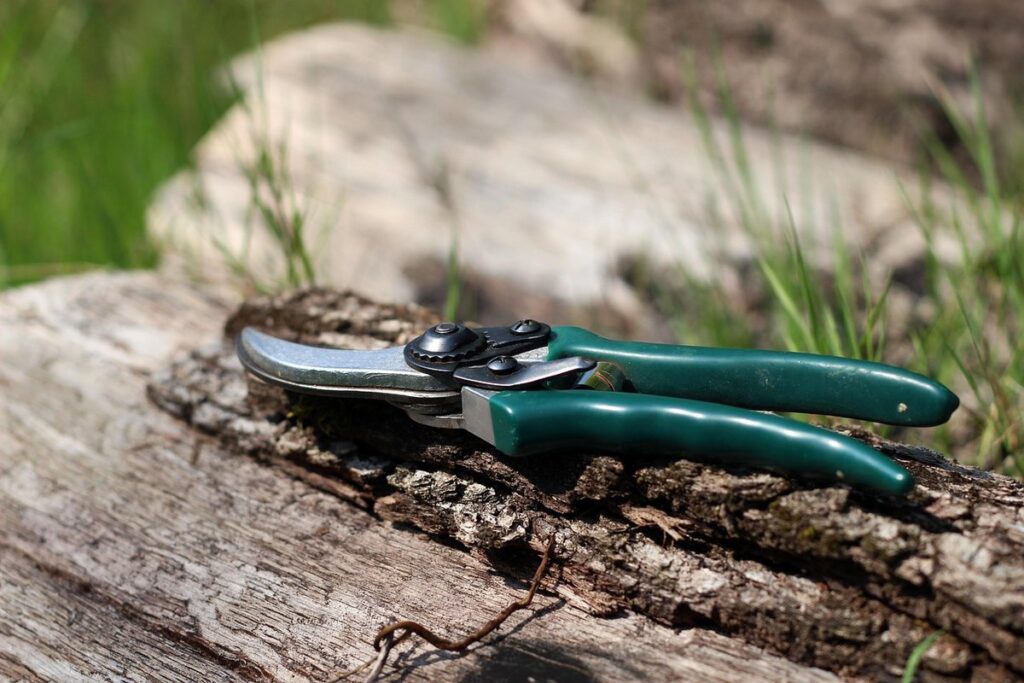
Hand pruners, also known as secateurs, are ideal for cutting smaller branches and stems. They come in various sizes and types, including bypass and anvil pruners. Bypass pruners are suitable for delicate cuts and won’t crush the branch, while anvil pruners are best for thicker branches.
Loppers are long-handled pruning shears that allow you to reach further into the bush without straining your back. They’re particularly useful for cutting thicker stems and branches up to 2 inches in diameter.
A good-quality pruning saw is also necessary for larger branches or those that are too hard to cut with pruners or loppers. Look for a saw with a curved blade and a comfortable grip to make the cutting process easier.
Proper maintenance of your pruning tools is just as important as having the right ones in the first place. Regularly clean and sharpen your hand pruners, loppers, and saws after each use to prevent rust and keep them performing optimally.
Understanding Pruning Techniques for Different Serviceberry Shapes
When pruning serviceberries, it’s essential to tailor your technique to the specific shape you want to achieve. For a vase-shaped form, focus on maintaining an open center and balanced branching structure. Remove any crossing branches or suckers that grow inside the canopy, and thin out select interior branches to allow more light to reach lower leaves.
For pyramidal shapes, prune in late winter or early spring, removing one-third to one-half of the previous year’s growth to maintain a narrow, upright profile. Selectively remove branches from the top and sides to maintain a balanced shape, but avoid over-pruning, which can lead to disease susceptibility.
Irregular forms often require more extensive pruning to restore balance and promote new growth. Remove any dead, diseased, or damaged wood, and cut back overgrown branches by one-third to encourage healthy regrowth. Consider rejuvenating your serviceberry every 5-7 years with a more aggressive prune to maintain optimal health and appearance.
When pruning for any shape, remember to make clean cuts just above a bud or growth node, using sharp, sterile tools to minimize damage and promote healing.
Pruning Objectives and Strategies for Serviceberries
When pruning serviceberries, it’s essential to understand your objectives, whether you want to promote healthy growth, encourage fruiting, or enhance the tree’s overall appearance. This section will walk you through the key strategies to achieve these goals effectively.
Reducing Size and Maintaining Shape
When it comes to reducing a mature serviceberry’s size while maintaining its shape, pruning is an essential part of the process. This involves carefully selecting and cutting back overgrown branches that are competing for water and nutrients, thereby promoting healthy growth.
To achieve this, start by inspecting your serviceberry for any dead, diseased, or damaged branches. Remove these immediately to prevent the spread of disease and encourage new growth. Next, identify the longest branch on the tree, which will become the new leader growth. Prune it back to a third of its length, cutting just above a bud eye. This will help direct energy towards the rest of the canopy.
Be mindful not to remove more than 25% of the tree’s foliage in one season, as this can cause stress and potentially lead to disease or pest issues. By pruning selectively and making regular cuts, you’ll be able to maintain your serviceberry’s shape while promoting a balanced growth habit.
Improving Air Circulation and Sunlight Penetration
When pruning serviceberries to improve air circulation and sunlight penetration, it’s essential to create an open and balanced canopy. This will not only promote healthy growth but also reduce the risk of disease and pests. To achieve this, start by removing any branches that are crossing or rubbing against each other, as these can cause damage and create an ideal environment for diseases to thrive.
Next, consider thinning out select branches to allow more sunlight to reach the interior of the tree. This will encourage healthy growth and prevent the development of weak, spindly shoots that may be more susceptible to disease. By removing about 1/3 of the old growth each year, you’ll be promoting a balanced canopy with an open center.
When pruning for air circulation, focus on maintaining a central leader and removing any weak or dead branches. This will help to prevent overcrowding and reduce the risk of disease. By following these simple steps, you can create a healthier, more vibrant serviceberry tree that’s better equipped to withstand the challenges of nature.
Timing and Frequency of Pruning for Serviceberries
When it comes to pruning your serviceberry, timing and frequency are crucial factors to consider. Regular pruning helps maintain a healthy shape while promoting blooming and fruiting cycles.
Determining When to Prune Based on Dormancy and Growth Cycles
Pruning serviceberry bushes at the right time is crucial for their health and productivity. To determine when to prune, consider the plant’s dormancy periods and growth cycles. Typically, serviceberries go dormant in late fall or early winter, and this period usually lasts until late February or early March.
During dormancy, it’s best to avoid pruning as much as possible. Pruning during this time can cause stress on the plant, making it more susceptible to disease and pests. However, if necessary, prune dead, diseased, or damaged branches in late winter before new growth begins.
As for growth cycles, serviceberries typically produce new growth in late March or early April. This is an excellent time to prune as you can shape the plant and promote healthy growth. When pruning during this period, focus on removing any crossing or rubbing branches, as well as weak or dead wood. By considering dormancy periods and growth cycles, you’ll be able to prune your serviceberries at the right time for optimal health and productivity.
Frequency of Pruning: Regular Maintenance vs. Thinning and Restoration
When it comes to pruning serviceberry trees and shrubs, frequency is crucial for maintaining their health, structure, and overall appearance. Regular maintenance pruning typically involves pruning 10-20% of the tree’s canopy annually to promote healthy growth and prevent over-crowding.
For thinning purposes, prune every 2-3 years, focusing on removing select branches that are rubbing against each other or growing inwards. This helps maintain air circulation, reduces disease susceptibility, and allows more sunlight to reach inner foliage.
Restoration pruning is a more extensive process usually needed after periods of neglect or severe storm damage. In these cases, it’s recommended to prune 30-50% of the tree’s canopy over several years to avoid stressing the plant.
To give you a better idea, consider this example: If your serviceberry shrub has grown quite dense and is now competing with itself for resources, thinning pruning can be done in late winter or early spring. For regular maintenance, prune immediately after blooming to minimize impact on next year’s flowers.
Common Serviceberry Pruning Mistakes to Avoid
Pruning serviceberries can be a delicate process, and making these common mistakes can harm your tree’s health and beauty. Let’s explore what you should avoid when pruning your serviceberry.
Over-Pruning and Under-Pruning Risks
When pruning serviceberries, it’s easy to get carried away and make mistakes that can have long-term consequences for the tree’s health. Over-pruning and under-pruning are two of the most common errors you want to avoid.
Over-pruning occurs when too much of the tree’s canopy is removed, leaving it vulnerable to disease and pests. This can also cause stress to the tree, making it more susceptible to environmental factors like extreme temperatures and weather conditions. In severe cases, over-pruning can even lead to branch dieback or death. For example, if you remove too many of the tree’s lateral branches, it may lose its ability to photosynthesize efficiently, causing the remaining branches to become weak and prone to breaking.
On the other hand, under-pruning involves failing to remove dead, diseased, or damaged wood, which can compromise the tree’s overall health. This can lead to the spread of disease and pests throughout the tree, ultimately causing more harm than good. It’s essential to strike a balance when pruning serviceberries – removing just enough to promote healthy growth and maintain the tree’s natural shape without over-exposing it to potential risks.
Misjudging Branch Strength and Angle
When pruning serviceberries, one common mistake is misjudging branch strength. This can lead to unnecessary pruning, weakening the overall structure of the tree, or failure to prune effectively, leaving unsightly growth and potentially creating hazards.
To avoid this, it’s essential to assess each branch carefully before making a cut. Check for obvious signs of weakness such as cracks, splits, or thinning bark. Inspect the branch from multiple angles to get an accurate sense of its structure and attachment point to the trunk.
Consider the angle at which branches meet the trunk – ideally, they should be at a 45-degree angle to prevent moisture accumulation and potential damage. If you notice branches growing inwards or crossing over each other, assess their strength and remove any that appear weak to maintain air circulation and prevent disease.
Before pruning, it’s also crucial to consider the direction of new growth – typically, serviceberry branches grow outward from the trunk. Cutting at an angle to encourage this natural direction will promote healthy regrowth and minimize the need for future pruning.
Conclusion: Benefits and Rewards of Pruning Serviceberries
Now that you’ve learned how to prune your serviceberry trees, let’s explore the benefits and rewards of doing so – from improved health to increased yields.
Recap of Key Takeaways and Best Practices
To effectively prune serviceberry trees and shrubs, it’s essential to remember the key takeaways from this comprehensive guide. First and foremost, pruning is a crucial maintenance task that promotes healthy growth, encourages blooming, and maintains the overall appearance of these beautiful plants.
When pruning serviceberries, keep in mind the importance of timing. Prune during their dormant season, typically between late winter and early spring, to minimize stress on the plant. Avoid pruning during active growing seasons or when the plant is under disease or pest pressure.
Another critical aspect to consider is the type of pruning tool to use. Invest in a good pair of sharp hand pruners or loppers for efficient and clean cuts. Dull tools can cause more damage than good, so ensure your equipment is up-to-date.
Some best practices to incorporate into your serviceberry pruning routine include:
* Removing any dead, diseased, or damaged branches first
* Cutting back overgrown branches to promote air circulation and sunlight penetration
* Pruning for shape and size, rather than just removing excess growth
To reinforce these key points, consider the example of a mature serviceberry tree with a history of overgrowth. Regular pruning can prevent its canopy from becoming too dense and reduce the risk of disease or pest issues.
By incorporating these tips into your maintenance routine, you’ll be well on your way to successfully pruning your serviceberry trees and shrubs.
Frequently Asked Questions
Can I Prune Serviceberries During Their Active Growth Phase?
Yes, you can prune serviceberries during their active growth phase, but it’s essential to be cautious not to remove too much foliage at once, which can stress the plant. Focus on selectively removing branches that are crossing or rubbing against each other to maintain air circulation and promote healthy growth.
How Often Should I Prune My Serviceberry Trees for Maintenance?
For regular maintenance, prune your serviceberries every 2-3 years during their dormant season (winter or early spring). This frequency will help control size, encourage new growth, and maintain shape. However, if you notice signs of overgrowth, poor air circulation, or pests, you may need to prune more frequently.
What Are the Consequences of Not Pruning Serviceberries Regularly?
Neglecting regular pruning can lead to overcrowding, reduced sunlight penetration, and increased susceptibility to diseases and pests. Untended serviceberry plants may also become leggy and produce fewer flowers and fruits. By incorporating pruning into your maintenance routine, you’ll promote healthy growth, improve air circulation, and enhance overall plant vitality.
Can I Use the Same Pruning Tools for All Serviceberry Varieties?
While some pruning tools can be versatile across various plant species, it’s recommended to use high-quality, sharp tools specifically designed for serviceberries. This will help prevent damage to delicate branches and ensure clean cuts that minimize disease entry points. Consider investing in a lopper or pruning saw suitable for your specific serviceberry variety.
What Should I Do If I’ve Pruned Too Much of My Serviceberry Branches?
If you accidentally over-prune, don’t panic! While it’s ideal to prune judiciously, you can still recover with careful aftercare. Provide your plant with optimal growing conditions, including sufficient water and nutrients. Monitor its response closely, and consider providing support if necessary to prevent further stress or damage.