
Are you tired of dealing with overgrown mulberry trees that are taking over your garden? Pruning these beautiful trees is an essential part of their care, but many of us struggle to know where to start. Mulberries can grow quite large and unruly if left unpruned, which not only affects their appearance but also reduces the quality and quantity of fruit they produce.
In this comprehensive guide, we’ll walk you through the growth habits of mulberry trees and provide expert advice on how to prune them like a pro. We’ll cover various pruning techniques suitable for different types of mulberries, from dwarf varieties to large, spreading trees. You’ll also learn what to do after pruning to ensure your tree stays healthy and thrives throughout the year. By following our step-by-step instructions, you’ll be able to enjoy beautiful, productive mulberry trees that bring joy to your garden for years to come.
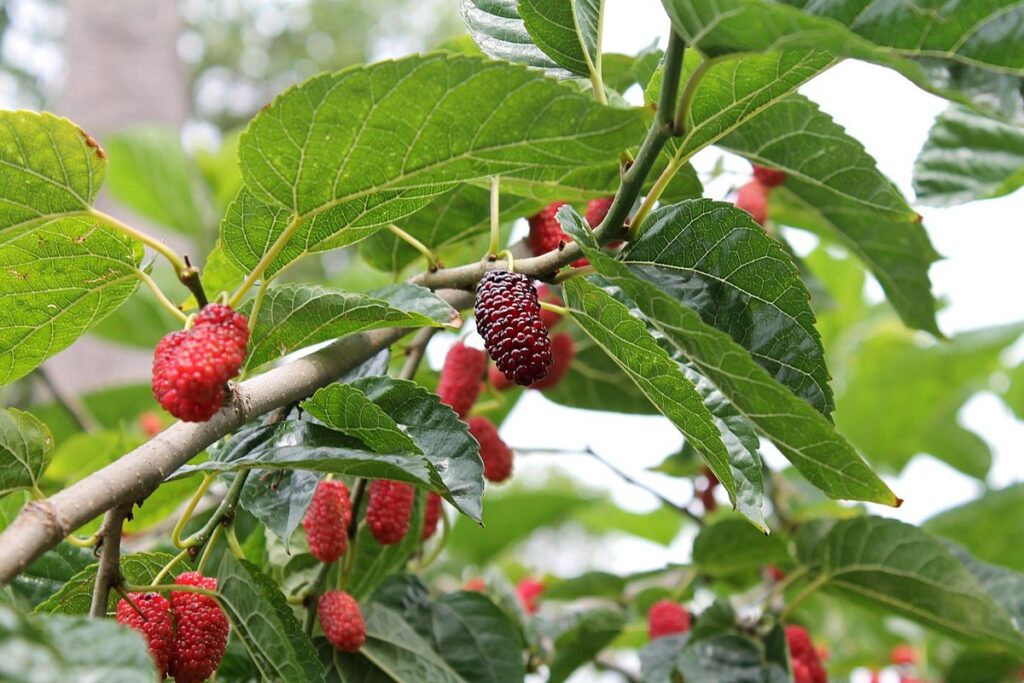
Understanding Mulberry Tree Growth and Pruning Needs
Understanding mulberry tree growth and pruning needs is crucial for maintaining their health, appearance, and fruit production. Let’s explore how to determine when and how much to prune your mulberry tree.
The Importance of Pruning in Mulberry Trees
Pruning is an essential aspect of maintaining mulberry trees. Without regular pruning, these trees can become unruly and prone to disease. One primary reason for pruning mulberry trees is to improve air circulation within the canopy. When branches are allowed to grow unchecked, they can create a dense, humid environment that fosters disease development. By removing select branches, you can increase airflow, reducing the risk of fungal diseases like powdery mildew and leaf spot.
Another significant advantage of pruning mulberry trees is reduced susceptibility to pests. Overgrown branches provide hiding places for insects and rodents, which can lead to infestations. Regular pruning helps maintain a more open structure, making it easier to inspect the tree for signs of pest activity.
Pruning also plays a critical role in maintaining the shape and appearance of your mulberry tree. By controlling growth through strategic pruning, you can encourage a strong, balanced branch structure that showcases the tree’s natural beauty.
Identifying the Best Time to Prune Mulberry Trees
When it comes to pruning mulberry trees, timing is everything. The optimal seasons for pruning depend on various factors such as climate and tree health. In regions with mild winters, late winter or early spring (February to March) is an excellent time to prune mulberry trees. During this period, the trees are still dormant, making it easier to identify and remove dead, diseased, or damaged branches.
In contrast, pruning during the active growing season (spring to summer) can be more challenging, as new growth may be stimulated, leading to a surge in foliage production. However, if you need to prune your mulberry tree during this time, make sure to do so in the morning, when the sun is not intense, and avoid pruning too heavily, as this can stress the tree.
To determine the best time for pruning based on climate and tree health, observe your tree’s behavior. If it’s already producing new growth or showing signs of sap flow, it may be best to prune during late winter or early spring. Conversely, if your tree is struggling with pests or diseases, pruning during the active growing season can help promote healthy regrowth.
Pre-Pruning Assessment: Inspecting Your Mulberry Tree
Before you start pruning your mulberry tree, it’s essential to assess its condition, checking for signs of pests, diseases, and nutrient deficiencies that may impact its health. This step will help you make informed decisions about how to prune.
Evaluating Tree Health and Structure
When evaluating the health and structure of your mulberry tree, it’s essential to look for signs of disease, pests, or nutrient deficiencies that may impact pruning decisions. Start by inspecting the tree’s leaves, bark, and branches for any visible damage or discoloration.
Look for signs of fungal diseases like powdery mildew, leaf spot, or anthracnose, which can cause yellowing or browning leaves, black spots, or a white, powdery coating on the leaves. Check for pest infestations such as aphids, spider mites, or scale insects, which can weaken the tree and make it more susceptible to disease.
Also, check the tree’s soil for nutrient deficiencies by examining the leaf color, texture, and growth rate. A mulberry tree with yellowing leaves may be indicating a nitrogen deficiency, while a tree with slow growth rates could be lacking in phosphorus or potassium.
Some common signs of stress or decline include dead branches, cracks in the bark, or an unusual number of new shoots emerging from the trunk. Keep in mind that some mulberry trees naturally shed branches as they mature, so it’s essential to differentiate between normal shedding and signs of disease or pests.
Measuring and Mapping Branches
Measuring branch thickness is crucial for determining which branches to prune. Hold a ruler against the branch at its widest point to get an accurate measurement. This will help you identify if the branch is too large and potentially causing damage or if it’s too small and not contributing much to the tree’s overall structure.
When measuring, take note of the angle between branches as well. A 45-degree angle is ideal for most mulberry trees, allowing for optimal growth and air circulation. If branches are growing in towards each other, prune them to create a more open canopy.
Proximity to other branches is also an important factor when deciding what to prune. Prune branches that cross over or rub against one another, as this can cause damage and create entry points for disease. Use these measurements to inform your pruning decisions and make intentional cuts to promote healthy growth in your mulberry tree.
Pruning Techniques for Mulberry Trees
When pruning a mulberry tree, knowing the right techniques can make all the difference in maintaining its shape and promoting healthy growth. This section will walk you through the specific pruning methods to use for your mulberry tree.
Hand Pruning Tools and Techniques
When it comes to pruning mulberry trees, having the right hand pruners, loppers, and saws is essential for making clean cuts and minimizing damage to the tree. For smaller branches, hand pruners are ideal for precise cuts. Look for pruners with sharp blades and comfortable grips to make pruning easier.
For thicker branches, loppers are a better choice. Choose loppers with long handles (up to 30 inches) and high-carbon steel blades that can cut through thick wood easily. When using loppers, place the blade at a 45-degree angle to prevent crushing the bark. Remember to keep your hands safe by wearing gloves when handling loppers.
For larger branches or cutting thicker sections of the tree, a pruning saw is necessary. Select a saw with a sharp, curved blade and a comfortable grip. Use the saw to make precise cuts, following the natural shape of the branch. Always cut just above a growth node (where a new shoot will grow from) to promote healthy growth and prevent disease entry points.
When handling these tools, remember to sanitize them regularly to prevent the spread of diseases.
Thinning, Reduction, and Shaping Cuts
When pruning mulberry trees, it’s essential to understand the different types of cuts used to achieve specific goals. Thinning cuts are made to remove select branches, reducing foliage density and allowing air and light to penetrate deeper into the tree. This type of cut is particularly useful for young trees or those with a dense canopy.
Reduction cuts, on the other hand, involve pruning entire branches back to their point of origin, often to control the size or shape of the tree. This technique can be used to maintain a smaller mulberry tree in a confined space or to reduce the risk of branch failure.
Shaping cuts are made to refine the overall silhouette and structure of the tree. These cuts typically involve shortening long branches or removing inward-growing shoots that can cause the tree’s shape to become distorted. To use these cuts effectively, identify the tree’s main leaders and remove any competing growth that may be hindering its natural form.
By mastering thinning, reduction, and shaping cuts, you’ll be able to tailor your pruning approach to suit your mulberry tree’s specific needs, promoting healthy growth and a beautiful shape.
Pruning Specific Mulberry Tree Types
When it comes to pruning mulberries, different varieties have unique requirements and techniques. In this section, we’ll cover specific pruning guidelines for popular mulberry tree types.
Pruning Dwarf or Compact Mulberry Varieties
When it comes to pruning dwarf or compact mulberry varieties, it’s essential to consider their unique growth habits and space constraints. These types of trees are bred for smaller spaces and often require more frequent pruning to maintain a manageable size.
To prune a dwarf or compact mulberry tree, start by removing any dead, diseased, or damaged branches. This will help prevent the spread of disease and encourage healthy growth. Next, focus on thinning out the canopy to allow more sunlight to reach the fruiting branches. Use loppers or pruning saws to remove select branches, making clean cuts just above a growth node.
Be mindful of the tree’s overall shape, as compact varieties can become top-heavy if not pruned regularly. To prevent this, prune the upper third of the canopy and maintain a balanced shape. Prune your dwarf mulberry tree 2-3 times per year, or as needed, to promote healthy growth and encourage fruiting.
By following these pruning tips, you’ll be able to enjoy an abundance of juicy berries from your compact mulberry tree while keeping it manageable in size.
Pruning Standard or Weeping Mulberry Trees
Standard or weeping mulberry trees have distinct pruning needs that require careful consideration. When it comes to these varieties, focus on maintaining a balanced shape and promoting healthy growth. For standard mulberries, aim for a central leader with a clear trunk, allowing sunlight to reach the lower branches. Prune any crossing or rubbing branches to prevent damage and promote air circulation.
For weeping mulberry trees, prune more frequently to maintain their characteristic cascading habit. Remove any upright shoots that grow towards the center of the tree, encouraging the branches to drape downwards. Prune about one-third of the new growth each year, as this will help control the spread and encourage a fuller canopy. Keep in mind that weeping mulberries can become quite wide, so be mindful of nearby structures or plants when pruning.
When pruning standard or weeping mulberry trees, also consider the branch length, angle, and spread. Remove any branches growing too close to the ground (within 2-3 feet) as these can harbor diseases and pests. Prune at a 45-degree angle, making clean cuts just above a bud or lateral branch. This will help promote new growth and maintain a balanced shape.
Post-Pruning Care: Maintaining Your Pruned Mulberry Tree
Now that you’ve pruned your mulberry tree, it’s essential to provide proper care for a healthy and thriving plant. This section will guide you through post-pruning maintenance tasks.
Watering and Fertilization After Pruning
After pruning your mulberry tree, it’s essential to provide proper care to ensure healthy growth and promote new foliage. Watering is a critical aspect of post-pruning care, as the tree will need sufficient moisture to recover from the pruning process.
Water your pruned mulberry tree regularly, but avoid overwatering, which can lead to root rot and other problems. Check the soil’s moisture level by inserting your finger into the soil up to the knuckle; if it feels dry, it’s time to water. Aim for about 1 inch of water per week, either from rainfall or irrigation.
Fertilization is also crucial during this period. Mulberry trees benefit from a balanced fertilizer, rich in nitrogen, phosphorus, and potassium (NPK). You can apply a slow-release fertilizer in early spring, following the manufacturer’s instructions. Avoid over-fertilizing, as this can damage the tree’s roots and lead to weak growth.
To promote healthy growth, consider adding organic matter like compost or well-rotted manure to the soil around your pruned mulberry tree. This will not only provide essential nutrients but also improve soil structure and drainage.
Monitoring for Pests and Diseases
After pruning your mulberry tree, it’s essential to monitor its health closely for signs of pests and diseases. Pests like aphids, whiteflies, and spider mites can attack the tree’s new growth, causing damage and weakening its defenses. Diseases such as powdery mildew, leaf spot, and root rot can also affect mulberry trees.
To identify potential issues, regularly inspect your tree for signs of infestation or infection. Check for yellowing leaves, black spots on branches, or a sticky substance on the bark. Look for pests like aphids, which can be found in clusters on the underside of leaves, or spider mites, which cause fine webbing between leaf veins.
To prevent pest and disease issues, maintain good hygiene practices around your tree. Remove any debris or weeds that may harbor pests or diseases. Keep your tree well-watered but not waterlogged, as this can create an environment conducive to disease development. Consider using natural deterrents like neem oil or insecticidal soap to control pest populations. By being vigilant and taking prompt action, you can prevent serious problems from arising and ensure the continued health of your pruned mulberry tree.
Frequently Asked Questions
What if I’ve never pruned a tree before? Can I still prune my mulberry tree successfully?
Don’t worry if you’re new to pruning! With the right guidance, you can learn to prune your mulberry tree effectively. Start by reading and following our step-by-step instructions in this guide. Take your time, and practice makes perfect – you’ll get better with experience.
How often should I water my mulberry tree after pruning?
Watering is crucial for mulberry trees after pruning, as it helps them recover from the stress of being pruned. For the first few weeks, water your tree regularly to keep the soil consistently moist but not soggy. After that, reduce watering to once or twice a week, depending on weather conditions and soil type.
Can I prune my mulberry tree during its dormant season?
Yes, pruning during the dormancy period is an ideal time for mulberry trees. Pruning during this time encourages healthy growth and fruit production in the following seasons. Make sure to identify your tree’s specific dormant period based on its variety and climate conditions before pruning.
How can I protect my mulberry tree from pests after pruning?
Mulberries are susceptible to pests like aphids, whiteflies, and spider mites. After pruning, keep an eye out for these pests by inspecting your tree regularly. Use natural pest control methods whenever possible, such as neem oil or insecticidal soap, to minimize harm to beneficial insects.
What should I do if my mulberry tree becomes diseased after pruning?
Yes, disease can occur in mulberries even with regular care and pruning. If you notice signs of disease like yellowing leaves, black spots, or fungal growth, take action quickly. Remove any infected branches, increase air circulation around the tree, and treat the tree with a fungicide specifically designed for fruit trees.