
The festive charm of the poinsettia tree is undeniable, but did you know that these beautiful plants can thrive beyond the holiday season? With proper care and attention, your poinsettia tree can flourish throughout the year, adding a pop of color and vibrancy to any space. Whether you’re a seasoned gardener or a newcomer to plant parenthood, learning how to care for your poinsettia tree is essential to keeping it healthy and thriving.
In this article, we’ll delve into the world of poinsettia tree care, covering everything from types and planting instructions to maintenance tips and tricks. You’ll discover how to choose the perfect poinsettia tree variety for your needs, as well as expert advice on watering, pruning, and fertilizing to keep your plant in top condition.
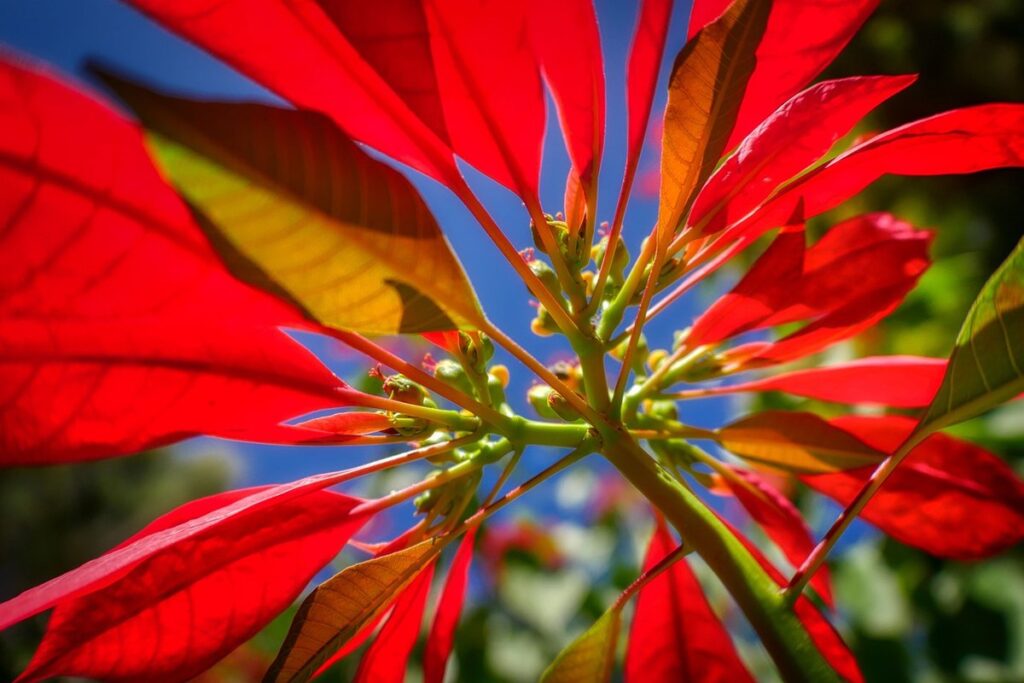
Understanding the Poinsettia Tree
When it comes to understanding poinsettia trees, knowing their unique characteristics and growth habits is key to appreciating these beautiful plants. Let’s break down what makes them stand out from other species.
What is a Poinsettia Tree?
The poinsettia tree is often mistaken for a real Christmas tree due to its vibrant red and green foliage. However, it’s actually a type of flowering shrub native to Mexico. Its botanical name, Euphorbia pulcherrima, might not give away its festive appearance, but its history as a holiday plant certainly does.
Poinsettias have been used in Christmas celebrations for over 200 years, originating from the Mexican state of Taxco, where they were first cultivated by the Aztecs. The plants’ bright colors and ability to thrive during the winter months made them an ideal choice for decorating homes during the holiday season.
When shopping for a poinsettia tree, look out for signs that indicate it’s not a real tree. Check for leaves with pointed tips, which are typically larger than those of a real Christmas tree. Also, keep in mind that poinsettias come in various shapes and sizes, but they tend to be smaller than traditional trees.
By knowing what to expect from your poinsettia tree, you can enjoy its festive appearance without the hassle of disposing of it after the holiday season has passed.
Types of Poinsettia Trees
When it comes to choosing a poinsettia tree for your home or garden, you’ll be delighted to know that there are numerous varieties to select from. These trees come in various shapes and sizes, each with its unique characteristics, growth habits, and requirements.
One of the most popular types is the dwarf poinsettia tree, which grows up to 3-4 feet tall. These compact plants are perfect for small spaces or indoor containers. They require minimal maintenance and can thrive in low-light conditions, making them ideal for rooms with limited natural light.
Hybrid species like ‘Prairie Fire’ and ‘Winter Rose’ offer vibrant colors and unique growth patterns. For instance, ‘Prairie Fire’ features deep red leaves with a hint of orange, while ‘Winter Rose’ boasts pale pink to white bracts. These varieties require well-draining soil and full sun to partial shade.
When selecting a poinsettia tree, consider the amount of space you have available and the level of care you’re willing to provide. Some varieties are more finicky than others, so it’s essential to choose one that suits your lifestyle and environment. With proper care and attention, these beautiful trees will bloom with vibrant colors and add a touch of festive charm to any setting.
Care and Maintenance of Poinsettia Trees
To keep your poinsettia tree thriving, it’s essential to understand its specific care requirements, which we’ll break down into simple steps in this section. Follow these guidelines for a healthy and vibrant tree all year round!
Planting a Poinsettia Tree
Planting a poinsettia tree requires careful consideration of its specific needs. When choosing a location, select an area that receives partial shade to full sun, depending on the climate and hardiness zone you’re in. In warmer regions, provide some afternoon shade to prevent scorching.
Prepare the soil by loosening it to a depth of about 12-18 inches. Poinsettia trees prefer well-draining soil with a pH between 6.0 and 7.0. If your native soil is heavy clay or sandy, mix in organic matter like compost or well-rotted manure to improve its structure.
Dig a hole that’s twice as wide and just as deep as the root ball of your poinsettia tree. Gently place the roots in the hole, making sure they’re not bunched up or circling. Fill with soil, tamping it down firmly as you go to remove any air pockets.
Water thoroughly after planting, then keep the soil consistently moist but not waterlogged. Avoid getting water on the leaves or crown to prevent rot and disease. With proper care, your poinsettia tree will establish itself quickly and thrive in its new home.
Lighting and Temperature Requirements
When it comes to caring for your poinsettia tree, providing the right lighting and temperature conditions is crucial. Poinsettias prefer bright, indirect light but can tolerate some direct sunlight. However, during peak summer months, it’s essential to filter the intense sunlight to prevent scorching of the leaves.
In the winter, when most poinsettia trees are in bloom, they require a bit more light to maintain their vibrant colors. Placing them near an east- or west-facing window is ideal. Avoid direct south-facing windows as they can cause fading and discoloration.
Temperature-wise, poinsettias prefer daytime temperatures between 65°F to 75°F (18°C to 24°C) and nighttime temperatures around 55°F to 65°F (13°C to 18°C). Keep them away from drafts, air conditioning vents, or radiators that can cause sudden changes in temperature.
In cooler climates, you can move your poinsettia tree outdoors during the spring and summer months. Choose a spot with partial shade, especially during peak sun hours. Make sure the soil isn’t waterlogged, as this can lead to root rot.
Propagation and Pruning of Poinsettia Trees
To keep your poinsettia tree healthy and thriving, it’s essential to understand how to properly propagate new plants from cuttings and prune existing ones. We’ll walk you through these crucial steps.
Propagating Poinsettia Cuttings
Propagating poinsettia cuttings is an excellent way to multiply these beautiful trees and share them with friends and family. The process is relatively simple and can be done at home with the right materials.
To start, take 4-6 inch stem cuttings from mature poinsettia branches in late spring or early summer when new growth begins. Cut just above a leaf node using a sharp, sterile knife or pruning tool. Remove lower leaves, leaving only two or three sets of leaves at the top.
Prepare rooting hormone by following the manufacturer’s instructions and mixing it with water according to the label. Dip the cut end of each stem into the prepared rooting hormone, making sure to coat it evenly.
Plant the cuttings in a propagation tray or pot filled with well-draining seed starting mix, burying them up to the node where you made the cut. Water gently but thoroughly. Place the tray or pot in a warm location with bright indirect light and maintain high humidity until roots develop, usually within 2-3 weeks.
Pruning Techniques for Shape and Size Control
Pruning is an essential part of poinsettia tree care, and it plays a crucial role in controlling its size and shape. The right pruning techniques can help maintain the tree’s compact growth habit and encourage new growth.
When pruning branches, start by removing any weak or damaged stems to prevent disease from spreading. Use sharp, clean pruning tools and make cuts just above a node (the joint where a branch meets the stem) at an angle, following the natural direction of the branch. This helps promote healthy cell growth and reduces the risk of water collecting on the cut end.
For root pruning, it’s essential to do so carefully to avoid damaging the tree’s root system. Remove any circling or damaged roots, taking care not to expose too much root tissue at once. Prune roots during the dormant season when the tree is less active.
Timing is everything when it comes to pruning a poinsettia tree. Prune in the spring after new growth has begun but before buds set, and again in late summer or early fall to control size and encourage new blooms for the holiday season.
Common Problems and Pests Affecting Poinsettia Trees
Poinsettia trees, despite their beauty, are susceptible to various issues that can be frustrating to deal with. We’ll explore some of these common problems and pests so you’re better equipped to care for your tree.
Root Rot and Overwatering Issues
Poinsettias are notorious for their sensitivity to overwatering and poor drainage. One of the most common problems associated with these issues is root rot, a condition that occurs when the roots of the tree become waterlogged and begin to decay. This can be devastating for the health of your poinsettia tree.
Identifying root rot early on can make all the difference in saving your tree. Look out for yellowing leaves, soft or mushy stems, and a foul odor emanating from the soil. These are all clear signs that something is amiss. If you suspect that your poinsettia has root rot, act quickly to correct the issue.
To prevent root rot, ensure that your poinsettia is planted in well-draining potting mix and that its container has adequate drainage holes. Avoid getting water on the leaves or crown of the tree, as this can increase the risk of fungal diseases. Water your poinsettia only when the top inch of soil feels dry to the touch. By following these simple tips, you can enjoy a healthy and thriving poinsettia tree. Regularly inspect your tree’s roots for any signs of decay and take action promptly if needed.
Insect Infestations: Aphids, Whiteflies, and Spider Mites
Poinsettia trees are susceptible to infestations from various insects, including aphids, whiteflies, and spider mites. These pests can cause significant damage to the tree’s leaves and stems, ultimately affecting its overall health.
Aphids are one of the most common insect pests that affect poinsettia trees. They are small, soft-bodied insects that feed on plant sap, causing curled or distorted leaves. Whiteflies, on the other hand, are tiny flying insects that also feed on sap, producing a sticky substance called honeydew.
Spider mites are another type of pest that can infest poinsettia trees. These microscopic arachnids feed on plant cells, causing yellowing or bronzing of leaves. Signs of infestation include white powdery patches, webbing, and actual insects visible on the tree’s surface.
To treat infestations, use neem oil or insecticidal soap to kill the pests on contact. Systemic insecticides can also be applied to control severe infestations. Prevention is key – maintain good air circulation, water plants carefully, and inspect your poinsettia tree regularly for signs of pest activity.
In addition to these measures, keep an eye out for eggs or larvae on the undersides of leaves. Regularly clean the tree’s potting mix to prevent mites from reproducing in the soil. With proper care and monitoring, you can enjoy a healthy and thriving poinsettia tree.
Health Benefits and Symbolism of Poinsettia Trees
Beyond its stunning beauty, the poinsettia tree also holds significant symbolic meaning and offers several health benefits that are worth exploring.
Let’s dive into the lesser-known advantages of having a poinsettia tree in your home.
Medicinal Properties of Euphorbia pulcherrima
Research has shown that Euphorbia pulcherrima, commonly known as poinsettia, contains a wealth of medicinal properties waiting to be unlocked. The plant is rich in anti-inflammatory compounds, including flavonoids and phenolic acids, which have been found to exhibit potent antioxidant activity. This suggests potential therapeutic applications for conditions characterized by chronic inflammation, such as arthritis, gout, and even certain types of cancer.
In traditional herbal medicine, poinsettia has long been used to treat a range of ailments, from fever reduction to skin irritations. Its sap, in particular, is believed to have antiseptic properties, making it a natural remedy for minor cuts and wounds. When used topically, the sap can be applied directly to affected areas to promote healing and reduce pain.
If you’re interested in harnessing the medicinal properties of poinsettia, consider incorporating it into your herbal remedies or using it as a natural alternative for certain health conditions. However, always exercise caution when handling any new substance, especially one with potential allergens or irritants. Consult with a healthcare professional before attempting to use poinsettia in any medical capacity.
Cultural Significance and Symbolism
Poinsettia trees have a rich cultural significance and symbolism that transcends their stunning beauty. In Mexico, they are considered the National Flower, often referred to as the “Flower of the Holy Night.” This is because they bloom around Christmas time, coinciding with the holiday season. The tradition dates back to 16th-century Aztec rituals, where the plant was used to symbolize rebirth and renewal.
In many Latin American countries, poinsettias are a staple during Christmas celebrations, often displayed in homes and churches as a sign of good luck and prosperity. In some cultures, they’re also associated with protection against evil spirits and bad luck. For instance, in Guatemala, the poinsettia is used to ward off misfortune and bring blessings to families.
When choosing a poinsettia for your holiday decor, consider its cultural significance. Display it proudly as a symbol of festive cheer, but also take a moment to appreciate its rich history and meaning. Whether you’re celebrating Christmas or another winter holiday, the poinsettia’s beauty and symbolism can add depth and warmth to your celebrations.
Frequently Asked Questions
How do I ensure my poinsettia tree continues to thrive beyond the holiday season?
To keep your poinsettia tree healthy and thriving, focus on gradual adjustments after the holiday period. Start by reducing watering frequency and gradually decrease fertilization levels. Also, maintain optimal temperatures between 60-70°F (15-21°C) for your plant’s well-being.
Can I propagate a new poinsettia tree from an existing one?
Yes, you can propagate a new poinsettia tree using stem cuttings or layering. For successful propagation, take 4-6 inch stem sections with at least two nodes, remove lower leaves, and place them in a rooting medium with moist conditions.
How do I prevent root rot and overwatering issues?
To avoid root rot and overwatering, ensure your poinsettia tree’s pot has good drainage holes. Water sparingly until the top 1-2 inches of soil feels dry to the touch. Check for moisture by sticking your finger into the soil.
Can I grow a poinsettia tree outdoors in my region?
Poinsettias are sensitive to frost and extreme temperatures, so it’s best to keep them indoors or move them under a protected area during winter months. If you live in USDA zones 10-12, consider growing your poinsettia tree outdoors year-round.
What are some common pests I should watch out for?
Aphids, whiteflies, and spider mites can infest poinsettias. Regularly inspect your plant’s underside and leaves, and treat any infestations promptly with neem oil or insecticidal soap to prevent damage and spread.