
Are you an eco-conscious gardener looking to grow your own tree without breaking the bank? Planting an avocado seed is a fun and rewarding DIY project that can provide you with fresh produce for years to come. With the right guidance, anyone can successfully cultivate their own avocado tree from scratch.
In this step-by-step guide, we’ll walk you through every aspect of planting an avocado seed, from selecting the perfect ripe fruit to nurturing your young tree into a thriving harvest-ready plant. You’ll learn how to identify the optimal time for harvesting and tips on caring for your tree throughout its growth stages. By following our simple and practical advice, you can grow your very own avocado tree in the comfort of your own home, saving money and enjoying the satisfaction of self-sufficiency.
Choosing the Right Avocado
Now that you have your avocado seed, it’s time to choose a healthy one for planting. Selecting a ripe and disease-free seed is crucial for successful germination.
Selecting a Fresh and Healthy Avocado
When selecting an avocado for planting, it’s essential to choose one that is fresh and healthy. This will increase your chances of successfully growing a tree from the seed. To determine if an avocado is ripe and ready for planting, look for these signs: a slight softening of the skin around the stem end, a gentle yielding to pressure when pressed with your fingers, and a sweet, fruity aroma.
Avoid avocados that are too soft or mushy, as they may be overripe. Also, steer clear of those with visible mold, bruises, or cuts, as these can lead to fungal infections that can harm the seedling. When selecting an avocado for planting, choose one that is slightly mature but still firm to the touch.
If you’re purchasing avocados from a store, opt for ones that are in good condition and have a long shelf life. If you’re harvesting them from your own tree or buying from a farmer’s market, make sure they are free of visible defects and have not been damaged during handling. By choosing a fresh and healthy avocado, you’ll be setting yourself up for success when planting the seed.
Preparing the Avocado for Planting
To extract the seed from the avocado, start by carefully cutting it open and separating the two halves. Gently remove the seed, taking care not to damage its delicate skin. Rinse the seed under cold running water to remove any remaining pulp or fibers.
Next, pat the seed dry with a paper towel to prevent bacterial growth and encourage healthy development. This step is crucial in preparing the seed for planting. A damp environment can lead to rot and fungal infections, so it’s essential to dry the seed thoroughly.
When selecting an avocado seed, look for one that is plump and firm. Avoid seeds that are soft or mushy, as they may have started to decay. Check the color; a healthy seed should have a smooth, even surface with no signs of mold or mildew. A good indicator of a healthy seed is its weight – it should feel substantial in your hand.
A heavier seed will have more potential for growth and a higher chance of producing fruit when planted correctly.
Basic Requirements for Avocado Seed Germination
To successfully plant and grow an avocado seed, you’ll need to understand the basic requirements that make germination possible. This includes specific conditions and tools you can’t ignore.
Providing the Right Environment
Avocados thrive in specific conditions that promote successful germination and growth. To create an ideal environment for your avocado seed, you’ll want to focus on three key factors: temperature, humidity, and light.
Temperature plays a crucial role in the germination process. Avocado seeds prefer temperatures between 65°F to 75°F (18°C to 24°C). Avoid placing them near heating vents or drafty windows that could cause the temperature to fluctuate. The optimal range is usually within 1-2 inches of indirect sunlight, where the temperature remains consistent.
Maintaining a humidity level between 50% to 60% is also essential for avocado seed germination. You can cover your container with plastic wrap or a clear bag to create a mini-greenhouse effect and maintain humidity. This will help prevent drying out and encourage roots to develop.
Lastly, light conditions significantly impact the growth of your avocado seedling. Direct sunlight can be too intense, causing damage to delicate seedlings. Instead, place them near an east- or west-facing window for gentle, indirect light. By replicating these conditions, you’ll set your avocado seed up for success in its early stages of development.
Equipment Needed for Planting
To successfully plant an avocado seed, you’ll need to gather the right equipment. First and foremost, you’ll need a pot that is specifically designed for seedlings or small plants. This will provide the necessary support and drainage for your seed as it begins to grow. A plastic or clay pot with good drainage holes is ideal.
You’ll also need some high-quality soil that is well-suited for seed germination. Look for a seed starting mix that contains perlite, vermiculite, or other ingredients designed to retain moisture but also promote healthy root growth.
In addition to your pot and soil, you’ll need water to keep the soil consistently moist during the germination process. It’s essential to use clean, room-temperature water to avoid shocking the seed. You may also want to have a container on hand for storing seeds in water, such as a cup or jar with a lid.
Some additional supplies you might find useful include a pencil or marker for labeling your pots and a small tray or saucer for catching excess water. By having all of these essentials at the ready, you’ll be well-prepared to help your avocado seed thrive during its critical germination phase.
Planting the Avocado Seed
Now that you’ve extracted the seed from your ripe avocado, it’s time to plant it and give it a chance to grow into a healthy tree. In this next step, we’ll cover how to prepare the seed for planting.
Soaking the Seed Before Planting
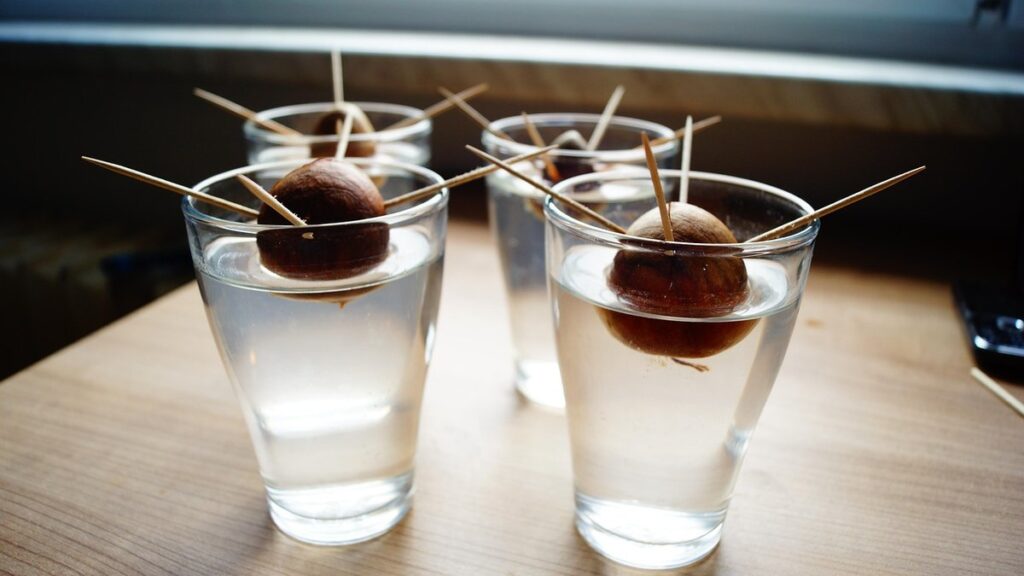
Soaking the avocado seed before planting is an essential step that can significantly improve its chances of germinating successfully. To stimulate germination, you’ll want to soak the seed in water for about 24 hours. This process helps to rehydrate the seed, making it more receptive to root development.
To do this, simply place the seed in a bowl or cup filled with lukewarm water. Make sure the water is at room temperature and not too hot, as this can damage the embryo inside the seed. Leave the seed to soak for 24 hours, changing the water once after 12 hours. This ensures that the seed remains fresh and doesn’t accumulate bacteria.
After soaking, gently scrub the seed with a soft-bristled brush to remove any mold or debris that may have developed during the soaking process. Rinse it thoroughly with clean water, then let it air dry for a few minutes before planting. By following these simple steps, you’ll be giving your avocado seed the best possible start in life.
Planting the Seed in a Pot or Container
When you’re ready to plant your soaked avocado seed in a pot or container, make sure it’s a well-draining one. Fill the pot with a good quality potting mix that is specifically designed for tropical plants like avocados. You can also add a small amount of perlite or sand to improve drainage and prevent waterlogged soil.
Gently remove the seed from the soak water and pat it dry with a paper towel, making sure not to damage the delicate roots that may have started to develop. Place the seed in the center of the potting mix, with the pointed end facing upwards. Cover the seed with about 1-2 inches (2.5-5 cm) of the potting mix.
Water the soil gently but thoroughly after planting the seed. Make sure the water is not too hot or cold as this can cause damage to the roots. If you’re using a tray, keep it filled with water and make sure the pot doesn’t sit in water for an extended period. Check the moisture level by sticking your finger into the soil up to about 1 inch (2.5 cm) deep; if the soil feels dry, it’s time to water again.
By following these steps, you’ll have successfully planted your avocado seed and given it a good start on its journey to becoming a strong and healthy tree.
Caring for Your Avocado Sapling
Now that you have successfully planted your avocado seed, it’s time to focus on giving your sapling the care and attention it needs to thrive in its new environment. Learn how to water, prune, and protect your young tree.
Providing Adequate Water and Nutrients
As you tend to your avocado sapling, it’s crucial to provide the right balance of water and nutrients. Too little or too much can be detrimental, so let’s break down what to look out for.
When watering, make sure the soil isn’t soggy but not parched either – a moisture meter can help gauge this. Avocado saplings need about an inch of water per week, either from rain or irrigation. Overwatering is common, causing roots to rot and making the plant more susceptible to pests and diseases.
On the other hand, underwatering will cause leaves to wilt and turn yellow. Check for these signs daily: droopy leaves, dry cracks in the soil, or yellow tips. Adjust your watering schedule accordingly – some weeks might require more water than others.
Nutrient-wise, use a balanced fertilizer (10-10-10) during the first year of growth. Dilute it to half the recommended strength to avoid burning the roots. You can also side-dress with a calcium-rich fertilizer to support fruit development later on. A single pound of 20-20-0 fertilizer per inch of tree diameter will suffice.
Pruning and Training the Sapling
Pruning and training are essential steps in promoting healthy growth and encouraging a single stem in your avocado sapling. Pruning helps to control the tree’s size, shape, and promote fruiting, while training supports its structural integrity. Think of it like shaping a bonsai tree – you’re guiding the plant’s natural growth pattern.
To prune an avocado sapling, remove any weak or damaged branches, focusing on maintaining a central leader (the tallest stem). Cut back lateral shoots to about two-thirds their length, leaving only three to four nodes. This will encourage new growth and prevent over-vigorous branching. For example, if your sapling has multiple stems growing from the base, choose one as the leader and remove the others.
Training is all about providing support for the sapling’s developing structure. You can use stakes or trellises to keep the plant upright and promote a single stem. Be sure to gently tie the stem to the stake with soft ties, like twine or cloth strips. This will prevent damage to the delicate stem tissue and ensure even growth.
Overcoming Common Challenges
Don’t let setbacks hold you back from successfully growing your avocado tree. We’ll address common challenges and offer solutions to keep your seedling thriving.
Dealing with Rot and Mold
When planting avocado seed, one of the most common challenges you may face is dealing with rot and mold. This can be a frustrating issue, especially if you’ve taken great care to provide the right conditions for germination. However, it’s essential to identify these problems early on to prevent them from spreading and killing your seedling.
Check your seed regularly for signs of rot or mold, such as soft spots, yellowing leaves, or an unpleasant odor. If you notice any of these symptoms, act quickly by gently removing the affected area with a sterile tool. Make sure to sanitize the surrounding soil to prevent further infection.
To prevent rot and mold from occurring in the first place, maintain good air circulation around your seedling and ensure it’s receiving enough light. Overwatering is a common cause of these issues, so be cautious not to waterlog the soil. Regularly inspect your seedling for any signs of disease, and take prompt action if you notice anything out of the ordinary.
Encouraging Root Development
When planting an avocado seed, many gardeners focus solely on the above-ground growth. However, it’s crucial to remember that a strong root system is just as important for the overall health and success of your tree. A robust root network allows your avocado plant to absorb essential nutrients and water, supporting healthy growth and development.
To encourage healthy root development in your avocado seedlings, start by providing them with a well-draining potting mix. This will help prevent waterlogged soil, which can lead to root rot and other issues. Also, keep the soil consistently moist but not waterlogged, as this will stimulate root growth. You can also try burying a small amount of the stem section below the soil surface when planting, as this will encourage the development of more roots.
Monitor your seedlings regularly for signs of healthy root growth, such as new leaf formation and a robust appearance. Avoid over-fertilizing, which can promote above-ground growth at the expense of underground development. By prioritizing root health from the outset, you’ll set your avocado tree up for long-term success.
Harvesting Your Avocado Tree
Now that your avocado tree is thriving, it’s time to reap the rewards of your labor and harvest its delicious fruit. Learn how to pick and care for your ripe avocados.
Determining When to Expect Fruit
When you finally see your avocado tree producing fruit, it’s an exciting moment. But when can you expect this to happen? The time it takes for an avocado tree to mature and produce fruit depends on several factors, including the variety, growing conditions, and care.
Typically, it can take anywhere from 3 to 10 years for an avocado tree to reach maturity and start producing fruit. Some dwarf varieties may produce fruit within 2-5 years, while others may take longer. Factors such as climate, soil quality, watering, and fertilization also play a significant role in the tree’s growth rate.
To determine if your tree is ready for harvest, look for signs of ripeness. Check for slight softening around the stem, which indicates that the fruit is mature but still firm to the touch. You can also gently tug on the fruit; if it comes off easily, it’s likely ripe. Keep in mind that avocados will continue to ripen after being picked, so don’t be discouraged if they’re not yet fully ripe when you pick them.
To ensure a bountiful harvest, make sure your tree is receiving adequate nutrients and water. Regular pruning and training of the tree will also promote healthy growth and fruiting. With proper care, your avocado tree should start producing delicious fruit within a few years.
Preparing for Harvest
As you await the fruit of your labor, it’s essential to prepare your avocado tree for harvest. This involves a series of tasks that will ensure a bountiful and healthy crop.
Pruning is the first step towards preparing your tree for harvest. Remove any weak or damaged branches, as well as those that are growing inwards or crossing over other branches. This will allow more sunlight to reach the fruit and promote even growth. Prune your tree during its dormant season, typically between December and February, to minimize stress.
Next, fertilize your avocado tree with a balanced fertilizer to provide essential nutrients for fruit production. Avocado trees require a lot of potassium, so look for a fertilizer that’s high in this nutrient. You can also add a boost of nitrogen to promote leaf growth.
Protecting your tree from pests and diseases is crucial during the harvest period. Common issues include root rot, canker, and fruit fly infestations. Regularly inspect your tree for signs of disease or pests and take action promptly if you notice any problems.
Frequently Asked Questions
What if I don’t have a sunny windowsill for my avocado sapling?
You can use grow lights to provide your avocado sapling with the necessary light it needs to thrive. This is especially useful during the winter months when sunlight is scarce. Place the grow lights 6-8 inches above the sapling and adjust as needed to prevent burning.
Can I plant multiple avocado seeds at once, or should I wait for one to germinate?
Yes, you can plant multiple avocado seeds at once. This will increase your chances of successfully growing a tree from seed. However, make sure to provide each seed with its own pot and adequate space to grow.
How do I prevent my avocado sapling from getting too leggy or top-heavy?
To prevent your avocado sapling from becoming too leggy or top-heavy, make sure to prune it regularly. This will encourage bushy growth and help the tree develop a strong root system. Prune your avocado sapling back by about one-third every spring to promote healthy growth.
What if I notice mold or rot on my avocado seed while it’s soaking?
No, this is not normal! If you notice mold or rot on your avocado seed while it’s soaking, discard the seed and start again with a fresh one. This will prevent any potential damage to your seedling and ensure healthy growth.
Can I transplant my avocado sapling outdoors directly from its pot, or should I wait for it to get larger?
Yes, you can transplant your avocado sapling outdoors when it has 2-3 sets of leaves and is around 6-8 inches tall. Choose a location with well-draining soil and full sun to partial shade. Harden off the sapling before transplanting by gradually exposing it to outdoor conditions over the course of 7-10 days.