
Do you often find yourself standing in your garden or walking through the woods, wondering what plant that beautiful greenery is? Perhaps you’ve inherited some unknown plants from a friend or family member and can’t quite put a name to them. Plant leaf identification can seem like an intimidating task, but don’t worry – with the right guidance, anyone can learn how to identify different types of plants based on their leaves’ shape, size, color, texture, and even odor.
In this article, we’ll take you through a comprehensive guide to plant leaf identification, covering all the essential factors that will help you become a plant expert in no time. From familiarizing yourself with common plant families to recognizing unique leaf characteristics, we’ll cover it all. By the end of this post, you’ll be equipped with the knowledge and confidence to identify plants like a pro – and maybe even discover some new favorites along the way!
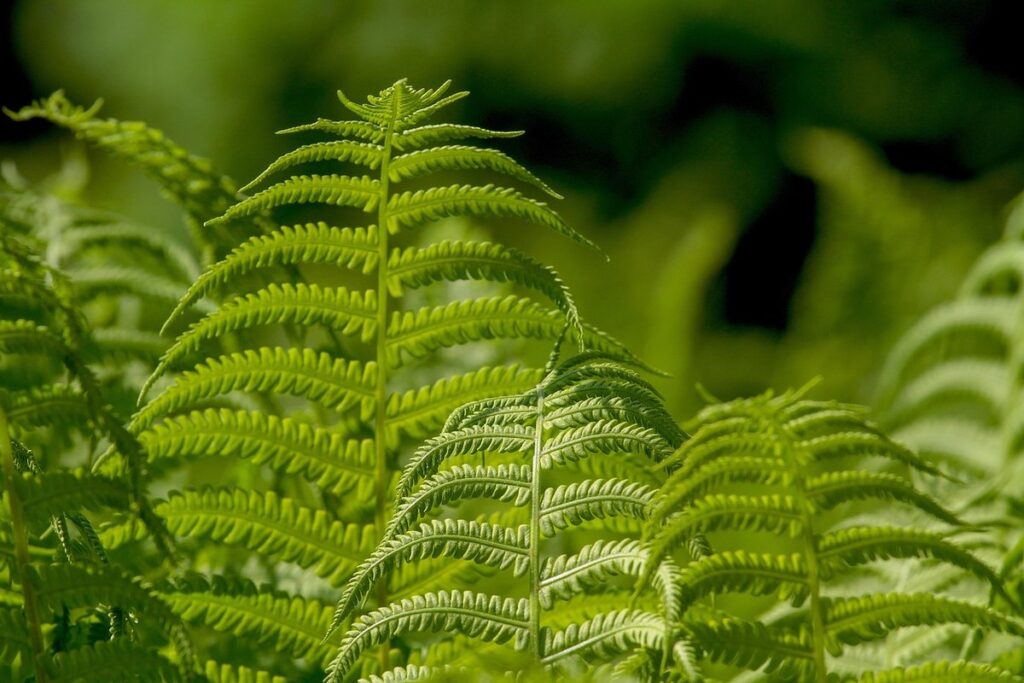
Understanding Plant Leaves and Their Importance
To truly master plant leaf identification, it’s essential to understand the characteristics and significance of leaves on different plants. Let’s dive into what makes a leaf special and why it matters in the world of botany.
What Are Plant Leaves?
Plant leaves are one of the most vital and distinctive features of plants. Their primary function is to carry out photosynthesis, a process that converts light energy from the sun into chemical energy for the plant’s growth and development. This complex process occurs within specialized cells called chloroplasts, which contain pigments such as chlorophyll, allowing leaves to absorb sunlight.
Leaves play a crucial role in a plant’s survival and are often considered its most essential organ. Without them, plants would not be able to produce the nutrients they need to thrive. Photosynthesis is essential for the production of oxygen, making leaves a vital component of the planet’s ecosystem. As plants use energy from sunlight to convert carbon dioxide and water into glucose and oxygen, they release excess oxygen into the air as a byproduct.
Understanding the structure and function of plant leaves can be invaluable for gardeners and botanists alike. By recognizing the unique characteristics of different leaf types, you’ll be better equipped to identify plants in various environments.
Types of Plant Leaves
When it comes to plant leaf identification, understanding the different types of leaves is crucial. Leaves can be broadly categorized into three main types: simple, compound, and lobed.
Simple leaves are those that have a single blade or lamina attached directly to the stem. Examples include needles on coniferous trees like pines and spruces. They often have parallel veins and can range in shape from linear to ovate. Identifying simple leaves is relatively straightforward, as they typically have a consistent shape and size.
Compound leaves, on the other hand, are made up of multiple leaflets attached to a central stem called a rachis. These leaves resemble ferns or palms and are often found on trees like oaks and maples. Lobed leaves have rounded or deeply incised lobes that can give them a complex shape. Examples include leaves with deep sinuses, such as those on birch or beech trees. Understanding the differences between these types of leaves will help you narrow down the possibilities when trying to identify an unknown plant species.
Leaf Structure and Anatomy
When it comes to identifying plant leaves, understanding their structure and anatomy is crucial. At first glance, a leaf may seem like a simple flat shape, but it’s actually composed of several intricate parts that work together to help the plant survive.
The veins within a leaf are responsible for transporting water, minerals, and sugars throughout the plant. These vascular tissues can be identified by their characteristic pattern on the underside of the leaf. Some leaves have prominent veins that run parallel to each other, while others have more delicate networks of smaller veins. Observe how the veins intersect with each other – this can give you clues about the leaf’s identity.
In addition to veins, leaves also contain stomata – small openings on the surface of the leaf that allow for gas exchange. Stomata are usually found on the underside of the leaf and can be identified by their small pores or depressions. Cuticle is another important component of a leaf’s anatomy, providing protection from water loss and environmental stressors.
When examining leaves under a microscope, you might notice tiny hairs or scales that help to reduce transpiration. Some leaves also have specialized structures like trichomes or papillae that aid in photosynthesis or defense mechanisms.
Identifying Plants by Leaf Shape and Size
When it comes to identifying plants, understanding leaf shape and size is a crucial step. In this next part of our guide, we’ll explore how these characteristics can help you narrow down your search.
Elliptical vs. Oblong Leaves
When identifying plants by leaf shape and size, it’s essential to be aware of the subtle differences between elliptical and oblong leaves. While these terms are often used interchangeably, they have distinct meanings in botany.
Elliptical leaves are characterized by their symmetrical, egg-shaped form, with two distinct ends and a curved or tapered middle section. Plants like the Japanese Maple (Acer palmatum) and the Redbud (Cercis canadensis) display elliptical leaves that taper to a point at both ends. In contrast, oblong leaves are longer than they are wide and have parallel sides, with a rounded tip at one end.
To differentiate between these two shapes, look for the presence of a distinct apex or pointed tip on elliptical leaves. Obong leaves typically lack this distinctive feature. The American Holly (Ilex opaca) is an example of a plant that produces oblong leaves with parallel sides and a rounded tip. When in doubt, consult a field guide or take a closer look at the leaf’s overall shape to determine whether it’s elliptical or oblong.
Large vs. Small Leaves
When it comes to leaf size, plants have adapted to thrive in various environments. Large leaves can be a distinctive characteristic of certain plant species. These leaves often provide more surface area for photosynthesis, allowing the plant to absorb more sunlight and water. In tropical regions with abundant rainfall, large leaves are common among plants like the Banana plant (Musa spp.) and Philodendron.
On the other hand, small leaves serve as an adaptation for environments with limited resources such as arid deserts or shaded areas. Small-leaved plants like succulents and cacti have evolved to conserve water by minimizing transpiration through smaller leaf sizes. In contrast, plants growing in shaded conditions often develop smaller leaves to optimize light absorption.
As you identify plants based on their leaves, note the size variation within a single species can be significant. Some plants may display large leaves during their juvenile stage or when grown under optimal conditions but revert to smaller leaves as they mature or adapt to less favorable environments.
Leaf Margin: Smooth, Toothed, or Lobed
The leaf margin is another critical characteristic to consider when identifying plants. It refers to the edge of the leaf blade and can be a significant differentiator between species. There are three main types of margins: smooth, toothed, and lobed.
Smooth margins have no visible serrations or projections along their edges, giving them a rounded or entire appearance. Plants with smooth margins include vegetables like lettuce and spinach. On the other hand, plants with toothed margins feature small teeth or projections that can be visible to the naked eye. Examples of such plants are peppermint and chamomile.
Lobed margins have deep incisions in their edges, creating a more complex shape than smooth or toothed margins. Plants featuring lobed margins include oak trees and certain species of maple. When observing leaf margins, note the size, depth, and arrangement of serrations or projections. This information can be valuable in distinguishing between similar-looking plants.
Identifying Plants by Leaf Arrangement and Growth Patterns
Now that we’ve covered leaf shape and color, let’s dive into how to identify plants based on their unique leaf arrangements and growth patterns, which can be just as telling. This section will help you decipher those subtle clues.
Alternate vs. Opposite Leaves
When identifying plants by leaf arrangement and growth patterns, it’s essential to understand the difference between alternate and opposite leaves. These two terms might seem similar, but they refer to distinct arrangements of leaves on a stem.
Alternate leaves are arranged one after the other along the stem, with each leaf emerging at an equal distance from its predecessor. This is in contrast to opposite leaves, which occur in pairs, one above the other, directly across from each other on the stem. For example, the leaves of a maple tree or a birch tree exhibit alternate arrangement, while the leaves of a hibiscus or a mint plant display an opposite pattern.
To identify these leaf arrangements, observe how the leaves attach to the stem and where new growth emerges. Keep in mind that some plants may have a mix of both alternate and opposite leaves on different parts of their stems, making it essential to examine multiple points along the stem for accurate identification.
Whorled Leaves: A Less Common Pattern
Whorled leaves are one of the less common leaf arrangements found in plants. To identify whorled leaves, look for leaves that emerge from a single point on the stem, forming a circular pattern around it. This arrangement can be either alternate or opposite, but with a twist – each pair of leaves or set of leaves emerges at the same spot.
In whorled leaf arrangements, you’ll typically see multiple leaves emerging together in one location, giving them a distinctive look that’s often associated with certain plant families like the Lamiaceae and Scrophulariaceae. For example, plants from these families have leaves that grow directly opposite each other or alternate but emerge at the same point on the stem.
Some common examples of plants with whorled leaf arrangements include mint (Mentha spp.), sagebrush (Artemisia spp.), and foxglove (Digitalis purpurea). When examining a plant’s leaves, pay close attention to their growth pattern. If you notice that multiple leaves are emerging from the same spot on the stem in a circular arrangement, it could be whorled leaves.
Remember to observe other characteristics of the leaf, such as shape, size, and margins, to get an accurate identification.
Leaf Venation: Pinnate, Palmate, or Other Patterns
When it comes to plant leaf identification, understanding the venation pattern is a crucial step. Leaf venation refers to the way veins are arranged on the surface of a leaf. There are several types of venation patterns found in plants, and recognizing these can help you narrow down the possibilities when trying to identify a specific species.
One common type of venation pattern is pinnate, where veins branch out from a central midrib like fingers from a hand. Examples of plants with pinnate venation include the majestic Royal Palm (Roystonea regia) and the elegant White Oak (Quercus alba). To recognize pinnate venation, look for leaves that have multiple lateral veins radiating from the center, often forming an ‘X’ shape.
Other common types of venation patterns include palmate, where veins are arranged in a star-like pattern around the central midrib, and other less common patterns like parallel or netted. Some plants, like the iconic English Ivy (Hedera helix), exhibit multiple venation patterns within a single leaf, making identification even more challenging.
To accurately identify plant leaves based on their venation patterns, study images of various species online or in field guides to familiarize yourself with these distinctive features.
Identifying Plants by Leaf Color, Texture, and Odor
When it comes to identifying plants, taking note of their leaf color, texture, and even scent can be a game-changer in narrowing down the possibilities. This section will explore these subtle yet important characteristics.
Leaf Color: Green, Variegated, or Atypical Colors
When it comes to plant leaf identification, one of the most distinctive and easily observable features is its color. Leaf color can be a significant indicator of a plant’s species, growth habits, and even its preferred environmental conditions. While most people are familiar with the classic shades of green, some plants boast striking variegated patterns or atypical colors that set them apart.
Take, for instance, the Calathea lancifolia, whose leaves display vibrant purple and white stripes. Similarly, the Coleus blumei boasts a kaleidoscope of colors, including pink, red, yellow, and green, depending on its specific variety. Plants like these not only add visual interest to your garden but also serve as fascinating examples of nature’s diversity.
To make the most of this trait in plant identification, take note of any unusual coloration you observe. Look for patterns such as stripes, spots, or blotches, which can be indicative of a specific species. Keep in mind that leaf color can change depending on factors like light exposure and nutrient availability, so it’s essential to consider these variables when making an identification.
Leaf Texture: Smooth, Hairy, or Waxy
When it comes to identifying plants, leaf texture is often an overlooked yet crucial characteristic. It can be just as distinctive as color and shape, helping you narrow down the possibilities. Let’s take a closer look at three common types of leaf textures: smooth, hairy, and waxy.
Smooth leaves are typically found on plants like oak trees (Quercus spp.) and eucalyptus (Eucalyptus spp.). These leaves have no noticeable hairs or ridges, giving them a sleek appearance. Hairy leaves, on the other hand, can be seen in plants such as lamb’s ear (Stachys byzantina) and dusty miller (Senecio cineraria). They often feature soft, velvety hairs that provide protection from extreme temperatures.
Waxy leaves are typically found on succulents like aloe vera (Aloe barbadensis) and agave (Agave spp.). These plants have adapted to store water in their leaves, which have developed a waxy coating to prevent moisture loss. When examining a leaf’s texture, gently run your thumb over it to feel any hairs or ridges. This can be a game-changer when trying to identify an unknown plant.
Leaf Odor: A Distinctive Feature
Leaf odor plays a significant role in plant identification, as it can be a distinctive feature that sets one species apart from another. Many plants have unique scents that are produced by specialized cells or glands on their leaves. These oils can be responsible for the characteristic aromas we associate with certain plants.
For example, lavender (Lavandula angustifolia) is known for its calming and floral scent, while tea tree oil (Melaleuca alternifolia) has a pungent, medicinal aroma. Peppermint (Mentha × piperita) leaves emit a refreshing, cooling scent that’s often used in teas and culinary dishes.
When identifying plants by leaf odor, it’s essential to note that the intensity of the scent can vary depending on factors like temperature, humidity, and time of day. To accurately identify a plant using its fragrance, it’s crucial to observe the leaves carefully and take note of any distinctive scents or odors you detect. By combining observations of leaf color, texture, and odor, you’ll be well-equipped to narrow down your search and arrive at an accurate identification.
Using Online Resources and Field Guides for Plant Identification
To accurately identify a plant, you can turn to online resources and field guides that provide detailed images, descriptions, and identification keys tailored to different regions. These tools are especially helpful when specific knowledge is lacking.
Online Plant Identification Tools and Apps
With so many online resources and apps available, you’re spoilt for choice when it comes to identifying plants using your smartphone. One of the most popular and user-friendly options is PlantSnap, which boasts a database of over 200,000 plant species. Simply snap a photo of the leaf or flower, and the app will try to identify it for you. Another strong contender is Leafsnap, developed by Columbia University, University of Maryland, and Smithsonian Institution. This app uses visual recognition software to match your photo with its extensive library.
When choosing an online plant identification tool, consider what features are important to you. Some apps, like FlowerChecker, allow you to upload a photo from your gallery rather than taking one on the spot. Others, such as PlantNet, offer more advanced features like image filtering and zooming. Be aware that some free options may have limitations, such as limited database access or advertising.
Before relying solely on online identification tools, it’s essential to understand their potential pitfalls. Some apps can be fooled by low-quality images or incorrectly identify plants due to incomplete databases.
Field Guides: A Traditional Approach to Plant Identification
When it comes to plant leaf identification, traditional field guides remain a trusted and effective tool for many botanists and nature enthusiasts. These comprehensive books provide detailed descriptions of plant species, along with illustrations and photographs that help distinguish one from another.
Field guides can be used in conjunction with online resources for more accurate results. For instance, if you’re unsure about the identity of a particular leaf, consult a field guide to narrow down the possibilities, and then use an online resource like a plant identification app or database to further verify your findings.
Some notable examples of traditional field guides include the National Audubon Society Field Guide to Wildflowers, The Tree Identification Book by George W. Symonds, and Newcomb’s Wildflower Guide. These resources often feature detailed descriptions of leaf morphology, growth habits, and other distinctive characteristics that can aid in identification.
When using a field guide, start by flipping through its pages to get an idea of the plant groups and species covered. Then, use the guide’s key or index to locate the page corresponding to your specimen. Study the illustrations, photographs, and descriptions carefully, taking note of any unique features that might help you identify the plant.
By combining traditional field guides with online resources, you can increase your chances of accurate plant leaf identification and enhance your overall botanical knowledge.
Common Challenges and Mistakes in Plant Leaf Identification
As you continue to develop your plant leaf identification skills, it’s essential to be aware of common mistakes that can lead to misidentification. We’ll explore these pitfalls and provide guidance on how to avoid them.
Misidentification due to Similarities in Leaf Shape or Size
When identifying plants based on their leaves, it’s easy to get caught up in similarities rather than differences. This can lead to misidentification and confusion. For instance, the leaves of the poison ivy (Toxicodendron radicans) and the Virginia creeper (Parthenocissus quinquefolia) are often mistaken for one another due to their similar leaf shape and size.
In reality, however, these plants have distinct differences in their stems, growth habits, and flower patterns. The poison ivy has woody vines with hairy stems, whereas the Virginia creeper has smooth, woody stems. If you’re identifying based solely on leaf shape or size, you might overlook these key differences.
To avoid this mistake, take a closer look at the plant’s overall structure, including its stems, flowers, and growth patterns. Consult multiple field guides or online resources to ensure accuracy. Consider creating a checklist of characteristics unique to each species, such as the number of leaflets or the presence of stipules. By doing so, you’ll be better equipped to distinguish between similar-looking plants and make more accurate identifications.
Overreliance on Single Characteristics: A Pitfall to Avoid
When relying solely on one characteristic for plant identification, you may inadvertently end up misidentifying a species. This is particularly true when it comes to leaf color, which can vary significantly across different genera and even within the same family. For instance, some leaves might have striking yellow or red hues during certain times of the year due to environmental factors such as temperature fluctuations.
Similarly, leaf shape and size can also be misleading. A small leaf might belong to a larger species if it’s an immature version of that plant, while a long, thin leaf could actually come from a smaller one with a unique growth pattern. Another crucial aspect is the way leaves are arranged on the stem – in some cases, what seems like a distinctive characteristic can simply be due to variations in growth habits.
To avoid this pitfall, take multiple characteristics into account when identifying plant species. This approach will allow you to consider various factors simultaneously and increase your chances of making an accurate identification.
Frequently Asked Questions
How can I use the information from this guide to identify plants in my garden?
You can apply the knowledge gained from this comprehensive guide to identify plants in your garden by observing their leaf characteristics, such as shape, size, color, texture, and odor. Start by taking note of the specific traits that distinguish each plant, and then consult the guide’s sections on leaf structure, arrangement, venation, color, texture, and odor for further identification.
What if I encounter a plant with leaves that don’t fit any of the categories mentioned in this guide?
Don’t worry! While this guide covers many common types of plants, it may not include every possible variation. In such cases, consult field guides or online resources for more specific information on less common plant species. You can also try using online plant identification tools and apps to get a second opinion.
Can I use photosynthesis as an indicator for the health of my plants?
Yes! Photosynthesis is a crucial process that affects a plant’s overall health and growth. If your plants are not producing healthy leaves, it may indicate issues with their ability to carry out photosynthesis. Monitor your plants’ leaf color, texture, and development to ensure they’re thriving.
How can I ensure accurate identification of plants with similar leaf shapes or sizes?
To avoid misidentification due to similarities in leaf shape or size, consult multiple sources, including field guides, online resources, and expert opinions. Look for unique characteristics that distinguish each plant species, such as the arrangement of leaves, venation patterns, color variations, or distinctive odors.
What if I’m new to plant identification and feel overwhelmed by all the information?
Take it one step at a time! Start by familiarizing yourself with common plant families and leaf characteristics. Practice identifying plants in your garden or nearby areas using the guide’s sections as a reference. As you become more comfortable, gradually move on to more advanced topics like leaf venation and odor identification.