
Are you an avid nature lover or perhaps a budding arborist looking to hone your skills in identifying trees? Either way, learning to identify oak trees is an exciting journey that can take you deep into the world of botany and beyond. With over 600 species worldwide, oak trees are one of the most diverse and widespread tree families on the planet. But how do you tell a White Oak from a Red Oak, or distinguish between a Live Oak and a Spanish Oak? In this comprehensive guide, we’ll take you through the key morphology, growth habits, and specialized features that will turn you into an oak identification expert in no time. From leaf shape and bark texture to branch patterns and acorn characteristics, we’ll cover everything you need to know to confidently identify these magnificent trees.
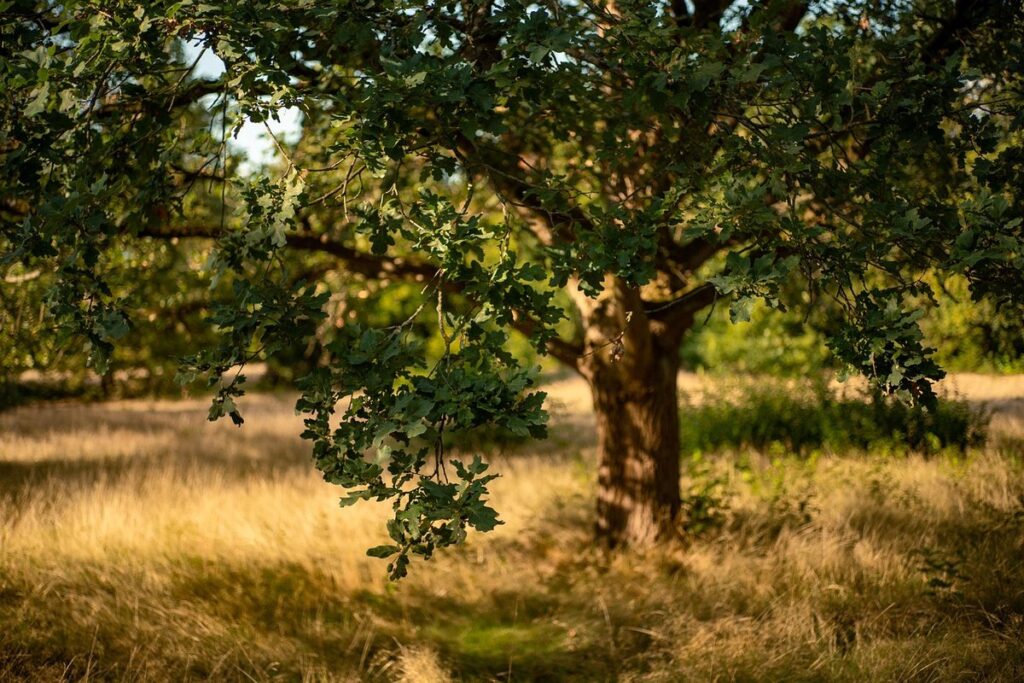
Understanding Oak Trees
To truly master oak tree identification, you need to understand their unique characteristics and growth patterns. Let’s dive into the fascinating world of oak trees and explore what sets them apart from other species.
Section Overview
Oak trees have been an integral part of many ecosystems for centuries, and their importance cannot be overstated. These majestic trees are not only a source of pride for landowners but also play a crucial role in supporting local wildlife and maintaining soil health.
There are two primary types of oak trees: deciduous and evergreen. Deciduous oaks, such as the white oak (Quercus alba) and red oak (Quercus rubra), shed their leaves annually, typically in autumn. Evergreen oaks, like the live oak (Quercus virginiana) and holm oak (Quercus ilex), retain their foliage year-round.
Oak trees are native to various parts of the world, with North America being home to over 60 species. Deciduous oaks are more prevalent in cooler climates, while evergreen oaks thrive in warmer regions. Understanding the specific characteristics and habitats of oak trees is essential for accurate identification. As we delve into this comprehensive guide, you’ll learn how to distinguish between different oak species, their unique features, and the key factors that contribute to their growth and survival.
Key Characteristics of Oak Trees
When identifying an oak tree, it’s essential to consider its key characteristics. Oak trees are known for their distinctive leaves, which can vary in shape and size depending on the species. Typically, oak leaves are lobed or deeply toothed with a pointed tip. They usually range from 4-8 inches long and have a wavy or serrated edge.
The bark of an oak tree is also a notable feature. It can be smooth when young but develops deep furrows and ridges as the tree matures. The texture ranges from thick and rough to thin and scaly, depending on the species. For example, the white oak (Quercus alba) has a broad, flat bark with shallow furrows, while the red oak (Quercus rubra) has a dark gray bark with deep ridges.
Oak trees can also be identified by their growth habits. They often grow to be large and spreading, with some species reaching heights of over 100 feet. They have a broad canopy and a straight trunk, which can be buttressed in some cases. When observing an oak tree, pay attention to its overall shape, size, and the way it spreads out its branches. This will give you a good starting point for further identification using other characteristics like acorn size and color, or leaf arrangement on the stem.
Identifying Oaks in Different Environments
When venturing outdoors to identify oak trees, it’s essential to consider the environment they inhabit. Oak trees can be found in various settings, from dense forests to urban parks and even backyards. Understanding their surroundings helps narrow down the identification process.
In forests, look for oaks with a more compact canopy, as these species often require less light due to the dense foliage of surrounding trees. The presence of acorns or leaves can also be indicative of oak species, such as the white oak (Quercus alba) and red oak (Quercus rubra). Pay attention to the bark texture and color – some oaks have scaly, gray bark, while others exhibit smoother, reddish-brown bark.
In urban areas, oak trees are often more exposed, with a more open canopy. Look for distinctive features like twisted or gnarled branches, which can be characteristic of older oak species. In parks and backyards, consider the soil type and moisture levels – some oaks prefer well-drained soils, while others tolerate wetter conditions.
To aid in identification, observe the overall shape and size of the tree, including its mature height and spread. Take note of any unique features like distinctive branching patterns or fruiting habits.
Morphology and Leaf Structure
When it comes to identifying oak trees, understanding their morphology and leaf structure is crucial. This unique combination of characteristics can help you pinpoint an oak tree’s species and age.
Oak Leaf Shape and Arrangement
When it comes to oak tree identification, one of the most distinctive and variable features is the shape and arrangement of their leaves. As you examine a mature oak leaf, notice if it has a lobed or sinuate margin. Loped margins feature deep indentations between the main veins, while sinuate margins have wavy edges with more gradual curves.
Some oak species have entirely smooth margins, without any noticeable indentations or waviness. Look for the overall shape of the leaf as well – is it deeply cleft, with multiple pointed lobes? Or perhaps it’s a broad, shallowly notched shape? Consider the arrangement of veins on the leaf surface, too – are they parallel and straight, or more irregular and branching.
When trying to identify an oak tree based on its leaves, pay attention to these details. If you’re still unsure, try comparing your findings with illustrations or photos from a field guide. Keep in mind that different species can display variation within the same leaf morphology, so don’t be discouraged if identification takes time and practice – it’s all part of mastering oak tree identification!
Leaf Size and Coloration
When it comes to identifying an oak tree, one of the most distinctive features is its leaf size and coloration. In general, oak leaves can range from 2-12 inches (5-30 cm) in length, with a corresponding width that’s often half as wide or slightly wider.
The typical color of oak leaves varies depending on the species. Some common hues include dark green, medium green, light green, and occasionally even grayish-green. However, some species like the white oak have leaves with a distinctive lobe arrangement that gives them a more silvery appearance due to their wavy edges and veins.
In terms of venation patterns, oak leaves can display two main types: those with brachyblastie (a short branch) leaf arrangement and others with paripinnate (an even number) leaf arrangements. Some species like the English oak have a characteristic “serrated” edge, while others feature rounded or lobed margins.
If you’re trying to identify an oak tree based on its leaves, observe these details carefully: pay attention to the general size, color, and venation patterns.
Tips for Identifying Oak Leaves
Identifying oak leaves can be a bit tricky, but with some practice and attention to detail, you’ll become an expert in no time. When examining the leaf undersides, look for small hairs, ridges, or other characteristics that are specific to certain oak species. For example, the white oak family (Quercus sect. Quercitimmum) has leaves with a hairy underside, whereas red oaks have leaves with wavy edges and teeth.
When it comes to veins, oak leaves can be divided into two main categories: pinnately lobed and palmate. Pinnately lobed leaves have pointed tips and are found on white oaks, while palmate leaves have rounded tips and are characteristic of red oaks. Also, pay attention to the presence or absence of stipules – small structures that occur at the base of some leaf stalks.
To accurately identify oak leaves, take a closer look at their margins (edges) too. Are they entire, lobed, or toothed? And what about the serrations on the teeth? These characteristics can vary significantly between species, so it’s essential to examine them carefully before making an identification.
Bark Patterns and Texture
When it comes to oak tree identification, paying attention to bark patterns and texture can be a game-changer. Let’s take a closer look at how these characteristics can help you pinpoint an oak species.
Identifying Oak Bark by Pattern
When examining oak tree bark, one of the most important characteristics to consider is its pattern. This can be a crucial factor in distinguishing between different species. Let’s explore some common patterns found on various oak trees.
Furrowed bark, often seen on white and red oak species, features deep grooves or furrows that extend from the trunk down to the branches. These grooves are usually more pronounced than those found on other types of oaks. For example, the Northern Red Oak (Quercus rubra) has a distinctive furrowed bark with broad, shallow ridges between each furrow.
On the other hand, some oak species exhibit scaly or plate-like bark patterns. The English Oak (Quercus robur), for instance, displays overlapping scales of rough, irregular plates that resemble armor plating. When observing the bark, pay attention to whether it is smooth, with no notable patterns or features.
Note the overall texture and pattern when inspecting oak tree bark. Take note of how the patterns change as you move from the trunk to the branches, and consider consulting a field guide or expert for further guidance if needed.
Factors Affecting Oak Bark Appearance
The appearance of oak bark can be influenced by various environmental factors, making it essential to consider these elements when attempting to identify an oak tree. Age is a significant factor, as young trees typically have smooth, thin bark that gradually thickens and becomes more rugged with age. The climate in which the tree grows also plays a crucial role; for example, oaks growing in dry conditions may develop deep grooves or furrows in their bark to conserve water.
Climate can also cause changes in the texture of oak bark, such as the development of mosses or lichens on trees growing in shaded, humid environments. Disease is another factor that can impact the appearance of oak bark; for example, a fungal infection may cause the bark to crack and peel. When attempting to identify an oak tree based on its bark, it’s essential to take these factors into consideration and look for patterns or characteristics that are consistent with the species in question.
In practice, this means examining the overall texture and color of the bark, as well as any notable features such as ridges, grooves, or moss growth. By taking a close look at the oak tree’s bark and considering its age, climate, and potential disease, you can gain valuable insights into its identity.
Practical Tips for Examining Oak Bark
When examining oak bark for identification purposes, it’s essential to do so safely and with proper care. Before handling branches, make sure to wear protective gloves to avoid getting scratched by the sharp edges of the bark.
To begin, gently remove any loose debris or leaves from the branch you’re about to examine. Use a soft-bristled brush to sweep away any dirt or grime that may be obscuring your view of the bark’s texture and patterns.
Next, carefully cut a small section of the branch using pruning shears or loppers. Hold the cutting tool at an angle, with the blade facing away from you, to prevent accidents.
Once you have a sample of oak bark, use a soft cloth or paper towel to wipe it clean. Avoid using water or any harsh chemicals, as these can damage the delicate texture of the bark.
Finally, examine your cleaned section of bark under good lighting conditions, taking note of its color, texture, and pattern. This will help you make an accurate identification of the oak tree species.
Growth Habits and Size Variations
Oak trees can vary significantly in size, depending on factors such as species, climate, and growing conditions, which affects their overall shape and growth habits. Let’s explore how these variations can impact your identification efforts.
Identifying Oak Trees by Height and Spread
When identifying oak trees, one of the most distinctive features is their height and spread. The shape and size of an oak tree’s crown can reveal its species identity. For instance, the White Oak (Quercus alba) has a broad, rounded crown with branches that often grow out from the trunk in a horizontal pattern.
In contrast, the Red Oak (Quercus rubra) tends to have a more upright growth habit and a narrower crown. Its branches also tend to be more curved or twisted than those of the White Oak. The English Oak (Quercus robur), on the other hand, has a massive, vase-shaped crown with a prominent central trunk.
To identify an oak tree based on its height and spread, observe how the branches radiate from the trunk. A species like the Live Oak (Quercus virginiana) often grows in a more compact, rounded form, while others like the Pin Oak (Quercus palustris) can become quite tall with a broad, flat crown.
Keep in mind that these are general characteristics and not every oak tree will conform perfectly to its expected growth pattern. However, by paying attention to the overall shape and size of an oak’s crown, you may be able to narrow down its species identity or make an educated guess based on visual observation alone.
Factors Influencing Oak Tree Size
When it comes to oak tree size, several factors come into play. Climate is one of the most significant influencers. For instance, white oaks tend to thrive in temperate regions with moderate temperatures and rainfall, while red oaks prefer warmer and drier environments. This can result in vastly different growth rates: a white oak growing in a humid climate might reach maturity in 50-70 years, whereas its red oak counterpart could take around 80-100 years.
Soil quality is another critical factor. Oak trees require well-draining acidic soil with adequate nutrients to support their massive root systems and towering canopies. Regions with poor soil quality may struggle to sustain large oak growth, while areas with rich loamy soils tend to produce robust specimens. Genetics also play a role in determining size: some species naturally grow larger than others due to factors like cell size and wood density.
If you’re hoping to cultivate a massive oak tree, ensure your land offers suitable climate conditions and fertile soil. Regular watering and fertilization can help supplement the tree’s growth rate. By understanding these factors, you’ll be better equipped to identify and appreciate the remarkable variations in oak tree sizes across different regions.
Tips for Measuring Oak Tree Dimensions
When it comes to measuring oak tree dimensions, accuracy is crucial for proper identification. To determine trunk diameter, wrap a flexible tape measure around the trunk at breast height (approximately 4.5 feet above ground level). For smaller trees, use a soft, non-invasive method like a clinometer or a rangefinder to avoid damaging the bark.
To measure canopy spread, consider both the diameter and shape of the tree’s crown. Measure from branch tip to branch tip, taking note of any irregularities or asymmetries. Use a mapping tool or a sketchpad to record your observations. For larger trees, use a laser rangefinder or a drone with aerial photography capabilities to capture an accurate image of the canopy.
Consider using a tree measurement app on your smartphone for convenience and ease of use. These apps often include built-in calculation tools and can help you save time in the field. When measuring oak tree dimensions, always prioritize caution: avoid damaging branches or harming yourself by using proper climbing equipment and following basic safety guidelines.
Specialized Features and Adaptations
Some oak species have remarkable adaptations that set them apart from others, making identification easier through unique characteristics. Let’s take a closer look at these specialized features.
Acorns: A Key Feature in Oak Identification
When it comes to identifying oak trees, one of the most distinctive and reliable features is the acorn. The characteristics of acorns can vary significantly between species, but there are some key variations to look out for when trying to identify a particular type of oak.
Firstly, consider the shape of the acorn. Some species have round or rounded oval shapes, while others may be more elongated or even conical in shape. The white oak group (Quercus sect. Quercus) tends to produce acorns with rounded tips, whereas red oaks (Quercus sect. Lobatae) typically have pointed tips.
Another crucial factor is the size of the acorn. Acorn sizes can range from just a few millimeters in diameter to as large as 5-6 centimeters or more in some species. Red oaks often produce smaller acorns compared to white oaks, which tend to be larger and more rounded.
The cap coloration is also an important identifier. Some oak acorns have caps that are nearly hairless, while others may be heavily covered with hairs or bristles. The stem attachment can vary as well – some species have a short, stout stem attached directly to the cap, whereas others may have a longer, more slender stem.
When examining the characteristics of an acorn, try to observe all these features together to make a more accurate identification.
Twigs and Branching Patterns
When examining the twigs and branching patterns of an oak tree, you may notice distinct differences between various species. These variations can be a valuable tool for identification purposes. One common arrangement is alternate branching, where leaves grow singly on either side of the stem, often with a staggered or alternating pattern. This type of branching is characteristic of several white oak species.
In contrast, some red oak species exhibit opposite branching, where two or more leaves emerge directly across from each other on a single stem. A whorled arrangement can also be observed in certain oak species, where three or more branches arise from a common point, often resembling the spokes of a wheel.
To accurately identify an oak tree’s branching pattern, observe the twigs closely and note any patterns you notice. Take into account the presence of thorns, buds, or other distinguishing features that may be present on the branches. By paying attention to these details, you can develop your skills in identifying different oak species based on their unique branching characteristics.
Tips for Identifying Oak Trees Based on Acorn Characteristics
When it comes to identifying oak trees, their acorns are often the most readily available and accessible characteristic for examination. To use acorns as a key identifier, you’ll need to take note of several distinct features.
Start by observing the size and shape of the acorn cap – some species, like the white oak, have a flat, rounded cap that covers about half of the nut, while others, such as the red oak, have a pointed cap with deep ridges. Measure the length of the cap to determine if it exceeds the size of the nut itself.
Also take note of the overall color and texture of the acorn. For example, white oak acorns are typically light brown in color and smooth in texture, while red oak acorns are reddish-brown with a rougher surface.
If you’re still unsure about the type of oak tree you’ve encountered, make a few observations about its habitat – do you see other oak trees nearby? Is it growing in well-drained soil or is it more adapted to swampy conditions? With a combination of these acorn characteristics and an understanding of your surroundings, you should be able to narrow down the type of oak tree.
Environmental Considerations and Conservation Efforts
As we explore the fascinating world of oak tree identification, let’s not forget the importance of preserving these incredible ecosystems for future generations. We’ll delve into the key considerations for their conservation and protection.
Climate Change Impacts on Oak Trees
Climate change is having a profound impact on oak tree populations worldwide. Rising temperatures are altering the delicate balance of ecosystems, leading to shifts in temperature and precipitation patterns that oak trees struggle to adapt to. For example, oak trees in North America are experiencing warmer winters, which allows pests like the oak wilt fungus to survive longer periods, devastating entire stands of trees.
Precipitation patterns are also changing, with some areas receiving more frequent and intense droughts, while others experience more frequent flooding. This can cause stress on oak trees, making them more susceptible to disease and pest infestations. In addition, changes in temperature and precipitation patterns are altering the distribution of pests and diseases that affect oak trees.
As an oak tree enthusiast, it’s essential to be aware of these climate-related impacts and take steps to support the health and resilience of oak trees in your area. This may involve incorporating climate-resilient species into your planting efforts or working with local conservation organizations to develop strategies for mitigating the effects of climate change on oak tree populations.
Disease and Pests Affecting Oak Trees
When it comes to oak tree health, several diseases and pests can cause significant damage if left unchecked. One of the most common issues is oak wilt, a fungal disease that clogs the tree’s vascular system, leading to rapid decline and death. Early signs of infection include yellowing leaves, wilting branches, and premature fall color.
Another major concern is the emerald ash borer (EAB), an invasive beetle that targets stressed or weakened trees, particularly those with shallow root systems. Look for thinning canopies, epicormic shoots, and small holes in the bark as signs of infestation.
Other pests, such as acorns weevils and oak leafrollers, can also cause significant damage by consuming acorns or leaves. Regular monitoring and prompt treatment can help prevent the spread of these diseases and pests. Keep an eye out for unusual growth patterns, excessive sap flow, or frass (insect waste) on tree trunks or branches. If you suspect infestation or infection, consult a certified arborist to develop a management plan tailored to your specific situation.
By staying vigilant and taking prompt action, you can help protect the health of these magnificent trees for generations to come.
Conservation Efforts for Oak Tree Preservation
Conservation Efforts for Oak Tree Preservation are crucial to ensure their continued survival. One of the most effective initiatives is reforestation programs, which involve planting new oak trees in areas where they have been depleted or destroyed. For instance, the “Plant a Billion Trees” campaign by the National Forest Foundation has already planted millions of trees across the United States.
Another significant threat to oak tree preservation is invasive species management. The Emerald Ash Borer and the Asian Longhorned Beetle are two of the most notorious invasive pests that have ravaged oak tree populations in recent years. To combat this, foresters use a combination of methods such as biological control, chemical treatment, and habitat modification.
Wildlife habitat preservation is also vital for oak trees’ survival. Oaks provide food, shelter, and breeding grounds for countless species of birds, mammals, and insects. By preserving these habitats, we can maintain the delicate balance between oak tree populations and the wildlife that depends on them. For example, you can create a wildlife-friendly garden by incorporating native plants, such as wildflowers and shrubs, which attract pollinators and other beneficial creatures.
You can also support local conservation efforts by participating in citizen science projects or volunteering for tree planting events. Every small action counts in protecting these magnificent trees for future generations.
Frequently Asked Questions
Can I use the information from this guide to identify oak trees in other parts of the world?
Yes, while some species of oak are more common in certain regions, many of the characteristics discussed in this guide can be applied to oak tree identification globally. However, it’s essential to consider regional variations and unique species that may differ significantly from those found in your area.
How do I know if an oak tree is healthy or suffering from disease?
To assess an oak tree’s health, look for signs of stress, pests, or diseases such as holes in leaves, cankers on the trunk, or fungal growth. Regularly inspecting your trees and taking prompt action when you notice any issues can help prevent further damage.
Can I use this guide to identify oak trees from photos?
While some features like leaf shape and bark texture are visible in photographs, others such as branching patterns and growth habits may be harder to assess. Combine visual identification with field observations for more accurate results.
How do I distinguish between a live oak (Quercus virginiana) and a Spanish oak (Quercus robur)?
Live oaks have broad, rounded leaves with wavy margins, while Spanish oaks have more pointed lobes on their leaves. Additionally, live oaks tend to grow in coastal regions with mild winters.
What’s the best way to record my observations when identifying oak trees?
Use a notebook or mobile app to document your findings, including notes on leaf shape, bark texture, and other distinctive features. This will help you keep track of your progress and refine your identification skills over time.