
Are you tired of seeing tunnels in your yard and wondering which underground creature is causing all the commotion? Moles and voles are two very different animals, but their similarities can make them tricky to tell apart. Identifying these small mammals is crucial for understanding how to manage their populations and prevent damage to your property.
As a homeowner or gardener, knowing the difference between moles and voles can save you time, money, and frustration in the long run. But with so many physical characteristics, habitats, and behaviors to consider, it’s no wonder that even seasoned wildlife enthusiasts get confused. In this comprehensive guide, we’ll break down the key differences between moles and voles, covering their distinctive features, habitats, and signs of presence.
Understanding the Basics
Before we dive into more advanced identification techniques, it’s essential to understand the fundamental differences between moles and voles. Let’s start by looking at their basic characteristics.
What are Moles and Voles?
When it comes to identifying moles and voles, understanding their classifications, habitats, and basic characteristics is essential. These small mammals belong to different families within the rodent order. Moles are classified under the family Talpidae, while voles fall under the family Cricetidae.
Moles are typically found in lawns, gardens, and other areas with moist soil, where they can easily dig their tunnels and burrows. They prefer dark, secluded environments and are primarily nocturnal, spending most of their time underground. Moles have a distinctive appearance, characterized by their stocky bodies, short legs, and long, pointed snouts.
Voles, on the other hand, inhabit a wide range of habitats, from forests to grasslands and wetlands. They are often found in areas with dense vegetation, where they can easily move through the underbrush. Voles have a more slender build than moles, with longer tails and larger ears. They are also primarily herbivores, feeding on various plant species.
Understanding these basic characteristics will help you recognize the differences between moles and voles when trying to identify them in your yard or garden.
Physical Characteristics: Size and Body Shape
When it comes to distinguishing between moles and voles, their physical characteristics play a significant role. Moles are typically larger than voles, with adults ranging from 5 to 13 inches (13-33 cm) in length, including their tail. Voles, on the other hand, usually measure around 4-10 inches (10-25 cm) in length.
The body shape of these two rodents is also a notable difference. Moles have more rounded bodies with short legs and long, pointed snouts. Their fur is thick and velvety, often appearing shiny black or brown. Voles have slender bodies with shorter legs, larger ears, and hairless tails. Their coats are generally thicker than those of moles, but not as dense.
When identifying a mole vs vole, pay attention to the fur on their backs; moles tend to lack this characteristic. Also, moles’ front paws are relatively large and powerful, with long, sharp claws that aid in digging burrows.
Habitat and Distribution
To identify moles and voles effectively, it’s essential to know where they live and thrive, as their habitats can provide valuable clues to their identities. Their environments are shaped by soil type, climate, and vegetation.
Moles’ Underground Habitats
Moles are well-known for their underground lifestyle, and it’s essential to understand their typical habitats to accurately identify them. These burrowing creatures prefer moist, well-drained soil that allows them to easily dig complex tunnel systems. This type of soil is often found in areas with high water tables or near streams, rivers, or ponds.
In addition to the right soil conditions, moles also require a stable food source to sustain their underground lifestyle. They feed on earthworms, insects, and other invertebrates that inhabit these moist environments. To adapt to different environments, moles have developed unique physical characteristics, such as powerful front legs and sharp claws, which enable them to dig efficiently.
Their underground tunnel systems can extend up to 2 feet below the surface and cover an impressive area of around 1-2 acres. These tunnels allow moles to move undetected above ground while maintaining a stable temperature and humidity level in their burrows. When it comes to identifying moles, recognizing these unique habitats and adaptations is crucial to making an accurate identification.
Voles’ Above-Ground Habits
When venturing above ground, voles exhibit distinct habits that help differentiate them from moles. These small rodents often prefer grasslands, fields, and woodlands as their habitats. They’re drawn to areas with dense vegetation, which provides cover from predators and suitable nesting sites.
In their quest for food, voles tend to graze on grasses, leaves, and other vegetation. This can sometimes lead them into agricultural fields or gardens, where they may become pests. To identify vole activity in these areas, look for signs of grazing, such as trampled vegetation or patches of eaten plants.
Voles also interact with their surroundings by creating burrows that extend above ground. These mounds often appear as small hills or ridges and can be mistaken for mole hills. However, vole burrows tend to be more extensive and complex, with multiple entrances and exits.
When observing voles in their natural habitat, pay attention to their size, color, and behavior. Voles are generally smaller than moles, with a stockier build and shorter snout. They’re also more likely to scurry about during the day, whereas moles tend to be nocturnal.
Behavior and Diet
When it comes to mole vs vole identification, understanding their behavior and diet habits is crucial for accurate classification. Here’s what you need to know about their feeding patterns and lifestyle differences.
Moles: Solitary and Nocturnal Feeders
Moles are often misunderstood creatures, and one of their most distinctive characteristics is their solitary nature. These animals are not social like voles, but instead prefer to live and forage alone, only coming together during mating season. This behavior is likely due to the fact that moles have adapted to living in a complex underground tunnel system, where competition for resources would be high if multiple individuals coexisted.
As nocturnal creatures, moles do most of their digging and feeding at night, which allows them to avoid predators and minimize exposure to harsh weather conditions. Their diet consists mainly of underground invertebrates such as earthworms, insects, and snails, which they detect using their highly developed sense of smell. By analyzing the type of soil and vegetation in your yard, you can make an educated guess about whether a mole or vole is present, based on the types of prey that would be most abundant in those conditions.
Voles: Social Animals with Varied Diets
Voles are highly social creatures that thrive in small group settings. They often live together with multiple females and their offspring, while males tend to wander between groups. This unique social structure allows voles to cooperate and share resources, such as food and nesting sites.
In terms of diet, voles are opportunistic omnivores, meaning they will eat a wide variety of plant-based materials depending on what’s available in their environment. Their primary sources of nutrition include seeds, fruits, leaves, stems, and vegetation. However, voles will also consume insects, small vertebrates, and even carrion when the opportunity arises.
One notable aspect of vole behavior is their adaptability to changing seasons. During harsh winter months, voles rely on stored fat reserves accumulated during times of abundance. They may also shift their diet to include more bark, twigs, and other plant materials that are readily available beneath snow cover. By understanding these social and dietary habits, you’ll be better equipped to identify vole activity in your yard or garden.
Tracks and Signatures
When it comes to identifying moles and voles, their tracks and signatures are often the best clues. Let’s take a closer look at how to spot these distinctive signs in your garden.
Identifying Mole Tracks and Burrows
When venturing outdoors to track moles and voles, it’s essential to know where to look for their distinctive signs. Mole tracks and burrows are often visible on lawns, gardens, and other areas with soil that’s suitable for digging. The key difference between mole and vole activity lies in the type of digging patterns they leave behind.
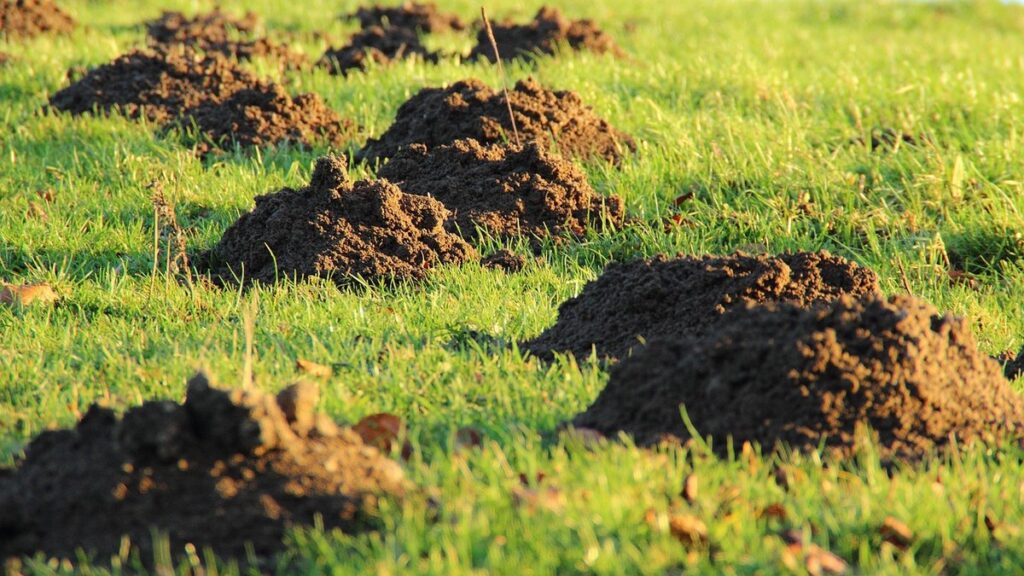
Moles create extensive networks of tunnels and burrows, which can be up to several feet deep. These underground pathways allow moles to move quickly and efficiently through their territories. When emerging from their tunnels, moles often create mounds of soil that are pushed out of the way. Look for these mounds, which are typically smaller in diameter than vole mounds.
Burrows are also an essential sign of mole activity. These can be found near the center of lawns or under heavy vegetation. Burrows may have small holes or entrances, which moles use to access their tunnels. Keep in mind that voles tend to dig shallow burrows and often reuse existing ones, whereas moles typically create new tunnel systems.
When observing mole tracks and burrows, pay attention to the following characteristics:
* Extensive networks of tunnels and burrows
* Small, compact mounds of soil pushed out by emerging moles
* Burrows with small holes or entrances near the center of lawns
* Deep digging patterns compared to vole activity
By recognizing these signs, you’ll be able to distinguish between mole and vole activity in your outdoor spaces.
Vole Signs: Nests and Trails
When you’re out foraging or simply enjoying nature, spotting vole signs can be an exciting experience. These tiny rodents leave behind a trail of evidence that’s often easily recognizable. Let’s dive into the world of vole nests and trails – two essential signs to identify their presence.
Vole nests are usually made from gathered plant material like grasses, leaves, or twigs, and are constructed in hidden spots such as under vegetation, rocks, or other sheltered areas. They might also create burrows, often with multiple entrances and exits. When inspecting a potential vole nest site, look for a depression in the ground surrounded by scattered vegetation.
Vole trails can be more challenging to spot, but they’re just as important. These rodents are prolific diggers and will create pathways through dense undergrowth or grassy areas. Their trails often have distinctive characteristics – smooth surfaces, slight indentations, or faint ridges from their digging activities. Keep an eye out for these subtle signs of vole activity in different environments, including forest floors, meadows, and even your backyard garden.
Common Misidentifications
When it comes to mole vs vole identification, one of the biggest challenges is spotting the subtle differences between these two tiny creatures. This section will highlight some common misidentifications that can lead you astray.
Avoiding Confusion with Similar Species
When venturing into the world of mole and vole identification, it’s not uncommon for these small mammals to be mistaken with other similar species. One of the most common misidentifications is between moles and blind moles (Spalax spp.). However, a closer look at their distinctive characteristics reveals they have different body shapes and distinct fur patterns.
Another confusion arises when trying to distinguish voles from lemmings or shrews. Voles tend to be larger than lemmings and typically have stockier bodies with more prominent cheek pouches. Shrews, on the other hand, are generally smaller and have pointed snouts that distinguish them from both moles and voles.
To avoid confusion when identifying these animals, it’s essential to pay attention to their size, body shape, and fur patterns. Look for distinctive features like the mole’s pink or orange-tipped nose, its robust digging claws, and the vole’s stocky build with prominent cheek pouches. These characteristics can help you accurately identify these small mammals in the wild.
Key Features to Look Out For
When trying to distinguish between moles and voles, there are several key features to look out for. One of the most noticeable differences is their body shape. Moles have a stout, rounded body with short legs, while voles have a more elongated body with longer legs. Voles also tend to be smaller than moles, typically weighing between 2-5 ounces compared to a mole’s 6-8 ounces.
Another important feature to note is the presence of distinctive markings or colors. Moles usually have solid-colored fur that ranges in color from black to dark brown, while voles often have a lighter underside and darker back with stripes or patches. Pay attention to the overall pattern and coloration, as these can be indicative of either a mole or vole.
In terms of size, moles are generally larger than voles, but this can sometimes make it difficult to tell them apart. A good rule of thumb is to look for the presence of visible front teeth in voles, which are often exposed due to their longer snouts. If you’re still unsure, consider looking at the animal’s overall gait and behavior – moles tend to be more secretive and less active during the day, while voles are often more social and diurnal.
Conservation Status and Impact
When it comes to mole and vole populations, understanding their conservation status is crucial for protecting these small but vital creatures. Here, we’ll explore the impact of human activities on their habitats.
Threats Facing Moles and Voles
The threats facing mole and vole populations are multifaceted and alarming. Habitat destruction is one of the primary concerns, as their underground tunnels and burrows are often disrupted by human activities such as construction, agriculture, and urban development. This not only affects their living spaces but also their ability to find food and shelter.
Climate change is another pressing issue, as it alters the delicate balance of their ecosystems. Rising temperatures can disrupt the timing of plant growth and insect emergence, making it challenging for moles and voles to adapt and survive. Additionally, changing precipitation patterns can lead to droughts or floods, further exacerbating the situation.
Disease is also a significant threat, with many mole and vole populations experiencing high mortality rates due to fungal infections such as Trichinella and Toxoplasma gondii. Human activities like pollution and pesticide use can also contribute to disease outbreaks in these small mammals.
Importance of Correct Identification for Conservation Efforts
Accurate identification of moles and voles is crucial for effective conservation efforts. When these small mammals are misidentified, it can lead to misguided strategies that may even harm their populations. For instance, if a mole is mistaken for a vole, conservationists might focus on controlling the population through extermination methods instead of preserving its habitat.
This misidentification can have far-reaching consequences, such as disrupting the delicate ecosystem balance and causing irreparable harm to the species. In reality, moles and voles play vital roles in their respective ecosystems, from aerating soil to seed dispersal. By failing to recognize these differences, conservation efforts may inadvertently contribute to their decline.
To avoid such missteps, it’s essential to educate yourself on mole and vole identification. Learn to distinguish between the two by observing their physical characteristics, habitats, and behaviors. This knowledge will enable you to develop targeted conservation strategies that cater specifically to each species’ needs, ultimately contributing to their long-term survival and well-being.
Frequently Asked Questions
Can I still have a lush lawn despite the mole tunnels?
Yes, you can still maintain a beautiful lawn even with mole activity. Focus on creating a healthy soil ecosystem by using organic fertilizers and mulching. This will help encourage beneficial microorganisms that repel moles from your area.
How do I identify vole nests in my yard?
Look for small, rounded nests made of grasses and other plant material, often located near burrow entrances or under snow cover. Voles use these nests to raise their young, so be sure to check for any signs of recent activity, such as fresh gnaw marks on nearby plants.
Can I deter moles from my garden using repellents?
Some people claim that certain commercial repellents can keep moles away. However, the effectiveness of these products is often anecdotal and may not provide long-term results. A more reliable approach is to modify your gardening practices by removing food sources (e.g., grub-infested soil) and creating physical barriers around vulnerable plants.
What should I do if I’m unsure about identifying a mole vs vole track?
When in doubt, it’s always best to consult with a wildlife expert or take a photo of the tracks for further identification. Moles tend to have more rounded, spoon-shaped tracks, while voles’ tracks are often more pointed and V-shaped.
Can moles be beneficial for my garden in any way?
Yes, moles can play a role in maintaining soil health by aerating it through their digging activities. This can help improve drainage, reduce soil compaction, and promote root growth – all of which can benefit your plants.