
Japanese beetles are a gardener’s worst nightmare, especially when they target prized rose bushes. These pesky insects can cause significant damage to your beautiful blooms, leaving behind unsightly holes and weakening the plant’s resistance to disease. If you’re tired of watching your roses suffer at the hands of these beetles, it’s time to take action. But before you resort to harsh chemicals, let’s explore some effective methods for controlling Japanese beetles on roses using both organic and chemical controls. This article will also provide valuable landscaping tips to create a pest-free garden that minimizes the risk of infestation. Whether you’re a seasoned gardener or just starting out, we’ll cover everything you need to know to keep your roses safe from these invasive pests and restore their beauty to your outdoor space.
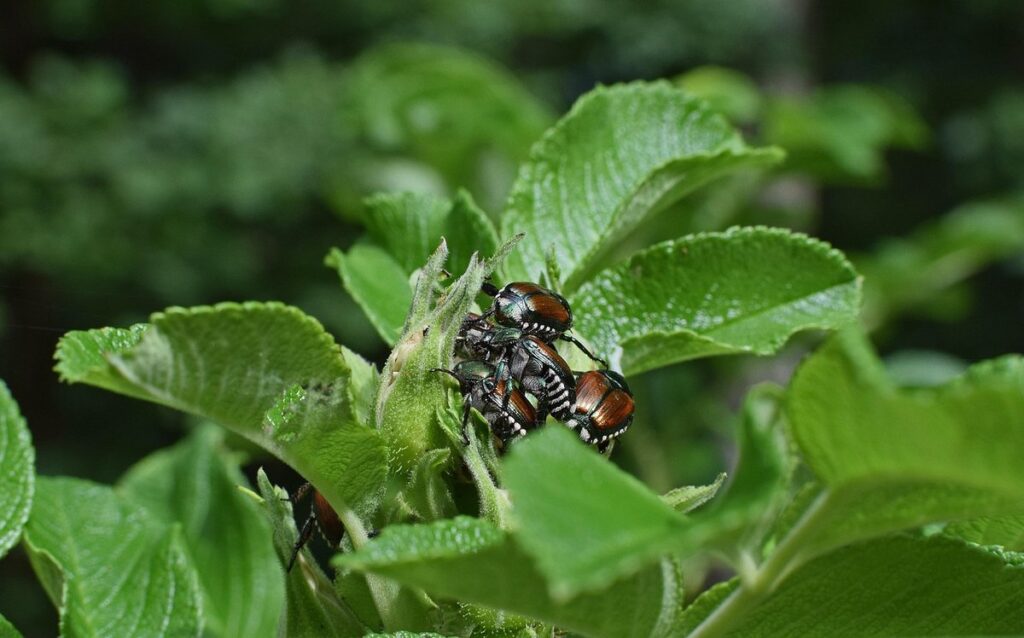
Understanding Japanese Beetles and Their Impact on Roses
Japanese beetles can cause significant damage to roses, understanding their life cycle and habits is crucial for effective control. Let’s break down how these pests impact your prized rose bushes.
Life Cycle of Japanese Beetles and How They Harm Roses
The Japanese beetle’s life cycle is divided into four stages: egg, larva, pupa, and adult. During the summer months, adult beetles emerge from their pupae and begin feeding on plants, including roses. These pests are notorious for causing significant damage to rose gardens, with adults consuming leaves, flowers, and even the fruit of some varieties.
In particular, Japanese beetles have a unique preference for rose petals, which they use as a food source. The beetles’ feeding habits can lead to defoliation, reducing the plant’s ability to photosynthesize and ultimately causing stress. In severe cases, repeated infestations can weaken the plant, making it more susceptible to disease.
As adult Japanese beetles emerge, they also reproduce, further exacerbating the problem. Female beetles lay eggs in soil, which hatch into larvae after a few weeks. These larvae feed on roots before pupating and emerging as adults, starting the cycle anew. Understanding this life cycle is crucial for implementing effective control methods and prevention strategies to mitigate damage caused by Japanese beetles on roses.
Common Signs of Japanese Beetle Infestation on Roses
When you suspect that Japanese beetles are infesting your rose garden, it’s essential to identify the signs of infestation early on. This allows you to take control measures and prevent further damage. Here are some common signs to look out for:
* Damaged leaves: Inspect your rose plants carefully for any signs of damage on the leaves. Japanese beetles feed on the leaves, causing large holes and tears. The leaves may also turn yellow or develop black spots.
* Eaten flowers: These pests also love to eat the delicate petals of roses, leaving behind unsightly brown spots and holes.
* Discoloration of stems: If you notice any discoloration or swelling of the rose stems, it could be a sign that Japanese beetles have laid eggs nearby. This is because the female beetles lay their eggs in the soil near the base of the plants.
If you’re unsure whether your rose garden has been infested by Japanese beetles, take a closer look at these signs and inspect your plants regularly to catch any potential problems early on.
Identifying the Cause: Determining if Japanese Beetles Are the Problem
Before you start treating your roses for pests, it’s essential to determine whether Japanese beetles are indeed the problem you’re facing. Let’s examine some key indicators that will help you make this determination.
Visual Identification of Japanese Beetles on Roses
When it comes to identifying adult Japanese beetles on roses, their distinctive appearance is often the most reliable indicator. To spot them, look for a shiny black and copper-colored body with white spots along the edges of the elytra (wing covers). These beetles are typically between 0.5-0.625 inches in length, making them relatively easy to spot on your rose bushes.
Pay close attention to the shape and size of their antennae – adult Japanese beetles have a distinctive elongated shape, often with a few segments that appear curved or hooked. If you’re still unsure, gently brush off any debris from the leaves and inspect the underside of the rose petals for signs of egg-laying or feeding damage.
When observing Japanese beetles on roses, note that they tend to congregate in large numbers, especially during peak activity periods in late spring and early summer. Look for clusters of damaged leaves with characteristic “shot-holing” patterns – a sure sign that these pests are present and active. By paying attention to their appearance, you’ll be well-equipped to identify the problem and take action against Japanese beetles on your prized rose bushes.
Using Traps to Monitor and Control Beetle Populations
When it comes to monitoring and controlling Japanese beetle populations on your rose plants, using traps can be an effective method. There are several types of traps available, each with its own strengths and weaknesses.
Sticky traps, for example, work by covering a surface with a sticky substance that adheres to the beetles’ bodies when they land on it. This allows you to collect and count the number of beetles present in your garden without harming them. Pitfall traps, on the other hand, involve digging shallow holes filled with water or liquid near your rose plants. When Japanese beetles fall into these traps, they become trapped, making it easier for you to dispose of them.
To use these traps effectively, place them near the affected areas and check them regularly. Sticky traps can be reused multiple times by simply washing off the adhesive substance, while pitfall traps should be replaced when they start to get too dirty or clogged with debris. By incorporating these traps into your control strategy, you’ll have a better understanding of Japanese beetle populations and can take more targeted action to mitigate their impact on your rose plants.
Organic Methods for Controlling Japanese Beetles on Roses
If you’re looking for a more natural way to manage Japanese beetles on your roses, we’ve got you covered with some organic methods that really work. Let’s dive into these effective and eco-friendly solutions.
Hand-Picking: A Labor-Intensive but Effective Method
Hand-picking is one of the most effective methods for controlling Japanese beetles on roses. This labor-intensive approach requires some elbow grease, but it’s a great way to keep your rose bushes beetle-free without using chemicals. Timing is everything when hand-picking Japanese beetles. The best time to do this is during the day, especially in the early morning or late afternoon when the beetles are most active.
To effectively remove the beetles from your roses, use a gentle sweeping motion with your hands or a soft-bristled brush to dislodge them without harming your plants. Start by inspecting each leaf and stem carefully for any signs of Japanese beetle activity. Pay particular attention to areas around the base of the plant, as this is where the beetles tend to congregate.
When hand-picking, it’s essential to remove both the adult beetles and their larvae from the plant. If you only remove the adults, new beetles will emerge from the larvae that are still present, negating any potential benefits. Regularly inspecting your rose bushes and hand-picking Japanese beetles will go a long way in preventing infestations and keeping your plants healthy.
Neem Oil and Insecticidal Soap: Natural Deterrents
When it comes to controlling Japanese beetles on roses, using natural deterrents is an effective and environmentally friendly approach. Two popular options are neem oil and insecticidal soap, which work by disrupting the beetle’s life cycle and making them less likely to feed on your rose bushes.
Neem oil, derived from the seeds of the neem tree, contains compounds that interfere with the beetles’ hormone system, preventing them from reproducing. This makes it difficult for Japanese beetles to establish themselves on your roses, reducing the population over time. To use neem oil effectively, mix it with water according to the product’s instructions and spray it on your rose bushes, making sure to cover all areas thoroughly.
Insecticidal soap works by dehydrating the insect exoskeleton, causing the Japanese beetles to die within a few days of application. This method is particularly effective against newly emerged adults and can be used in combination with neem oil for added protection. When using insecticidal soap, be sure to follow the product’s instructions carefully and avoid spraying during peak sun hours or when rain is forecasted.
By incorporating these natural deterrents into your rose care routine, you can reduce the damage caused by Japanese beetles and maintain a healthy, thriving garden.
Chemical Controls: When Organic Methods Are Not Enough
Sometimes, despite your best efforts, Japanese beetles can still do significant damage to your rose bushes. In these cases, we’ll explore alternative chemical controls that can help mitigate the problem.
Overview of Common Chemical Controls for Japanese Beetles
When dealing with severe Japanese beetle infestations on roses, chemical controls may be necessary. One of the most common and effective chemical controls is pyrethrin sprays. Derived from chrysanthemum flowers, these sprays are toxic to Japanese beetles but relatively safe for humans and pets when used properly. They work by disrupting the insect’s nervous system, ultimately leading to their death.
Another widely used chemical control is carbaryl, a carbamate pesticide that acts as an insecticide. While effective, carbaryl has some drawbacks: it can be toxic to aquatic life and may require repeated applications. It’s essential to follow label instructions carefully when using carbaryl to minimize risks to the environment and beneficial insects.
When choosing a chemical control, consider the specific needs of your garden and the type of Japanese beetle infestation you’re facing. Be sure to read and follow all label instructions, take necessary safety precautions, and apply these chemicals only as a last resort after exhausting organic methods. Always test a small area first to ensure the product doesn’t cause any damage to your roses or other plants.
Safety Precautions When Using Chemical Controls
When dealing with Japanese beetles on roses, it’s essential to exercise caution when using chemical controls. While these methods can provide quick relief from infestations, they should be used judiciously and with proper precautions.
Always read the label carefully before applying any pesticide or fungicide, and follow the instructions explicitly. This may seem obvious, but many gardeners overlook this crucial step, which can lead to accidents or exposure. For instance, some pesticides can cause skin irritation or respiratory problems, so it’s vital to wear protective gear like gloves, long sleeves, and a face mask.
To minimize risks, use chemical controls only when absolutely necessary, and start with the least toxic option first. Integrated Pest Management (IPM) strategies often recommend using neem oil or insecticidal soap as initial treatments before moving on to more potent chemicals. It’s also crucial to target specific areas of infestation rather than spraying entire plants. This approach not only reduces chemical exposure but also preserves beneficial insects that can help control Japanese beetle populations.
Preventing Future Infestations: Landscaping and Cultural Practices
To prevent future Japanese beetle infestations on your roses, consider implementing some simple landscaping changes and adopting cultural practices that deter these pesky insects. A well-planned approach can make all the difference.
Plant Selection and Rose Care Tips to Deter Japanese Beetles
When selecting roses to plant in your garden, choosing varieties that are less attractive to Japanese beetles can be an effective prevention strategy. Some rose types, such as hybrid teas and grandifloras, tend to be more resistant to these pests due to their dense foliage and strong fragrances. In contrast, floribundas and shrub roses are often preferred by Japanese beetles for their luscious blooms and tender leaves.
When planning your garden layout, consider planting rose varieties that are less appealing to Japanese beetles near areas where they tend to congregate, such as near windows or in sunny spots. Mixing in some non-rose flowers and plants can also help deter these pests by disrupting the food chain and reducing the attractiveness of your roses.
In addition to selecting beetle-resistant rose varieties, proper rose care practices can also help minimize Japanese beetle infestations. This includes keeping your garden free of debris and weeds, as beetles often overwinter in leaf litter and hidden crevices. Regular pruning, especially during the spring season when new growth emerges, can also help remove infested areas and promote healthy plant development.
Some key best practices for rose care to consider include:
* Deadheading spent blooms regularly to prevent seed production and reduce beetle attractants
* Avoid over-fertilizing, as this can lead to lush foliage that is more appealing to Japanese beetles
* Provide support for tall rose varieties using stakes or trellises to minimize leaf damage and promote air circulation
Integrated Pest Management (IPM) Strategies for Roses
To effectively manage Japanese beetles on your roses, it’s essential to incorporate integrated pest management strategies that balance control methods with environmental sustainability. This section will explore practical IPM approaches for rose care.
Monitoring and Managing Multiple Pests at Once
When it comes to managing Japanese beetles on roses, a holistic approach is essential. This is where Integrated Pest Management (IPM) strategies come into play. By adopting an IPM mindset, you can develop a comprehensive plan to monitor and manage multiple pests at once, reducing the risk of over-reliance on chemical pesticides.
One key aspect of IPM is monitoring your rose garden regularly. Keep an eye out for Japanese beetles’ distinctive copper-colored elytra and white spots on their backs. Look for any signs of damage, such as eaten leaves or flowers. By staying vigilant, you can catch infestations early, preventing them from spreading.
But how do you manage multiple pests at once? Start by identifying all the different insects present in your garden. In addition to Japanese beetles, other common rose pests include aphids, whiteflies, and spider mites. Use a combination of techniques to address each pest population. For example, introduce beneficial nematodes to control grubs, while using neem oil to target soft-bodied insects like aphids.
Another crucial element of IPM is crop rotation and sanitation. Rotate your rose plants periodically to break the life cycle of pests. Remove weeds and debris, which can harbor insect eggs and larvae. Regularly clean your garden tools and equipment to prevent spreading diseases and pests between plants.
By implementing these IPM strategies, you’ll be better equipped to manage Japanese beetle populations on your roses. Remember, a multi-faceted approach is key to successful pest control. Combine monitoring with targeted management techniques, crop rotation, and sanitation for a balanced and sustainable solution. With time and practice, you’ll develop the skills to monitor and manage multiple pests at once, keeping your rose garden healthy and thriving.
Frequently Asked Questions
Can I use neem oil on newly planted roses to prevent Japanese beetle infestation?
Yes, you can use neem oil as a preventative measure for newly planted roses. However, make sure to follow the instructions and dilution ratio specified on the product label. Neem oil is generally considered safe for most plants, but it’s always a good idea to test a small area first.
What are some signs that Japanese beetles have already weakened my rose bushes?
Common signs of weakened rose bushes due to Japanese beetle infestation include wilting or droopy leaves, stunted growth, and an increased susceptibility to diseases like black spot or powdery mildew. If you notice any of these symptoms, it’s essential to take control measures immediately.
How often should I check my roses for signs of Japanese beetle damage?
Regular monitoring is crucial in managing Japanese beetles on your rose bushes. Check your plants at least twice a week during peak season (June and July), paying close attention to the upper leaves, flowers, and buds. Early detection will help you intervene before the infestation gets out of hand.
Can I use multiple control methods simultaneously, or should I stick to one approach?
It’s recommended to adopt an integrated pest management (IPM) strategy that combines two or more control methods to achieve optimal results. For example, you can use neem oil as a preventative measure and hand-pick beetles when they appear. This approach will help minimize the risk of developing pesticide resistance.
How long does it take for Japanese beetle infestations to become severe?
The speed at which an infestation becomes severe depends on various factors, including climate, plant density, and control measures taken. However, in general, you can expect the problem to escalate within 2-3 weeks after adult beetles emerge from their pupae. Be prepared to take action quickly to prevent significant damage to your rose bushes.