
If you’ve ever looked out at your lush green lawn or vibrant garden only to spot those pesky white flowers dotting the landscape, chances are you’ve encountered chickweed. This common weed can be quite the nuisance, not just for its unsightly appearance but also because it competes with your plants for water and nutrients. Identifying chickweed is a crucial first step in effectively controlling its spread and restoring balance to your garden. In this article, we’ll break down everything you need to know about identifying chickweed – from its distinctive white flowers and delicate stems to its life cycle and growth patterns. We’ll also provide practical tips on how to control its presence, so you can keep your lawn and garden looking their best all season long.
What is Chickweed?
Chickweed is a common, yet often misunderstood weed that can be tricky to identify. Let’s dive into what makes chickweed unique and how you can spot it in your lawn and garden.
Physical Characteristics of Chickweed
Chickweed is a common weed that can easily be mistaken for other plants due to its resemblance to certain flowers and leaves. One of the key identifying features of chickweed is its stem and leaf structure. Chickweed stems are typically long and sprawling, reaching up to 12 inches in length, with numerous branches that grow along the ground.
The leaves of chickweed are small, oval-shaped, and pointed at the tip. They can range in color from a light green to a deep greenish-blue hue, depending on the environment they’re growing in. Notably, the leaves have no hair or thorns, which makes them easily distinguishable from many other weeds.
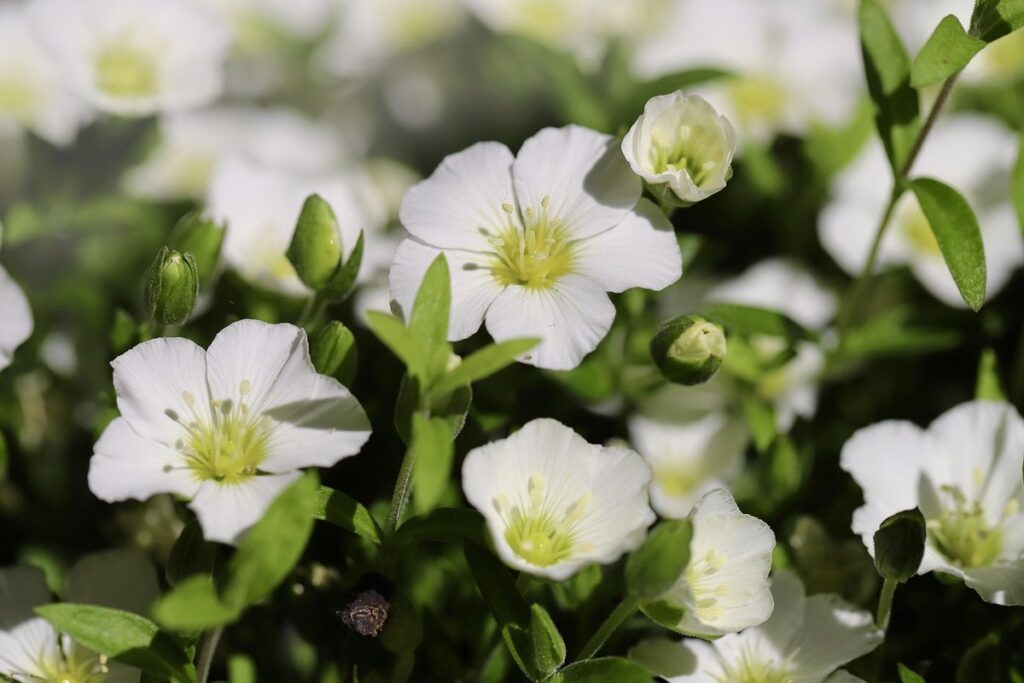
Chickweed produces white or pale pink flowers that grow in clusters at the tips of its stems. These small, delicate flowers are often mistaken for tiny stars due to their shape and structure. To identify chickweed accurately, observe the plant’s growth habit, stem length, leaf shape and size, and flower color.
Common Misidentifications of Chickweed
Chickweed is often mistaken for other common weeds that share similar characteristics. Two plants that are frequently confused with chickweed are henbit (Lamium amplexicaule) and deadnettle (Lamium purpureum). Henbit has a more upright growth habit than chickweed, with rounded leaves that are a deep green color. It also produces small purple flowers in the spring.
Deadnettle, on the other hand, has net-like patterns on its leaves, which can give it a distinctive appearance. However, deadnettle often grows taller and more robustly than chickweed, making it easier to distinguish. To tell these plants apart from chickweed, pay attention to their leaf shape and size, as well as their flower color and growth habit.
One way to confirm the identity of a plant is to examine its stem. Chickweed typically has a slender, wiry stem that is often branched near the base. Henbit and deadnettle have thicker, more woody stems that are less likely to be branching. By paying attention to these details, you can avoid misidentifying chickweed as one of these other plants.
Habitat and Life Cycle of Chickweed
Chickweed thrives in a variety of environments, from moist lawns to woodland edges, and understanding its habitat can help you identify it more easily.
Preferred Growing Conditions
Chickweed tends to thrive in areas with mild temperatures, consistent moisture levels, and rich soil. It can grow in a variety of soil types, including clay, loam, and sand, but it prefers well-drained soils that are slightly acidic to neutral in pH.
In ideal conditions, chickweed requires partial shade to full sun, although it can tolerate deep shade. This adaptability is part of what makes it such an invasive weed – it can grow anywhere from 30% shade to full sun. As a result, areas with dense tree cover or buildings with overhanging roofs are susceptible to heavy infestations.
To understand why chickweed thrives in certain areas, consider the following factors: Soil compaction and poor drainage allow chickweed to spread its roots more easily, while consistent moisture levels encourage germination and growth. Areas with disturbed soil, such as newly graded lawns or construction sites, provide an ideal environment for chickweed to take hold.
When identifying potential problem areas in your lawn and garden, look for these conditions. If you’ve noticed that certain sections are consistently wet or have poor drainage, it may be a prime location for chickweed growth.
Stages of Growth: Seed Germination to Flowering
Chickweed’s life cycle is a fascinating process that allows it to thrive in various environments. The journey begins with seed germination, where tiny seeds sprout into delicate white roots and leaves. This stage typically occurs within 1-3 weeks after sowing, depending on temperature and moisture conditions.
As the plant grows, it develops a taproot system, allowing it to anchor itself firmly in the soil. Leaf production increases, with new sets of rosettes forming around the central stem. This is an excellent opportunity for identification, as the plant’s distinctive leaf shape and pointed tips are now more visible.
As chickweed reaches maturity, it transitions into its flowering stage, producing clusters of small white flowers. This is a key identifier, as the plant can produce multiple sets of flowers throughout its life cycle. By understanding these growth stages, you’ll be better equipped to recognize chickweed in your lawn and garden at different times of the year.
Keep an eye out for this progression, especially during spring and early summer when chickweed tends to germinate and flower.
Distinguishing Chickweed from Similar Weeds
You may have noticed that chickweed can look similar to other weeds, which is why it’s essential to learn how to distinguish it from its lookalikes in your lawn and garden. In this next section, we’ll help you tell them apart.
Visual Identification Tips
Chickweed has a distinctive appearance that sets it apart from other weeds. To visually identify chickweed, look for its small, oval-shaped leaves that are typically 1-2 inches long and have toothed edges. The leaves often grow opposite each other on the stem, which is usually slender and wiry. Chickweed stems can be green or slightly reddish in color.
One of the key features to note when identifying chickweed is its tiny white flowers. These dainty blooms are arranged in clusters at the top of the stem and are a key distinguishing characteristic. They typically appear from spring to fall, but can vary depending on factors like climate and weather conditions.
When examining your lawn or garden for chickweed, it’s essential to observe these visual cues together. By paying attention to leaf shape, stem color, and flower characteristics, you’ll be better equipped to identify this pesky weed. Remember, a combination of these features is more reliable than relying on any single trait.
Common Weed Combinations with Chickweed
When it comes to identifying chickweed in your lawn and garden, it’s not uncommon for it to appear alongside other weeds. In fact, there are several common weed combinations that often occur with chickweed. One of the most notable is henbit (Lamium amplexicaule). Henbit has similar oval-shaped leaves to chickweed, but they’re typically a bit larger and have a more coarsely toothed edge. The stems of henbit tend to be taller and more robust than those of chickweed.
Another weed that often accompanies chickweed is deadnettle (Lamium purpureum). Deadnettle has similar heart-shaped leaves to chickweed, but they’re typically a deeper green color and have a slightly hairy texture. The stems of deadnettle can grow quite long and may produce small purple flowers in the summer.
Knotweed (Polygonum aviculare) is yet another weed that often appears with chickweed. Knotweed has smaller, lance-shaped leaves that are typically a bit pointed at the tip. The stems of knotweed tend to be shorter than those of chickweed and may have a reddish tint to them.
To identify these weeds in conjunction with chickweed, take note of their leaf shape, size, and texture, as well as any flowers or growth habits they exhibit.
Control Methods for Chickweed
Now that you’ve identified chickweed in your lawn and garden, it’s time to think about control methods. We’ll explore effective ways to suppress its growth without harming your plants.
Cultural Controls: Prevention and Removal
Preventing chickweed from taking over your lawn can be challenging, but there are effective non-chemical methods to control its spread. Proper lawn mowing techniques can go a long way in preventing chickweed growth. Maintain your mower at a height of 2.5 to 3 inches, and avoid scalping the grass, which can stress the turf and make it more susceptible to weed invasion.
Another approach is to focus on soil amendments that promote healthy grass growth. Fertilize your lawn with a balanced fertilizer in the spring, and consider adding organic matter like compost or manure to improve soil structure and fertility. This will give your grass the nutrients it needs to outcompete chickweed for resources.
To remove existing chickweed, try hand-pulling the weeds when the soil is moist but not waterlogged. Make sure to pull the entire root system to prevent regrowth. You can also use a tool like a hoe or cultivator to carefully loosen and remove chickweed without damaging nearby grass. Regularly maintaining your lawn through proper mowing, fertilization, and weed removal will help keep chickweed under control and promote a healthy, balanced ecosystem.
Chemical Controls: Herbicides and Precautions
When it comes to controlling chickweed, chemical controls can be an effective option. Herbicides are substances that kill plants, and there are various types available for chickweed control. Non-selective herbicides, such as glyphosate (Roundup) and glufosinate (Finale), will kill any plant they come into contact with, making them useful for large areas of infestation. However, these herbicides can also harm desirable plants, so be sure to carefully select the area you treat.
Selective herbicides, like dicamba (Banvel) and 2,4-D, target specific plant species. They are more precise but still require caution when applied near other plants. Always read and follow label instructions before using any herbicide. To minimize risks, avoid applying herbicides during windy or rainy conditions and wear protective clothing, including gloves and eyewear.
Before resorting to chemical controls, consider the potential long-term effects on your soil and ecosystem. Chickweed can be managed through cultural practices like proper mowing, watering, and fertilization. Additionally, natural methods such as hand-pulling or mulching can also be effective in controlling chickweed infestations. If you do choose to use herbicides, carefully select the product and follow safety precautions to minimize risks.
Long-term Solutions for Chickweed Management
Now that you’ve identified chickweed in your lawn and garden, it’s time to think about how to keep it under control for good. We’ll explore long-term solutions to prevent its return.
Integrated Pest Management (IPM) Strategies
Implementing Integrated Pest Management (IPM) strategies is a holistic approach to managing chickweed and other weeds in your lawn and garden. By combining cultural, biological, and chemical controls, you can create a comprehensive plan that leads to long-term weed suppression.
Cultural controls involve making adjustments to the environment to discourage weed growth. This includes proper mowing techniques, watering schedules, and fertilization practices. For example, regular mowing at the correct height can prevent chickweed from flowering and seeding. Additionally, using drought-tolerant plants or reducing watering frequency can weaken weeds’ ability to compete with desirable plants.
Biological controls involve using living organisms to control pests. This includes introducing beneficial insects that prey on weeds or using microorganisms to suppress weed growth. For instance, introducing ladybugs that feed on aphids and other plant-sucking insects can indirectly reduce chickweed populations.
Chemical controls are often necessary for targeted applications, but it’s essential to use them judiciously to minimize harm to the environment. By rotating between different control methods, you can avoid developing resistance in weed populations.
Maintaining Healthy Lawn and Garden Conditions
When it comes to managing chickweed effectively, it’s essential to focus on creating an environment that’s less hospitable to its growth. One of the most critical aspects is maintaining healthy lawn and garden conditions. Proper watering techniques play a significant role here.
Watering should be done deeply but infrequently to encourage deep root growth in your plants. This helps them become more resilient to chickweed invasion. As a general rule, aim for about 1 inch of water per week, either through rainfall or irrigation. You can check the soil moisture by inserting a finger into the soil up to the knuckle. If it feels dry, it’s time to water.
Soil testing is another crucial step in maintaining healthy lawn and garden conditions. This helps you determine your soil’s pH level and nutrient content. Most plants prefer slightly acidic to neutral soil (pH 6.0-7.0), which is less conducive to chickweed growth. Based on the test results, you can adjust the fertilization schedule accordingly.
Proper fertilization practices are vital in maintaining healthy lawn and garden conditions. Use a balanced fertilizer that provides equal amounts of nitrogen, phosphorus, and potassium (N-P-K). Avoid over-fertilizing, as this can promote weak plant growth, making them more susceptible to chickweed invasion.
Frequently Asked Questions
How do I know if chickweed is the primary weed issue in my lawn or garden, rather than a secondary one?
Identifying the primary weed can be challenging, but observe its growth pattern. Chickweed often spreads rapidly and forms large patches. If you notice these characteristics alongside other weeds, it might indicate that chickweed is not the only issue at hand. Consider examining your preferred growing conditions and cultural controls to determine if they’re contributing to multiple weed problems.
Can I use mulch or landscaping fabric as a physical barrier to prevent chickweed from spreading?
Yes, using mulch or landscaping fabric can be an effective way to control chickweed spread, especially in areas where you don’t want the weed to grow. However, remember that these barriers may not completely eliminate existing chickweed growth; they primarily serve to prevent new seedlings from emerging.
How do I handle the situation if I accidentally spread chickweed seeds while weeding?
Chickweed can be dispersed through various means, including equipment and human activity. If you suspect this has happened, take immediate action by carefully raking or digging up the affected area before chickweed seeds have a chance to germinate.
Will using herbicides harm beneficial insects in my garden, like bees that might be attracted to chickweed flowers?
Yes, some herbicides can be harmful to beneficial insects. However, many modern herbicides are specifically designed for targeted use and have minimal impact on non-target species. Always follow product instructions carefully and consider integrated pest management (IPM) strategies that prioritize natural methods of control.
Can I use chickweed as a companion plant in my garden, potentially benefiting from its properties or attracting beneficial insects?
Chickweed is sometimes used in herbal medicine and has been reported to have various health benefits. However, using it as a companion plant primarily for these reasons may not be the most practical approach. Chickweed can grow aggressively and outcompete your desired plants, making it more challenging to manage weeds overall.