
Cherry trees are a delight to have in any garden or yard, but can you tell one species from another just by looking at their leaves? Not many people can identify cherry tree leaves with confidence, and it’s not hard to see why. With so many varieties out there, each with its unique characteristics, learning how to spot the differences can be overwhelming.
In this article, we’ll take you through the essentials of identifying cherry tree leaves like a pro. We’ll cover the key features that will help you tell apart different species: shape and size, color patterns, and other distinctive traits. You’ll also learn expert tips on observing and documenting these characteristics, making it easier to differentiate between various types of cherry trees. Whether you’re an avid gardener or just starting out with tree identification, this comprehensive guide has got you covered.
Understanding Cherry Tree Leaf Morphology
Now that we’ve discussed basic leaf characteristics, let’s dive into the fascinating world of cherry tree leaf morphology, exploring key features to look for.
Shape and Size
Cherry tree leaves exhibit remarkable diversity in terms of shape and size, which can often be indicative of their respective species. The most prominent distinction lies between the oval-shaped leaves of sweet cherry (Prunus avium) and the lanceolate leaves of sour cherry (Prunus cerasus). On average, sweet cherry leaves measure 4-8 cm in length, with a width ranging from 2-5 cm.
Sour cherry leaves tend to be smaller, typically measuring 3-6 cm in length and 1.5-4 cm in width. Some species, such as the ornamental weeping cherry (Prunus subhirtella ‘Pendula’), exhibit even more slender and curved leaf shapes, often reaching lengths of up to 12 cm.
When identifying cherry tree leaves, consider the overall proportion and symmetry of the leaf. Sweet cherry leaves tend to have a more rounded base and pointed tip, while sour cherry leaves have a narrower base and less pronounced tip.
Leaf Margins and Lobes
When examining cherry tree leaves, one of the key characteristics to pay attention to is the shape and appearance of the leaf margins. The margin refers to the edge of the leaf, and it can vary greatly between different species.
There are three main types of leaf margins: entire, serrated, and lobed. Entire margins are smooth and unbroken, while serrations (or toothed margins) have small pointed projections along the edge of the leaf. Crenations, on the other hand, have small rounded projections that can be arranged in a regular pattern.
To distinguish between these different types of margins, look closely at the edge of the leaf under good lighting conditions. Serrated leaves will have small teeth or points along the margin, while crenated leaves will have more rounded features. Entire margins are relatively easy to identify as they lack any notable projections or indentations.
Keep in mind that some cherry tree varieties can exhibit a combination of these characteristics, making it even more crucial to examine multiple leaves and consider other identifying features before making a positive identification.
Leaf Arrangement on Stems
When it comes to identifying cherry tree leaves, understanding their arrangement on stems is an essential detail. Cherry trees display different leaf arrangements, which can be a key characteristic for identification. The most common leaf arrangements found on cherry tree stems are opposite, alternate, and whorled.
Opposite leaves are arranged in pairs, with one leaf directly above the other on either side of the stem. This arrangement is typical for many Prunus species, including sweet cherries (Prunus avium) and sour cherries (Prunus cerasus). Alternate leaves, on the other hand, grow alternately along the stem, with a single leaf between each pair of nodes. Many ornamental cherry trees exhibit this arrangement.
Whorled leaves occur when three or more leaves emerge from a single node on the stem. This is less common in cherry tree species but can be observed in some cultivars. When examining a cherry tree’s stem, observe how the leaves are arranged to help narrow down the identification process.
Common Cherry Tree Species and Their Leaves
When it comes to identifying cherry tree leaves, recognizing the differences between various species is crucial. Let’s explore some of the most common cherry tree varieties and their distinctive leaf characteristics.
Sweet Cherry (Prunus avium) Leaves
Sweet cherry tree leaves are one of the most recognizable types of leaves found on cherry trees. These leaves are typically ovate to elliptical in shape, with a pointed tip and a slightly notched base. They can grow quite large, reaching lengths of up to 4 inches (10 cm) or more, and have a wavy or doubly serrated margin.
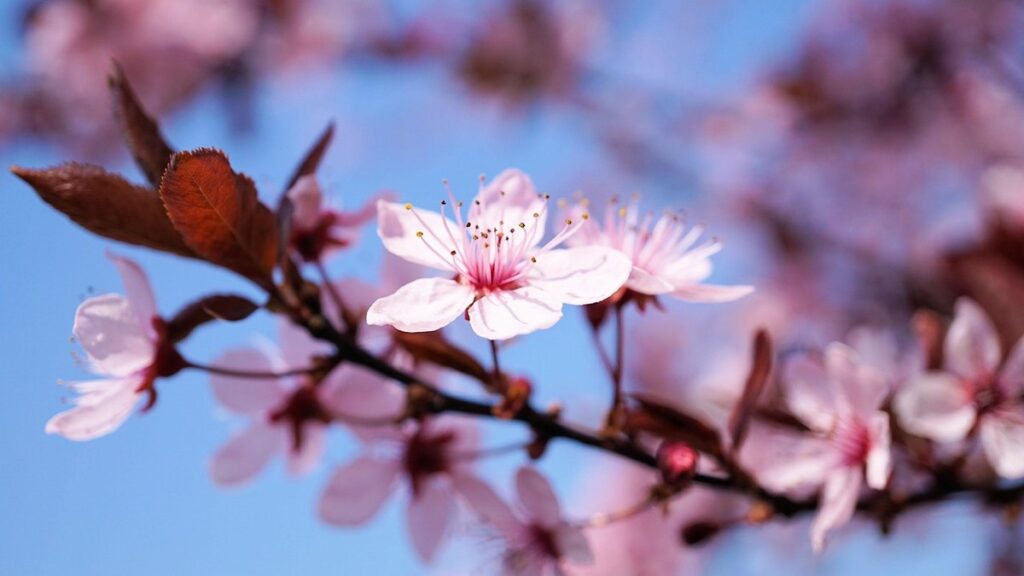
When examining sweet cherry tree leaves, look for the distinctive fine teeth along the margins. These teeth are spaced fairly evenly apart and give the leaf a coarsely toothed appearance. The upper surface of the leaf is usually dark green in color, while the lower surface has a light yellow-green hue. In the spring, new growth on sweet cherry trees often has a reddish tint to its leaves.
When trying to identify sweet cherry tree leaves, pay close attention to their overall shape and size. If you’re still unsure, take a closer look at the margins – if they have fine teeth spaced evenly apart, it’s likely a sweet cherry tree leaf. With practice, you’ll become more confident in your ability to distinguish between different types of cherry tree leaves based on these distinctive characteristics.
Sour Cherry (Prunus cerasus) Leaves
Sour cherry trees (Prunus cerasus) are known for their distinctive leaves, which can be easily distinguished from those of sweet cherry trees. The leaves of sour cherry trees are typically narrower and more lance-shaped, with a pointed tip at the apex. They usually have a single serration on each lobe, giving them a coarsely toothed appearance. Another notable feature is the presence of stipules, small leaf-like structures that occur at the base of the petiole (leaf stem). These stipules are often missing in sweet cherry trees.
In terms of size, sour cherry leaves tend to be smaller than those of sweet cherries, typically measuring between 2-4 inches long. The upper surface is usually a vibrant green color with a smooth texture, while the lower surface may have a slight bluish tint and be slightly hairy. When identifying sour cherry tree leaves, pay attention to these distinctive features and compare them to the leaves of other cherry species. With practice, you’ll become proficient in distinguishing between different types of cherry trees based on their unique leaf morphology.
Other Cherry Tree Species
In addition to the popular sweet cherry (Prunus avium) and sour cherry (Prunus cerasus), there are several other notable cherry tree species that can be identified by their unique leaf characteristics. Prunus incana, also known as the downy cherry, has leaves with a grayish-green color and a dense covering of fine hairs on the underside. This gives them a soft, velvety texture.
Prunus fruticosa, or the red-berried cherry, has smaller leaves with pointed tips and a more oval shape than Prunus avium. The leaves are also slightly wavy along the edges and have a dense covering of fine hairs on the underside, similar to Prunus incana.
When identifying these tree species, pay attention to the overall leaf size, shape, and texture. Note any distinctive markings or colors that may be present on the leaves. Keep in mind that cherry trees can hybridize with other Prunus species, resulting in unique characteristics. By observing the specific traits of each species, you can more accurately identify the type of cherry tree based on its leaves alone.
For example, a downy cherry (Prunus incana) can be identified by its small, oval-shaped leaves with a distinctive grayish-green color and dense covering of fine hairs on the underside.
Identifying Cherry Tree Leaves by Color and Pattern
When it comes to identifying cherry tree leaves, a crucial step is examining their vibrant colors and unique patterns. This section will help you decode these characteristics.
Leaf Venation Patterns
When examining cherry tree leaves, it’s essential to pay attention to their venation patterns. The arrangement of veins on the leaf can be a crucial identifying feature. Cherry tree leaves often display two primary types of venation: palmate and pinnate.
Palmate venation is characterized by a central vein from which multiple secondary veins radiate outward, resembling the fingers of a hand. Sweet cherry (Prunus avium) leaves typically exhibit this pattern, with five to seven lobes that branch off from the central stem. For example, if you notice a leaf with three distinct divisions on either side of the midrib, it could be a sweet cherry tree.
Pinnate venation, on the other hand, features a single main vein down the center of the leaf, accompanied by lateral veins that connect to it at intervals. Sour cherry (Prunus cerasus) leaves usually display this pattern, with leaflets attached along both sides of the central rachis. To distinguish between these patterns, take note of the orientation and arrangement of veins on the underside of the leaf as well.
Leaf Coloration and Tinting
Cherry tree leaves display a range of colors and tintings depending on the season and environmental conditions. During spring, newly emerged leaves are typically bright green with a reddish-purple tint due to the presence of anthocyanins. As the trees mature, the leaves gradually transition to a deeper green color, often with a yellow or bronze tint around the edges.
In summer, healthy cherry tree leaves can turn a vibrant dark green or even a bluish-green hue. However, if the leaves are exposed to stressors like drought, disease, or pests, they may develop unusual colors such as pale yellow, light brown, or even black spots. These changes can also be triggered by factors like soil quality, nutrient deficiencies, and exposure to extreme temperatures.
In autumn, cherry tree leaves often turn a brilliant shade of orange, red, or purple before falling off the tree. This color change is caused by the breakdown of chlorophyll, allowing other pigments like carotenoids and anthocyanins to dominate. By observing these seasonal changes and potential color variations, you can gain valuable insights into the overall health and well-being of your cherry tree.
Leaf Stippling and Other Markings
When examining cherry tree leaves, you may notice various stippling patterns and other markings that can aid in identification. Leaf stippling refers to small white or yellow spots on the leaf’s surface, often caused by tiny insects feeding on the sap.
Some common cherry tree species exhibit unique stippling patterns:
* Sweet Cherry trees (Prunus avium) typically have a more even stippling pattern, with numerous small spots covering much of the leaf.
* Sour Cherry trees (Prunus cerasus), on the other hand, often feature larger, more sparse stippling.
Other markings to look for include:
• Marginal teeth: The edge of some cherry tree leaves is lined with sharp teeth. These can be quite pronounced in varieties like Prunus serrulata.
• Vein color: Cherry tree veins may appear white or yellowish due to the presence of latex, a natural defense mechanism.
• Leaf shape and size: Some species, such as Prunus campanulata, have heart-shaped leaves with wavy margins.
When examining these markings, consider the overall leaf morphology and the specific growth habits of the tree.
Environmental Factors Affecting Cherry Tree Leaves
When it comes to identifying cherry tree leaves, environmental factors can significantly impact their appearance, making it essential to consider these influences when trying to determine the right species.
Seasonal Changes
As the seasons change, cherry tree leaves undergo significant transformations. Temperature fluctuations, droughts, and extreme weather conditions all impact leaf morphology, making identification more challenging. In the spring, as temperatures rise, new growth emerges in shades of bright green or reddish-purple. These young leaves may be smaller and more rounded than mature leaves.
Summer heat can cause leaves to turn darker green or develop a bronzy hue due to increased chlorophyll production. However, extreme heatwaves can scorch leaves, causing them to wilt and develop brown edges. Droughts can also stress trees, leading to curled or wrinkled leaves. In autumn, as temperatures drop, leaves may turn yellow, orange, or reddish-purple before falling.
Keep in mind that these seasonal changes can vary depending on the specific cherry tree variety, climate, and location. To accurately identify cherry tree leaves, observe their morphology during different seasons, noting any unusual characteristics. This knowledge will help you better understand how to distinguish between various cherry tree species and cultivars.
Disease and Pests
Cherry trees are susceptible to various diseases and pests that can cause significant damage to their leaves. One of the most common diseases is powdery mildew, a fungal infection that appears as a white, powdery coating on the upper surface of leaves. Black knot disease, caused by the fungus Dibotryon morbosum, forms black, swollen growths on branches and can lead to leaf scorch.
Another significant threat is pests like aphids, which secrete a sticky substance called honeydew that attracts ants and promotes fungal growth. Spider mites, tiny spider-like insects, feed on sap, causing yellowing or bronzing of leaves. Japanese beetles are also known to attack cherry trees, leaving behind skeletonized leaves.
Regular inspections can help detect these issues early on. Look for unusual color changes, holes, or distortions in leaves, and monitor for the presence of pests like aphids or spider mites. Fungal diseases often appear as yellowing or wilting leaves, accompanied by black spots or powdery patches.
Soil Quality and Nutrient Deficiencies
Soil quality and nutrient deficiencies can have a significant impact on cherry tree leaf health. When soil lacks essential nutrients, it can lead to a range of problems including stunted growth, yellowing leaves, and reduced fruit production. Cherry trees require a balanced diet of nitrogen, phosphorus, potassium, and other micronutrients to thrive.
A lack of potassium, in particular, can cause cherry tree leaves to develop brown edges and become more susceptible to disease. On the other hand, an overabundance of nitrogen can lead to excessive foliage growth at the expense of fruit production. To diagnose nutrient deficiencies, look for signs such as yellowing or browning leaves, stunted growth, and reduced flower or fruit production.
To improve soil quality and address potential nutrient deficiencies, regular soil testing is essential. Based on the results, amendments such as compost, manure, or fertilizers can be applied to provide the necessary nutrients. For example, adding a balanced fertilizer in early spring can help promote healthy growth and development throughout the growing season. By monitoring soil health and making adjustments as needed, you can create an optimal environment for your cherry tree leaves to flourish.
How to Use This Knowledge in Practice
Now that you’ve learned how to identify cherry tree leaves, let’s discuss practical ways to apply your new knowledge in everyday life and gardening situations effectively.
Key Takeaways for Identification
When it comes to identifying cherry tree leaves in practice, there are several key takeaways from our comprehensive guide that will serve as a valuable resource. First and foremost, it’s essential to recognize the distinct characteristics of sweet and sour cherry trees, including their leaf shapes, sizes, and arrangements on the stem.
Remember that sweet cherry leaves tend to be larger and more rounded, while sour cherry leaves are smaller and more oval in shape. Additionally, sweet cherry leaves often have a pointed tip, whereas sour cherry leaves have a blunt tip. Keep an eye out for these differences as you examine the leaves up close.
Another crucial aspect of identification is considering the overall leaf texture and color. Sweet cherry leaves typically have a smooth surface with a reddish-green tint, while sour cherry leaves are usually more glossy with a deeper green hue. By combining these characteristics, you’ll be well on your way to confidently identifying cherry tree leaves in various environments.
By committing these key features to memory, you’ll develop a keen eye for spotting cherry trees and differentiating between their various species.
Best Practices for Observation and Documentation
When observing and documenting cherry tree leaves, it’s essential to do so with precision and attention to detail. Start by selecting a healthy leaf from a mature tree, ideally one that is not too large or too small. Take note of the shape, size, and coloration, including any notable markings or patterns.
For photography, natural light is crucial for capturing accurate colors and textures. Position yourself so that the sunlight is behind you, and avoid using flash as it can distort the image. Use a close-up lens or macro setting to capture intricate details such as venation patterns and edge serrations.
When taking notes, focus on specific characteristics like leaf length, width, and the number of lobes or teeth. Consider sketching the leaf’s shape, including any distinctive features like notches or ridges. Also, record any observations about the tree’s environment, such as its location, soil type, and surrounding vegetation. This information will help you contextualize your findings and make more accurate identifications.
Frequently Asked Questions
How do I choose the right cherry tree species for my garden or yard?
When selecting a cherry tree, consider factors like climate, soil type, and available space. If you live in a cooler region, opt for sweet cherries (Prunus avium), while warmer areas are better suited for sour cherries (Prunus cerasus). Also, think about the mature size of the tree and its potential impact on nearby structures.
Can I use photographs to identify cherry tree leaves?
Yes, taking clear photos of leaves can be a useful tool in identification. However, be aware that images may not accurately represent leaf color or venation patterns due to factors like lighting and camera quality. To get the most out of photo documentation, consider using high-quality equipment and consistent shooting conditions.
How do environmental factors affect cherry tree leaf morphology?
Environmental factors such as temperature, humidity, and soil quality can significantly impact the appearance of cherry tree leaves. For instance, drought stress may cause leaves to become smaller or develop brown edges, while nutrient deficiencies can lead to yellowing or stunted growth. Be aware of these influences when observing and documenting leaves.
Can I identify cherry tree species solely based on leaf color?
No, relying solely on leaf color for identification is not recommended. While some species exhibit distinctive colors or patterns, many others share similar characteristics. To accurately identify cherry trees, consider a combination of features like shape, size, venation patterns, and other morphological traits.
How can I ensure accurate observation and documentation of cherry tree leaves?
To document leaves effectively, use a consistent method for measuring and recording leaf dimensions, venation patterns, and coloration. Also, photograph the leaves from multiple angles to capture any notable characteristics. Consider keeping a notebook or using digital tools like apps or spreadsheets to organize your observations and notes.