
Poison ivy is one of those sneaky outdoor foes that can quickly turn a beautiful hike into an uncomfortable encounter. If you’re not careful, you might end up with itchy rashes and painful blisters – all thanks to urushiol oil, the culprit behind poison ivy’s notorious reputation. But don’t let fear keep you from enjoying nature! With our expert guide, you’ll be able to confidently identify poison ivy in no time.
We’ll cover everything you need to know about recognizing this pesky plant, including its distinctive leaf shapes and typical habitats. You’ll learn how to spot it before it spots you – and what to do if you accidentally come into contact with it. Plus, we’ll share some valuable prevention tips to help you minimize the risk of an encounter gone wrong. By the end of this article, you’ll be a poison ivy pro, ready to take on whatever the great outdoors throws your way.
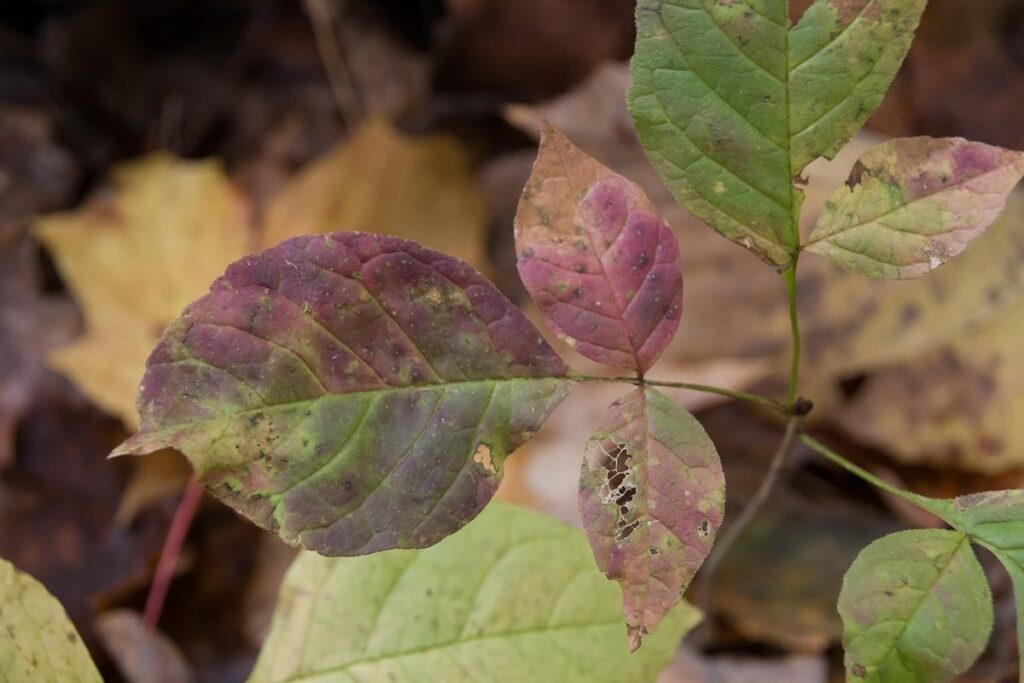
Understanding Poison Ivy Basics
To effectively identify poison ivy, it’s essential to understand its basic characteristics, including its growth patterns and distinguishing features. Let’s dive into these fundamental basics together.
The Toxic Trio: Identifying Poison Ivy’s Allies
When it comes to poison ivy identification, it’s essential to know its closest relatives that share similar allergenic properties. These “toxic trio” allies are poison oak and poison sumac, both of which can cause severe skin irritation, blisters, and rashes upon contact.
Poison oak (Toxicodendron diversilobum) is a common lookalike to poison ivy, found primarily on the West Coast. It has lobed leaves that resemble an umbrella shape, often with seven pointed tips. Like poison ivy, it contains urushiol oil, which causes the allergic reaction.
Poison sumac (Rhus venenata), native to the southeastern United States, is another potent allergen. Its white or pale yellow berries make it easily identifiable. The leaves of poison sumac have a more rounded shape and tend to grow on staghorn or winged branches, often near swamps or bogs.
To avoid these toxic trio allies, be aware of your surroundings when exploring the outdoors. Take note of unique leaf shapes and berry patterns, as these can help you differentiate between safe plants and poison oak, poison sumac, and poison ivy.
The Urushiol Oil Connection
Urushiol oil is the primary culprit behind poison ivy’s notorious reputation for causing severe skin irritation and allergic reactions. This oily sap is responsible for the plant’s toxicity and is found in all parts of the poison ivy plant, including its leaves, stems, roots, and even the plant’s berries.
When urushiol oil comes into contact with human skin, it triggers an intense immune response, leading to inflammation, itching, and blistering. The reaction can be severe enough to require medical attention in some cases. What makes urushiol oil so potent is its ability to bind strongly to proteins on the surface of skin cells, causing a long-lasting and sometimes debilitating response.
To avoid exposure to this toxic oil, it’s essential to exercise caution when dealing with poison ivy plants. If you suspect you’ve come into contact with poison ivy, wash your skin thoroughly with soap and water as soon as possible. Use cool water and mild soap to help reduce the severity of the reaction.
Recognizing Poison Ivy Leaves
When it comes to identifying poison ivy, being able to recognize its distinctive leaves is crucial – let’s break down what you need to look for.
Leaf Shape and Arrangement
When examining poison ivy leaves, pay close attention to their shape and arrangement on stems. Poison ivy has three main leaf shapes: palmate, lobed, and unlobed.
The most distinctive shape is the palmate leaf with five pointed lobes. These lobes are typically symmetrical and can have smooth or toothed edges. The middle lobe often has a more rounded tip than the side lobes. In some cases, the leaves may be asymmetrical, with one side having fewer lobes.
The arrangement of these lobes on stems is also characteristic of poison ivy. They usually grow in an alternate pattern, meaning that each leaf is positioned opposite to the stem’s growth direction. However, some plants can exhibit a whorled or clustered arrangement. The color and texture of the leaves may vary depending on the time of year and environmental conditions.
When trying to identify poison ivy, remember that not all leaves will have these exact characteristics. Some may have more or fewer lobes, while others might appear smoother or more waxy.
The Presence of Vines and Climbing Behavior
When it comes to identifying poison ivy, its climbing behavior can make it particularly challenging to spot. Poison ivy often grows as a vine, using its tendrils to wrap around trees and other structures. This adaptable growth habit allows the plant to thrive in various environments, from dense forests to urban backyards.
As you’re searching for poison ivy, be aware that its climbing behavior can make it blend seamlessly into its surroundings. For instance, if you’re walking through a forest, a poison ivy vine might be snaking its way up a tree trunk or wrapping around a branch. Without proper knowledge of the plant’s characteristics, it’s easy to miss these hidden patches.
When searching for poison ivy, remember to inspect not only the ground but also nearby trees and structures. Check for vines or stems that resemble thin, hairy cords. Be cautious when reaching up to examine branches or trunks, as you don’t want to inadvertently brush against a urushiol-coated leaf. By being aware of poison ivy’s climbing behavior, you can better navigate areas where the plant may be present and reduce your risk of exposure.
Identifying Poison Ivy Stems and Roots
When it comes to identifying poison ivy, being able to spot its stems and roots is crucial – learn how to recognize these distinctive features. Take a closer look at what makes them stand out from other plants.
Bark Patterns and Stem Color
When identifying poison ivy, one of the key distinguishing characteristics is its bark pattern. In the winter months, when leaves are absent, look for a mottled or patchwork pattern on the stem. This distinctive pattern features shades of gray and brown, with small, rounded patches that can be lighter or darker than the surrounding area.
As the seasons change, so does the coloration of poison ivy stems. In the spring, when new growth emerges, the stems are typically a bright green or reddish-green color. They may also have a slightly hairy appearance. As summer progresses, the stems turn a more mature green, often with an oily sheen.
In addition to bark patterns and stem colors, pay attention to the overall texture of the stem. Poison ivy stems tend to be relatively slender, with a smooth or slightly hairy surface. This can help you distinguish it from other plants in the area. By combining these visual cues, you should be able to identify poison ivy with confidence, even when it’s not in leaf.
Root System and Spread
Poison ivy’s extensive root system is one of its most remarkable features. This underground network allows it to spread quickly through an area, making it nearly impossible to eradicate once established. The root system can extend several feet beyond the visible plant, sending up new shoots and roots as it goes.
This ability to regenerate itself rapidly has significant implications for land management and control efforts. When attempting to remove poison ivy from a property, it’s essential to understand that simply cutting or digging up the above-ground growth won’t solve the problem. In fact, this approach can often spread the plant further by breaking off roots and sending them to new areas.
To effectively manage poison ivy, landowners must adopt a comprehensive strategy that includes not only physical removal but also prevention measures such as mulching and maintaining a healthy soil environment. This proactive approach will reduce the risk of regrowth and allow you to reclaim your property from this invasive plant.
Habitat and Geographic Range
Poison ivy can be found growing in a wide range of environments, from the forests of North America to your own backyard. Let’s take a closer look at its typical habitats and geographic range.
Common Environments for Poison Ivy Growth
Poison ivy is commonly found in various environments throughout eastern and central North America. When venturing outdoors, it’s essential to be aware of the areas where poison ivy tends to thrive.
Forests and woods are prime habitats for poison ivy growth. This versatile plant can adapt to different forest types, including deciduous, evergreen, and mixed forests. Its woody vines can climb up trees, using their strong tendrils to reach the canopy and create dense clusters of leaves. If you’re planning a hike through the woods, be cautious when approaching areas with dense underbrush or where trees are leaning over each other.
Along streams and rivers, poison ivy often grows as a groundcover or in shrub form. Its proximity to water sources is due to its ability to tolerate moist environments. When near these areas, inspect the banks and surrounding vegetation carefully for signs of poison ivy. Take note of any vines with compound leaves that have three leaflets each.
When identifying potential poison ivy habitats, pay attention to the types of trees nearby. Poison ivy often grows in association with oak, maple, and hickory trees. Also, look for areas with rich soil and adequate moisture – these conditions are ideal for poison ivy growth.
Regional Variations in Poison Ivy Distribution
When venturing outdoors, it’s essential to be aware of regional variations in poison ivy distribution. This plant is native to North America and can be found throughout much of the continent. However, its presence and concentration can differ significantly from one region to another.
In the eastern United States, poison ivy is most abundant, particularly in wooded areas and along trails. The southeastern states, such as Georgia and Florida, have a high concentration of the plant due to their warm and humid climate. In contrast, the western United States has fewer occurrences of poison ivy, but it’s still present in many national parks and forests.
The Midwest is another region where poison ivy is commonly found, particularly in states like Ohio and Michigan. When hiking or exploring these areas, be sure to check for the plant’s distinctive leaves and vines. In Canada, poison ivy is also prevalent, especially in provinces like Ontario and Quebec.
Keep in mind that even if you’re familiar with a particular region, it’s always possible to encounter poison ivy unexpectedly. Always exercise caution when venturing outdoors, and be prepared to identify this pesky plant.
Prevention and Treatment
Now that you’ve identified poison ivy, let’s dive into what to do if you encounter it, from preventing exposure to treating those pesky rashes.
Precautions for Outdoor Activities
When engaging in outdoor activities like hiking or gardening, it’s essential to take precautions to minimize exposure to poison ivy. Wear long-sleeved shirts, pants, and closed-toe shoes to cover as much skin as possible. Consider wearing clothing made from protective fabrics such as nylon or polyester, which are less likely to come into contact with urushiol.
When working outdoors, use a barrier between your skin and the plant. Apply a thick layer of calamine lotion, mud, or even Vaseline to any exposed skin before working in areas where poison ivy may be present. If you’re planning a hike, pack protective gear like gloves and a hat to prevent urushiol from coming into contact with your face and hands.
Be aware of your surroundings and avoid touching any unknown plants, especially those with leaves that resemble oak or maple. When handling gardening tools, wash your hands thoroughly after each use, and consider using a tool with a long handle to keep your skin at a safe distance. By taking these precautions, you can enjoy the great outdoors while minimizing the risk of exposure to poison ivy.
Symptoms and Treatment Options
When you come into contact with poison ivy, it can cause an allergic reaction that leads to uncomfortable and sometimes severe symptoms. The most common symptoms of a poison ivy rash include redness, itching, blistering, and swelling. In some cases, the rash can spread rapidly, causing significant discomfort.
If you experience mild symptoms, such as minor redness or itching, you can try treating them at home with over-the-counter remedies like calamine lotion or hydrocortisone cream. These creams can help alleviate itching and reduce inflammation. However, if your symptoms worsen or you notice signs of a severe reaction, such as difficulty breathing or swallowing, seek medical attention immediately.
In more severe cases, prompt medical attention is crucial to prevent complications. Your doctor may prescribe stronger medications like prednisone to treat the rash and reduce swelling. They may also recommend antihistamines to help with itching and other symptoms. If you’re unsure about the severity of your reaction or if you’re experiencing any unusual symptoms, don’t hesitate to consult a medical professional for guidance.
Conclusion
In conclusion, identifying poison ivy requires attention to detail and knowledge of its distinct features. By remembering the iconic leaves’ compound shape, red stems, and glossy surfaces, you’ll be well-equipped to spot this pesky plant in your backyard or on a hike. It’s also essential to note that some people may react more severely than others, so it’s crucial to take precautions when handling suspected poison ivy. To avoid getting burned (literally!), always assume the worst and wash those hands thoroughly. With practice and patience, you’ll become a poison ivy expert, able to confidently navigate the great outdoors without worrying about an itchy rash.
Frequently Asked Questions
How do I confirm I’ve identified poison ivy correctly?
Before taking any action, double-check your findings by looking for the characteristic leaf arrangement of three leaflets (usually with pointed tips) on a single stem. Also, consider the plant’s overall shape and color, including its hairy vines or stems, which are common traits among the toxic trio.
Can I still get poison ivy rash from just touching clothing or gear that came into contact with it?
Yes, urushiol oil can remain active on surfaces for a long time. If you’ve come into contact with contaminated clothing, gear, or even your own skin, wash those areas thoroughly with soap and water as soon as possible to minimize the risk of an allergic reaction.
What are some common places where poison ivy likes to grow?
Poison ivy often thrives in shaded areas near water sources, forests, and woodland edges. Be cautious when exploring these environments, especially during peak growing seasons (spring-fall) when urushiol oil is more potent. Always inspect your surroundings carefully before venturing further.
Can I prevent poison ivy rash by using protective clothing or gear?
While protective measures can help reduce the risk of exposure, they’re not foolproof. Be sure to combine these precautions with knowledge and vigilance while exploring the outdoors. Consider wearing long-sleeved shirts, pants, gloves, and closed-toe shoes when venturing into suspect areas.
What’s the best course of action if I accidentally touch poison ivy?
If you come into contact with urushiol oil, wash the affected area immediately with soap and water to remove any remaining oil. For minor reactions, apply a topical ointment or calamine lotion to soothe skin irritation. In severe cases, consult medical attention for proper treatment and guidance.