
Hoverflies are often misunderstood insects, but their larvae play a crucial role in ecosystems. These often-overlooked creatures are essential for controlling pest populations and maintaining a healthy balance within nature. However, identifying hoverfly larvae can be challenging, even for experienced naturalists. That’s why we’ve put together this comprehensive guide to help you learn how to identify these fascinating insects.
In this article, we’ll delve into the physical characteristics of hoverfly larvae, explore their habitats, and discuss identification techniques that will take your knowledge to the next level. From understanding their unique features to recognizing their behavior in different environments, our guide aims to demystify the world of hoverfly larvae. By the end of this article, you’ll be well-equipped to confidently identify these incredible insects and appreciate their significance in the ecosystem.
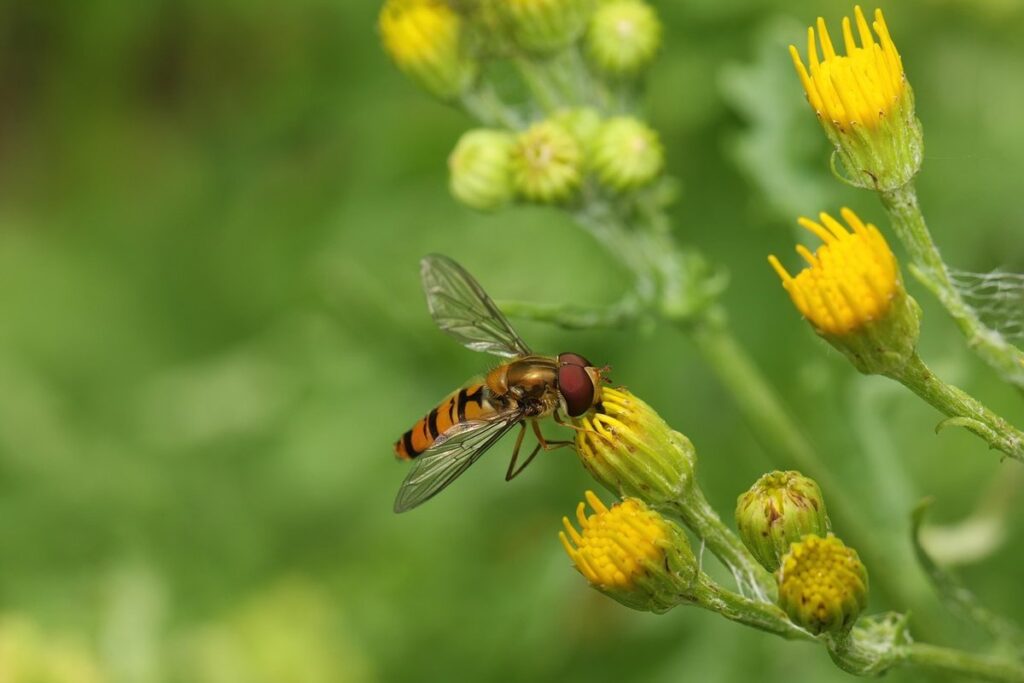
Understanding Hoverflies and Their Life Cycle
To truly master hoverfly larvae identification, you need to understand their fascinating life cycle, which involves four distinct stages of development. Let’s break down each stage together.
What Are Hoverflies?
Hoverflies are one of the most fascinating and beneficial insects to have in your garden. They are scientifically classified as part of the family Syrphidae within the order Diptera, which also includes flies and mosquitoes. However, don’t let their name fool you – hoverflies are not actually flies! Despite their appearance, they are closely related to bees and wasps.
Commonly known as flower flies or mosaic winged flies, hoverflies are easily recognizable by their striking colors and patterns on their wings and bodies. These vibrant markings serve as a warning signal to potential predators that hoverflies are toxic and taste bad. Female hoverflies are typically larger than males, with a more robust build, and can be distinguished by the presence of ovipositors used for laying eggs.
One of the unique characteristics of hoverflies is their incredible ability to pollinate flowers while in flight, much like bees and butterflies. This is due to their long, tube-shaped proboscis that allows them to reach nectar deep within flower structures. As a result, hoverflies play an essential role in maintaining ecosystem health and biodiversity by pollinating plants and controlling pest populations through their larvae’s herbivorous behavior.
Importance of Hoverflies in Ecosystems
Hoverflies play a vital role in maintaining the delicate balance of ecosystems. As pollinators, they contribute to the reproduction of plants by transferring pollen between flowers. This process is often overlooked, but hoverflies are responsible for pollinating a variety of crops, including alfalfa and blueberries.
In addition to their role as pollinators, hoverflies also serve as effective predators of aphids, whiteflies, and other pests that can damage crops. A single female hoverfly can lay up to 1,000 eggs on a single stem, ensuring that the next generation is well-equipped to tackle these unwanted visitors.
In the food chain, hoverflies occupy a unique position as both predator and prey. They are an essential food source for birds, bats, spiders, and other insects, providing a valuable link in the chain of life. By conserving hoverfly populations, we can also protect biodiversity and maintain ecological balance.
Physical Characteristics of Hoverfly Larvae
When it comes to identifying hoverfly larvae, understanding their physical characteristics is crucial for accurate identification. Let’s dive into the key features that set these fascinating insects apart from others.
Body Shape and Size Variations
When it comes to identifying hoverfly larvae, one of the key characteristics to look out for is their body shape and size variations. These differences can be quite striking, and they often serve as a crucial clue in distinguishing between different species.
Some hoverfly larvae exhibit elongated bodies with distinct setae or spines that run along their length, making them resemble tiny, insect-like caterpillars. Others may have stout, rounded bodies with short, stubby appendages that give them a more compact appearance. In some cases, you might notice that the setae on certain species are longer or thicker than others, while in other instances, they may be shorter and more sparse.
It’s worth noting that body shape and size can also vary within the same species due to factors such as diet, habitat, or developmental stage. Therefore, when making an identification, it’s essential to consider these variables and look for additional features that can help confirm the identity of the larva.
Some examples of hoverfly larvae with distinctive body shapes include the “alligator-like” appearance of certain Syrphid species, which have elongated bodies with a series of bumps or tubercles running along their length. Others, like the “bird-dropping” lookalike, have stout, rounded bodies with dark coloration and short, stubby setae that mimic bird droppings.
Coloration and Pattern Diversity
When it comes to identifying hoverfly larvae, one of the most crucial aspects is understanding their diverse coloration and patterns. These tiny insects exhibit a wide range of colors, from vibrant yellows and blues to striking blacks and whites. But what do these colors mean, and how can you use them to your advantage when trying to identify a particular species?
Firstly, let’s talk about the significance of coloration in hoverfly larvae. Research has shown that different species often exhibit unique combinations of colors and patterns on their bodies, which can serve as key identifiers. For instance, some species have distinctive yellow stripes or spots, while others may display intricate networks of fine lines or veins.
To take advantage of this diversity, observe the larva’s overall color pattern carefully. Note any distinctive markings, such as white or yellow patches, and look for patterns like stripes or spots. Consult field guides or online resources to match your observations with known species profiles. By paying close attention to these characteristics, you’ll be well on your way to accurately identifying hoverfly larvae in the wild.
Habitat and Distribution of Hoverfly Larvae
Hoverfly larvae can be found in a variety of habitats, from gardens to forests, and their distribution is influenced by factors such as climate and vegetation. Let’s take a closer look at where you might find them.
Aquatic vs. Terrestrial Environments
Hoverfly larvae can be found in various environments, including both aquatic and terrestrial habitats. Aquatic habitats like ponds, lakes, and streams are home to certain species of hoverfly larvae that have adapted to living in water. These larvae are often found near the surface, where they feed on algae or small aquatic organisms. For example, the common green bottle fly (Lucilia sericata) is known to lay its eggs in shallow water, and the resulting larvae will feed on decaying organic matter.
In contrast, other hoverfly species prefer terrestrial environments like soil, vegetation, or near plant roots. These larvae are often found in areas with high levels of moisture, but not necessarily submerged in water. They feed on small insects, such as aphids, or break down organic matter to recycle nutrients. For instance, the garden hoverfly (Eristalis tenax) is commonly found near flowers or vegetable gardens, where its larvae will feed on pests like aphids and whiteflies.
It’s essential to consider both aquatic and terrestrial habitats when identifying hoverfly larvae. By knowing their preferred environments, you can narrow down the possible species and make a more accurate identification.
Geographic Distribution and Regional Variations
Hoverflies can be found on every continent except Antarctica, with their larvae inhabiting diverse environments worldwide. The global distribution of hoverfly larvae is shaped by factors such as climate, vegetation, and availability of food resources.
Regional variations in species composition are evident when comparing different parts of the world. For instance, the larvae of the genus Merodon are common in Europe and Asia but scarce in Africa. In contrast, certain species like the Episyrphus balteatus are widespread across North America and Eurasia. These regional differences make it essential to familiarize yourself with local hoverfly fauna.
When identifying hoverfly larvae, consider the specific region you’re in and its corresponding larval species composition. Consult local field guides or online resources for guidance on identifying larvae native to your area. Note that while certain characteristics like body shape and coloration are shared among hoverfly larvae, regional adaptations can lead to distinctive features.
Identification Techniques for Hoverfly Larvae
To accurately identify hoverfly larvae, you’ll want to focus on their distinctive features such as mouthpart shape and body structure. Let’s break down the essential characteristics to look out for.
Macroscopic Examination
When examining hoverfly larvae using a microscope or hand lens, it’s essential to know what features to look for and what potential pitfalls to avoid. Begin by adjusting the focus carefully to ensure you’re viewing the specimen at a high magnification (usually 10x-40x). Look for distinctive characteristics such as the larva’s shape, coloration, and setal arrangement.
Observe the head capsule shape and size in relation to the body length, as well as the presence of mandibles or labium. Note the number and arrangement of prolegs, if present. Be aware that some larvae may have darkened cuticles, which can be mistaken for melanization due to environmental factors.
When inspecting setae (bristles), remember that their number and shape can vary significantly between species. Take note of any unusual features like wing buds or a distinctively shaped abdomen. Avoid over-interpreting minor details, as they may not be relevant to the larva’s identification. By paying attention to these characteristics and being mindful of potential pitfalls, you’ll be well on your way to accurately identifying hoverfly larvae under magnification.
Key Characteristics for Distinguishing Species
When examining hoverfly larvae, it’s essential to note key characteristics that distinguish one species from another. These features can be found in various parts of the larva, including its body shape, coloration, and structural details.
One of the primary characteristics used for identification is the presence or absence of a caudal spur on the last abdominal segment. This small projection can vary greatly between species, with some having a long, pointed spur while others have a short or even absent one. Additionally, the shape and size of the anal lobe, which is the triangular flap located at the end of the abdomen, can also be used to differentiate between species.
The coloration and pattern on the larva’s body are another crucial factor in identification. While some species may appear quite similar in terms of overall color, a closer inspection will reveal unique patterns or markings that set them apart. For example, the green-striped banding on the thorax can be a distinctive feature for certain species.
It’s also worth noting that some species have distinctive head shapes or antennal features that can aid in identification. By paying close attention to these characteristics and comparing them to reference materials, you can develop a more confident understanding of which species you’re dealing with.
Common Lookalikes and Misidentification Risks
When it comes to identifying hoverfly larvae, one of the biggest challenges is distinguishing them from other insects that may look similar. This section will highlight some common lookalikes and misidentification risks to watch out for.
Similar Species or Genera
When identifying hoverfly larvae, it’s not uncommon to come across species that bear a striking resemblance to one another. In fact, some genera share such similar characteristics that they can be easily mistaken for each other. For instance, the genus Rhagionidae and the family Conopidae have larvae that are often confused with those of the hoverfly family (Syrphidae).
Careful examination is crucial in distinguishing between these lookalike species. Start by observing the overall body shape and size. Note the number and arrangement of prolegs (short, fleshy extensions) on the abdomen. Also, examine the coloration and any distinctive markings or patterns.
The Syrphidinae subfamily, which includes many common hoverflies, is often confused with the Dolichopodidae family due to their similar slender bodies and long antennae. However, a closer look at the shape of the thorax and abdomen usually reveals key differences. To accurately identify these larvae, it’s essential to consult multiple field guides and take note of any specific characteristics unique to each species. By being aware of these potential misidentifications, you can ensure a more accurate identification process.
Impact of Misidentification on Ecosystems
Misidentifying hoverfly larvae can have far-reaching consequences for ecosystems. When these beneficial insects are mistaken for pests, they may be treated with pesticides or removed from the environment altogether. This incorrect treatment can not only harm the hoverflies but also disrupt the delicate balance of the ecosystem.
For example, some species of hoverfly larvae are natural predators of aphids and other garden pests. If these beneficial larvae are misidentified and sprayed with pesticides, they may be killed along with their prey, leading to an increase in pest populations. This can result in significant economic losses for farmers and gardeners who rely on these insects to control pest outbreaks.
Furthermore, removing hoverfly larvae from ecosystems can also have unintended consequences. These larvae play a vital role in decomposing organic matter and recycling nutrients, making them essential components of healthy soil biota. When they are removed, the ecosystem may suffer from reduced nutrient cycling and altered microorganisms populations, leading to degraded soil health over time.
By accurately identifying hoverfly larvae, you can help preserve these beneficial insects and maintain the balance of your ecosystem.
Conclusion and Future Directions
Now that we’ve explored the ins and outs of hoverfly larvae identification, let’s wrap up our discussion by highlighting key takeaways and discussing future directions for further study.
Recap of Key Takeaways
When it comes to accurately identifying hoverfly larvae, several key characteristics stood out throughout this comprehensive guide. To recap, these crucial traits include the presence of prolegs, shape and size variations, and specific color patterns.
The larval stage’s morphology was a significant aspect to focus on, with particular attention given to the development of thoracic legs and abdominal features. Understanding these distinct features is essential for distinguishing hoverfly larvae from other insect species that might resemble them.
Coloration also played a vital role in identification, as some species exhibit distinctive markings or color patterns. For example, the common green lacewing (Chrysopa nigra) has bright green prolegs with yellow tips, making it easier to recognize among others.
To reinforce your understanding of these characteristics, consider practicing identification using field guides and online resources that provide detailed images and descriptions. With time and practice, you’ll become more adept at distinguishing between various hoverfly larvae species based on their unique traits.
Recommendations for Further Study
If you’re eager to dive deeper into the fascinating world of hoverfly larvae biology, there are several recommendations for further study that can enhance your knowledge and expertise. Firstly, explore peer-reviewed journals such as Journal of Insect Science or Ecological Entomology, which frequently publish articles on hoverfly larval ecology, behavior, and systematics.
Additionally, online resources like the British Naturalists’ Association’s website offer a wealth of information on hoverflies, including identification guides, habitat notes, and distribution maps. The Integrated Taxonomic Information System (ITIS) is another valuable tool for accessing taxonomic data and species classification.
For those interested in research opportunities, consider contacting universities or institutions with entomology departments to inquire about potential projects or collaborations. Participating in citizen science initiatives like the Hoverfly Monitoring Scheme can also provide hands-on experience and contribute to a broader understanding of hoverfly ecology.
To further develop your skills, take online courses or attend workshops on insect identification, ecology, and systematics. This will not only deepen your knowledge but also equip you with practical tools for identifying and studying hoverfly larvae in various environments.
Frequently Asked Questions
What if I’m still unsure after trying the identification techniques mentioned in this guide?
Don’t worry, it’s normal to need more practice or clarification on certain points! For advanced species identification, consider consulting a field guide specific to your region or seeking guidance from an experienced naturalist. You can also join online communities or forums dedicated to entomology to connect with experts and fellow enthusiasts.
Can I use magnifying glasses for macroscopic examination instead of a microscope?
Yes, while microscopes are ideal for precise examinations, high-quality magnifying glasses (10x-20x) can be a more portable and affordable option for initial observations. However, keep in mind that they may not provide the same level of detail as a microscope.
How do I deal with similar species or genera that are difficult to distinguish?
When faced with challenging identifications, focus on key characteristics mentioned in this guide and cross-reference them with multiple field guides or online resources. Don’t be afraid to consult experts or join online forums for additional guidance. Remember, experience and practice will help you develop your skills over time.
Can I use images from the internet as a reference for identification?
While it’s understandable to rely on online resources, using images from unknown sources can lead to misidentification risks. Instead, rely on trusted field guides or expert-verified images, and always verify information with multiple sources whenever possible.
What if I’m interested in monitoring hoverfly larvae populations over time? Are there any best practices for sampling?
Yes! Monitoring population trends requires consistent methods and careful documentation. For long-term studies, consider establishing a standardized sampling protocol, using the same locations and observation techniques at regular intervals (e.g., monthly or seasonally). Also, record detailed notes on environmental conditions, as these can impact larval populations.