
Are you ready to unlock the secrets of the conifer world? Identifying conifers can be a daunting task, especially when they all seem to blend together. But don’t worry, we’ve got you covered! With over 550 species of conifers to choose from, being able to distinguish between them is essential for anyone who spends time outdoors – whether you’re a seasoned hiker or just starting to explore the great outdoors.
In this article, we’ll break down the key characteristics that will help you identify conifer trees by their needles. We’ll delve into the world of needle shapes and sizes, arrangements, and even share some field techniques to help you spot these trees like a pro. From spruces to pines, and firs to cedars, we’ll cover it all. By the end of this comprehensive guide, you’ll be well-equipped with the knowledge to confidently identify conifer trees in no time!
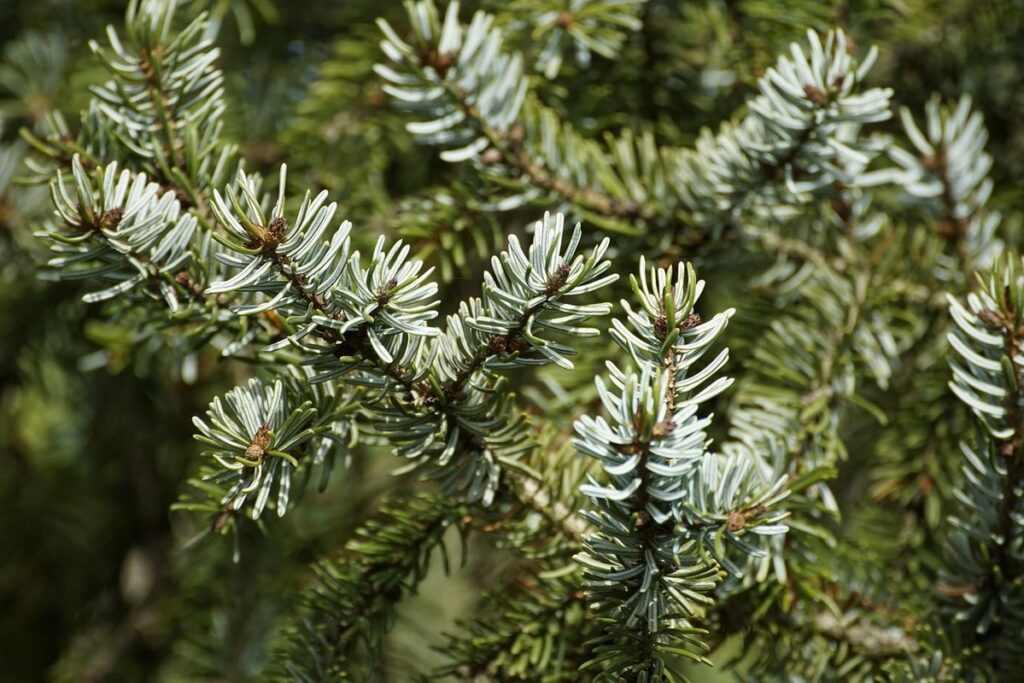
Understanding Conifers and Their Needles
Let’s start by breaking down the basic anatomy of conifer needles, which will help us better understand their unique characteristics and uses for identification. This includes types, shapes, sizes, and arrangements.
What are Conifers?
Conifers are one of the oldest and most diverse groups of trees on our planet. To understand conifer identification, it’s essential to grasp the basics about these fascinating plants. Conifers are a group of trees that belong to the division Pinophyta or Coniferae. They are characterized by their needle-like leaves, which can be found in various shapes and sizes.
There are over 550 species of conifers, ranging from towering evergreens like the Douglas fir and pine to smaller shrubs like the dwarf spruce. Some common types of conifers include pines (Pinus), spruces (Picea), firs (Abies), cedars (Cedrus), and cypresses (Cupressus). Conifers are generally found in temperate and boreal regions, but they can also thrive in tropical climates.
To spot a conifer tree, look for its distinctive needle-like leaves, which often have a waxy or resinous coating. The arrangement of these needles on the twig is also an important identification feature, with some species having needles that grow in clusters while others have them spaced evenly apart.
Key Characteristics of Conifer Needles
Conifer needles are often the most distinctive feature of these trees, and understanding their key characteristics is crucial for identification purposes. When examining conifer needles, pay attention to their shape, size, arrangement on branches, and texture.
Needle shape can vary greatly among conifers. Some species have flat, wide needles, such as those found on Blue Spruce (Picea pungens), while others have long, thin needles, like those of Eastern White Pine (Pinus strobus). Needle size is also an important identifier, with some species having very small needles and others boasting larger ones.
The arrangement of needles on branches can be a telling characteristic. For instance, Ponderosa Pine (Pinus ponderosa) has large, rounded clusters of needles, while Douglas Fir (Pseudotsuga menziesii) has long, whorled branches with pairs of needles in an alternate pattern.
Lastly, the texture of conifer needles can provide valuable identification clues. The surface may be smooth or have tiny ridges, and some species have a waxy coating that catches light, making them stand out against their surroundings.
Morphology of Conifer Needles: Shapes and Sizes
Let’s dive into the fascinating world of conifer needle shapes and sizes, where even small differences can be crucial in identifying these trees accurately. From linear needles to scale-like leaves, get ready for a closer look!
Needle Shapes: Lanceolate, Ovate, and Linear
Conifer needles come in a variety of shapes and sizes, which can be an important identifying feature when trying to distinguish between different species. One way to categorize these needle types is by their shape: lanceolate, ovate, or linear.
The lanceolate shape is narrow and pointed, tapering to a sharp tip at the end. Trees like eastern white pine (Pinus strobus) and Loblolly pine (Pinus taeda) have needles with this shape. On the other hand, the ovate needle shape is more rounded and broad at the base, narrowing towards the tip. The Fraser fir (Abies fraseri), for instance, has needles that are typically ovate in shape.
The linear shape is long and flat, often with a straight edge. Trees like silver fir (Abies alba) and balsam fir (Abies balsamea) have needles with this elongated shape. By paying attention to the needle shapes on your tree, you can start narrowing down its identity within the conifer family.
To get started, take a closer look at the needle arrangement, size, and overall morphology of your tree. Remember that needle shape is just one aspect to consider when identifying conifers – other features like bark texture, growth habits, and cone characteristics will also come into play as you continue to learn more about this fascinating group of trees.
Small vs. Large Needle Size: Implications for Identification
When identifying conifer trees, the size of their needles can be a valuable clue. Conifers with small-needled foliage are often fir species, such as balsam fir (Abies balsamea) and Fraser fir (Abies fraseri). These trees tend to have short, stout needles that are typically 1-2 inches long.
In contrast, large-needled conifers like spruce (Picea spp.) can be identified by their longer, thinner foliage. For instance, Colorado blue spruce (Picea pungens) has needles that range from 1 to 3 inches in length. The larger needle size is often a distinguishing feature of these trees.
To use needle size as an identification tool, look closely at the arrangement and size of the needles on your specimen tree. Check if they are clustered at the end of short shoots or scattered along longer branches. Take note of any prominent characteristics such as tip color or texture. By combining needle size with other morphological features like shape and arrangement, you can narrow down your identification to a specific conifer species.
Needle Arrangement on Branches: Key to Identification
When examining the needles of conifer trees, paying attention to how they’re arranged on branches can be a crucial step in making an accurate identification. This pattern is often unique to each species.
Alternate vs. Opposite Needles
When examining the needles on conifer branches, it’s essential to note the arrangement pattern. Two common patterns are alternate and opposite needle arrangements.
In an alternate arrangement, needles arise from different sides of a stem or branch, often appearing one above the other in an alternating pattern (1-2-3). This is characteristic of many pine species, such as white pine (Pinus strobus) and loblolly pine (Pinus taeda). In contrast, an opposite needle arrangement features needles that arise from the same side of a stem or branch, often appearing directly across from one another (opposite).
To distinguish between these two arrangements, observe how the needles are attached to the twig. For example, in some spruce species like Colorado blue spruce (Picea pungens), needles attach opposite each other along the twig. Meanwhile, in conifers with alternate needle arrangement, like fir trees (Abies spp.), needles will be positioned on alternating sides of a branch.
To accurately identify conifer trees by needle arrangement, study images or specimens carefully to note how many rows of needles are visible on a stem and where they attach relative to one another.
Whorl Patterns: Understanding Their Importance in Conifer Identification
When examining conifer branches, it’s essential to pay attention to whorl patterns, which refer to the arrangement of needles arising from a single point on a branch. This distinctive characteristic can be a crucial aid in identifying specific conifer species.
In some cases, the number and arrangement of whorls can be quite distinct between different species. For instance, the eastern white pine (Pinus strobus) typically displays 5-8 whorls per inch, while the loblolly pine (Pinus taeda) has fewer whorls with a more irregular spacing.
To accurately identify conifers based on their whorl patterns, examine multiple branches and note any consistent variations. Take into account not only the number of whorls but also the shape and size of individual needles within each whorl. For example, species like the jack pine (Pinus banksiana) often have smaller needles with a more tightly packed arrangement in their whorls.
Understanding whorl patterns can greatly enhance your conifer identification skills. By paying attention to these unique characteristics, you’ll be better equipped to distinguish between various species and confidently identify even the most challenging specimens.
Needle Texture and Scents: Additional Identification Tools
Now that we’ve covered needle shape, size, and arrangement, let’s dive into two more crucial identification tools: texture and scent. These characteristics can be surprisingly distinctive across conifer species.
Needle Surface Features: Scales, Bumps, and More
When examining conifer needles up close, you’ll notice various surface features that can aid in identification. Scales are one of the most distinctive features, with some species sporting prominent scales that give them a scaly appearance. These scales can be present all over the needle or limited to specific areas.
Bumps and resin blisters are other notable features found on conifer needles. Bumps can range from small, rounded protrusions to larger, more pronounced formations. Some species may have bumps scattered across the entire needle, while others might only display a few prominent ones towards the base of the leaf. Resin blisters, in contrast, contain resin that oozes out when damaged. These blisters often appear as small swellings along the needle’s surface.
Observing these features can be an effective way to narrow down your identification options. To make the most of this method, take a closer look at the needles and try to note any distinguishing patterns or formations. When comparing different species, pay attention to where on the needle these features occur, as well as their size and shape. This will allow you to develop a keen eye for detail and improve your chances of accurately identifying conifer trees based on their needles alone.
Identifying Conifers by Needle Smell or Taste
Some conifer species can be identified not just by their needle texture and color, but also by their distinctive scents or tastes. For example, the sap of pine trees has a unique, slightly sweet aroma that’s often associated with these trees. If you crush a few needles between your fingers, you may notice a pungent smell that helps you pinpoint the species.
However, not all conifers release such strong aromas when their needles are crushed or bruised. In some cases, it’s more about the taste rather than the scent. For instance, if you try chewing on a fir needle, it will likely be bitter and unpleasantly astringent, which is characteristic of the fir genus (Abies spp.). On the other hand, spruce needles (Picea spp.) have a slightly sweet and resinous flavor when crushed.
When using scent or taste to identify conifers, remember that this method should only be used in conjunction with other identification tools. It’s also essential to note that many conifers can produce strong scents or tastes that are not unique to their species, so always consider multiple factors before making an identification.
Field Identification Techniques: Putting Your Knowledge to Practice
Now that you’ve got a solid understanding of conifer needle identification, it’s time to put your knowledge into practice in real-world scenarios. Let’s dive into some essential field techniques to take your skills to the next level.
Observing Needles in Different Conditions
When observing conifer needles in different conditions, it’s essential to consider the impact of weather and seasons on their appearance. In some cases, these changes can make identification easier, while in others, they may pose a challenge.
For instance, during dry spells, conifer needles tend to become more brittle and prone to breaking off at the base, which can make it harder to determine their shape and size. On the other hand, when needles are fully hydrated, they retain their natural shape and color, making identification more straightforward.
In areas with frequent fog or mist, conifer needles may remain damp for extended periods, leading to an increased risk of fungal infections that alter their appearance. Be aware of these conditions when observing conifers in temperate climates.
To accurately identify conifer needles under various conditions, observe the following:
* Note the color and texture changes caused by weather fluctuations
* Examine the needle’s shape and size carefully, looking for any signs of damage or decay
* Pay attention to the presence of any unusual growths or lesions that may indicate disease or pests
Using Other Characteristics for Confirmation: Bark, Cones, and More
When you think you’ve identified a conifer based on its needles alone, it’s essential to double-check with other characteristics. This is especially true for species that can be easily confused with one another.
Look closely at the bark of the tree. Different conifers have distinct patterns and textures. For instance, the bark of Ponderosa Pine is thick and orange-brown, while White Fir has papery, fibrous bark. These unique characteristics can help you confirm your identification or even rule out certain possibilities.
Cone shape and size are also crucial identifiers. Some conifers produce large, showy cones, like those found on Douglas Fir, while others have smaller, more inconspicuous ones, like the Eastern White Pine. Knowing what to look for in this regard will help you narrow down your options when trying to pinpoint a specific species.
Pay attention to other details as well – leaf arrangement, growth habits, and even scent can all be telling signs of a particular conifer.
Common Conifers: A Guide to Identifying Specific Species
Let’s dive into some of the most common conifer species, including characteristics and identification tips for trees like Ponderosa Pine, Douglas Fir, and Eastern White Pine. These familiar faces are great places to start your needle-identification journey!
Pine Family (Pinaceae): Identification Tips
The Pine Family (Pinaceae) is one of the most recognizable and widespread conifer families. With over 100 species worldwide, identifying pine trees can be a breeze once you know what to look for. Start by examining the needle size and arrangement. Pines typically have long, slender needles that are bundled in clusters of 2-5 on a short stem. Needle length varies greatly depending on the species, but most pines have needles between 1-6 inches (2.5-15 cm) long.
When identifying pine trees, look for distinctive needle patterns, such as twisted or curved needles in certain species like Ponderosa Pine or Shortleaf Pine. Also, note the size and shape of the cones. Pine cones are typically cylindrical or oval-shaped, with scales that are woody at the base and often have a wax-like coating. Keep in mind that some pine species, like White Pine, produce long, soft needles that don’t resemble typical pine needles.
Take a closer look at the bark, too – many pines develop scaly, fibrous bark as they mature. With practice, you’ll be able to distinguish between different pine species based on these characteristics, making it easier to identify conifers in your next outdoor adventure.
Spruce and Fir Trees: Examples of Large-Needled Conifers
When it comes to large-needled conifers, two of the most common species are spruce and fir trees. These evergreens can be easily distinguished from one another using a combination of needle characteristics and branching patterns.
Spruce trees (genus Picea) have needles that are typically more rigid than those of fir trees, with four to five distinct ridges on the underside. The needles are also often longer and more tapered, giving them a sharp point at the tip. Look for a prominent bud at the base of each branch, as well as a distinctive horizontal branching pattern.
Fir trees (genus Abies), on the other hand, have needles with two white bands of stomata running down either side, giving them a silvery appearance. The needles are often shorter and more rounded than those of spruce trees, with a blunt point at the tip. Fir branches tend to be longer and more weeping in habit.
In the field, it’s easy to get these two species mixed up. However, by paying close attention to needle characteristics and branching patterns, you can confidently identify whether you’re looking at a spruce or fir tree.
Conclusion and Final Tips for Success
As you’ve made it through this comprehensive guide on identifying conifer trees by needles, we hope you feel more confident in your ability to recognize these beautiful trees. Remember, practice makes perfect, so don’t be afraid to get out there and start observing the needle patterns of various conifers. Take note of the shape, size, color, and arrangement of the needles – these details can make all the difference in identifying a specific species.
When you’re out on your next hike or nature walk, take a closer look at the trees around you. Pay attention to the way the light filters through the needles, creating dappled shadows on the forest floor. This is just one more way to appreciate these incredible trees and develop your skills as an identifier. With patience and persistence, you’ll be able to confidently identify conifer species in no time.
Frequently Asked Questions
How Can I Best Record My Observations of Conifer Needles for Later Reference?
Record your observations using a mix of notes, sketches, and photographs. Take detailed descriptions of the needle shape, size, arrangement, texture, and any notable features. Use a camera or smartphone to capture images from different angles, including close-ups of needles. Consider creating a field guide or journal specifically for recording conifer identification data.
Can I Trust My Senses When Identifying Conifers by Needle Smell or Taste?
While it’s essential to rely on multiple characteristics for accurate identification, your senses can be a valuable tool when combined with other observations. Be cautious not to confuse similar scents or tastes, and always consider the context of the environment where you’re making your observation.
How Do I Handle Conflicting Information When Identifying Conifers?
When encountering conflicting information about a conifer species, consider multiple sources and weigh the credibility of each. Consult with experts, review field guides, and observe the tree’s growth habits in different conditions to gain a more comprehensive understanding.
Can I Use Other Characteristics Beyond Needles for Confirmation? What Are Some Examples?
Yes! Conifers can be identified using various characteristics beyond their needles. Observe the bark texture, color, and patterns; note the size, shape, and arrangement of cones; and consider the tree’s growth habits, including its height, branch structure, and root system.
How Do I Use My Knowledge to Identify Specific Conifer Species?
To identify a specific conifer species, combine your knowledge of needle characteristics with observations of other traits like cone type, bark texture, and growth habits. Cross-reference this information with field guides or consult with experts to confirm the identification. Practice observing and recording these characteristics will help you develop your skills in identifying conifer trees.