
When it comes to growing delicious onions in your garden, one crucial step is often overlooked: planting depth. Getting this right can make all the difference between a bountiful harvest and disappointing results. But why does onion depth matter? The answer lies in understanding how onions develop their roots. Some varieties are better suited for deep planting, while others thrive when planted shallowly. In this article, we’ll delve into the world of onion root development, explore the best techniques for preparing your soil, and cover essential care tips to ensure your onions grow strong and healthy. By following our guide on how deep to plant onions, you’ll be well on your way to enjoying a successful harvest. Let’s get started!
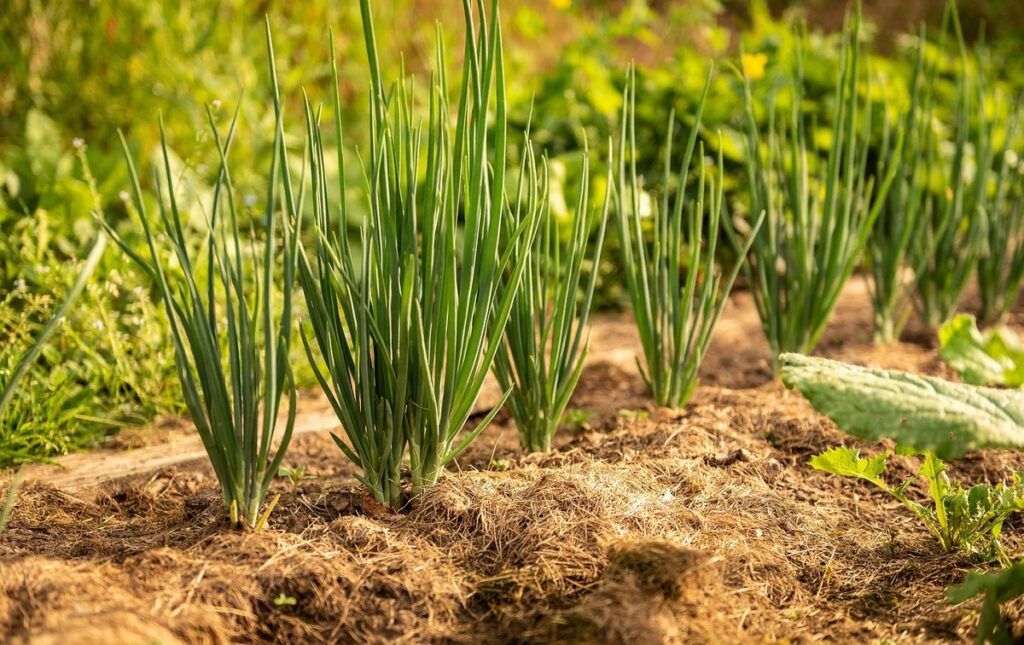
Understanding Onion Root Development
Onions have a unique root system, and understanding how it develops is crucial for growing healthy onions. Let’s dive into the specifics of onion root development and its implications for planting depth.
The Importance of Proper Planting Depth
Planting onions at the right depth is crucial for their growth and development. When onions are planted too shallowly, their necks may not be buried beneath the soil surface, making them more susceptible to drying out and attracting pests like aphids and spider mites. This can lead to poor yields and a lower quality crop.
On the other hand, planting onions too deeply can cause them to rot or become waterlogged. Water will collect in the seed furrow, causing the onion’s neck to remain above ground, creating an environment that fosters disease growth.
A general rule of thumb is to plant sets (small bulbs) 1-2 inches deep and larger bulbs 2-3 inches deep. The ideal planting depth also depends on the specific variety of onion you’re growing. Make sure to check the seed packet or consult with a local nursery for more information about the recommended planting depth for your chosen variety.
To ensure proper growth, gently spread the roots out in all directions when planting and cover them evenly with soil. This will promote healthy root development and give your onions the best chance at thriving throughout their growing season.
Common Mistakes in Planting Onion Depth
When planting onions, it’s easy to get carried away and bury them too deeply. However, this mistake can have serious consequences for the health of your onion plants. Planting onions too deep can lead to a range of problems, from rotting bulbs to stunted growth.
For example, if you plant an onion 6 inches deep, the neck (where the bulb meets the stem) may be submerged in soil, causing it to rot. This not only weakens the plant but also reduces its yield. Conversely, planting onions too shallowly can expose them to drying winds and frost, which can be disastrous for young seedlings.
The ideal depth for planting onions varies depending on factors like climate and variety. A general rule of thumb is to plant sets (small bulbs) 1-2 inches deep and about 4-6 inches apart. If you’re direct-sowing seeds, sow them about ¼ inch deep and 1-2 inches apart. By being mindful of the depth at which you plant your onions, you can avoid these common mistakes and set your plants up for success.
Factors Affecting Optimal Planting Depth
When planting onions, it’s essential to consider several factors that affect optimal planting depth. Soil type plays a significant role, as different soils have varying levels of density and moisture retention. For example, clay soil can become waterlogged if planted too deeply, while sandy soil may require deeper planting to prevent drying out. Climate also impacts ideal planting depth – in areas with intense sunlight or high temperatures, shallower planting promotes root growth and prevents damage.
The specific onion variety is another crucial factor to consider. Some varieties, like ‘Redwing’ or ‘Ebenezer’, are bred for their deep roots and require deeper planting (around 1-2 inches). Conversely, varieties like ‘Stuttgarter’ or ‘Yellow Granex’ have shallower root systems and benefit from planting at a depth of around 0.5-1 inch.
Consider the climate and soil type when deciding on planting depth. In regions with mild winters and cool summers, you can opt for deeper planting (around 2 inches). However, in areas with hot summers or water scarcity, shallower planting (around 0.5-1 inch) is recommended to prevent root damage and ensure optimal growth.
Choosing the Right Onions for Your Climate
When it comes to growing onions, choosing the right variety is crucial, especially considering your specific climate and region’s conditions. This affects how deep you can plant them successfully.
Determining Your Hardiness Zone
To determine the perfect onion for your climate, it’s essential to understand your hardiness zone. The United States Department of Agriculture (USDA) has divided the country into 11 distinct zones based on average winter temperatures. Your hardiness zone determines which plants can thrive in your area and how well they’ll withstand cold snaps.
To find your hardiness zone, visit the USDA’s Plant Hardiness Zone Map online or check with your local nursery or gardening extension office for guidance. Each zone has its unique characteristics, so it’s crucial to choose onion varieties that are tailored to your specific region.
For example, if you live in a cooler climate (zones 3-5), look for onion varieties like ‘Vidalia’ or ‘Yellow Granex’, which are bred for their cold tolerance and ability to mature slowly. In warmer zones (6-10), opt for heat-loving onions like ‘Texas Grano’ or ‘Beltsville Bunching’. By selecting the right onion variety for your hardiness zone, you’ll be more likely to enjoy a bountiful harvest and minimize the risk of crop failure due to extreme temperatures.
Selecting Onion Varieties Based on Depth Requirements
When selecting onion varieties for your garden, it’s essential to consider their specific depth requirements. Different types of onions have varying needs when it comes to planting depth.
Onion sets, which are small bulbs harvested from the previous crop, require a shallower planting depth than other varieties. Plant them about 1-2 inches deep, depending on their size and the climate you’re in. This allows for a more even emergence and reduces the risk of rot.
Seed-grown onions, on the other hand, can be planted a bit deeper, typically 2-3 inches deep. They require a slightly longer growing season to mature, so planting them at this depth helps ensure they have enough time to develop.
Shallots are another variety that requires specific attention when it comes to planting depth. They should be planted about 1 inch deep, with the sets spaced about 4-6 inches apart.
Factors Influencing Onions’ Susceptibility to Disease
When choosing the right onions for your climate, it’s essential to consider factors that can impact their susceptibility to disease. Climate plays a significant role in this regard. For example, regions with high temperatures and humidity are more prone to fungal diseases like downy mildew. Onions grown in these conditions may require deeper planting to reduce moisture levels around the neck of the bulb.
Soil quality is another critical factor to consider. Well-draining soil can help prevent root rot and other diseases that thrive in waterlogged conditions. In areas with poor soil drainage, it’s crucial to amend the soil or use raised beds to ensure optimal growth and minimize disease risk. Furthermore, inconsistent watering schedules can stress onions, making them more vulnerable to disease.
To mitigate these risks, consider planting onion varieties that are bred for resistance to specific diseases. Regularly inspect your plants, removing any affected leaves or bulbs to prevent the spread of disease. By taking these precautions and understanding the factors influencing onion susceptibility, you’ll be better equipped to choose the right onions for your climate and make informed decisions about planting depth.
Preparing the Soil for Onion Planting
Before planting onions, it’s essential to prepare the soil by loosening and aerating it to a depth of about 12 inches. This step will help your onion bulbs grow strong and healthy roots.
Testing Your Soil pH Level
Testing your soil pH level is an essential step before planting onions. Onions prefer a slightly acidic to neutral soil pH, ranging from 6.0 to 7.0. If your soil’s pH falls outside this range, it can affect onion growth and yield.
To test your soil pH, you can purchase a DIY soil testing kit or send a sample to a lab for analysis. These kits usually involve mixing a powder with water to create a solution that changes color depending on the pH level. For a more accurate reading, consider consulting with your local nursery or extension office for guidance.
A pH test will reveal if your soil needs adjustments to support onion growth. If your pH is too high (alkaline), you may need to add sulfur-based products to lower it. Conversely, if it’s too low (acidic), adding lime can help raise the pH.
Knowing your soil pH level ensures that your onions receive optimal growing conditions. It’s also an opportunity to make any necessary adjustments before planting, giving you a head start on a healthy and productive harvest.
Amending Your Soil for Optimal Growth
Before planting onions, it’s essential to amend your soil with necessary nutrients and organic matter to support healthy onion growth. Onions are heavy feeders that require a balanced diet of nitrogen, phosphorus, and potassium (N-P-K) to produce a strong and robust crop.
Start by testing your soil pH level and adjust it if necessary. Most onions prefer a slightly acidic to neutral soil pH between 6.0 and 7.0. Add organic matter like compost or well-rotted manure to improve soil structure, increase water-holding capacity, and supply essential micronutrients. Aim for at least 2-3 inches of compost incorporated into the top 6-8 inches of soil.
Additionally, consider adding a balanced fertilizer that provides N-P-K in a ratio suitable for onion growth (e.g., 5-10-10). For example, you can mix 1 tablespoon of 10-10-10 fertilizer with 1 gallon of water and apply it as a foliar spray or incorporate it into the soil before planting. Remember to follow the recommended application rates and timing to avoid over-fertilization.
As onions are sensitive to salt buildup, ensure your amended soil has good drainage to prevent waterlogging and nutrient loss.
Reducing Weed Competition for Water and Nutrients
When preparing the soil for onion planting, it’s essential to consider reducing weed competition for water and nutrients. Weeds can be a significant threat to your onion crop, competing with them for vital resources like light, water, and nutrients. To minimize their impact, you can use several strategies.
One effective approach is to apply a thick layer of organic mulch around the plants. This will help suppress weed growth by blocking out light and preventing seed germination. You can choose from various types of mulch, such as straw, wood chips, or even leaves. Aim for a depth of at least 2-3 inches to be effective.
Another method is crop rotation, which involves rotating onion crops with other plants that are less appealing to weeds. For example, planting a cover crop like clover or rye after harvesting onions can help suppress weed growth in the following season.
You can also consider using cover cropping to reduce weed competition. Planting cover crops during off-seasons or between crop cycles can help smother weeds and improve soil health.
Planting Onions at the Right Depth
When it comes to planting onions, getting the depth just right is crucial for healthy growth and a bountiful harvest, and that’s exactly what we’ll cover in this section.
Planting Sets vs. Seeds: Depth Considerations
When it comes to planting onions, you have two main options: using onion sets (already formed bulbs) or sowing seeds. While both methods can be successful, they require different depth considerations and growth expectations.
Onion sets typically need to be planted 1-2 inches deeper than the point where the top of the bulb meets the base of the neck. This allows for proper development and prevents green shoots from emerging too quickly. On the other hand, seeds should be sown about ¼ inch deep, with the soil gently firmed over them. As the seedlings grow, they’ll require thinning to prevent overcrowding.
It’s essential to consider these depth differences when planning your onion crop. If you’re using sets, make sure to space them at least 6-8 inches apart to allow for adequate root development. With seeds, you can plant them closer together (about 2-3 inches apart) and thin them out as needed.
In terms of growth expectations, onion sets will generally mature faster than seedlings, often within 70-80 days. Seeds, on the other hand, may take around 90-100 days to reach maturity. By choosing the right planting method for your needs, you can optimize your harvest and enjoy a bountiful crop of delicious homegrown onions.
Key Factors to Consider When Choosing Your Planting Depth
When choosing the optimal planting depth for your onions, several key factors come into play. One crucial consideration is soil density. If you’re working with heavy clay or dense loam, it’s essential to plant your onions slightly deeper than usual – around 2-3 inches (5-7.5 cm) below the surface – to account for their larger root system.
On the other hand, if you have lighter soils like sand or silt, you can plant your onions a bit shallower, typically between 1-2 inches (2.5-5 cm) deep. This allows their roots to grow freely without becoming waterlogged or damaged by excessive moisture.
Another factor is root development. Onions have a long taproot that grows downward as they mature. To encourage healthy growth and prevent the bulbs from developing split eyes, make sure to plant them at a depth that allows for about 1-2 inches (2.5-5 cm) of soil coverage over their necks.
By taking these factors into account and adjusting your planting depth accordingly, you’ll be well on your way to growing robust and flavorful onions with minimal waste or effort.
Caring for Onions After Planting
Once you’ve planted your onions, proper care is crucial for a successful harvest. In this section, we’ll share expert tips on how to care for your onions after planting.
Watering Techniques for Healthy Growth
Proper watering is crucial for onions to grow healthily. It’s essential to strike a balance between overwatering and underwatering. Onions need about 1-2 inches of water per week, either from rain or irrigation. To achieve this, you can use drip irrigation, which delivers water directly to the roots while minimizing evaporation.
Alternatively, soaker hoses are another effective option. These lay flat on the ground and provide a steady supply of water to the soil. Make sure to avoid overhead watering methods, like sprinklers, as they can lead to fungal diseases.
Water your onions deeply but infrequently to encourage deep root growth. Aim for about 6-8 inches of depth in the first week after planting, gradually increasing it by an inch every two weeks. Monitor the moisture levels by inserting a finger into the soil up to the knuckle; if the soil feels dry, it’s time to water again.
Mulching to Retain Moisture and Suppress Weeds
Mulching is an effective technique that can significantly benefit onion growth by retaining moisture and suppressing weeds. When it comes to planting onions, a layer of mulch around the plants can help keep the soil consistently moist, reducing the need for frequent watering. This is especially important during the first few weeks after planting when onions are most susceptible to drying out.
To create a barrier against weeds, apply a 2-3 inch layer of organic mulch such as straw or wood chips around the onion plants. As the mulch breaks down, it will also add nutrients to the soil, promoting healthy growth and development. Avoid using inorganic materials like plastic sheeting, which can prevent air circulation and hinder onion growth.
Some additional tips to keep in mind: avoid piling mulch directly against the base of the onions, as this can lead to rotting. Also, replenish the mulch layer as needed to maintain its effectiveness. By incorporating mulching into your onion care routine, you’ll be well on your way to growing healthy, robust onions that will reward you with a bountiful harvest.
Harvesting Onions at the Right Time
Now that you’ve successfully planted your onions, it’s essential to know when they’re ready for harvest and how to pick them at their sweetest peak. This section will guide you through the process of harvesting onions at the right time.
Monitoring for Bulb Formation
Monitoring for bulb formation is crucial to determine when your onions are ready for harvest. As you approach the end of the growing season, start checking on your onion plants regularly. Gently dig around one plant with a fork, taking care not to damage the surrounding bulbs.
Look for signs of maturity, such as the top foliage beginning to yellow and fall over. This is an indication that the bulb has finished growing and is ready for harvest. Check the size of the bulb by carefully digging it up or using a tool specifically designed for onion harvesting. The ideal size will depend on the variety you’re growing, but generally, onions are ready when they’ve reached 1-2 inches in diameter.
If you notice any signs of disease or pests, take action promptly to prevent further damage. Some common issues include fungal infections, aphids, and thrips. Regular monitoring will help you identify potential problems early on and make necessary adjustments to ensure a healthy crop. By keeping a close eye on your onions’ progress, you’ll be able to harvest them at the optimal time, ensuring they retain their flavor and texture.
Harvesting Techniques for Minimizing Damage
When it’s time to harvest your onions, you’ll want to do so carefully to minimize damage and ensure they’re ready for storage. The harvesting technique you use can make a big difference in the quality of your crop.
You can use a fork to gently loosen the soil around the onion base, then lift it out whole. This is a good option if you’ve grown shallots or multiplier onions, which don’t form a central neck like regular onions do. For larger onions, try using a knife to carefully cut the stem at the top, leaving about an inch of stem attached to the bulb.
If you prefer a more straightforward approach, you can use a shovel to dig around the onion and lift it out of the ground. However, be careful not to damage the bulb or disturb any nearby onions. Regardless of the method you choose, make sure to handle your onions gently to prevent bruising or crushing them.
In most cases, a shallow harvest depth is best – about 1-2 inches below the soil surface should do the trick. This will help minimize damage and make it easier to store your onions for later use.
Troubleshooting Common Onion Problems
We’ve all been there – a struggling onion crop, and you’re not sure what’s going wrong. This section will help you identify and solve common issues that can affect your onions’ growth and development.
Dealing with Onions that are too Deep or Too Shallow
If you’ve planted onions at an incorrect depth, don’t worry – it’s easier to fix than you think. Onions that are too deep can be a problem because they’re more susceptible to fungal diseases and pests like aphids and thrips that thrive in moist environments. When onions grow too deeply, their necks may become deformed or even rot, reducing yields.
On the other hand, onions planted too shallowly might not develop properly, leading to weak necks and uneven growth. These issues can be addressed by carefully digging up the onions and re-planting them at the correct depth (which we’ve covered earlier in this guide).
To fix an onion that’s been planted too deeply, gently dig around it with a fork, taking care not to damage any of its roots or the surrounding soil. Then, trim off any affected areas to promote healthy growth. For onions planted too shallowly, gently lift them out and re-plant them at the recommended depth. Water well to settle the soil and ensure good contact between the onion sets and the earth.
Managing Diseases and Pests Affecting Onions
Onion crops are susceptible to various diseases and pests that can significantly impact yields and quality. Some common issues include:
* Downy mildew: a fungal disease characterized by yellowing leaves and white, cottony growth on the underside of leaves.
* Bloat disease: caused by bacteria, leading to swollen, soft bulbs and reduced marketability.
To prevent these problems, maintain good crop rotation practices, ensuring that onions are not planted in the same location year after year. Rotate onion crops with other bulb vegetables like garlic or shallots to break disease cycles.
Regular monitoring is essential for early detection of diseases and pests. Look for signs such as yellowing leaves, white powdery growth, or actual insects like aphids, thrips, or mites.
Control measures can include targeted fungicides or insecticides, crop dusting with sulfur or neem oil to prevent infestations. For example, applying a preventative fungicide at planting time can help control downy mildew, while introducing beneficial nematodes can control pests like grubs and caterpillars.
It is also crucial to maintain field sanitation by removing weeds, which can serve as hosts for diseases and pests. Proper irrigation practices should be followed to avoid overwatering, a common contributor to disease development.
Effective management involves a combination of cultural controls, crop rotation, monitoring, and targeted treatments.
Frequently Asked Questions
What are the best onion varieties for deep planting, and where can I find them?
If you’re looking to plant onions at a deeper depth, consider using varieties like ‘Vidalia’ or ‘Beltsville Bunching’, which thrive when planted 2-3 inches deep. These varieties can be found at most gardening stores or online seed retailers that specialize in heirloom and specialty onion seeds.
How do I ensure my onions don’t become waterlogged if I plant them too deeply?
To prevent waterlogging, make sure the soil is well-draining before planting your onions. You can also create a raised bed with good drainage to minimize the risk of water collecting around the onion bulbs.
Can I use compost tea as a natural fertilizer for my onions, and will it affect their depth requirements?
Yes, you can use compost tea as a natural fertilizer for your onions. However, keep in mind that adding organic matter like compost may increase soil density, which could affect the optimal planting depth. Start with a small amount of compost tea and monitor your onion growth to adjust as needed.
What’s the ideal time to plant onions in my region, considering factors like hardiness zone and climate?
The ideal time to plant onions varies depending on your location and climate. In general, it’s best to plant onions 4-6 weeks before the last frost date for your area. If you live in a warmer climate (Hardiness Zone 8 or above), you can plant onions year-round.
Can I grow onions in containers if I don’t have garden space? How will this affect my planting depth?
Yes, you can grow onions in containers! When growing onions in pots, use a well-draining potting mix and choose varieties that are compact or dwarf. Plant the onion sets 1-2 inches deep, depending on the variety’s requirements, to ensure optimal growth and prevent root circling.