
Bees are some of the most fascinating creatures in the natural world, and their ability to collect nectar from flowers is truly remarkable. But have you ever wondered how they do it? It’s not just a matter of buzzing from flower to flower; there’s an intricate process at play that involves specialized anatomy and precise timing.
As we explore the world of bee biology, we’ll delve into the fascinating process of how bees collect nectar. From the shape of their tongues to the structure of their honey stomachs, we’ll examine the key factors that enable these tiny creatures to gather enough nectar to sustain their colonies. By understanding how bees collect nectar, we can appreciate the incredible complexity and beauty of nature. In this article, we’ll take a closer look at the anatomy involved and the environmental factors that affect their success in collecting nectar from flowers.
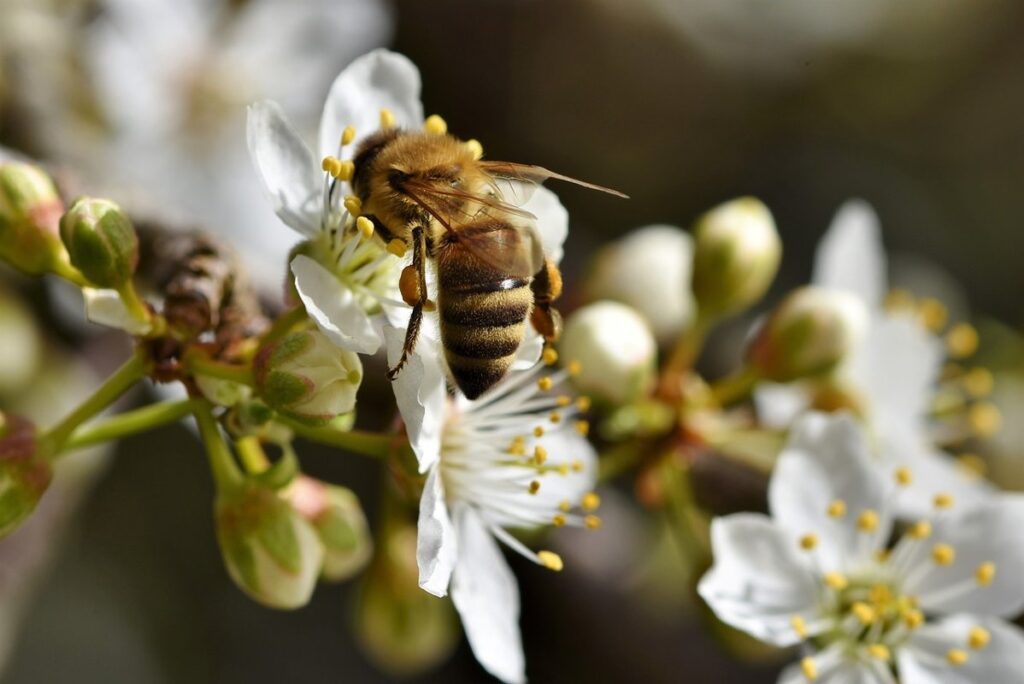
The Importance of Nectar Collection
As we explore how bees collect nectar, it’s essential to understand why this process is crucial for their survival and the entire ecosystem. Without nectar collection, many plants wouldn’t be pollinated.
What Is Nectar?
Nectar is a sweet, energy-rich liquid secreted by plants as a way to attract pollinators like bees. It’s a vital component of bee biology, serving as the primary source of nutrition for bees during the summer months when other food sources are scarce. In fact, nectar accounts for about 70-80% of a bee’s diet.
When it comes to collecting nectar, bees use their long, tube-shaped tongues called proboscis to extract the liquid from flowers. They land on the flower, extend their proboscis, and insert it into the corolla tube – the narrow tube that contains the nectar-producing tissue. The proboscis is coated with tiny hairs that help guide the nectar back into the bee’s mouth.
To make the most of this valuable resource, bees need to collect nectar from a variety of flowers. This is known as “nectar diversity,” and it allows them to have access to a wider range of nutrients. In addition to providing energy, nectar also contains other essential compounds like amino acids, vitamins, and minerals that support bee health and well-being.
Bees visit many different types of flowers throughout the day, storing the collected nectar in their honey stomachs before returning to the hive. There, they regurgitate the nectar and share it with other bees, who then store it in cells within the honeycomb for later use.
Why Do Bees Need Nectar?
Bees rely heavily on nectar as their primary source of energy. Without it, they wouldn’t be able to fly, navigate, or even survive. Nectar is essentially a high-sugar liquid secreted by plants to attract pollinators like bees.
To understand why bees need nectar, think about the basic requirements of life. Energy is essential for everything from movement and growth to maintenance and repair. For bees, this energy comes primarily in the form of carbohydrates, which are abundant in nectar. In fact, a single day’s worth of flight can burn up to 100 calories in a bee, equivalent to running a marathon. Nectar provides them with the fuel they need to fly back to their hives, care for their young, and perform all other essential functions.
To make the most of this vital resource, bees collect nectar from flowers using specialized structures like their long, tube-shaped tongues called proboscis. This process is crucial not just for individual bee survival but also for pollination and plant reproduction. By collecting nectar, bees inadvertently transfer pollen between plants, facilitating the reproduction process.
In short, bees need nectar to live and thrive. Without it, entire ecosystems would collapse. By understanding this fundamental necessity, we can better appreciate the intricate dance of relationships between plants and pollinators like bees.
Bee Anatomy and Its Connection to Nectar Collection
To truly understand how bees collect nectar, let’s dive into their remarkable anatomy and explore its role in this fascinating process. This intricate system enables them to efficiently gather sweet treats from flowers.
The Role of the Proboscis
The proboscis is an essential tool that honey bees use to collect nectar from flowers. It’s a long, tube-like structure that extends from the bee’s mouth and is made up of two parts: the galea and the labium. The galea is the longer section, which contains tiny muscles that allow it to flex and reach deep into flowers to gather nectar.
When a bee lands on a flower, it uses its proboscis to extend down into the flower’s tube-shaped structure, called the corolla. As it reaches the nectar-rich cells within the flower, the bee uses its proboscis to suck up the liquid nectar and store it in its honey stomach. The honey stomach is specifically designed for this purpose, with tiny muscles that help to break down the complex sugars found in nectar.
It’s worth noting that different types of flowers can present challenges for bees when it comes to accessing nectar. Some flowers have narrow tubes or long distances between their nectar-rich cells, which require a bee to use its proboscis to reach and collect the nectar effectively. By understanding how a bee uses its proboscis, you’ll gain a deeper appreciation for the intricate details involved in this fascinating process.
The Importance of the Stomach
The stomach of a bee is specifically designed to handle the task of storing and processing nectar. Unlike humans, bees don’t have a complex digestive system that breaks down food before it reaches their bloodstream. Instead, they store nectar in their stomachs as it is collected from flowers. This unique feature allows them to carry large amounts of nectar back to the hive without getting weighed down.
A bee’s stomach is essentially an expandable pouch that can hold up to 0.05 grams of nectar – equivalent to a tablespoon of honey. To put this into perspective, a single rose flower can produce around 1-2 milliliters of nectar, which is roughly the amount a bee needs to fill its stomach to create one pound of honey. Bees are incredibly efficient at collecting and storing nectar due to their specialized anatomy. This unique ability allows them to gather and process vast amounts of nectar from flowers, making it possible for us to enjoy this sweet natural treat in our daily lives.
The Process of Nectar Collection
Let’s dive into the fascinating process of how bees actually collect nectar from flowers, a crucial step in their daily survival. This involves some amazing adaptations and techniques that we’ll explore next.
How Bees Find Nectar-Rich Flowers
Bees have an impressive ability to locate flowers with an abundance of nectar. This is crucial for their survival as they need a constant supply of energy-rich nectar to feed themselves and their colonies. So, how do they do it? The process starts with visual cues. Bees are attracted to colors such as yellow, blue, and purple which are commonly found in flowers that produce a lot of nectar.
However, color is not the only factor at play here. Bees also use scent to locate nectar-rich flowers. They can detect sweet-smelling substances like sugars and amino acids from far away using their antennae. When a bee lands on a flower, it will often perform a “waggle dance” which communicates to its fellow bees the location of the food source.
Bees also use UV light to identify nectar-rich flowers. Many flowers reflect ultraviolet light in unique patterns that are invisible to humans but visible to bees. By combining these visual cues with their sense of smell, bees can pinpoint the exact location of flowers that are likely to produce an abundance of nectar.
As you might expect, experience plays a significant role in this process as well. More experienced foragers learn to associate certain flowers and colors with nectar-rich blooms.
The Licking and Sucking Mechanism
When collecting nectar, bees employ a unique mechanism involving their proboscis and tongue-like structure. The proboscis is coiled within the bee’s head, consisting of four distinct parts: the labrum, glossa, hypopharynx, and pharynx. As the bee approaches a flower, it extends its proboscis by uncoiling these parts.
The proboscis then inserts into the nectaries of the flower, where enzymes are secreted to break down complex sugars. The resulting liquid is drawn up through the proboscis, which acts as a straw. This process is often accompanied by a “licking” motion, as the bee’s tongue-like structure, or glossa, helps guide the proboscis into position.
In order for effective nectar collection to occur, bees must also manipulate their body temperature and movements in sync with the flower’s nectaries. Bees will typically vibrate at 150-200 Hz to facilitate pollen collection from anthers while simultaneously collecting nectar from nectaries. This intricate dance between bee and flower is crucial for successful nectar collection.
Factors That Affect Nectar Collection
Now that we know how bees gather nectar, let’s explore what affects their collection, from weather conditions to plant characteristics. These factors play a crucial role in a bee’s success.
Weather Conditions
When it comes to nectar collection, weather conditions play a significant role in determining the success of this process. Temperature, humidity, and wind are the key factors that affect nectar collection.
Temperature is a crucial factor, as it impacts the rate at which nectar flows through the flowers. Bees prefer temperatures between 64°F (18°C) and 90°F (32°C), as these conditions allow for optimal nectar flow. If it’s too hot or too cold, the nectar flow slows down, making it harder for bees to collect nectar.
Humidity also plays a vital role in nectar collection. Bees prefer humid environments, typically above 60%, to facilitate easy nectar absorption through their tongues. When humidity is low, the nectar becomes thick and sticky, making it difficult for bees to collect.
Wind can be a significant obstacle for bees collecting nectar. Strong winds can disrupt the delicate balance of the flower, causing the nectar to spill out or become inaccessible to the bee. Bees must adapt their collection strategies in windy conditions, often relying on more sheltered areas to gather nectar. By understanding these weather-related factors, you can better appreciate the challenges bees face when collecting nectar and provide them with optimal conditions for success.
Flower Types and Availability
Bees are attracted to flowers that produce nectar, but did you know there’s a wide variety of flowers that fit this criterion? The main types of flowers that bees collect nectar from include tubular flowers like trumpet vines and honeysuckle, bell-shaped flowers such as fuchsia and foxglove, and flat-faced flowers including roses and daisies.
Different regions have different flower availability throughout the year. In areas with mild winters, flowers may bloom year-round, while in cooler climates, there’s a distinct nectar flow season. In warmer climates, for example, California poppies and sunflowers are available during spring and summer. Meanwhile, lavender and coneflowers thrive in late summer and early fall.
Some flowers produce nectar that’s easily accessible to bees, such as sunflowers, while others require more effort, like orchids. Bees also prefer flowers with a mix of nectar-rich tubules and landing platforms. In your own garden, planting a variety of nectar-rich flowers will ensure a steady supply for our busy bee friends.
Bee Communication and Cooperation in Nectar Collection
As bees work together to collect nectar, they use complex communication methods to coordinate their efforts and ensure a successful harvest. Let’s take a closer look at these fascinating interactions.
Waggle Dance and Nectar Guidance
When a forager bee returns to the hive with nectar, it shares more than just its bounty – it communicates the location of that nectar-rich flower through the waggle dance. This intricate movement is crucial for the success of future foraging trips and helps the colony optimize its resources.
As the dancer bee oscillates back and forth at a 30-60 degree angle relative to the vertical, it conveys the direction and distance of the flower from the hive. The speed of the dance also indicates the quality of the nectar source – faster dances signal richer flowers. Other bees watching this performance can learn exactly where to find similar blooms.
By following this waggle dance, forager bees can locate nectar-rich flowers with remarkable accuracy. For example, a study found that honeybees using the waggle dance were able to locate feeder stations 90% of the time. This impressive navigation system relies on both visual and kinesthetic cues from the dancer bee, highlighting the complexity and coordination required in bee communication.
As you observe bees collecting nectar in your garden, remember that this intricate dance is not just a spectacle – it’s a vital tool for their survival and success. By understanding how the waggle dance works, you can better appreciate the sophisticated social organization of these incredible insects.
The Importance of Cooperative Foraging
Cooperative foraging is a crucial aspect of nectar collection among bees. When one bee finds a rich source of nectar, it will often communicate the location to its fellow colony members through complex dance patterns and pheromone signals. This enables other bees to join in on the foraging effort, creating a more efficient and productive approach.
For example, studies have shown that when one honeybee informs its colony about a rich source of nectar, it can lead to an increase in nectar collection by up to 50%. This is because cooperative foraging allows multiple bees to work together, reducing the time spent on individual searches and increasing overall yields. By working together, bees are able to maximize their energy output and bring back more nectar to the colony.
To replicate this behavior in your own garden or apiary, try providing a diverse range of nectar-rich flowers that bloom at different times throughout the year. This will encourage cooperative foraging among your bees, allowing them to take full advantage of the resources available. Additionally, consider leaving some areas of your garden unmanicured and untended, as these can serve as natural “nurseries” for beneficial insects like bees.
Challenges Facing Bees During Nectar Collection
As bees navigate their complex journey of nectar collection, they face numerous challenges that can affect their success and even survival. We’ll explore some of these obstacles in this section.
Pesticide Use and Its Impact on Bees
When bees venture out to collect nectar, they’re not just searching for food – they’re also navigating a complex landscape of environmental hazards. One significant threat to their survival is the widespread use of pesticides. These chemicals can contaminate nectar and pollen, affecting bee health and behavior.
Studies have shown that exposure to certain pesticides can disrupt bees’ navigation systems, making it harder for them to find food and return to their hives. This can lead to malnutrition, weight loss, and even death. For example, a study in the UK found that bees exposed to neonicotinoids – a common class of pesticide – had reduced cognitive abilities and were less likely to navigate back to their nests.
As a bee enthusiast or gardener, you can make a difference by choosing Integrated Pest Management (IPM) techniques over broad-spectrum pesticides. This approach involves using targeted methods to control pests while minimizing harm to beneficial insects like bees. By being mindful of the chemicals we use and opting for more bee-friendly alternatives, we can help create a safer environment for these vital pollinators to thrive in.
Habitat Loss and Fragmentation
As bees navigate their complex nectar collection process, they face numerous challenges that hinder their efficiency and success. One significant obstacle is habitat loss and fragmentation. When natural habitats are destroyed or split into smaller pieces by human activities like deforestation, urbanization, and agriculture, it disrupts the delicate balance of ecosystems.
This loss and fragmentation have a ripple effect on bee populations. Without sufficient foraging areas, bees struggle to find nectar-rich flowers within their territory. As a result, they must fly longer distances to collect resources, expending precious energy that could be better allocated to reproduction and colony growth. To make matters worse, habitat loss also leads to reduced biodiversity, causing the remaining plant species to become less abundant or vulnerable to pests and diseases.
Bees adapt to these challenges by changing their foraging behavior, often traveling further afield in search of food. However, this comes at a cost: they face increased competition from other pollinators, predators, and diseases.
Conclusion: The Significance of Nectar Collection in Bee Biology
In conclusion, nectar collection is a crucial process that not only sustains individual bees but also drives the entire colony’s survival. By understanding how bees collect nectar, we can appreciate the intricate social dynamics and communication skills involved in this process. It’s fascinating to note that a single forager bee may visit up to 1,000 flowers in a single day, collecting just enough nectar to sustain itself and its colony members. This complex behavior is a testament to the incredible organization and cooperation within bee colonies.
As we’ve explored throughout this guide, nectar collection is an essential aspect of bee biology that cannot be overstated. By acknowledging its significance, we can better appreciate the vital role bees play in pollinating our environment and sustaining ecosystems worldwide.
Frequently Asked Questions
How Do I Identify Nectar-Rich Flowers in My Garden?
To identify nectar-rich flowers, look for blooms that are large, showy, and have a strong fragrance. These traits often indicate a high concentration of nectar. Consider planting native flowers or those specifically favored by bees, such as sunflowers, lavender, or coneflowers.
Can Bees Collect Nectar in Extreme Weather Conditions?
Yes. While bees can collect nectar in various weather conditions, extreme temperatures (either very hot or cold) and heavy rain can hinder their ability to forage effectively. In such cases, bees may focus on collecting nectar from nearby flowers rather than venturing out too far.
How Do I Support Bees in My Community Through Nectar Collection?
Supporting bees through nectar collection involves creating a bee-friendly environment by planting diverse, native flowers that provide an abundant source of nectar. You can also consider providing a source of water for the bees and reducing pesticide use in your garden.
What Are Some Common Challenges Faced by Bees During Nectar Collection?
Bees often face challenges such as habitat loss, pesticide use, and climate change, which affect their ability to collect nectar effectively. These environmental factors can reduce the availability of nectar-rich flowers and increase the risk of bee deaths.
Can Bees Collect Nectar From Flowers with Different Types of Pollen?
Yes. While bees are primarily interested in collecting nectar, they also visit flowers for pollen, which is a rich source of protein. The structure of their proboscis allows them to access nectar from various flower types, but some flowers (like those with long corollas) may be more difficult for bees to reach due to the length and shape of their tongues.