
Are you looking to add some breathtaking beauty and wildlife value to your garden? Look no further than hardy flowering trees with large white blossoms! These stunning trees are perfect for adding a touch of elegance and sophistication to any outdoor space. Not only do they provide a picturesque backdrop for your garden, but they also attract pollinators and other beneficial wildlife, making them an excellent choice for nature lovers.
In this article, we’ll explore the best types of hardy flowering trees with large white blossoms that can thrive in various climates and conditions. We’ll cover their care and maintenance requirements, as well as provide tips on how to incorporate these stunning trees into your garden design. Whether you’re a seasoned gardener or just starting out, this article is perfect for anyone looking to bring some beauty and wildlife value to their outdoor space with the right hardy flowering tree large white blossoms.
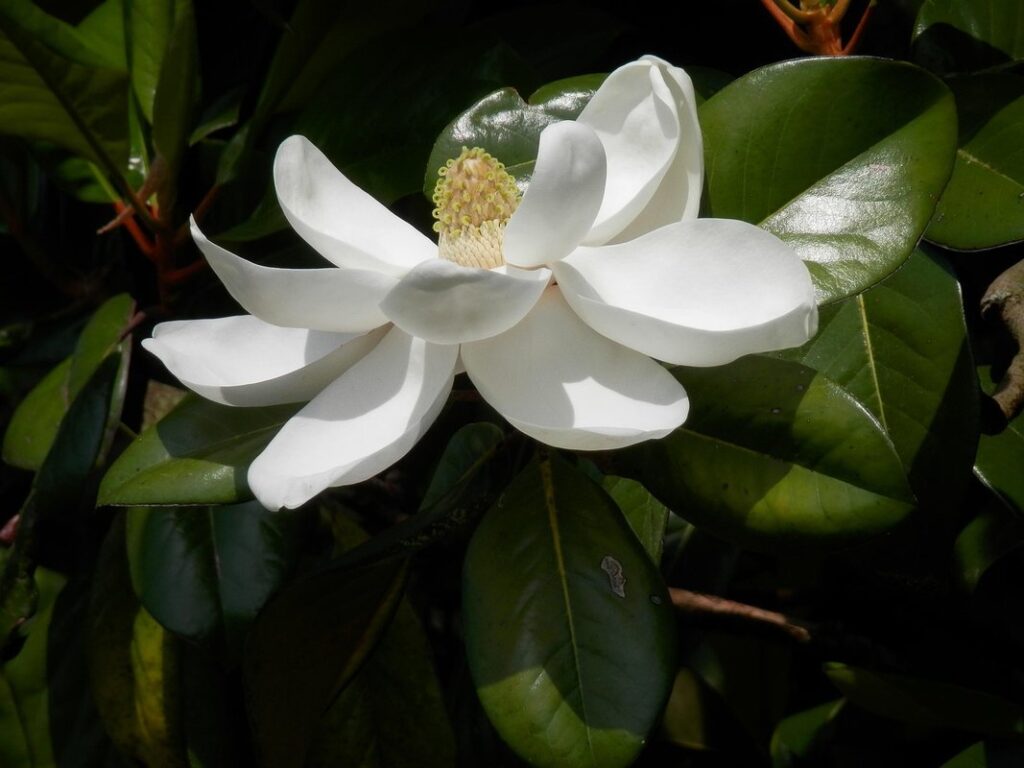
Understanding the Characteristics of Hardy Flowering Trees
To help you choose the perfect tree for your yard, we’ll explore the key characteristics that make hardy flowering trees thrive in various climates and conditions. This includes factors like soil tolerance, temperature resistance, and disease susceptibility.
Types of Hardy Flowering Trees with Large White Blooms
When it comes to adding a touch of elegance and beauty to your landscape, few things compare to the sight of large white blooming trees. Among the many varieties available, some popular options include Crataegus (hawthorn), Malus (apple tree), and Viburnum (guelder rose). These trees not only provide stunning blooms but also thrive in a range of conditions, making them perfect for gardeners of all skill levels.
Crataegus trees are known for their showy white flowers that bloom in late spring, often followed by red or orange berries. They’re relatively low-maintenance and can tolerate a variety of soil types. Malus trees, on the other hand, produce fragrant white blooms in early spring, which are followed by edible apples. They prefer well-drained soil and full sun to partial shade.
Viburnum trees offer large white flowers in late spring that are often accompanied by red or black berries. These trees prefer moist, fertile soil and partial shade but can adapt to a range of conditions. If you’re looking to add some drama to your landscape, consider planting one of these varieties – with proper care, they’ll provide years of beautiful blooms.
Factors Influencing Bloom Size and Duration
When it comes to the size and duration of blooms on hardy flowering trees with large white blossoms, several environmental factors come into play. Climate is a crucial factor, as temperature fluctuations can significantly impact bloom size and longevity. For instance, trees grown in areas with warm winters tend to produce larger flowers than those grown in regions with harsher winters.
Soil quality also plays a significant role in determining the size and duration of blooms. Well-draining soils rich in organic matter tend to promote healthy root growth, which in turn supports robust flowering. Conversely, poor soil conditions can lead to weakened trees that may not produce as many flowers or those that are smaller in size.
Sunlight is another essential factor influencing bloom size and duration. Most hardy flowering trees require full sun to partial shade to thrive, with some species requiring more sunlight than others. By providing your tree with the right amount of sunlight, you can encourage healthy growth and optimal blooming.
By considering these environmental factors, you can take steps to optimize the bloom size and duration on your hardy flowering tree.
Choosing the Right Hardy Flowering Tree for Your Garden
When selecting a hardy flowering tree, it’s essential to consider factors such as climate tolerance, bloom frequency, and maintenance requirements. This will help you find the perfect tree for your garden.
Considerations for Soil Type and Climate
When selecting a hardy flowering tree for your garden, it’s essential to consider the soil type and climate in your area. Different soil types can impact the growth and bloom characteristics of your tree, so let’s take a closer look at how these factors play into your decision.
In general, trees prefer well-draining soils that are rich in organic matter. Sandy soils tend to drain too quickly, while clay soils retain water but may become soggy. Trees with large white blossoms like the Amelanchier or Viburnum can tolerate a range of soil types, including those with poor drainage. However, for optimal growth and blooming, ensure your tree’s roots have room to breathe by adding organic matter like compost or mulch.
Climate also plays a significant role in determining which hardy flowering trees will thrive in your garden. For example, if you live in an area with hot summers and cold winters, choose trees that can tolerate extreme temperature fluctuations, such as the Birch or Cherry tree. Be aware of frost dates in your area to ensure your tree is protected during the winter months. By considering both soil type and climate, you’ll be able to choose a hardy flowering tree that will flourish in your garden for years to come.
Space and Maintenance Requirements
When selecting a hardy flowering tree with large white blossoms for your garden, it’s essential to consider the necessary space and maintenance requirements. These trees can grow quite large, so make sure you have enough room for them to mature. A general rule of thumb is to plant a flowering tree at least 10-15 feet away from any structures or power lines.
In terms of maintenance, regular watering and fertilization are crucial for the health and blooming performance of your tree. Water your tree deeply once or twice a week during its first year after planting, then gradually decrease the frequency as it becomes more established. Fertilize your tree annually with a balanced fertilizer in early spring to promote healthy growth and blooming.
Additionally, consider pruning your flowering tree regularly to maintain its shape and promote more blooms. Prune any dead or diseased branches, and thin out the canopy to allow for better air circulation and sunlight penetration. With proper care, a hardy flowering tree with large white blossoms can provide stunning beauty and enjoyment in your garden for years to come.
Popular Varieties of Hardy Flowering Trees with Large White Blooms
If you’re looking for trees that bloom with large white flowers, there are several hardy options to consider. Let’s take a closer look at some popular varieties that thrive in different climates and conditions.
Crataegus Monogyna: Hawthorn Tree
Crataegus Monogyna is one of the most recognizable and widely cultivated hawthorn tree species. Native to Europe, Western Asia, and North Africa, it has been naturalized in many parts of the world due to its adaptability and hardiness.
When it comes to growth habits, Crataegus Monogyna can grow up to 10-15 meters tall with a spread of around 6-8 meters. Its branches are thorny, making it an ideal choice for hedges or boundaries. The tree’s dense foliage provides excellent shade and creates a beautiful backdrop for its showy white blooms.
The bloom time for Crataegus Monogyna typically occurs in late spring to early summer, with clusters of small, fragrant flowers that attract pollinators. These flowers are followed by red berries that provide a vital food source for various bird species.
When caring for your Crataegus Monogyna, make sure to plant it in well-drained soil and full sun to partial shade conditions. Regular watering is essential during its first year of growth. Pruning should be done annually to maintain shape, promote healthy growth, and encourage blooming. With proper care, this hawthorn tree can thrive for many years, providing beauty and wildlife habitat to your garden or landscape.
Malus Baccata: Siberian Crab Apple
The Malus Baccata, also known as the Siberian Crab Apple, is a hardy flowering tree that produces stunning large white blossoms. Native to the mountainous regions of Central Asia, this tree has been cultivated for centuries and has become a popular choice for gardeners in temperate climates.
One of the key characteristics of the Malus Baccata is its adaptability to challenging growing conditions. It can thrive in poor soils and tolerate extreme temperatures, making it an excellent choice for areas with harsh winters or dry summers. The tree’s tolerance also makes it an ideal selection for those who live in areas with high winds or pollution.
In terms of growth requirements, the Malus Baccata prefers full sun to partial shade and well-drained soil. However, it can tolerate a range of soil types and pH levels, making it relatively low-maintenance. When planted in a suitable location, this tree can grow up to 20 feet tall and wide, providing a stunning display of white blossoms in the spring.
The Malus Baccata is also a popular choice for its fruit, which is edible but not particularly sweet. However, the flowers are a major draw, attracting pollinators like bees and butterflies.
Hardy Flowering Trees for Specific Garden Conditions
When choosing a hardy flowering tree, specific garden conditions can greatly impact your selection. This section helps you narrow down options based on unique challenges in your yard.
Trees for Shady Areas
When it comes to planting hardy flowering trees with large white blossoms in shady areas, you have several options to consider. These trees are perfect for gardens that receive partial shade or full shade conditions, as they can thrive even in areas with limited sunlight.
One excellent choice is the Dogwood tree (Cornus florida), which produces show-stopping white flowers in late spring. This tree is relatively small, growing up to 25 feet tall, making it an ideal option for smaller gardens or spaces with limited room. Another great option is the Kousa Dogwood (Cornus kousa), a more compact variety that grows up to 15 feet tall and produces large white flowers in early summer.
When planting flowering trees in shady areas, be sure to choose a location that receives at least 4-6 hours of direct sunlight per day. Also, consider the mature size of the tree to ensure it has enough room to grow without overcrowding nearby plants or structures.
In addition to these options, you can also consider the Whitebeam (Sorbus aria) and the Mountain Ash (Sorbus aucuparia), both of which produce stunning white flowers in late spring.
Trees for Small Gardens
If you’re lucky enough to have a small garden, there’s no reason why you can’t enjoy the beauty of hardy flowering trees with large white blossoms. Compact and dwarf varieties are perfect for smaller spaces, providing all the drama and color you’d expect from larger trees.
When selecting a tree for your small garden, consider species like the dwarf Korean cherry (Prunus ‘Kojo no Mai’), which grows up to 3 meters tall and produces showy white blossoms in spring. Another option is the compact Cornelian cherry (Cornus mas), which thrives in poor soil and reaches a maximum height of 4 meters.
For even smaller spaces, consider container-grown trees like the flowering crabapple (Malus spp.) or the apple tree (Malus domestica). These can be moved to different locations as needed, providing flexibility for gardeners with limited space. Whatever variety you choose, make sure it’s suitable for your climate and soil type to ensure a healthy and thriving plant.
By selecting the right compact variety, you can enjoy the beauty of hardy flowering trees in even the smallest of gardens.
Planting and Caring for Your Hardy Flowering Tree
When it comes to planting and caring for your hardy flowering tree, proper placement and maintenance are crucial to ensure its health and beauty. Here’s a step-by-step guide to get you started.
Pre-Planting Checklist
Before planting your hardy flowering tree with large white blossoms, it’s essential to prepare the site properly. This step is crucial for ensuring the tree’s health and preventing potential issues down the line. Start by conducting a soil test to determine its pH level and nutrient content. Based on the results, you may need to amend the soil to create an optimal growing environment.
For example, if your soil is too acidic or alkaline, it can affect the tree’s ability to absorb essential nutrients. Similarly, if the soil lacks necessary micronutrients like phosphorus or potassium, it may impact flower production and overall growth. To address these issues, consider adding organic matter like compost or well-rotted manure to improve soil structure and fertility.
Another critical aspect is evaluating the site’s drainage and sunlight exposure. Make sure the area receives at least six hours of direct sunlight per day and has adequate water drainage to prevent root rot. By taking care of these details, you’ll set your hardy flowering tree up for success and enjoy a bountiful display of large white blossoms in years to come.
Post-Planting Care and Maintenance Tips
Proper care and maintenance are crucial for the optimal growth of your hardy flowering tree with large white blossoms. After planting, it’s essential to establish a routine that includes regular watering, pruning, and fertilization.
Watering is critical during the first year after planting, especially during hot summer months. Aim to provide about 1 inch of water per week, either through rainfall or supplemental irrigation. However, be cautious not to overwater, as this can lead to root rot and other issues. You can check soil moisture by inserting your finger into the soil up to the knuckle; if it feels dry, it’s time to water.
Pruning is also vital for maintaining your tree’s shape, promoting healthy growth, and encouraging blooming. Remove any dead or diseased branches in late winter or early spring before new growth begins. Thin out the canopy to allow sunlight to reach inner branches, and reduce excessive growth by one-third to half.
Fertilize your hardy flowering tree annually with a balanced, slow-release fertilizer. Follow the manufacturer’s instructions for application rates and timing. By adhering to these post-planting care practices, you’ll set your tree up for long-term success and ensure those beautiful large white blossoms continue to bloom year after year.
Benefits and Uses of Hardy Flowering Trees
Now that we’ve explored the beautiful varieties of hardy flowering trees with large white blossoms, let’s dive into their numerous benefits and uses. These versatile trees can bring joy to any garden.
Wildlife Habitat Creation
Flowering trees are not only breathtakingly beautiful, but they also play a vital role in supporting local wildlife. When it comes to providing food and shelter for animals, flowering trees are one of the most effective solutions. The large white blossoms on these trees produce an abundance of nectar, pollen, and seeds that serve as a crucial source of nutrition for various species.
For instance, bees and butterflies are attracted to the fragrant blooms, which provide them with the energy they need to survive. Birds, such as hummingbirds and robins, also visit these flowers in search of nectar-rich feeders. Even small mammals like squirrels and rabbits benefit from the seeds produced by flowering trees.
To create a wildlife-friendly habitat using hardy flowering trees, consider planting species that are native to your area. This will not only ensure that the trees thrive but also provide the most beneficial resources for local wildlife. Plant multiple trees of different species to attract a variety of animals and maintain a diverse ecosystem.
Aesthetic Value and Property Appeal
One of the most significant advantages of incorporating hardy flowering trees with large white blossoms into your landscaping is their undeniable aesthetic value. These stunning trees not only add a touch of elegance and sophistication to your outdoor space but also provide a breathtaking backdrop for your home’s facade. Imagine walking up to your front door surrounded by a sea of fragrant, white blooms – it’s an experience that will leave a lasting impression on you and your guests.
Beyond their visual appeal, these trees can also increase your property value. Research has shown that well-maintained landscaping can boost a home’s resale price by as much as 15%. A beautiful flowering tree, in particular, can become a major selling point for potential buyers who are looking for a unique feature to set their property apart from others on the market.
To maximize the aesthetic value of your hardy flowering trees, consider planting them in strategic locations where they will be visible from multiple angles. This could include near walkways, patios, or other outdoor living areas where you and your family can enjoy their beauty.
Frequently Asked Questions
Can I grow hardy flowering trees with large white blossoms in a small garden?
You can definitely grow hardy flowering trees in small gardens, but consider the mature size of the tree and ensure it has enough space to thrive without overcrowding other plants. Some popular varieties for small gardens include Crataegus Monogyna: Hawthorn Tree and Malus Baccata: Siberian Crab Apple.
How do I choose the right hardy flowering tree for my specific climate?
When choosing a hardy flowering tree, consider your local climate and soil type. Research the tree’s temperature resistance, disease susceptibility, and soil tolerance to ensure it can thrive in your area. You can also consult with local nurseries or gardening experts for personalized advice.
Can I grow multiple types of hardy flowering trees together?
Yes, you can grow multiple types of hardy flowering trees together, but make sure they have similar growing conditions and space requirements. Consider their mature size, soil preferences, and maintenance needs to create a harmonious and thriving garden ecosystem.
How do I prune my hardy flowering tree for optimal blooming and health?
Pruning your hardy flowering tree regularly can help promote healthy growth, encourage blooming, and maintain its shape. Prune in late winter or early spring, removing any dead or diseased branches, and cutting back overgrown areas to maintain a balanced canopy.
Can I use hardy flowering trees as part of a wildlife habitat creation project?
Yes, hardy flowering trees can be a valuable addition to your wildlife habitat creation project, providing nectar-rich flowers for pollinators and shelter for birds and other wildlife. Consider incorporating multiple tree species with different bloom times to provide a constant source of food and shelter throughout the growing season.