
If you’ve ever been lucky enough to catch a glimpse of these stunning butterflies, you know just how breathtaking they are. The Gulf Fritillary (Agraulis vanillae) is one of the most recognizable and beloved species in North America. But there’s more to this butterfly than its striking orange color – have you ever wondered about its unique physical characteristics or where it calls home? As we delve into the world of these fascinating creatures, we’ll explore their habitat, life cycle, diet, and conservation status in detail. From its impressive range spanning from Canada to Central America, to its distinctive caterpillar stage, every aspect of the Gulf Fritillary’s biology is steeped in intrigue. In this comprehensive guide, we’ll take a closer look at all things Gulf Fritillary and explore what makes this butterfly so special.
Physical Characteristics and Identification
Let’s take a closer look at how you can identify a gulf fritillary butterfly, as well as its unique physical characteristics that set it apart from other species.
Body Structure and Size
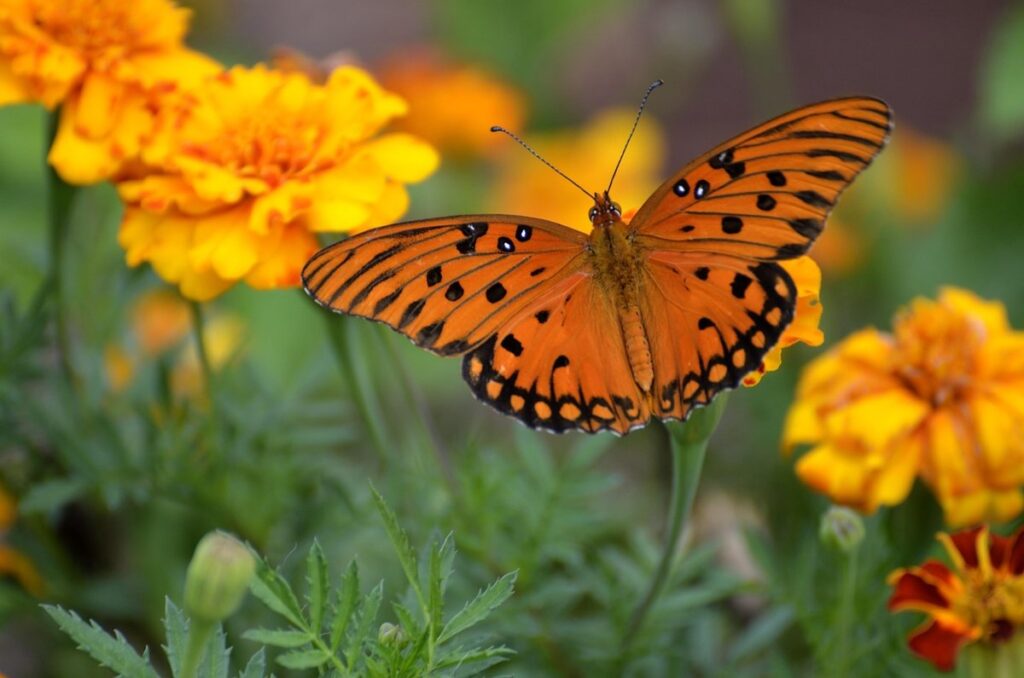
The gulf fritillary butterfly’s physical characteristics are truly striking. One of its most distinctive features is its bright orange coloration with silvery spots on the hindwings and along the edges of the forewings. However, this vibrant coloring can vary slightly depending on the individual butterfly’s genetics and environmental conditions.
In terms of body size, the gulf fritillary is a medium-sized butterfly, measuring between 2.75 to 3 inches in wingspan. Its slender body is approximately 1 inch long, with the female being slightly larger than the male. This relatively small frame allows for agile flight, which the gulf fritillary uses to its advantage as it flits from flower to flower.
When identifying a gulf fritillary, look for these distinctive markings: six silver spots on the hindwings and silvery edges along the forewings. The butterfly’s wings are also marked by dark brown or black veins. By paying attention to these physical characteristics, you can confidently identify a gulf fritillary in its natural habitat.
Wing Patterns and Coloration
One of the most striking features of the gulf fritillary butterfly is its vibrant wing patterns and coloration. As you observe this beautiful creature up close, you’ll notice that its wings are a mesmerizing mix of orange and black stripes. The distinctive pattern on the gulf fritillary’s wings is one of the easiest ways to identify it in the wild.
The orange coloration on the gulf fritillary’s wings is typically more prominent than the black stripes, but they work together to create a stunning visual effect. If you look closely, you’ll notice that the black stripes are often thicker and darker at the edges of the wing, giving them a slightly velvety appearance.
When trying to identify a gulf fritillary in the wild, take note of the shape and pattern of its wings. The orange coloration can vary from a deep burnt orange to a bright, fire engine red, depending on the individual butterfly’s genetics. By paying attention to these distinctive features, you’ll be able to tell a gulf fritillary apart from other similar-looking species in no time.
Keep an eye out for any subtle variations in wing pattern or coloration, as these can sometimes indicate differences in age or sex. For example, female gulf fritillaries may have slightly more prominent black stripes than males. With practice and patience, you’ll become a pro at identifying the gulf fritillary’s unique wing patterns and colors.
Habitat and Distribution
The Gulf Fritillary butterfly is found in warm, subtropical regions of the Americas, where you’ll spot them flitting between flowers and sheltered spots. Let’s take a closer look at their specific habitats.
Native Range and Migration Patterns
In its natural state, the gulf fritillary can be found in warm and sunny environments across North America. The butterfly’s native range stretches from Mexico to the southern United States, with a particular affinity for Florida and Texas. This is where you’ll find the highest concentrations of these striking butterflies, often flitting about in large groups.
In terms of specific habitats, gulf fritillaries tend to thrive in open areas like meadows, fields, and even suburban gardens. They’re particularly drawn to plants with nectar-rich flowers, such as passionflower, lantana, and zinnia. These flowers provide the energy the butterflies need to fuel their migration patterns.
Speaking of which, gulf fritillaries are known for their impressive migratory journeys. Each year, they travel from their wintering grounds in Mexico back to their summer habitats in the southern United States. This journey can be up to 2,000 miles round trip, with some individuals covering distances of over 1,500 miles in a single season. To support these incredible migrations, try planting native flowers and shrubs that provide nectar-rich blooms – your local gulf fritillaries will thank you!
Adaptation to Urban Environments
One of the most impressive adaptations of the gulf fritillary butterfly is its ability to thrive in urban environments. These delicate creatures can be found flitting about cities and towns, sipping nectar from flowers in human-altered landscapes. In fact, the gulf fritillary has become a common sight in many urban areas, particularly where there are plenty of milkweed plants available.
This adaptability is largely due to the butterfly’s reliance on host plants like milkweed for its caterpillars. Urban gardens and landscaping often incorporate these plants, providing a steady food source for the gulf fritillary’s young. Additionally, the abundance of flowers in urban areas provides a constant supply of nectar, allowing adults to fuel their energy-intensive flight.
If you’re interested in attracting gulf fritillaries to your own urban garden or balcony, consider planting milkweed and other butterfly-friendly flowers. This will not only provide a haven for these beautiful butterflies but also add vibrancy and life to your outdoor space.
Life Cycle and Behavior
As we delve into the fascinating world of the Gulf Fritillary, let’s explore how these beautiful butterflies grow and thrive from egg to adult. You’ll learn about their unique life cycle stages.
Egg Stage and Larval Development
When you spot a gulf fritillary butterfly flitting around nectar-rich flowers, it’s likely that she has just begun her life cycle anew. After mating, the female Gulf Fritillary lays her eggs on the underside of passionflower leaves or stems, usually on the tip of new growth.
These tiny eggs are typically pale blue and about 1-2 millimeters in length. They hatch into larvae after around three to four days, depending on temperature and humidity levels. The newly hatched caterpillars, also known as instar I, are voracious eaters and start feeding immediately on the passionflower leaves.
As they grow, the larvae molt four times before entering their pupal stage. Each instar lasts about 3-4 days, with the fourth instar being the longest. During this time, the caterpillar’s body changes dramatically as it develops organs and tissues for its future life as a butterfly. Keep in mind that if you’re trying to raise gulf fritillaries, providing fresh passionflower leaves is essential for successful larval development.
Pupal Stage and Adult Emergence
As the gulf fritillary caterpillar transforms into a pupa, it undergoes a remarkable metamorphosis. During this stage, the caterpillar’s body breaks down and is reorganized into the adult butterfly form. This process typically takes around 7-10 days, although it can vary depending on factors such as temperature and humidity.
As the pupa hangs from a branch or leaf, it may exhibit interesting behaviors like movement or twitching of its legs. These movements are not just random; they’re actually part of the pupation process, where the caterpillar’s body is being reorganized into the adult form. If you observe a gulf fritillary pupa, you might notice that it appears to be “pumping” or flexing its body, which helps to distribute fluids and nutrients throughout the new adult form.
When the transformation is complete, the adult gulf fritillary emerges from the pupal case, its wings still folded. This is a critical moment in the butterfly’s life cycle, as it takes time for the wings to dry and expand fully. Be patient, as this can take several hours or even overnight.
Diet and Host Plants
When it comes to thriving as a gulf fritillary, understanding what they eat and where they lay their eggs is crucial. In this section, we’ll explore their dietary needs and host plant preferences.
Nectar Sources and Preferences
When it comes to nectar sources and feeding habits, gulf fritillary butterflies are relatively straightforward. As a member of the Nymphalidae family, these beautiful creatures rely heavily on high-energy nectars found in flowers with long, tube-shaped structures.
Their preferred nectar sources include passionflower (Passiflora spp.), lantana (Lantana camara), and firebush (Hamelia patens). These plants are particularly appealing due to their bright colors, strong scents, and abundant nectar production. When searching for food, gulf fritillary butterflies will often land on the underside of leaves or the base of stems, where they can access the nectar more efficiently.
In terms of feeding habits, adult gulf fritillaries typically visit flowers around 10-20 times per day to replenish their energy stores. They also require a rich source of minerals and salts, which are often obtained from mud puddles or damp soil. By understanding these specific needs, you can create an inviting environment for gulf fritillary butterflies in your garden by incorporating their preferred nectar sources and providing access to mineral-rich sites.
Host Plants for Caterpillars
When it comes to the gulf fritillary’s life cycle, host plants play a crucial role in its survival and development. The caterpillars of this beautiful butterfly feed exclusively on certain plant species, which provide them with the necessary nutrients for growth.
The primary host plants used by gulf fritillary caterpillars are members of the passionflower family (Passifloraceae). The most common species include Passionflower (Passiflora spp.), Maypop (Passiflora incarnata), and Purple Passionflower (Passiflora lutea). These plants are rich in nutrients, making them an ideal food source for the caterpillars.
When choosing host plants for your gulf fritillary garden, consider the specific needs of these caterpillars. Look for plant species with large, edible leaves that can support the caterpillars’ growth. Plant multiple host plants in a single location to ensure a steady food supply throughout the growing season. By providing an abundance of host plants, you’ll be well on your way to creating a thriving environment for gulf fritillaries to thrive.
Conservation Status and Threats
As we explore one of North America’s most beautiful butterflies, it’s essential to understand the pressing threats facing their populations and the conservation efforts in place to protect them.
The Gulf Fritillary butterfly is listed as Least Concern on the IUCN Red List, but they still face several significant threats that impact their habitat and survival.
Population Trends and Decline Factors
The gulf fritillary butterfly’s population trends and decline factors are a pressing concern for conservation efforts. Unfortunately, this species is currently listed as “least concern” on the IUCN Red List, but its populations have been declining in some areas due to habitat loss and fragmentation.
One of the primary reasons for the decline of gulf fritillary butterfly populations is the destruction of their host plant, passionflower (Passiflora spp.). These butterflies rely exclusively on passionflower as a food source for their caterpillars, making it crucial for their survival. When passionflower habitats are destroyed or degraded, the butterfly population suffers.
In addition to habitat loss, climate change also poses a significant threat to gulf fritillary populations. Changes in temperature and precipitation patterns can disrupt the delicate balance of the ecosystem, affecting the availability of food resources and suitable breeding sites for the butterflies.
To mitigate these threats, conservation efforts should focus on protecting and restoring passionflower habitats, as well as creating corridors to connect isolated populations. By preserving the delicate balance of the ecosystem and promoting sustainable land-use practices, we can help stabilize gulf fritillary butterfly populations and ensure their continued survival.
Human Activities Impacting Populations
Human activities have significantly impacted gulf fritillary populations, threatening their very existence. Deforestation is a major concern as it not only destroys habitats but also reduces the availability of food sources for these butterflies. In areas like Florida and Texas, large tracts of land are being cleared for urban development, agriculture, and other human needs. This loss of habitat has led to fragmented populations, making it challenging for gulf fritillaries to migrate, find mates, and survive.
Pesticide use is another significant threat. These chemicals can contaminate nectar sources, which gulf fritillaries rely on for sustenance. When these butterflies feed on contaminated flowers, they ingest toxic substances that harm their health and reproductive capabilities. Climate change also poses a threat as it disrupts the delicate balance of ecosystems. Rising temperatures and altered precipitation patterns affect the availability of food resources, making it difficult for gulf fritillaries to adapt.
If you’re concerned about the welfare of these magnificent creatures, consider taking action in your own backyard! Planting nectar-rich flowers that are native to their habitats can provide essential food sources. Additionally, reducing or eliminating pesticide use in your garden will make a significant difference. By making conscious choices and adapting our lifestyles, we can contribute to the conservation of gulf fritillary populations and preserve these incredible insects for future generations.
Frequently Asked Questions
Can I raise Gulf Fritillary butterflies from caterpillars?
Yes, raising Gulf Fritillary butterflies from caterpillars can be a rewarding experience, but it requires careful attention to their specific dietary needs and habitat requirements. You’ll need to provide milkweed plants for the caterpillars to feed on, as they’re the sole food source for these butterflies. Research local regulations before attempting to raise them in your area.
How do I attract Gulf Fritillaries to my garden?
Attracting Gulf Fritillaries to your garden involves creating a butterfly-friendly environment with native milkweed plants and other nectar-rich flowers that match their preferences. Also, consider the butterflies’ migratory patterns and provide shelter from wind and harsh weather conditions by incorporating vegetation like shrubs or trees.
Can I breed Gulf Fritillary butterflies for different colors?
No, it’s not possible to breed Gulf Fritillaries for specific color variations as their genetic traits are fixed in terms of orange coloration with silvery spots. However, environmental factors can influence the intensity and distribution of these markings, resulting in subtle variations.
What should I do if I encounter a gulf fritillary caterpillar infestation?
If you find a large number of Gulf Fritillary caterpillars on your milkweed plants, consider creating a separate area for them to feed and grow without harming the rest of your garden. This will also give you an opportunity to monitor their development and potential threats.
How can I help conserve Gulf Fritillary populations in my local ecosystem?
You can contribute to the conservation of Gulf Fritillaries by planting native milkweed species, reducing pesticide use, and protecting natural habitats from human activities like deforestation or urban development. Also, support local conservation efforts and educate others about the importance of preserving these unique butterflies’ habitats.