
Onions are one of the most versatile vegetables in any kitchen, but have you ever wondered how long they take to grow? Whether you’re a seasoned gardener or just starting out, understanding the growth stages and factors that influence onion development is crucial for successful cultivation. In this article, we’ll dive into the world of onion growth, exploring the critical periods from planting to harvest, and examining the key elements that impact their rate of growth – including climate, soil quality, and watering techniques. By the end of this guide, you’ll be equipped with expert tips on how to grow onions quickly and efficiently, ensuring a bountiful crop every time. From sowing to harvesting, let’s explore the fascinating world of onion cultivation together.
Understanding Onion Growth Basics
To grow onions, you’ll want to understand their basic growth cycle and development stages, which can vary depending on factors like climate and soil conditions. Let’s break down these fundamental processes.
Life Cycle of Onions
Onion growth is a fascinating process that involves several distinct stages. Understanding these stages will help you anticipate when your onions will be ready for harvest.
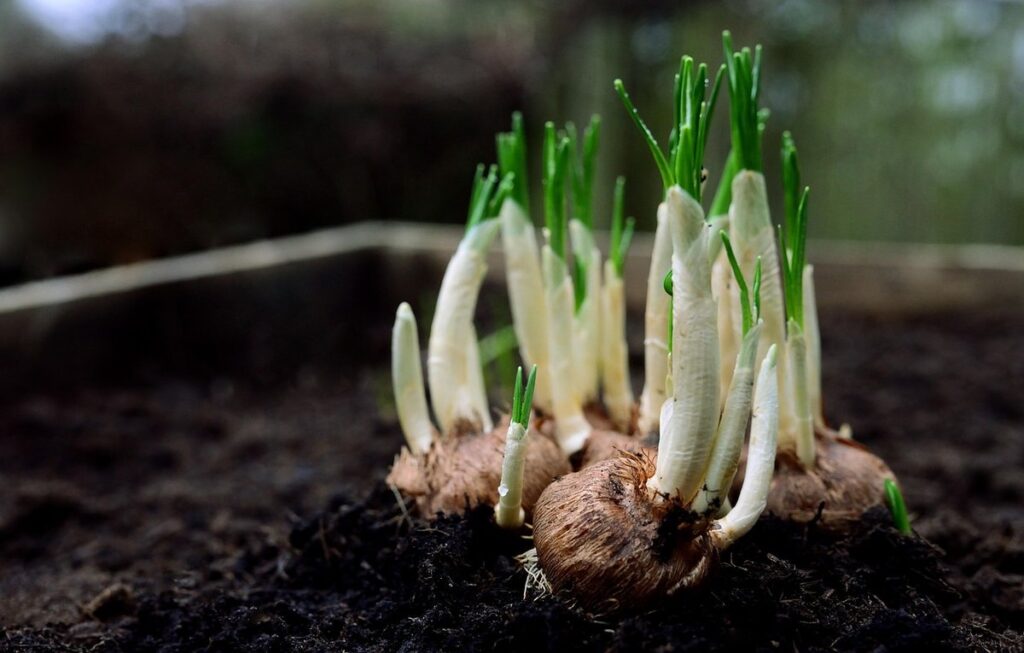
Germination typically occurs within 7-10 days after sowing, provided the soil temperature is around 75°F (24°C). During this stage, tiny white roots emerge from the onion sets or seeds, followed by green shoots that gradually break through the soil surface. It’s essential to keep the soil consistently moist but not waterlogged during germination.
As the onions sprout, they enter a growth phase characterized by rapid development of the bulb and foliage. This can take anywhere from 60-90 days, depending on factors such as variety, climate, and available sunlight. During this period, it’s crucial to maintain adequate spacing between plants to prevent overcrowding, which can lead to disease and reduced yields.
Maturation marks the final stage of onion growth, where the bulb reaches its full size and flavor profile develops. Onions typically mature within 120-150 days after sowing.
Factors Affecting Onion Growth Rate
When growing onions, several factors can significantly impact their growth rate. Climate plays a crucial role, with ideal temperatures ranging from 65°F to 75°F (18°C to 24°C). Onions grown in regions with extreme temperature fluctuations may experience slowed or stunted growth.
Soil quality is another essential factor. Well-draining soil rich in organic matter allows onions to grow faster and healthier than poorly drained soils. A pH range of 6.0 to 7.0 is also ideal for onion growth, as this promotes nutrient uptake and root development.
Proper watering is vital for onion growth. While onions require consistent moisture, overwatering can lead to rot and fungal diseases. Water your onion plants when the top inch of soil feels dry to the touch, avoiding excessive wetting.
Sunlight exposure also affects onion growth speed. Onions need full sun to partial shade, with at least 6 hours of direct sunlight per day. This promotes healthy leaf growth and bolting prevention. By controlling these factors, you can create an optimal environment for your onions to grow rapidly and healthily.
Planting Onions from Seed or Sets
When it comes to growing onions, you have two popular options: planting seeds or using sets. We’ll explore the details of each method in this section.
Advantages of Growing Onions from Seed
Growing onions from seed offers several advantages over using sets. For one, seeds have faster germination rates compared to sets, which can take up to a week longer to sprout. This is because seeds are typically more sensitive to temperature and moisture fluctuations than sets. As a result, you can expect your onion crop to emerge in as little as 7-10 days after sowing.
Another benefit of growing onions from seed is that it gives you greater control over the plant’s development. With sets, you’re limited by the size and type of onion already formed within the bulb. In contrast, seeds allow you to choose from a wide range of varieties, each with its unique characteristics, such as flavor, texture, and maturity date.
This increased flexibility also enables you to tailor your growing conditions to suit specific types of onions, whether it’s a long-day or short-day variety. By choosing the right seed for your climate and available sunlight, you can optimize growth rates and yields, ultimately leading to a more bountiful harvest in about 120-150 days.
Setting Up for Success: Choosing the Right Onion Variety
When planting onions from seed or sets, choosing the right variety is crucial for success. Different onion varieties are bred for specific purposes, such as cooking or storage, and have varying growth periods that can impact the overall growth time. Climate also plays a significant role in determining which variety to choose.
For example, if you live in a hot climate with long summers, look for varieties like ‘Texas Grano’ or ‘Vidalia’, which are heat-tolerant and mature quickly within 120-150 days. On the other hand, cooler climates require varieties that take longer to mature, such as ‘Beltsville Bunching’ or ‘Ebenezer’, which can take around 160-200 days to reach maturity.
If you plan to store your onions for a long time, select varieties with high storage potential like ‘Granex’ or ‘Yellow Granex’. These varieties are bred specifically for their ability to retain quality and size during storage.
Factors Affecting Onion Growth Rate
The growth rate of onions can be influenced by several factors, including soil quality, temperature, and watering habits. Let’s dive into each of these variables to understand their impact on onion development.
Soil Quality and pH
Soil quality and pH play a crucial role in determining an onion’s growth rate. Onions are relatively adaptable to different soil types but perform best in well-draining, fertile soils with a pH between 6.0 and 7.0. If the soil is too acidic or alkaline, it can lead to nutrient deficiencies, stunted growth, and increased susceptibility to diseases.
To create optimal growing conditions for onions, test your soil pH regularly. Most gardeners find that adding compost or well-rotted manure improves the structure and fertility of their soil without significantly altering its acidity. Onions also benefit from adequate calcium and magnesium levels, which can be achieved through lime application if necessary.
When selecting a location to grow onions, choose an area with good drainage to prevent waterlogged soil. Avoid using areas where tomatoes or members of the Brassica family have been previously grown, as these plants can leave behind diseases that affect onions. By attending to these details, you’ll set your onions up for optimal growth and development, allowing them to mature at their best pace.
Watering Habits: Balancing Moisture and Fungus Prevention
Watering onions is an art that requires a delicate balance between providing enough moisture and preventing fungal diseases that can damage or kill the plants. Onions need about 1-2 inches of water per week, either from rainfall or irrigation, to grow well. However, overwatering can lead to root rot and other problems. To avoid this, make sure the soil drains well before planting onions, and use mulch to retain moisture and suppress weeds.
A general rule of thumb is to water onions when the top 2-3 inches of soil feel dry to the touch. This usually means watering every 4-7 days during hot weather and less frequently in cooler conditions. It’s also essential to avoid getting water on the leaves or crown of the onion, as this can encourage fungal growth.
Check your onions regularly for signs of disease, such as yellowing or browning leaves, soft spots, or a musty smell. If you notice any of these symptoms, reduce watering immediately and treat the affected area with a fungicide specifically designed for use on onions. With proper care and attention to moisture levels, you can enjoy a healthy crop of onions in about 120-150 days.
Monitoring and Maintaining Onion Growth
Now that you’ve got your onions planted, it’s time to focus on their growth. This means keeping a close eye on their development and making sure they have everything they need to thrive.
Recognizing Signs of Healthy vs. Unhealthy Onions
As you monitor and maintain your onion growth, it’s essential to recognize signs of healthy versus unhealthy onions. This will help you catch potential issues early on and prevent them from spreading throughout the crop.
A healthy onion typically has a firm, compact bulb with tightly closed scales. The skin should be dry and free of cracks or soft spots. In contrast, an unhealthy onion may show signs of pests, disease, or nutrient deficiencies. For example, if you notice tiny holes or tunnels in the bulb, it could indicate infestation by pests like thrips or nematodes.
If you notice a fungal growth on the leaves or bulbs, it’s likely a sign of disease such as botrytis or downy mildew. On the other hand, nutrient deficiencies can cause onions to develop distorted or yellowed leaves. If you suspect an issue with your onion crop, inspect the plants carefully and look for any unusual signs or symptoms.
Some common pests to watch out for include aphids, spider mites, and root knot nematodes. Regular monitoring and maintenance practices like crop rotation, sanitation, and adequate watering can help prevent these issues from arising in the first place.
Timing Harvesting for Optimal Flavor and Texture
Timing harvesting correctly is crucial to bringing out the optimal flavor and texture of your onions. This involves monitoring their growth closely, taking into account factors like size, color, and flavor profile.
As a general rule, onions are ready for harvest when they reach about 3/4 of their mature size. You can check on them by gently digging around the base with a fork to avoid damaging the bulb. If you’re growing onions for storage, wait until the tops begin to yellow and fall over, indicating that the bulbs have reached maturity.
When it comes to flavor profile, some varieties are best harvested earlier than others. For instance, sweet onions like Vidalia or Maui are typically ready to harvest when they reach about 1/4 inch in diameter, as this allows for maximum sweetness. In contrast, larger onion varieties like Globe or Texas Grano can be left to mature fully and then harvested when the tops have fallen over.
Keep an eye on your onions’ color as well – a deep yellow or golden hue usually indicates that they’re ripe and ready for harvest. When in doubt, it’s always better to err on the side of caution and wait a little longer rather than pulling them up too soon.
Tips for Growing Onions in Different Environments
Growing onions can be a challenge, especially when it comes to different climates and conditions. Let’s dive into some expert tips on how to grow onions successfully in various environments.
Challenging Weather Conditions: Droughts, Extreme Temperatures
Growing onions in areas with challenging weather conditions requires adaptability and strategic planning. Droughts can be particularly detrimental to onion growth, as they need consistent moisture levels to form bulbs. To combat this, consider planting drought-tolerant onion varieties or using mulch to retain soil moisture.
When dealing with extreme temperatures, onions can suffer from heat stress above 35°C (95°F) or frost damage below 0°C (32°F). In regions prone to such conditions, plant onions in the fall or spring, avoiding the hottest part of summer. You can also provide protection for your plants using shade cloth or row covers during heatwaves.
In areas with irregular climate patterns, it’s essential to monitor weather forecasts and adjust your cultivation schedule accordingly. For example, if a severe drought is predicted, delay planting until more favorable conditions return. Conversely, take advantage of brief wet spells to plant onions in the midst of dry periods. This proactive approach will help minimize crop losses and ensure a successful harvest.
Small-Space Gardening Solutions for Urban Onion Growers
As an urban gardener, you’re likely no stranger to making the most of limited space. Growing onions in compact areas can be a challenge, but don’t worry – we’ve got some creative solutions for you! With the right techniques and tools, you can successfully cultivate delicious onions even in the smallest of spaces.
One popular option is container gardening. Choose a deep pot with good drainage, and fill it with a well-draining mix specifically designed for containers. Plant onion sets or seedlings, making sure to leave enough space for growth. Water carefully, as overwatering can be detrimental to compact root systems.
Another innovative approach is using vertical gardens or trellises. These allow you to maximize your available space while keeping the onions off the ground. You can also try growing shallots or scallions, which are naturally more compact than full-sized onions.
Remember, even with these solutions, it’s essential to provide enough light for your onion crop. Most varieties require at least 6 hours of direct sunlight per day. With careful planning and attention to detail, you’ll be enjoying homegrown onions in no time!
Advanced Techniques: Growing Onions from Scraps and Microgreens
Take your onion growing skills to the next level by learning how to cultivate onions from scraps and microgreens, perfect for maximizing yields in small spaces.
Exploring the World of Microgreens
Microgreens are young, nutrient-dense greens that have gained popularity in recent years. They’re essentially the first stage of a plant’s life cycle, harvested within 1-3 weeks after germination. Microgreens pack more punch than their mature counterparts due to their high concentration of vitamins and minerals.
One of the unique characteristics of microgreens is their intense flavor. For instance, pea shoots have a sweet, garden-fresh taste, while radish greens have a spicy kick. This concentrated flavor makes them an excellent addition to salads, sandwiches, and smoothies.
Growing microgreens is relatively simple: you’ll need a container with good drainage, some potting mix, and your chosen seeds. Place the seeds on top of the soil, water gently, and voilà – within 1-3 weeks, you’ll have a batch of fresh microgreens. Many microgreen varieties can be harvested in as little as 7 days. When it comes to using onion scraps for growing onions, some gardeners recommend starting with microgreens as they mature more quickly than full-grown onions and require less space.
Regenerating Onion Scraps into New Plants
Regenerating onion scraps into new plants is an excellent way to reduce kitchen waste and enjoy fresh onions year-round. With just a few simple steps, you can breathe new life into what would otherwise be discarded scraps. Start by collecting the white base of an onion, leaving about 1 inch of the top intact. Place this in a glass or jar filled with water, making sure the base is fully submerged.
Change the water every few days to keep it fresh and prevent bacterial growth. You’ll start to notice roots developing within a week, and the green shoots will emerge from the center of the onion. Once they’re about 6-8 inches tall, transfer them into a pot filled with well-draining soil. Keep the soil consistently moist but not waterlogged.
In as little as 3-4 months, you’ll be harvesting your very own onions. Be patient and keep an eye out for pests or diseases that can affect the growth process. By following these steps, you can enjoy fresh onions from your kitchen scraps and minimize waste in the process. With a bit of effort and care, you’ll have a continuous supply of homegrown onions to use in your cooking.
Frequently Asked Questions
Can I grow onions from scraps, or does it have to be from seed or sets?
Onions can indeed be grown from scraps, but this method is typically used for microgreens or small-scale production. For larger yields and better flavor, it’s recommended to start with onion seeds or sets. However, regenerating onion scraps into new plants can be a fun experiment and a great way to extend the life of your onions.
How do I ensure my onions get enough water without overwatering?
Watering is crucial for onion growth, but excessive moisture can lead to fungal diseases. To balance moisture and prevent fungus, make sure the soil drains well and avoid watering during peak sun hours. Instead, water in the morning or evening when the sun is not intense.
Can I grow onions in containers or do they require a large garden bed?
Onions can thrive in containers as long as you provide adequate space for growth (at least 6-8 inches deep) and ensure good drainage. Choose a container with at least 5-gallon capacity to accommodate the roots, and use well-draining potting mix.
How do I know when my onions are ready to harvest?
Look for signs of readiness such as yellowing or browning tops, which indicate that the bulbs have formed underground. Gently dig around the base of the plant, checking for firmness and size. When the onion is ready, carefully lift it out of the ground, making sure not to damage the bulb.
Can I grow onions in areas with extreme temperatures or droughts?
While ideal conditions are between 60°F-80°F (15°C-27°C) with regular watering, some varieties can tolerate more extreme temperatures and droughts. Research heat-tolerant or drought-resistant onion varieties, such as ‘Texas Grano’ or ‘Crystal Wax’, to help mitigate these challenges.