
Growing your own luffa plants can be a fun and rewarding experience, providing you with a sustainable source of natural exfoliants for years to come. However, many gardeners are intimidated by the thought of cultivating these unique gourds from scratch. But don’t worry – with the right guidance, you’ll be enjoying your homegrown luffa harvest in no time! This article will walk you through the essential steps of growing luffa plants from seeds, including selecting the perfect variety for your climate and preparing the ideal soil conditions. We’ll also cover expert tips on caring for your luffa plant, as well as common challenges to overcome during the growth process. Whether you’re a seasoned gardener or just starting out, this guide will give you the confidence to successfully grow your own loofah plants and enjoy the many benefits they have to offer.
Choosing the Right Variety
When growing a luffa plant, selecting the right variety is crucial for success. This section will walk you through the key factors to consider in choosing a luffa variety that suits your needs.
Understanding Luffa Types
When growing luffa plants, it’s essential to understand the different types available, as each variety has its unique characteristics that can impact your harvest. The two main species are Luffa cylindrica and Luffa acutangula.
Luffa cylindrica is also known as the smooth loofah or silk gourd. It produces long, cylindrical fruits with a smooth skin, making it ideal for commercial purposes. This variety grows faster than Luffa acutangula and can produce multiple harvests in a single season. However, its seeds are smaller, which may affect germination rates.
On the other hand, Luffa acutangula, or the angled loofah, has ridged fruits with small spines on the skin. It is more common in Asian cultures and is often used for culinary purposes. This variety tends to grow slower than Luffa cylindrica but produces larger seeds, which improves germination rates.
When choosing a luffa type for your garden, consider factors such as space availability, desired harvest frequency, and the intended use of the loofah fruits.
Selecting Seeds or Seedlings
When it comes to planting a luffa plant, you’ll have two options: starting from seeds or using seedlings. The decision ultimately depends on several factors, including your climate and region. If you’re growing in a cooler climate with a shorter growing season, seeds might be the better choice. This is because they can be started indoors 6-8 weeks before the last frost date and then transplanted outside when the weather warms up.
On the other hand, if you live in a warmer region or have a long growing season, seedlings can provide an earlier harvest. Seedlings are also a good option for areas with poor soil quality, as they’ll come with a head start on establishing themselves.
Consider your climate and region when deciding between seeds and seedlings. In regions with cold winters, seeds are often the better choice, while warmer climates or those with mild winters can opt for seedlings.
Planting and Preparing the Soil
Before you start planting, let’s talk about preparing your soil for a healthy luffa plant. This is where most gardeners go wrong!
Preparing the Garden Bed
Before you start planting your luffa seeds, it’s essential to prepare the garden bed properly. This involves more than just digging up the soil and removing any weeds – it requires a thoughtful approach to create an environment that will support your loofa plant’s growth.
Start by testing the pH level of your soil using a soil testing kit or sending a sample to a laboratory for analysis. Luffa plants prefer well-draining, slightly acidic soil with a pH between 6.0 and 7.0. If your soil is too alkaline or acidic, you’ll need to adjust it before planting.
Next, till the soil to a depth of about 12 inches to loosen and aerate it. This will help break up any compacted areas and allow water and air to penetrate more easily. Add a 2-3 inch layer of organic matter like compost or well-rotted manure on top of the tilled soil. This will not only improve drainage but also provide essential nutrients for your loofa plant.
Remember, proper garden bed preparation is key to a healthy and thriving luffa crop. By following these steps, you’ll be creating an optimal environment for your loofa plants to grow and flourish.
Planting Seeds or Seedlings
When planting seeds or seedlings for your luffa plant, it’s essential to follow some specific steps to ensure successful germination and growth. If you’ve started your seeds indoors, wait until the soil is warm enough – typically around 65°F (18°C) – before transplanting them into the garden bed.
To plant seeds directly in the garden, sow them about 1 inch deep and 6-8 inches apart. Water gently but thoroughly after planting, making sure not to wash away the tiny seeds. If using seedlings, space them out evenly, leaving around 12-18 inches between each plant. Gently dig a hole for each seedling, adding some of the surrounding soil back in as you plant.
As a general rule, it’s best to plant luffa seeds or seedlings when the weather is calm and there’s no risk of frost. This will help prevent damage to the delicate roots during the transplanting process. Keep your newly planted seeds or seedlings consistently moist but not waterlogged – this will encourage healthy root development and give your luffa plants a solid start.
Mulching and Watering
Mulching and watering are crucial aspects of growing a healthy luffa plant. Mulch helps retain moisture, suppresses weeds, and regulates soil temperature. For luffa plants, apply a 2-3 inch layer of organic mulch such as wood chips or straw around the base of the plant, keeping it a few inches away from the stem.
Watering frequency depends on weather conditions – in hot, dry climates, water every 2-3 days, while in cooler, more humid areas, reduce watering to once a week. Luffa plants require about 1 inch of water per week, either through rainfall or irrigation. Check soil moisture by inserting your finger into the soil up to the first knuckle – if it feels dry, it’s time for watering.
Aim to provide about an inch of water at each watering session, either by using a soaker hose or letting the water flow gently over the roots. Avoid getting water on the leaves to prevent fungal diseases and ensure good air circulation around the plant. Keep in mind that luffa plants have a deep root system, so watering too frequently can cause shallow roots, reducing its ability to absorb nutrients effectively.
Caring for Your Luffa Plant
Now that you’ve successfully grown your luffa plant, it’s time to learn how to care for it properly so it thrives and produces plenty of gourds. Proper maintenance will ensure a healthy harvest.
Fertilization and Pruning
Fertilization is crucial for luffa plants to grow vigorously and produce abundant fruit. Feed your plant with a balanced fertilizer (10-10-10) once a month during the growing season, which typically runs from spring to fall. You can also use an organic fertilizer like fish emulsion or compost tea to provide essential micronutrients.
Pruning is equally important for maintaining the health and productivity of your luffa plant. Remove any weak or damaged growth to prevent disease spread and encourage healthy fruiting. Cut back the vines by about one-third in late winter or early spring to control its size and promote bushy growth.
Regular pruning also helps to maintain air circulation, which is critical for preventing fungal diseases like powdery mildew that often target luffa plants. By maintaining a clean and well-ventilated environment around your plant, you can significantly reduce the risk of pest infestations.
Pest and Disease Management
As a luffa plant owner, it’s essential to be aware of common pests and diseases that can affect its health. Fungal infections are one such problem. These often occur when the plant is exposed to excess moisture or poor air circulation. Powdery mildew and leaf spot are two types of fungal infections you might encounter.
To prevent these issues, ensure your luffa plant receives adequate airflow by keeping a suitable distance between plants. Also, avoid overhead watering, which can lead to water droplets sitting on the leaves overnight, creating an ideal environment for fungi growth. Instead, water at soil level or use a soaker hose to minimize moisture on the leaves.
Aphids are another common pest that can infest luffa plants. These tiny insects feed on plant sap, causing curled or distorted leaves. To manage aphid infestations, spray your plant with neem oil, insecticidal soap, or horticultural oil according to the product’s instructions. Regularly inspect your plant for signs of aphids and address any issues promptly to prevent these pests from spreading.
To maintain a healthy luffa plant, monitor it regularly and take action at the first sign of trouble. This proactive approach will help you keep your plant thriving and prevent more severe problems down the line.
Training and Supporting the Vines
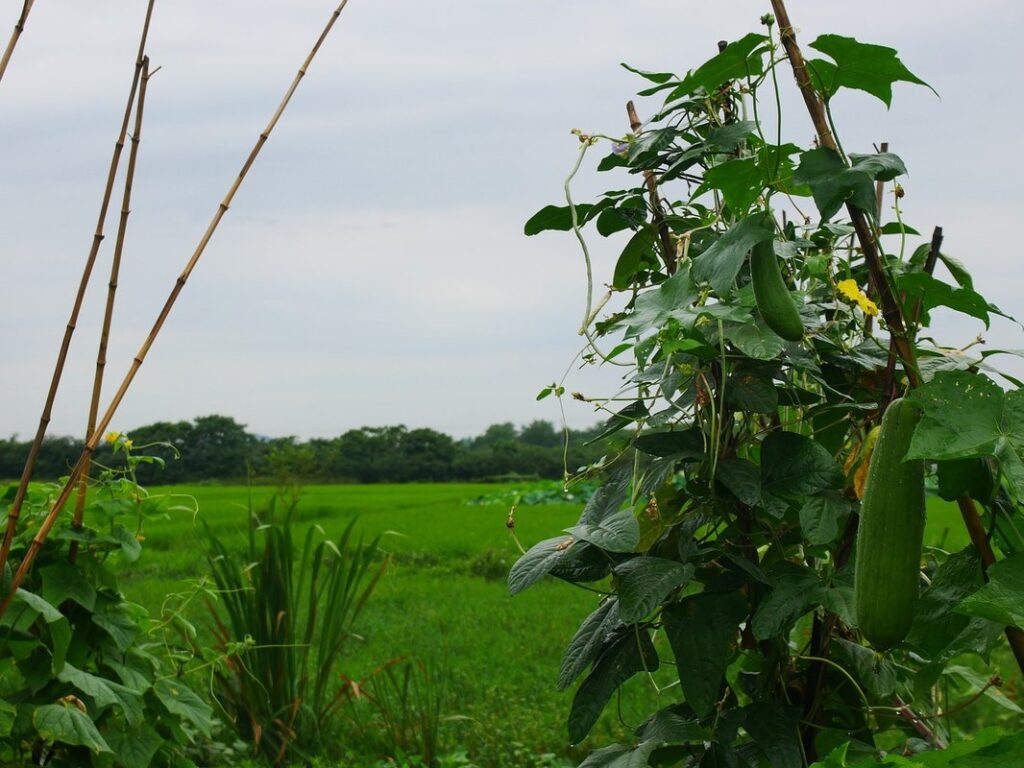
Now that your luffa plant is established, it’s time to focus on training its vines to grow up a trellis or other support system for optimal growth. This will help your loofahs dry properly and prevent damage to the plant.
Tying Up Vines
As your loofah plant grows, its vines will start to sprawl outwards and upwards. This can be both a blessing and a curse – on the one hand, it allows for more sunlight exposure which is essential for growth; but on the other hand, it can also lead to tangling and damage to nearby plants or structures. To ensure your loofah plant receives optimal sunlight while preventing any potential problems, you’ll need to tie up its vines.
You can do this using stakes or trellises – both of which are relatively inexpensive and easy to set up. Start by gently twining the vines around the supports, working from the base upwards to avoid any damage to the delicate stem. Make sure to leave enough space between each tie for the plant to breathe and grow freely. You can also use soft ties or twine to secure the vines in place without causing any harm.
For larger loofah plants, you may want to consider using a trellis which will provide more support and allow for better air circulation. Whichever method you choose, be sure to check on your plant regularly to ensure its growth is not being restricted by the ties or supports. By giving your loofah plant the right amount of sunlight and support, you’ll be well on your way to a bountiful harvest of loofah sponges.
Providing Support as Needed
As your loofah plant grows, it will eventually need additional support to maintain its structure and promote healthy growth. This is especially true for the stem, which can grow quite long and heavy as the plant matures. Look for signs that your plant needs support, such as bending or drooping stems, and take action promptly.
You can provide support using stakes or trellises, securing them gently to the plant’s stem to prevent damage. Make sure to choose a type of support that is sturdy enough to hold the weight of the plant without becoming top-heavy.
In addition to providing physical support, it’s also essential to prune your loofah plant regularly. Pruning helps control the shape and size of the plant, encourages healthy growth, and promotes fruiting (in this case, the production of luffa sponges). Remove any weak or damaged growth, and trim back long stems to encourage branching.
Prune your loofah plant when it reaches about 6-8 feet tall, or whenever you notice signs of overgrowth. By providing support as needed and pruning regularly, you’ll help your loofah plant grow strong, healthy, and productive.
Harvesting Your Luffa Gourd
Now that you’ve successfully grown your luffa plant, it’s time to reap the rewards and harvest those lovely gourds. Learn how to properly dry and clean them for future use as a loofah sponge.
Knowing When to Pick
When it comes to harvesting your luffa gourd, timing is everything. A mature luffa gourd will be ready for harvest when it reaches its full size and color. Typically, this happens around 100-120 days after sowing the seeds. To determine if your luffa gourd is mature, gently grasp it at the stem end and twist it slightly. If it comes off easily, it’s likely ready to be picked.
Another way to check for maturity is to examine the skin of the gourd. A ripe luffa gourd will have a deep yellow or orange color with brown spots on the ridges. The skin should also be smooth and free of soft spots. If you notice any cracks or softness, it’s best to wait a few more days for the gourd to fully mature.
Keep in mind that over-maturity can cause the luffa gourd to become too fibrous, making it less ideal for use as a loofah. So, it’s essential to strike the right balance between picking when the gourd is still young and soft enough, but not before it reaches its full maturity.
Tips for Easy Handling
When you’re harvesting your luffa gourds, it’s essential to handle them carefully to minimize damage and ensure they remain usable for their intended purpose. To start, inspect the gourds gently with your fingers or a soft-bristled brush to remove any dirt or debris without scratching the surface.
Avoid handling the luffas excessively, as the skin can be easily bruised or punctured, leading to rot or mold. If you must move them around, place them in a mesh bag or a ventilated container to prevent moisture buildup and promote air circulation.
For storage, keep the harvested gourds in a dry, well-ventilated area with temperatures between 60°F to 70°F (15°C to 21°C). Avoid direct sunlight and high humidity levels. You can also hang them upside down from a hook or a nail, allowing air to circulate around each fruit.
When not in use, the luffas should be kept clean and dry to prevent mold growth. Regularly inspect them for signs of spoilage and remove any affected areas promptly to maintain their quality. By following these simple guidelines, you’ll be able to enjoy your harvested luffa gourds for a longer period and make the most out of your gardening efforts.
Common Challenges and Solutions
Growing a luffa plant can be tricky, but we’ve got you covered with our rundown of common challenges and practical solutions to get your loofah growing smoothly. Let’s tackle those obstacles together!
Overcoming Common Issues
Growing luffa plants can be rewarding, but it’s not without its challenges. As you tend to your loofah plant, you may encounter common issues that could impact its growth and productivity. Let’s explore some of the most frequent problems faced by growers and provide practical solutions.
Drought is one issue that often affects luffa plants, especially during periods of low rainfall. To prevent this, ensure you’re providing your plant with consistent moisture levels. Water it deeply but infrequently to encourage deep root growth. Mulching around the base also helps retain soil moisture and suppress weeds.
Pests like aphids, whiteflies, and spider mites can quickly spread disease among luffa plants if not addressed promptly. Regularly inspect your plant for signs of infestation, such as sticky honeydew droplets or actual pests on the leaves. Treat affected areas with neem oil or insecticidal soap according to the product’s instructions.
Diseases like powdery mildew and root rot are also prevalent among luffa plants. Prevent these issues by maintaining good air circulation around your plant, keeping the surrounding area clean, and removing any infected parts immediately. Practice crop rotation to reduce soil-borne pathogens’ chances of spreading disease.
Fungal diseases such as root rot can be mitigated with proper watering habits and preventing waterlogged conditions in the roots. If you notice wilting or discoloration, inspect your plant’s roots for signs of fungal growth. In severe cases, remove the entire affected section to prevent further damage.
When faced with these challenges, remain calm and identify the root cause of the issue. Adjust your care routine accordingly to resolve it promptly, ensuring a healthy and thriving luffa plant that yields an abundance of loofahs come harvest time.
Frequently Asked Questions
Can I grow luffa plants indoors?
Yes, you can grow luffa plants indoors if you have a warm and humid climate-controlled environment. However, this may require more maintenance and attention to ensure the optimal growing conditions for your plant.
How long does it take for luffa seeds to germinate?
Luffa seeds typically take 7-14 days to germinate after sowing. Keep the soil consistently moist during this period and maintain a warm temperature of around 75°F (24°C) to encourage healthy growth.
What are some common pests that affect luffa plants, and how can I prevent them?
Common pests like aphids, whiteflies, and squash bugs can infest luffa plants. Regularly inspect your plant for signs of infestation, and use organic pest control methods like neem oil or insecticidal soap to prevent damage.
Can I grow multiple varieties of luffa plants together in the same garden bed?
Yes, you can grow multiple varieties of luffa plants together in the same garden bed. However, make sure to provide enough space between each plant for proper air circulation and sunlight penetration to prevent disease and pests from spreading easily.
How do I know if my luffa gourds are ripe and ready to harvest?
Check your luffa gourds regularly by gently tugging on the stem. When they’re fully mature, the skin should be a creamy yellow color, and the gourd will come off the plant easily. Be sure not to overwater or underwater your plants during this stage for optimal fruit development.