
Growing cucumbers indoors with precision is now more accessible than ever, thanks to the advent of LED grow lights. If you’re looking to get started with indoor growing, or simply want to optimize your current setup, this guide has got you covered. Choosing the right type of indoor growing system and LED light can make all the difference in achieving a bountiful harvest.
With so many options available, it’s easy to feel overwhelmed by the sheer variety of LED grow lights on the market. However, with this article, we’ll walk you through the process of selecting the perfect LED light for your cucumber plants. We’ll also discuss optimizing your space for maximum yield and explore different types of indoor growing systems that can help you achieve success with your indoor garden.
Choosing the Right Indoor Growing System
When selecting the perfect indoor growing system for your cucumbers, you’ll want to consider factors such as space constraints and desired yield. This will ultimately determine which type of system is best suited for your needs.
Types of Indoor Growing Systems for Cucumbers
When it comes to growing cucumbers indoors, you’ll want to choose an indoor growing system that suits their unique needs. There are several types of systems to consider, each with its own advantages and disadvantages.
Hydroponics is a popular choice for indoor growers, as it allows for precise control over nutrient delivery and can result in higher yields. However, hydroponic systems require regular maintenance and monitoring to prevent water-borne diseases. If you’re new to indoor growing, a soil-based method like seed starting or container gardening might be a better option. These methods are more forgiving and allow for easier transition to larger pots as the plants grow.
Aeroponics is another system that’s gaining popularity among indoor growers. By suspending plant roots in the air and delivering nutrients through a fine mist, aeroponic systems can reduce water consumption by up to 95%. This method is ideal for growing cucumbers in small spaces or for those who want to minimize their environmental impact.
When selecting an indoor growing system, consider factors like space constraints, maintenance requirements, and your level of expertise. Each type of system has its pros and cons, so it’s essential to choose one that fits your specific needs and growing goals. With the right system in place, you can enjoy a bountiful harvest of fresh cucumbers year-round.
Factors to Consider When Selecting an Indoor Growing System
When selecting an indoor growing system for cultivating cucumbers, there are several key factors to consider. First and foremost, budget comes into play. Determine what you’re willing to spend on the system, as prices can vary greatly depending on features and capabilities. For example, a basic hydroponic system might cost around $200-$500, while more advanced systems with automation features can range from $1,000-$3,000 or more.
Another crucial factor is space constraints. Measure your available area to ensure the growing system fits comfortably, taking into account ventilation requirements and electrical access. Consider vertical gardening options if floor space is limited. Next, think about the level of automation you need. Do you want a simple setup with manual monitoring, or would you prefer a more hands-off approach with automated temperature control, watering, and lighting?
Lastly, consider your desired yield and plant density. How many cucumbers do you plan to grow at one time? What kind of space will each plant require for optimal growth? These factors will influence your decision when choosing between different growing systems, such as LED-based hydroponics, aeroponics, or traditional soil-based cultivation.
LED Grow Light Options for Indoor Cucumber Farming
When it comes to illuminating your indoor cucumber farm, you’ve got a range of impressive LED grow light options available to suit different budgets and growing needs. We’ll explore these in more detail next.
Types of LED Grow Lights Suitable for Cucumbers
When it comes to choosing the right LED grow light for your indoor cucumber farming setup, you have several options to consider. One popular choice is full-spectrum LEDs, which provide a balanced spectrum of blue, red, and green light that promotes healthy plant growth. These lights are ideal for cucumbers as they help to regulate photosynthesis, promoting strong vegetative growth and fruit production.
Another option is single-color LEDs, which emit a specific wavelength of light, such as blue or red. While these lights can be effective for certain stages of plant growth, they may not provide the same level of overall health benefits as full-spectrum LEDs. For example, blue LEDS promote leafy growth, but may not stimulate fruiting as effectively.
COB (Chip-on-Board) LEDs are also worth considering, offering high intensity and efficiency in a compact design. These lights can be particularly beneficial for cucumbers by providing targeted light distribution, reducing energy waste, and promoting even growth throughout the plant.
Ultimately, the choice of LED grow light will depend on your specific growing needs and setup.
Features to Look for in an LED Grow Light for Cucumbers
When selecting an LED grow light for your cucumber plants, there are several key features to look for to ensure optimal growth and yields. First and foremost, consider the lumen output of the light. This measures the total amount of visible light emitted by the light and is typically measured in lumens per watt (lm/W). For cucumbers, a lumen output of at least 1000-1200 lm/W is recommended.
Another crucial feature to consider is color temperature, which affects plant growth and development. Cucumbers require a balanced spectrum with a mix of blue, red, and green light. Look for an LED grow light with a color temperature range of around 4000K to 6500K to promote healthy growth and fruiting.
Lastly, PAR (Photosynthetic Active Radiation) values are essential in determining the effectiveness of an LED grow light. This measures the amount of light available for photosynthesis and is typically measured in μmol/s. A PAR value of at least 300-400 μmol/s is recommended for cucumbers to ensure optimal growth and yields.
When shopping for an LED grow light, make sure to check these key features to ensure you’re getting a high-quality light that will support your cucumber plants’ needs.
Planning and Designing Your Indoor Growing Space
To successfully grow cucumbers indoors, you’ll need a well-planned space that maximizes your investment in LED grow lights. Let’s dive into designing an ideal environment for your indoor cucumber garden.
Maximizing Space Efficiency in an Indoor Growing Area
When growing cucumbers indoors with precision using LED grow lights, every square inch of space counts. To maximize efficiency, consider implementing vertical growing systems. These clever solutions make the most of your available height by stacking planters or trellises, allowing for multiple crops to thrive in a smaller footprint.
For example, you can use a wall-mounted trellis system that not only saves floor space but also provides support for climbing cucumbers. This way, you can grow more plants without sacrificing valuable square footage. To further optimize your space, prune your cucumber plants regularly to promote bushy growth and encourage fruiting.
Another tip is to train your cucumbers to climb up a trellis or other support using twine or clips. Not only does this free up floor space, but it also allows for better air circulation around the plants, reducing the risk of disease and promoting healthy growth. By implementing these space-saving strategies, you can grow more cucumbers in less space while still achieving high yields with your precision LED grow lights.
Environmental Control for Optimal Cucumber Growth
Maintaining optimal environmental conditions is crucial for healthy cucumber growth. Temperature, humidity, and air circulation are key factors that need attention to ensure a bountiful harvest. Cucumbers prefer temperatures between 65-75°F (18-24°C) during the day and no lower than 55°F (13°C) at night. Exceeding these thresholds can lead to stressed plants, reduced yields, or even damage.
Humidity levels should be kept between 40-60%. Cucumbers thrive in a humid environment but excessive moisture can cause fungal diseases. To maintain humidity, use a humidifier nearby the growing area. Adequate air circulation is also vital as it helps prevent fungal growth and promotes healthy transpiration. Ensure at least 1 foot of space around each plant for good air movement.
Adequate light from LED grow lights is just one part of optimal conditions; proper environmental control provides a solid foundation for cucumber growth indoors.
Installing and Setting Up Your LED Grow Light System
Now that you have your LED grow light system, it’s time to install and set it up properly for optimal growth. This step is crucial in ensuring your cucumber plants receive the right amount of light.
Safety Precautions When Working with Electrical Equipment
When working with electrical equipment, it’s essential to take necessary safety precautions to avoid accidents and ensure a safe working environment. Before installing your LED grow light system, make sure you have read the manufacturer’s instructions carefully and are familiar with the equipment.
To start, turn off the power supply to the system at the main electrical panel or breaker box. Verify that all components are switched off using a voltage tester or multimeter. This is a crucial step in preventing electrical shock or injury.
Next, inspect your workspace for any potential fire hazards, such as flammable materials or liquids nearby. Remove any obstructions and ensure good ventilation to prevent overheating or electrical fires.
When handling the LED grow light units themselves, be mindful of sharp edges, metal components, and fragile wiring. Avoid touching electrical contacts or connectors with your bare hands, and use protective gear like gloves when necessary.
Finally, double-check all connections, including power cords, cables, and wire harnesses, to ensure secure connections and prevent electrical short circuits. By following these simple safety precautions, you’ll be able to install and set up your LED grow light system safely and efficiently.
Tips for Optimizing LED Grow Light Placement and Angles
When it comes to growing cucumbers indoors with precision using LED grow lights, proper placement and angle of the light is crucial for optimal growth. To ensure your plants receive the right amount of light, follow these tips:
• Keep the LED grow light at a distance of 12-18 inches above the plant canopy. This will provide an even distribution of light without burning or scorching the leaves.
• Experiment with different angles to find what works best for your specific setup. A general rule is to maintain an angle of 30-45 degrees between the LED grow light and the plant. However, this may vary depending on the type of LEDs you’re using and the space available.
• Consider the layout of your growing area. If you have a large space, you can use multiple LED grow lights to provide adequate coverage. For smaller spaces, a single high-powered LED grow light may be sufficient.
• Monitor your plants’ response to different placements and angles. Adjust as needed to ensure maximum growth and minimal stress on the plants.
Monitoring and Maintaining Your Indoor Cucumber Farm
To keep your cucumber plants thriving, you’ll need to regularly monitor temperature, humidity, and nutrient levels, as well as perform regular pruning and watering tasks. This section will walk you through these essential maintenance steps.
Measuring and Monitoring Growth Parameters
Measuring and monitoring growth parameters is crucial to optimize cucumber growth indoors. Temperature, humidity, and light levels are critical factors that can significantly impact plant health and productivity.
Start by investing in a reliable thermometer to monitor temperature fluctuations within the grow space. Cucumbers prefer daytime temperatures between 65°F to 70°F (18°C to 21°C) and nighttime temperatures around 55°F to 60°F (13°C to 15°C). Ensure your LED grow lights are positioned to provide even heat distribution, avoiding hotspots that can scorch leaves.
Maintain a humid environment by controlling the moisture levels between 40% to 60%. You can use a hygrometer to monitor humidity and adjust accordingly. Cucumbers thrive in high humidity, but excessive moisture can lead to fungal diseases.
Monitor light levels closely, as they directly affect photosynthesis. Use a lux meter or the built-in spectrum controls on your LED grow lights to ensure optimal light intensity for cucumber growth. Aim for 20-30 micromoles per second (μmol/s) during the vegetative stage and increase it to 40-50 μmol/s during flowering.
Regularly record these parameters in a logbook to track progress and make adjustments as needed. By closely monitoring temperature, humidity, and light levels, you’ll be able to optimize your indoor cucumber farm’s performance and maximize yields.
Common Issues and Troubleshooting Tips for Indoor Cucumber Growing
As you monitor and maintain your indoor cucumber farm, you may encounter some common issues that can impact your crop’s growth. One of the most significant challenges is inconsistent light quality, which can be caused by misaligned LED grow lights or dirty lenses. To troubleshoot this issue, check the lights’ positioning and adjust them as needed to ensure even coverage. Regularly clean the lenses with a soft cloth and mild soap solution to maintain optimal light transmission.
Another common problem is overwatering, which can lead to root rot and reduce yields. To prevent this, make sure your cucumber plants are receiving the right amount of water by monitoring the soil moisture level. Check for droopy leaves or yellowing stems, which may indicate too much moisture in the soil. Adjust your watering schedule accordingly, taking into account factors like humidity, temperature, and plant size.
If you notice slow growth rates or pale green coloration on your cucumber plants, it could be a sign of nutrient deficiencies. Be sure to provide balanced fertilization according to the manufacturer’s instructions, as well as maintain proper air circulation within your grow space to promote healthy development.
Harvesting and Enjoying Your Homegrown Cucumbers
Now that your cucumber crop is thriving, it’s time to enjoy the fruits of your labor – literally! Learn how to harvest and prepare your homegrown cucumbers for a crunchy snack or refreshing salad.
Timing and Frequency of Harvests
When it comes to harvesting your homegrown cucumbers indoors using LED grow lights, timing and frequency are crucial. Cucumbers typically take around 50-60 days to mature from sowing the seeds under ideal conditions.
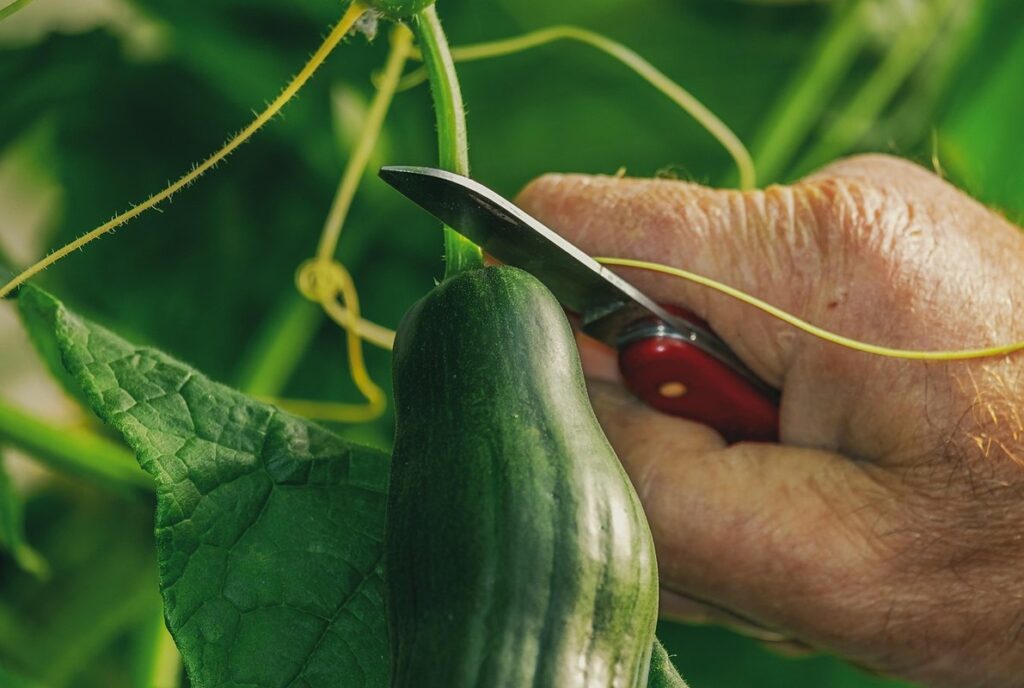
To determine if your cucumber is ready for harvest, look out for these signs: a dark green color with slight yellowing at the stem end, and a slightly soft feel when gently pressed. Harvest cucumbers in the morning when the plant is at its highest water content, making them easier to slice without losing moisture.
Harvest frequency depends on your desired cucumber size and shape. If you prefer smaller, pickling-sized cucumbers, harvest every 2-3 days. For larger slicing varieties, check for readiness after about 5-7 days of growth. Regular harvesting will encourage the plant to produce more fruit, maximizing your indoor crop’s potential.
Remember, regular pruning also promotes healthy growth and encourages bushy plants with more fruiting sites. By combining these practices with optimal LED grow light conditions, you’ll be enjoying a bountiful harvest in no time!
Preserving and Storing Homegrown Cucumbers
Preserving and storing homegrown cucumbers is just as important as harvesting them. When grown indoors with precision using LED grow lights, cucumbers can be harvested at their peak freshness, but proper preservation techniques are necessary to enjoy them throughout the year.
To preserve cucumbers, start by selecting the best ones for pickling or canning. Choose cucumbers that are firm, dark green, and about 6-8 inches long. Next, prepare the cucumbers for preservation by slicing off both ends and creating a small nick in the skin to help remove excess water.
For refrigerator storage, wrap individual cucumber slices or whole cucumbers tightly in plastic wrap or aluminum foil to prevent moisture loss. Store them in the crisper drawer, where the humidity is high. For longer-term storage, consider pickling or canning using a pressure canner to ensure proper acidity levels and safe preservation.
Some popular methods for preserving homegrown cucumbers include making dill pickles, Korean-style kimchi, or relishes. Experiment with different recipes to find your favorite way to enjoy the fruits of your labor year-round.
Frequently Asked Questions
Can I use LED grow lights for other types of plants besides cucumbers?
Yes, LED grow lights can be used for a wide range of plants, including leafy greens, herbs, and even flowers. However, when choosing an LED light, make sure to select one that is specifically designed for the type of plant you’re growing.
How do I ensure optimal LED placement for my cucumbers?
To achieve optimal growth with your cucumber plants, place your LED grow lights 12-18 inches above the leaves, and adjust their angle to ensure even coverage. Make sure to also provide sufficient air circulation around the plants to prevent overheating.
What’s the best way to space out multiple LED lights for a large growing area?
To optimize energy efficiency and promote healthy growth in your indoor cucumber farm, arrange your LED grow lights in a pattern that ensures each plant receives the right amount of light. Aim for 20-40 watts per square foot, depending on the type of plants you’re growing.
Can I use a single LED grow light for both vegetative and flowering stages?
While it’s technically possible to use one LED light throughout the growth cycle, it may not be the most efficient option. Consider investing in separate LED lights or adjusting your existing setup to accommodate changing light requirements during different growth phases.
How do I troubleshoot common issues with my indoor cucumber growing system, such as leaf yellowing or stunted growth?
Leaf yellowing can often be caused by overwatering or nutrient deficiencies. Stunted growth may result from inadequate light or temperature fluctuations. Check your LED lighting schedule, ensure proper watering habits, and verify that your plants are receiving the necessary nutrients to thrive.