
Growing your own cucumbers can be a delight, but it’s not always easy. One wrong move and you’re left with a crop ravaged by disease or pests. That’s why we’ve put together this guide on tips for growing cucumbers, packed with expert advice to help you succeed.
We’ll start by walking you through the selection process – how to choose varieties that are resistant to common diseases, so you can avoid the headaches of constant treatment and replacement. From there, we’ll move on to harvesting and storing your cucumbers, ensuring they stay fresh for as long as possible. You’ll also learn how to overcome common challenges like powdery mildew and aphids, and enjoy a bountiful harvest that will have you hooked from the first bite.
Choosing the Right Variety
When growing cucumbers, selecting the right variety for your climate and desired harvest is crucial. This choice can make all the difference in a successful crop.
Selecting Disease-Resistant Cucumber Varieties
When selecting disease-resistant cucumber varieties, it’s essential to consider factors beyond just their resistance to common diseases. Popular options like ‘Slicing’, ‘Pickling’, and ‘English’ differ significantly in terms of flavor, texture, and growth habits.
For instance, ‘Slicing’ cucumbers are known for their long, slender shape and sweet flavor, making them ideal for fresh salads or snacking. They tend to grow upright on a trellis or other support system. In contrast, ‘Pickling’ cucumbers are shorter, rounder, and more compact, with a milder flavor that’s perfect for preserving in vinegar or brine.
If you’re looking for an English-style cucumber, also known as a “hothouse” cucumber, be aware that they have a thicker skin and tend to grow larger than other varieties. This type is great for slicing and serving fresh, but it may not be the best choice if you plan to preserve your cucumbers.
Some popular disease-resistant options include ‘Marketmore’, ‘Straight Eight’, and ‘Dill Pickling’. These varieties are bred specifically to resist common cucumber diseases like powdery mildew and bacterial wilt. By selecting one of these resistant varieties, you’ll not only ensure a healthier crop but also enjoy better yields and reduced maintenance needs.
Understanding the Difference Between Gourd and Slicing Cucumbers
When it comes to growing cucumbers, choosing the right variety is crucial for a bountiful harvest. Two popular types of cucumbers are gourd and slicing cucumbers, each with its unique characteristics, uses, and growth requirements. Gourd cucumbers, also known as pickling cucumbers, are ideal for making dill or sweet pickles. They have a thicker skin and a more rounded shape than slicing cucumbers, which makes them perfect for preserving.
Slicing cucumbers, on the other hand, are bred specifically for their long, slender shape and thin skin. They’re ideal for snacking fresh or adding to salads, sandwiches, and other recipes. When it comes to growth requirements, gourd cucumbers prefer a slightly cooler temperature (around 65-70°F) and well-drained soil, while slicing cucumbers thrive in warmer temperatures (above 70°F) and require more water.
In terms of harvest time, gourd cucumbers typically take around 50-60 days to mature, while slicing cucumbers are ready to pick in as little as 35-40 days. By understanding the differences between these two types of cucumbers, you can choose the right variety for your needs and ensure a successful harvest.
Soil Preparation and pH Requirements
Before you start planting your cucumber seeds, it’s essential to prepare the soil properly by testing its pH levels and adjusting them if necessary. This ensures a healthy base for your cucumbers’ growth.
The Importance of Well-Draining Soil for Cucumber Growth
When it comes to growing cucumbers, one of the most crucial aspects of soil preparation is ensuring that it drains well. Cucumbers are sensitive to waterlogged conditions and can be susceptible to root rot if their roots sit in wet soil for too long. If you plant your cucumber seeds in poorly draining soil, you may find that they’re more prone to disease, have stunted growth, or even die off altogether.
To improve drainage, start by incorporating organic matter like compost or well-rotted manure into the soil. These materials help to break up clay soils and add aeration, making it easier for water to penetrate and move through the soil. You can also consider adding sand to the mix – a coarse-textured sand will help to improve drainage without affecting the overall pH balance of your soil.
By taking these simple steps to ensure good drainage, you’ll be well on your way to growing healthy, thriving cucumbers that produce an abundance of delicious fruit.
Optimizing Soil pH for Maximum Yield
Cucumbers thrive in well-balanced soils with a pH range of 6.0 to 7.0. If your soil falls outside this spectrum, it’s essential to test and adjust the pH levels to optimize growth.
To determine your soil’s pH level, you can use a DIY kit or send a sample to a lab for analysis. For example, if your soil is acidic (pH below 6.0), cucumber plants may struggle to absorb nutrients, leading to stunted growth and reduced yields. On the other hand, alkaline soils (pH above 7.0) can cause an overabundance of certain minerals, potentially burning plant roots.
If you find your soil is too acidic or alkaline, take corrective action by adding lime to raise the pH or elemental sulfur to lower it. A general rule of thumb is to make small adjustments (0.5-1.0 pH units) and retest every few weeks until you reach the optimal range.
Providing Adequate Light and Temperature
When it comes to growing cucumbers, making sure they receive enough light and have a suitable temperature is crucial for their development. Ensure your cucumber plants are in an area that gets at least six hours of direct sunlight daily.
The Impact of Sunlight on Cucumber Growth
Cucumbers are a sun-loving crop, and they thrive when given the right amount of direct sunlight. In fact, cucumbers need around 6-8 hours of direct sunlight per day to produce an abundance of fruit. If you’re growing cucumbers indoors or in a shaded area, supplemental lighting can be used to provide the necessary light.
To determine if your cucumber plants are getting enough sunlight, simply observe their growth and leaf color. If the leaves appear pale or limp, it may be a sign that they need more direct sunlight. On the other hand, if the leaves are a deep green color, it’s likely that they’re receiving sufficient sunlight.
When providing supplemental lighting, consider using LED grow lights specifically designed for cucumbers. These lights emit a balanced spectrum of light that promotes healthy growth and fruit production. To protect your cucumbers from intense heat, make sure to provide some shade during the hottest part of the day or use a sheer curtain to filter the sun’s rays. This will help prevent scorching and ensure a bountiful harvest.
Managing Temperature Fluctuations for Optimal Yield
Maintaining an optimal temperature range is crucial for cucumber growth. Ideally, cucumbers thrive between 65°F and 75°F (18°C to 24°C). When temperatures drop below 55°F (13°C) or rise above 85°F (29°C), plant health begins to decline.
Temperature fluctuations can lead to poor fruit set, reduced yields, and an increased susceptibility to disease. Extreme temperatures can also cause stress to the plants, weakening their immune system and making them more vulnerable to pests.
To protect cucumbers from extreme temperatures, consider providing some shade for your plants during hot afternoons using row covers or other shading materials. You can also delay planting until the soil has warmed up to an ideal temperature for cucumber growth. If you live in an area with sudden cold snaps, use mulch or cover crops to insulate the soil and protect the roots from damage.
Keep a close eye on your plant’s response to temperature changes, and adjust your care routine accordingly. By providing the right conditions for optimal growth, you’ll be well on your way to enjoying a bountiful harvest of healthy, delicious cucumbers.
Watering and Irrigation Techniques
Now that you’ve got your cucumber seeds sprouting, let’s dive into the essential techniques for watering and irrigation to keep them healthy and thriving throughout their growth. Proper hydration is key!
The Risks of Overwatering and How to Avoid Them
Overwatering can be detrimental to cucumber plants, leading to root rot and fungal diseases that can quickly spread through the soil. This is especially true for cucumbers, which are prone to moisture-related issues due to their large leaves and high water requirements.
To avoid these risks, it’s essential to monitor your soil moisture levels effectively. Check the soil daily by inserting a finger into the top 1-2 inches of soil. If it feels dry, it’s time to water; if it’s already moist or wet, wait another day before checking again. This approach helps you catch any potential issues early on.
Consider using drip irrigation systems or soaker hoses for efficient watering. These tools deliver water directly to the roots, minimizing evaporation and runoff that can lead to overwatering. By carefully monitoring soil moisture levels and investing in efficient watering methods, you can protect your cucumber plants from the dangers of overwatering and enjoy a bountiful harvest.
Mulching and Its Benefits for Cucumber Growth
Mulching is a game-changer when it comes to growing cucumbers. Not only does it retain moisture in the soil, but it also suppresses weeds and regulates soil temperature – all of which are crucial for healthy cucumber growth.
Using organic mulch materials like straw or bark chips can be especially beneficial. For example, a 2-inch layer of straw can help keep the soil consistently moist, reducing the need for frequent watering. This is especially important for cucumbers, which require about an inch of water per week to thrive.
But that’s not all – mulch also helps regulate soil temperature by insulating it from extreme heat and cold. This means your cucumber plants will be less stressed and more likely to produce a bountiful harvest. To get started with mulching, simply spread a 2-3 inch layer of straw or bark chips around the base of your cucumber plants, making sure not to cover any stems or leaves.
Pruning and Training Techniques
To get the most out of your cucumber plants, learn how to prune them to encourage bushy growth and promote a bountiful harvest. With these pruning and training techniques, you’ll be on your way to maximum yields!
The Importance of Pruning for Encouraging Vertical Growth
Pruning is an essential technique for encouraging vertical growth and increasing yields in cucumber plants. When left unpruned, cucumber vines can spread out widely, making it difficult to manage the plant’s space requirements. By pruning regularly, you can direct the plant’s energy towards producing more fruit rather than sprawling horizontally.
To encourage vertical growth, prune your cucumber vine by removing lower leaves and weak growth tips. This will force the plant to focus its energy on producing longer, stronger vines that are better equipped to support fruit production. When pruning, make clean cuts just above a leaf node to promote healthy growth.
Regular pruning also helps improve air circulation around the plant, reducing the risk of fungal diseases that thrive in humid environments. Prune your cucumber vine every 7-10 days during the growing season to keep it under control and encourage vertical growth. By doing so, you’ll not only increase yields but also make harvesting easier and more efficient.
Using Trellises and Cages for Support
When it comes to growing cucumbers, providing support is essential for their vertical growth and health. One effective way to do this is by using trellises or cages. These structures not only keep the plants upright but also offer several benefits that promote healthy growth.
Using trellises or cages can improve air circulation around your cucumber plants, which is crucial in preventing fungal diseases like powdery mildew and downy mildew. These diseases thrive in humid environments where air doesn’t circulate well. By providing support with trellises or cages, you ensure that air can pass through, keeping the plants dry and reducing the risk of disease.
When choosing a trellis or cage for your cucumber variety, consider the plant’s growth habit and pruning requirements. For example, compact varieties like ‘Salad Bush’ or ‘Bush Pickle’ may require smaller cages to accommodate their bushy growth, while longer varieties like ‘Marketmore’ might need more extensive support from larger trellises. Be sure to place the structure firmly in the soil to prevent it from toppling over under wind pressure.
Pest and Disease Management
When it comes to growing cucumbers, managing pests and diseases is crucial to prevent damage and ensure a healthy crop. Here’s how to identify common issues and take control of your cucumber garden.
Identifying Common Pests Affecting Cucumbers
When growing cucumbers, it’s essential to be aware of common pests that can damage your crop. One of the most prevalent pests affecting cucumbers is aphids. These tiny insects feed on plant sap, causing curled or distorted leaves and stunted growth. To identify aphids early, look for clusters of small, soft-bodied insects on stems and leaves.
Another pest to watch out for is whiteflies, which can spread diseases like powdery mildew. Whiteflies are usually seen as a cloud of tiny flying insects hovering around plants during the day. Spider mites are another significant threat, especially in warm, dry conditions. These tiny, spider-like creatures feed on plant sap, causing fine webbing and yellowing leaves.
To control these pests, use organic methods whenever possible. For aphids, try spraying your plants with a mixture of water and mild dish soap. For whiteflies, introduce natural predators like ladybugs or lacewings to your garden. To combat spider mites, spray your plants with neem oil or Garrett Juice, which can help control their population.
In addition to these methods, keep an eye out for pests by regularly inspecting your plants. A quick once-over each day can go a long way in preventing pest infestations and protecting your cucumber crop.
Recognizing Early Signs of Fungal Diseases in Cucumbers
Cucumbers are susceptible to several fungal diseases that can significantly impact their growth and yield. One of the most common issues is powdery mildew, which causes a white, powdery coating on the leaves and stems of infected plants. Downy mildew, another prevalent disease, manifests as yellowing or browning leaves with white or grayish cottony growth on the underside.
To prevent these diseases, maintain good hygiene practices by removing any infected plants from the area and disposing of them properly. Crop rotation is also essential – avoid planting cucumbers in the same spot year after year, as fungal spores can persist in the soil for extended periods. If necessary, use a fungicide specifically labeled for controlling powdery or downy mildew on cucumbers.
Regularly inspect your plants for early signs of disease, such as yellowing leaves, white spots, or a sticky substance called honeydew. Take prompt action if you notice any of these symptoms to prevent the spread of fungal diseases and ensure a healthy crop.
Harvesting and Storage Tips
Now that you’ve successfully grown a bountiful crop of cucumbers, it’s time to learn how to harvest them at the peak of freshness and store them for maximum enjoyment.
The Optimal Time for Harvesting Cucumbers
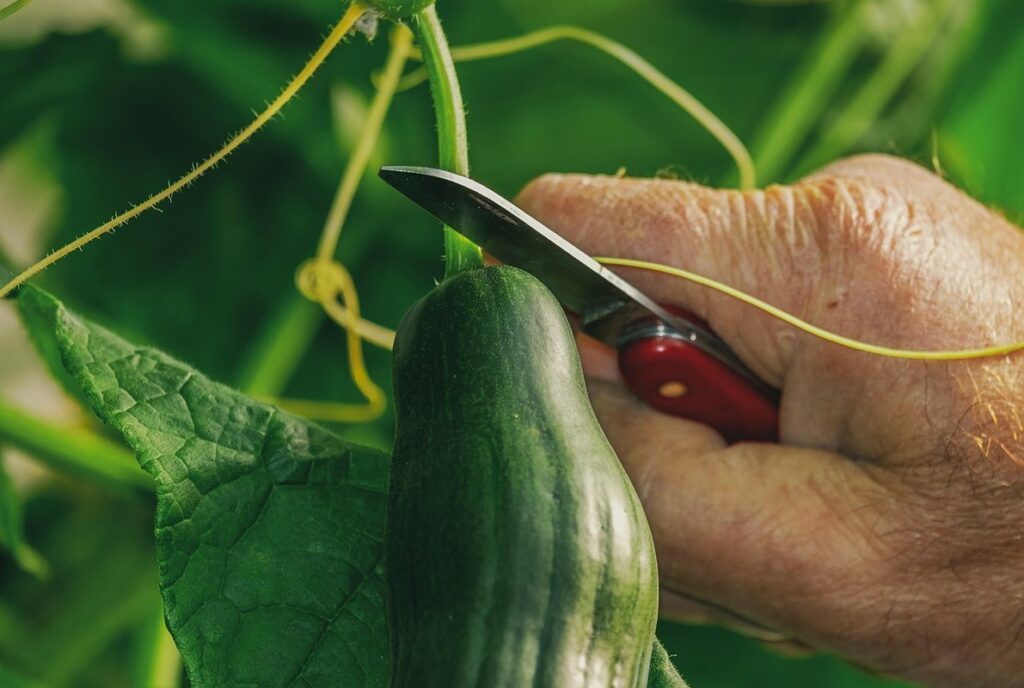
When it comes to harvesting cucumbers, timing is everything. The ideal time for harvesting is usually when they’ve reached a length of around 6-8 inches. But how do you know when they’re ready? One way to check is by gently tugging on the cucumber. If it comes off easily, it’s likely ripe and ready to be picked.
Another method is to check the color and texture. Cucumbers are typically a bright green or yellow-green color, depending on the variety. Avoid harvesting cucumbers when they’re too dark in color, as this can indicate over-ripeness. You should also look for a slight sheen to the skin, which indicates high water content.
When it comes to picking, you have two options: hand-picking or mechanical harvesting. Hand-picking is often the preferred method, especially for smaller harvests. Not only does it allow for more precise selection and gentle handling of the cucumbers, but it also gives you a chance to inspect each one individually for quality.
Mechanical harvesting can be more efficient for larger crops, but it’s essential to choose the right type of equipment that won’t damage the delicate skin of the cucumbers.
Storing Freshly Harvested Cucumbers
When you’ve finally harvested those luscious cucumbers from your garden, it’s essential to store them properly to maintain their freshness and longevity. The key is to keep them cool, dry, and away from direct sunlight. Direct sunlight can cause the cucumbers to become over-ripe, while heat can lead to a loss of crispness and flavor.
To store freshly harvested cucumbers, you’ll want to use breathable storage containers or bags that allow for airflow and moisture transfer. You can place them in a paper bag, mesh bag, or even a ventilated produce keeper with holes for air circulation. This will help maintain the optimal humidity level, preventing mold growth and spoilage.
When storing cucumbers, keep them away from strong-smelling fruits and vegetables, as they can absorb odors easily. You can store them in the refrigerator at a consistent temperature below 40°F (4°C). Make sure to check on them regularly to remove any that are spoiling or showing signs of decay. By following these simple storage tips, you’ll be able to enjoy your homegrown cucumbers for a longer period and savor their freshness throughout the season.
Frequently Asked Questions
Can I grow cucumbers in containers if my outdoor space is limited?
Yes, you can definitely grow cucumbers in containers if your outdoor space is limited. Choose a container that’s at least 12-18 inches deep and has good drainage holes to prevent waterlogged soil. Make sure the container receives full sun (at least 6 hours of direct sunlight) and keep it consistently moist.
How do I know when my cucumbers are ready for harvest?
Check your cucumber plants regularly, and gently grasp the fruit in question. If it comes off easily, leaving a small piece of stem attached to the plant, it’s ready to be harvested. The ideal time for harvesting is usually around 50-60 days after sowing, depending on the variety.
Can I grow cucumbers alongside other vegetables, or do they require separate plots?
Cucumbers can be grown alongside a wide range of vegetables, including tomatoes, peppers, and squash, as long as you provide adequate space for air circulation. However, avoid planting them near strong-smelling plants like onions and garlic, which can deter pests but also affect the flavor of your cucumbers.
How do I manage powdery mildew on my cucumber plants?
Powdery mildew is a common issue in cucumber cultivation. To prevent it from spreading, remove any infected leaves or stems immediately. Improve air circulation around your plants by pruning nearby foliage and ensuring good soil drainage. Consider using organic fungicides as a last resort.
Can I still grow cucumbers if my garden’s pH level is on the higher side (above 7)?
While most cucumber varieties prefer a slightly acidic to neutral soil pH, some can tolerate more alkaline conditions. However, be aware that extremely high pH levels may affect nutrient availability and reduce yields. Consider taking steps to adjust your soil pH or choosing disease-resistant varieties specifically bred for high-pH environments.