
If you’re looking to create a bee-friendly garden, there’s one plant that stands out from the rest: the globe thistle. Not only does this striking flower provide a vibrant pop of color, but it also offers a wealth of benefits for bees and other pollinators. Its high nutritional value makes it a vital source of energy and nutrients for these busy creatures, while its ability to attract a variety of pollinators means that your garden will be buzzing with life. But what exactly makes globe thistle so special? And how can you incorporate this bee-friendly plant into your garden? In this article, we’ll explore the benefits of globe thistle flowers for bees and provide tips on how to grow and care for this amazing plant. Whether you’re a seasoned gardener or just starting out, you won’t want to miss this!
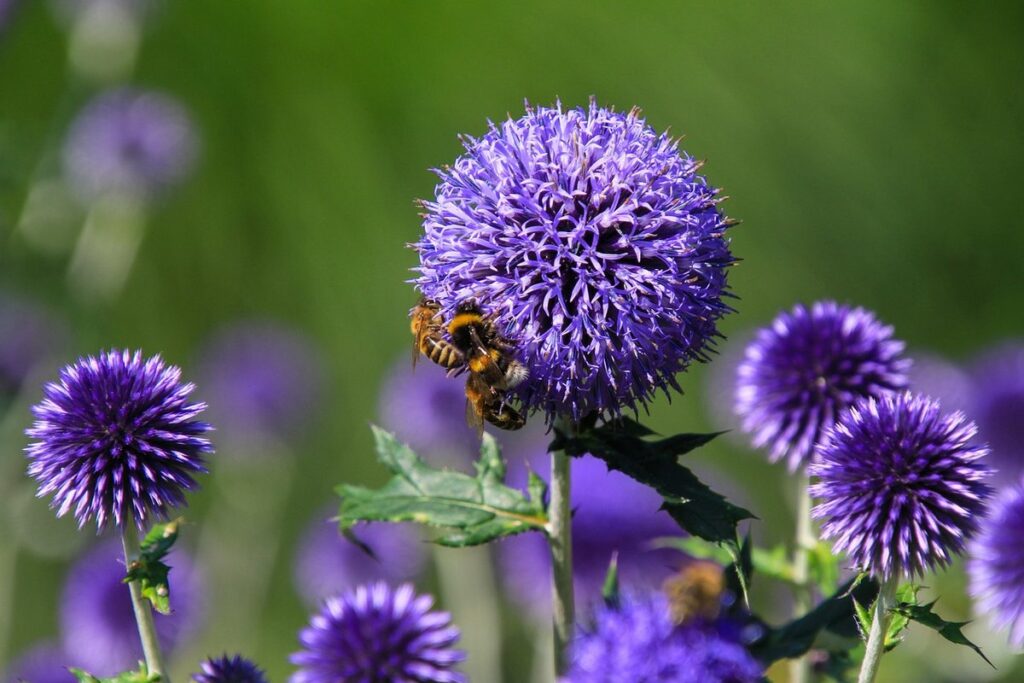
Benefits of Globe Thistle for Bees
Globe thistle is a bee haven, and its benefits for pollinators can’t be overstated. Let’s explore just how valuable these beautiful flowers are to bees.
Why Globe Thistle is a Bee’s Favorite
When it comes to attracting bees to your garden, Globe Thistle is an excellent choice. But why do these busy pollinators go crazy for this particular flower? The answer lies in the essential resources it provides: nectar and pollen.
For bees, nectar is a vital source of energy, particularly during peak summer months when their colonies are thriving. Globe Thistle’s tubular flowers, also known as “globe-shaped” flowers, make it easy for bees to access this sweet liquid. As they feed on the nectar, they’re able to store up enough energy to sustain themselves and their hives.
Pollen, another crucial resource, is abundant in Globe Thistle flowers. Bees collect pollen from these blooms to bring back to their colonies, where it’s used as a protein-rich food source for their young ones. This process of pollination is not only essential for bee survival but also helps to maintain the health and diversity of your garden ecosystem.
To maximize the benefits of Globe Thistle in your garden, plant multiple specimens together to create a nectar-rich hotspot that will attract bees from far and wide.
Nutritional Value of Globe Thistle for Bees
Globe thistle flowers are a rich source of nutrients for bees, making them an attractive food source during their high-energy activities like pollination. The nectar and pollen from these flowers pack a punch when it comes to protein content. In fact, research has shown that globe thistle flowers contain up to 24% protein, which is significantly higher than many other wildflowers.
This high protein content makes globe thistle an ideal food source for bees, particularly during peak summer months when they need the extra energy to fuel their activities. Bees rely on nectar and pollen as their primary sources of nutrition, and the unique combination of nutrients found in globe thistle flowers is a vital component of their diet.
By planting globe thistle in your garden, you’re not only supporting local pollinators but also providing them with essential nutrients for survival. Consider incorporating this versatile flower into your bee-friendly garden to reap the rewards of a thriving ecosystem where both plants and bees can thrive together.
Growing Globe Thistle for Bee Support
To help these pollinators thrive, you’ll want to learn how to grow globe thistle effectively and create a welcoming environment that attracts bees in abundance. Let’s start by mastering the basics of cultivating this bee-friendly flower.
Choosing the Right Variety
When selecting a globe thistle variety for your garden, it’s essential to consider factors such as hardiness, growth habits, and blooming times. This will ensure that you attract pollinators like bees during the right season.
Begin by checking the plant’s hardiness zone rating. Globe thistles are typically hardy in zones 3-8, but some varieties can thrive in warmer or cooler climates. For example, ‘Atropurpurea’ and ‘Ritro’ are popular choices for gardens in zones 4-7, while ‘Nanus’ is more suitable for zones 6-9.
Consider the growth habits of the variety as well. Some globe thistles can grow quite tall (up to 5 feet), while others remain compact (around 2 feet). If you have limited space or want a lower-maintenance option, look for varieties like ‘Helen’s Blush’ or ‘Ryedale’. Be mindful of the blooming times too – some globe thistles bloom in early summer, while others peak in mid-to-late summer. This ensures that your garden provides a constant source of nectar and pollen throughout the season.
When selecting a variety, choose one that fits your specific climate and garden conditions. With so many options available, you’re sure to find a globe thistle that will attract pollinators like bees and add beauty to your garden all summer long.
Planting and Maintenance Tips
To ensure that your globe thistle plants thrive and provide optimal support for pollinators, it’s essential to follow some key planting and maintenance tips. First, choose a spot with full sun, as globe thistles require at least six hours of direct sunlight per day to bloom well. When selecting the soil, opt for a well-draining mix that is slightly alkaline in pH, as this will help prevent root rot.
Water your globe thistle plants regularly, but make sure not to overwater, which can lead to root decay and other issues. Aim for about 1 inch of water per week, either from rainfall or irrigation. It’s also crucial to fertilize your globe thistles annually with a balanced, slow-release fertilizer to promote healthy growth and blooming.
By following these planting and maintenance tips, you’ll be able to create an ideal environment for your globe thistle plants to flourish and provide sustenance for the bees in your garden. Keep in mind that proper care will also help extend the lifespan of your globe thistle blooms, allowing pollinators to visit them over a longer period.
Some popular varieties of globe thistle, such as ‘Atropurpurea’ and ‘New Horizons’, are known to be relatively low-maintenance and can tolerate some neglect. However, regular deadheading and pruning will encourage more blooms and keep your plants bushy and healthy.
Attracting Other Pollinators with Globe Thistle
While globe thistle is a bee magnet, it’s also a great choice for attracting other pollinators to your garden, including butterflies and hummingbirds. Let’s explore how to make this happen!
Butterflies and Moths
In addition to being a haven for bees, globe thistle flowers also provide a vital source of nectar and pollen for butterflies and moths. These often-overlooked pollinators play a crucial role in maintaining the balance of ecosystems, and incorporating them into your garden can add to its biodiversity.
Butterflies, such as the monarch butterfly, are particularly drawn to globe thistle’s tall spikes of blue flowers. As they feed on nectar, they inadvertently transfer pollen between plants, facilitating the reproduction process. To attract these majestic creatures, consider planting globe thistle in a sunny spot with minimal shade. The delicate balance of light and temperature will encourage butterflies to flutter in and out of your garden.
Moths, such as the hummingbird hawk moth, also find globe thistle’s blooms irresistible. These nocturnal visitors are often active when bees have retired for the night, ensuring that pollination continues even after dark. To create a moths-friendly environment, incorporate native plants with fragrant flowers, as these will provide a rich source of nectar and attract these hidden pollinators.
By welcoming butterflies and moths into your garden, you’ll not only enhance its biodiversity but also create a more dynamic ecosystem that thrives throughout the day and night.
Other Insects and Animals
Globe thistle flowers are not just a haven for bees; they also attract other beneficial insects and animals that play a vital role in maintaining a healthy ecosystem. Beetles, such as the lady beetle and ground beetles, are natural predators of aphids and other pests that can harm plants. By attracting these beneficial beetles to your garden, you’re creating a balanced environment where pollinators and predators coexist.
Wasps, like paper wasps and yellowjackets, also visit globe thistle flowers for nectar. While they may have a reputation for being aggressive, wasps are actually beneficial pollinators that help transfer pollen between plants. By incorporating globe thistle into your garden, you’re not only supporting bee populations but also creating a haven for these often-maligned wasp species.
Birds, particularly hummingbirds and finches, are drawn to the tubular shape of globe thistle flowers, which make it easy for them to access nectar. By planting globe thistle in your garden, you’re creating a diverse ecosystem that supports an array of pollinators and wildlife. This diversity is key to maintaining a healthy environment, as each species plays a vital role in the larger ecosystem.
Designing a Bee-Friendly Garden with Globe Thistle
To attract even more pollinators, we’ll now turn to designing your garden with globe thistle as the star of the show, providing a haven for bees. Let’s create a bee-friendly space that they’ll love!
Creating a Pollinator-Focused Garden Plan
When designing a garden plan that focuses on supporting pollinators, it’s essential to consider the specific needs of bees and other beneficial insects. To create a thriving ecosystem, incorporate a variety of plants that provide nectar and pollen throughout different seasons.
Start by selecting a range of flowers that bloom at various times, ensuring a constant source of food for pollinators. Globe thistle (Echinops ritro) is an excellent choice, as it produces vibrant blue flowers in mid-to-late summer, providing a rich source of nectar and pollen. Other complementary plants, such as coneflower, black-eyed Susan, and lavender, can be added to the garden plan.
When integrating globe thistle into your layout, consider its mature height (around 3-4 feet) and spread (about 12-18 inches). Plant it in a location that receives full sun and well-drained soil. Also, make sure to include plants with different bloom times to ensure a steady supply of nectar throughout the growing season.
To further enhance your pollinator-friendly garden plan:
* Incorporate native plants, which are more likely to attract local pollinators
* Avoid using pesticides, which can harm or kill beneficial insects
* Provide a source of water, such as a shallow dish or birdbath with fresh water and rocks for landing sites
Incorporating Complementary Plants
When designing a bee-friendly garden with globe thistle, it’s essential to incorporate complementary plants that pair well with this versatile flower. These additions will not only enhance the garden’s biodiversity but also provide a constant source of nectar and pollen for bees throughout the growing season.
Consider pairing globe thistle with coneflowers (Echinacea spp.), which bloom around the same time and offer an abundance of nectar-rich flowers. Bee balm (Monarda didyma) is another excellent choice, as its red, pink, or purple flowers are a favorite among bees and attract them to your garden from afar.
Lavender (Lavandula spp.) and rosemary (Rosmarinus officinalis) are also great options, as they not only provide a rich source of nectar but also repel pests that might harm globe thistle. When selecting complementary plants, remember to choose varieties that bloom at different times to ensure a constant food source for bees. By incorporating these plants into your garden design, you’ll create a thriving ecosystem that supports the local bee population and attracts other pollinators as well.
Tips for Encouraging Year-Round Bee Activity
To make the most of your globe thistle flowers, consider these practical tips to encourage year-round bee activity and keep your garden buzzing all season long.
Winter Interest and Care
As winter sets in, it’s essential to care for your globe thistle plants to ensure they remain healthy and attractive to pollinators throughout the cold months. This is where proper winter interest and care come into play.
Firstly, cut back the stalks of the globe thistle plant after the first frost, leaving about an inch of stem intact. This will help prevent damage from snow and ice. You can also add a layer of mulch around the base to protect the roots from freezing temperatures.
During this dormant period, it’s crucial to water your globe thistle plants sparingly, as excess moisture can lead to root rot. Avoid fertilizing them during winter months, as this can encourage new growth that may not have time to harden off before the next frost.
By following these simple care tips, you’ll be able to enjoy the beauty of your globe thistle flowers even in the dead of winter, when other plants are dormant. This will also provide a welcome source of nectar and pollen for pollinators like bees, which can help boost their populations and ensure a healthy start to the next growing season.
Overwintering Strategies
As the seasons change and winter approaches, it’s essential to protect your globe thistle plants from harsh weather conditions. Overwintering strategies will help ensure that these vital bee-friendly flowers thrive when spring returns. Mulching is a simple yet effective way to insulate your globe thistle plants. Apply a 2-3 inch layer of organic mulch around the base, keeping it a few inches away from the crown. This will shield the roots from freezing temperatures and retain moisture.
Pruning also plays a crucial role in overwintering. Cut back any dead or damaged foliage to about 6 inches above ground level. This will prevent disease and pest infestations, promoting healthy growth when warmer weather arrives. Consider protecting your globe thistle plants from extreme temperatures by covering them with burlap or straw during particularly harsh winter conditions.
Additionally, take measures to safeguard against animal damage. Rabbits, deer, and other wildlife may see your globe thistles as a tasty snack. Fencing or using repellents can help deter these pests, ensuring the longevity of your plants.
Conclusion: Creating a Bee-Friendly Haven with Globe Thistle
Now that you’ve learned how to attract bees to your garden, it’s time to create a welcoming haven for these vital pollinators. By incorporating globe thistles and other bee-friendly plants, your garden will thrive!
Recap of Key Takeaways
As you’ve learned throughout this article, globe thistle flowers are an excellent addition to any garden aiming to attract pollinators like bees. By incorporating these stunning blooms into your design, you’ll not only be creating a bee-friendly haven but also supporting the local ecosystem.
One of the key takeaways is that globe thistle’s unique flower structure and high nectar content make it a go-to source for bees and other pollinators in search of sustenance. By planting multiple globe thistle flowers together, you’ll create a “hotel” for solitary bees, providing them with an abundance of food and shelter.
Another crucial point is that globe thistle’s drought tolerance and adaptability to various soil types make it an ideal choice for gardeners looking to minimize maintenance while still supporting their local pollinators. To maximize the benefits, consider planting a mix of bee-friendly flowers, including globe thistle, lavender, and coneflower.
By incorporating these simple yet effective design elements into your garden, you’ll be creating a thriving haven that supports both the beauty of nature and our precious pollinators.
Encouragement to Get Started
As you’ve learned about the benefits of globe thistle flowers for bees and the importance of creating a bee-friendly haven, it’s time to take action. Incorporating pollinator-supporting plants like globe thistle into your garden can be a rewarding and easy process.
Start by choosing a sunny spot in your yard that gets at least 6 hours of direct sunlight per day. This is ideal for globe thistle, which thrives in well-drained soil and full sun. Next, select a mix of plants that provide nectar-rich flowers throughout the growing season to ensure a constant food source for pollinators.
Begin small by adding one or two globe thistle plants to your garden this year, and gradually expand your bee-friendly space over time. Consider consulting with a local nursery or gardening expert to determine which other pollinator-supporting plants will thrive in your region. With a little planning and effort, you can create a haven for bees and other pollinators that will bring joy and beauty to your garden for years to come.
Frequently Asked Questions
Can I grow globe thistle in containers or does it require a lot of space?
Yes, you can grow globe thistle in containers if you have limited space. However, keep in mind that it prefers well-draining soil and full sun, so make sure your container is at least 6-8 inches deep to accommodate its taproot. Choose a large enough container to support the mature size of the plant, usually around 12-18 inches tall.
How long does globe thistle bloom for, and can I expect it to attract bees throughout the growing season?
Globe thistle typically blooms from mid-to-late summer, often lasting 6-8 weeks. However, you can extend its blooming period by deadheading spent flowers, which encourages more nectar-rich blooms. Yes, globe thistle is a reliable source of nectar and pollen for bees throughout the growing season.
What other pollinators besides bees are attracted to globe thistle?
Besides bees, butterflies, moths, and other beneficial insects like lacewings and parasitic wasps are also drawn to globe thistle. Its tall spikes of blue flowers provide a valuable source of nectar for these pollinators, making it an excellent addition to any garden designed to support biodiversity.
How can I ensure the health and longevity of my globe thistle plants?
To promote healthy growth and prevent disease, water your globe thistle regularly but avoid overwatering. Fertilize sparingly during the growing season, as excessive fertilizer can reduce nectar production. Yes, regular deadheading and staking can help maintain the plant’s appearance and encourage repeat blooming.
Can I propagate globe thistle from seed or do I need to purchase new plants every year?
Globe thistle can be propagated from seed, but it may take several months for the seedlings to mature. Alternatively, you can divide established clumps in the spring or fall to create new plants. Yes, dividing and replanting is a reliable method for propagating globe thistle, ensuring a steady supply of this valuable pollinator-friendly plant.