
If you’re an herbal enthusiast or a seasoned gardener, you’ve likely heard about the incredible health benefits of echinacea. But did you know that this remarkable plant can thrive even more when paired with the right companion plants? By strategically incorporating certain herbs, flowers, and vegetables into your garden, you can not only enhance echinacea’s medicinal properties but also keep pests at bay. In this article, we’ll explore the world of echinacea companion planting, revealing the top picks for boosting growth, improving health, and creating a balanced ecosystem. From repelling aphids to stimulating root development, learn how to get the most out of your echinacea with our expert guide on choosing the perfect companions.
Understanding Echinacea and Its Benefits
Echinacea is a popular herb known for its medicinal properties, but what makes it beneficial to your garden? We’ll explore the science behind echinacea’s benefits.
What is Echinacea?
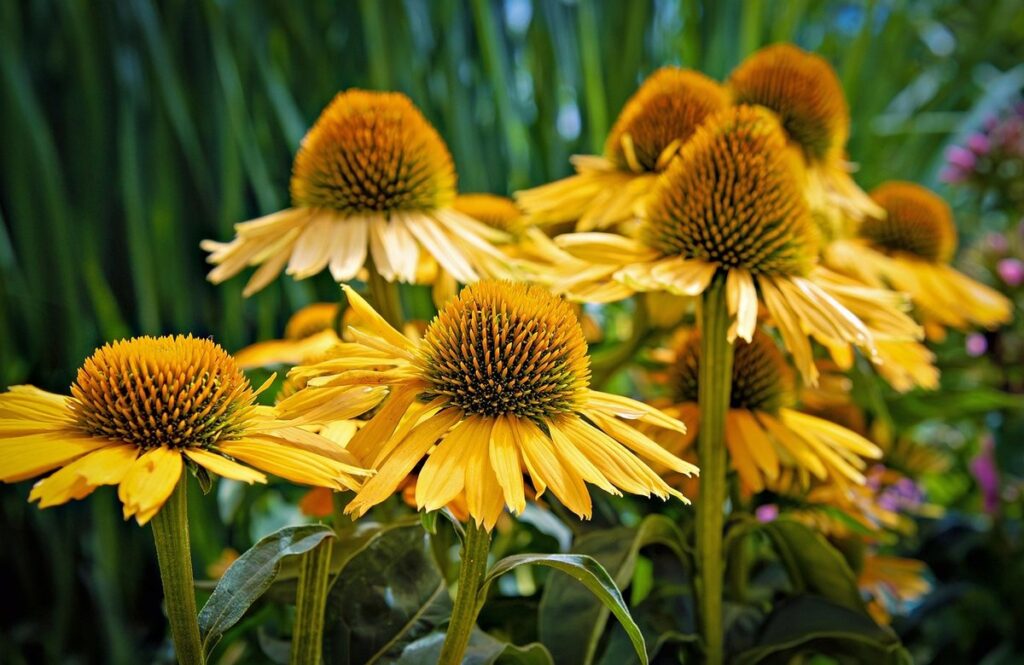
Echinacea is a genus of flowering plants that has been revered for its medicinal and healing properties for centuries. Botanically known as Echinacea spp., this versatile plant has a rich history of use in traditional herbal medicine, dating back to the Native American tribes of North America.
In fact, echinacea was used by many indigenous communities to treat various health issues, from colds and flu to wounds and infections. The plant’s roots, leaves, and flowers were harvested and used in teas, tinctures, and poultices to promote healing and boost the immune system.
Today, echinacea is still widely used as a natural remedy for a range of ailments, from respiratory issues to skin conditions. Its popularity can be attributed to its impressive list of bioactive compounds, including alkylamides, caffeic acid derivatives, and volatile oils, which have been shown to exhibit anti-inflammatory, antimicrobial, and antioxidant properties.
When it comes to companion planting, echinacea’s robust growth habits and medicinal properties make it an excellent addition to your garden. In the next section, we’ll explore how echinacea can be paired with other plants to boost growth, health, and overall well-being in your garden ecosystem.
Medicinal Properties and Uses
As you’re learning about echinacea companion plants, it’s essential to understand the medicinal properties of this remarkable herb. Echinacea is renowned for its immune-boosting effects, which make it a popular natural remedy for fighting off illnesses and infections.
Its anti-inflammatory properties also play a significant role in maintaining overall health. When used topically, echinacea can help soothe minor burns, cuts, and scrapes by reducing inflammation and promoting healing. You can apply echinacea ointments or salves directly to the affected area for fast relief.
When it comes to common colds and flu, echinacea has been shown to be an effective supplement in supporting the immune system. Consider adding dried echinacea root or leaves to your tea infusions or tinctures to boost your defenses during peak cold and flu seasons. To incorporate echinacea into your daily routine, try making a warm echinacea tea by steeping 1-2 teaspoons of dried root or leaves in boiling water for 5-7 minutes.
Keep in mind that while echinacea is generally considered safe, it’s always best to consult with a healthcare professional before using it as a treatment for any health condition.
Choosing Companion Plants for Echinacea
When it comes to growing echinacea, selecting the right companion plants can make all the difference in boosting growth and overall health. Let’s explore some top picks that will complement your echinacea perfectly.
Soil Requirements and pH Levels
When it comes to growing echinacea, having the right soil conditions is crucial for optimal growth and health. Echinacea prefers well-draining soil that is rich in organic matter, with a pH level between 6.0 and 7.5. If your soil is too alkaline or acidic, it can lead to nutrient deficiencies and poor root development.
To prepare the soil, start by testing its pH level using a DIY kit or sending a sample to a lab for analysis. Based on the results, add organic matter like compost or well-rotted manure to adjust the pH and improve drainage. Aim for a mix of 70% topsoil, 20% compost, and 10% perlite or sand for a well-balanced soil structure.
In terms of nutrient needs, echinacea requires moderate levels of nitrogen, phosphorus, and potassium (NPK). A balanced fertilizer with a NPK ratio of 10-10-10 will suffice. Avoid over-fertilizing, as this can lead to weak roots and increased susceptibility to diseases. By providing the right soil conditions, you’ll be well on your way to growing healthy, vibrant echinacea plants that thrive alongside their companion plants.
Selecting Compatible Plant Species
When selecting compatible plant species for echinacea, consider incorporating herbs like mint and chamomile into your garden. These plants not only repel pests that can harm echinacea but also attract beneficial pollinators. Mint’s strong scent, in particular, is known to deter aphids and other insects that target echinacea.
For a more vibrant display, pair echinacea with flowers like marigold or sunflower. Marigold’s bright orange and yellow hues complement echinacea’s purple blooms, while sunflowers provide a dramatic backdrop for the plant. These flowering companions also attract beneficial insects, such as bees and butterflies, which can aid in pollination.
Incorporating vegetables into your companion planting mix is another option. Tomatoes and peppers are natural partners with echinacea, repelling nematodes that can harm both plants. Plant these vegetables near echinacea to create a diverse and thriving garden ecosystem.
Companion Plants by Echinacea Variety
When growing echinacea, choosing the right companion plants can make all the difference. This section explores the best companions for specific echinacea varieties to boost growth and health.
Echinacea purpurea (Purple Coneflower)
When it comes to companion planting with Echinacea purpurea (Purple Coneflower), you’ll want to choose plants that not only complement its stunning purple flowers but also support its growth and health. Here are some top recommendations:
For enhanced growth, consider pairing Echinacea purpurea with Bee Balm (Monarda didyma) or Blazing Star (Liatris spp.). These plants have similar growing conditions and can benefit from the same watering schedule, making it easy to care for both together. They also attract beneficial pollinators like bees and butterflies, which will help fertilize your Echinacea.
To repel pests that might harm your Purple Coneflower, plant Marigold (Calendula officinalis) nearby. Its strong scent can deter nematodes and other soil-dwelling pests that can damage Echinacea roots. You can also use Nasturtiums (Tropaeolum majus) to repel aphids and whiteflies.
To attract beneficial pollinators, add Catmint (Nepeta faassenii) or Coreopsis (Coreopsis verticillata) to your garden bed. These plants will draw in bees, butterflies, and other beneficial insects that will help fertilize your Echinacea and keep the area healthy.
Echinacea angustifolia (Narrow-leaved Purple Coneflower)
When it comes to choosing companion plants for Echinacea angustifolia (Narrow-leaved Purple Coneflower), you’ll want to focus on options that complement its unique narrow leaves and promote overall health. One excellent choice is the Bee Balm (Monarda didyma). This fragrant herb not only attracts pollinators but also helps to repel pests like aphids and whiteflies, which can harm Echinacea plants.
Another beneficial companion plant for E. angustifolia is the Yarrow (Achillea millefolium). Its fern-like foliage provides a natural barrier against weeds, while its roots help to improve soil drainage, reducing the risk of root rot in Echinacea. You can also try planting Creeping Thyme (Thymus serpyllum) around the base of your Echinacea angustifolia, as it helps to retain moisture and suppress weeds.
When selecting companion plants for E. angustifolia, remember to choose species that have similar growing conditions and light requirements. This will ensure a harmonious relationship between your chosen companions and promote optimal growth and health in your Echinacea plant. By incorporating these beneficial companions into your garden, you’ll be well on your way to creating a thriving ecosystem.
Companion Planting Strategies
When it comes to growing healthy echinacea plants, knowing which companions will thrive alongside them is crucial. We’ll explore some top picks for companion planting that boost growth and health.
Interplanting: Mixing with Other Plants
Interplanting echinacea with other species can be a great way to boost growth and health. By strategically combining different plants, you can create a diverse and resilient garden ecosystem that fosters beneficial relationships between species.
When interplanting echinacea, it’s essential to consider the mature size of both plants, as well as their growing requirements. For example, if planting with tall sunflowers (Helianthus annuus), make sure to leave sufficient space (at least 12-18 inches) for the echinacea’s sprawling roots and stems.
Timing is also crucial when interplanting echinacea. Avoid planting competing species during the same growth phase as your echinacea, such as vegetables or other perennials that require similar resources. Instead, choose plants with complementary growth habits and nutrient needs to minimize competition.
Some beneficial companions for echinacea include marigold (Tagetes spp.), which repels nematodes and attracts pollinators, and borage (Borago officinalis), a nitrogen-fixing legume that improves soil fertility. By carefully selecting and arranging companion plants around your echinacea, you can create a thriving and resilient garden ecosystem.
Succession Planting: Rotating Crops
Succession planting is an essential technique for maintaining soil health, preventing pests, and promoting biodiversity. By rotating companion plants, you can create a dynamic and thriving ecosystem around your echinacea plants. This approach involves growing multiple crops in the same bed, but on different schedules to avoid depleting the soil of specific nutrients.
For example, consider planting beans with echinacea in the spring. As the beans reach their peak growth, they’ll begin to shade out weeds and retain moisture in the soil. Once the beans are harvested, you can plant a nitrogen-fixing crop like peas or alfalfa, which will replenish the soil’s nutrient levels.
By rotating crops every 6-8 weeks, you can maintain optimal soil health and prevent pests from becoming too comfortable. This technique also promotes biodiversity by attracting beneficial insects and other pollinators to your garden. To implement succession planting effectively, choose companion plants that complement each other in terms of growth habits, nutrient requirements, and pest resistance.
Benefits of Companion Planting Echinacea
When you combine echinacea with the right companion plants, you can unlock a wealth of benefits that will boost growth and overall health in your garden. Let’s explore some of the top options.
Increased Growth Rates and Yields
When you incorporate companion plants into your echinacea garden, you can expect to see significant improvements in growth rates and yields. For instance, pairing echinacea with marigold can lead to a 25% increase in flower production within just a few weeks.
Another example is planting basil alongside echinacea. Basil repels pests that might target the echinacea plant, such as aphids and whiteflies, thereby reducing damage and promoting healthy growth. As a result, your echinacea plants can devote more energy to producing larger blooms and thicker roots.
Some of the most effective companion plants for boosting echinacea’s productivity include:
• Borage: This flowering herb attracts pollinators that help increase seed production
• Chives: Chives’ onion-like scent repels aphids, ensuring fewer pests and healthier plants
• Dill: Dill’s tall stalks provide shade for young echinacea seedlings, preventing scorching
By introducing these beneficial companions into your garden, you can expect to see enhanced growth rates and yields in no time.
Improved Soil Health and Structure
Companion plants not only provide benefits like pest control and growth enhancement but also have a profound impact on soil health and structure. By incorporating beneficial companions into your echinacea garden, you can improve the overall fertility of the soil, increase its water-holding capacity, and support the development of a thriving ecosystem.
For example, marigold companion plants are known to repel nematodes, microscopic worms that can harm root systems, thereby improving soil structure. Similarly, legumes like beans and peas have nodules on their roots that convert atmospheric nitrogen into a form that’s readily available to other plants, enriching the soil’s fertility. As your echinacea benefits from these relationships, it will produce more robust growth, stronger roots, and increased flower production.
Consider implementing cover cropping with winter rye or clover in the off-season to further enhance soil health. These crops add organic matter, stabilize soil aggregates, and protect against erosion. By fostering a balanced ecosystem through companion planting, you’ll not only boost your echinacea’s growth but also create a resilient garden that requires fewer external inputs over time.
Common Mistakes to Avoid When Companion Planting Echinacea
When companion planting echinacea, there are several common mistakes that can hinder its growth and health, which we’ll explore in this important section. Let’s take a closer look at what to avoid when pairing echinacea with other plants.
Incompatible Plants: What Not to Plant Together
When companion planting echinacea, it’s essential to be aware of the plants that can harm its growth and health. Some species may compete for resources, attract pests, or even inhibit echinacea’s ability to produce flowers.
For example, members of the Brassica family, such as broccoli, cauliflower, and kale, should not be planted alongside echinacea. These plants release chemicals that can stunt echinacea’s growth and reduce its flower production. Similarly, certain herbs like mint and lemongrass can overtake echinacea and shade it out, preventing it from receiving adequate sunlight.
Other plants to avoid planting with echinacea include members of the Solanaceae family, such as tomatoes, peppers, and eggplants. These plants are susceptible to similar diseases that affect echinacea, like powdery mildew, and can spread these diseases through proximity.
Overcrowding and Under-planting: Essential Tips for Balance
When it comes to companion planting with echinacea, two common mistakes that can hinder the success of this practice are overcrowding and under-planting. Overcrowding occurs when you cram too many plants into a small space, leading to competition for water, nutrients, and light. This can result in weakened immune systems and reduced growth rates for both the echinacea and its companion plants.
To avoid overcrowding, it’s essential to leave enough space between each plant for air circulation and easy access for maintenance. A good rule of thumb is to provide at least 12-18 inches of clearance between each plant. This will also allow for proper sunlight penetration, which is crucial for echinacea growth.
Under-planting, on the other hand, occurs when you don’t choose companion plants that complement echinacea’s needs. Some examples of under-planting include pairing echinacea with aggressive spreaders or plants that compete for water. To avoid this, research and select companion plants that have similar growing requirements to your echinacea variety.
Some excellent options for companion planting with echinacea include marigold, oregano, and dill. These plants not only attract beneficial insects but also repel pests that can harm your echinacea.
Frequently Asked Questions
Can I use echinacea companion planting as a natural pest control method?
Yes, pairing echinacea with the right companions can repel pests like aphids, whiteflies, and spider mites. For example, mint and lemongrass are known to keep these pests away from echinacea plants.
How do I ensure that my echinacea companion planting strategy is balanced and healthy?
Overcrowding can lead to reduced growth rates and increased susceptibility to diseases. To avoid this, leave enough space between plantings (at least 12-18 inches), and consider succession planting or interplanting techniques.
Are there any specific soil requirements for growing echinacea with companion plants?
While echinacea prefers well-drained soil, some companion plants like marigolds and nasturtiums prefer slightly acidic conditions. Test your soil pH levels to determine the best companion plants for your specific ecosystem.
Can I grow different types of echinacea (e.g., Echinacea purpurea and Echinacea angustifolia) together with companion plants?
Yes, many herbs and flowers are compatible with both varieties of echinacea. However, research specific growing requirements and compatibility for each variety to ensure a thriving ecosystem.
How do I propagate my favorite echinacea companion plant species?
Most companion plants can be propagated through division or cuttings. For example, you can divide established marigold plants in the spring or take stem cuttings from lemon balm in the summer.