
When you step outside on a sunny day, surrounded by blooming flowers, it’s hard not to notice these busy creatures flitting from one colorful bloom to the next. Bees are some of the most fascinating insects out there, and their role in pollination is crucial for our ecosystem. But have you ever wondered what fuels their activity? Do bees collect pollen or nectar, and what’s the significance of each? The answer might surprise you! In this article, we’ll delve into the world of bee nutrition, exploring how these vital resources are collected and used by bees. We’ll also discuss the consequences of losing these essential components of a bee’s diet, and why it matters for our planet’s well-being. Let’s take a closer look at what makes bees tick!
The Importance of Bees in Ecosystems
Bees play a vital role in ecosystems, but have you ever wondered how their presence affects our environment and food supply? Let’s explore the importance of bees in maintaining healthy ecosystems.
Role of Bees in Plant Reproduction
Bees play a vital role in facilitating plant reproduction by transferring pollen between plants. This process is crucial for seed production and fruit set. Without bees, many plant species would be unable to reproduce successfully.
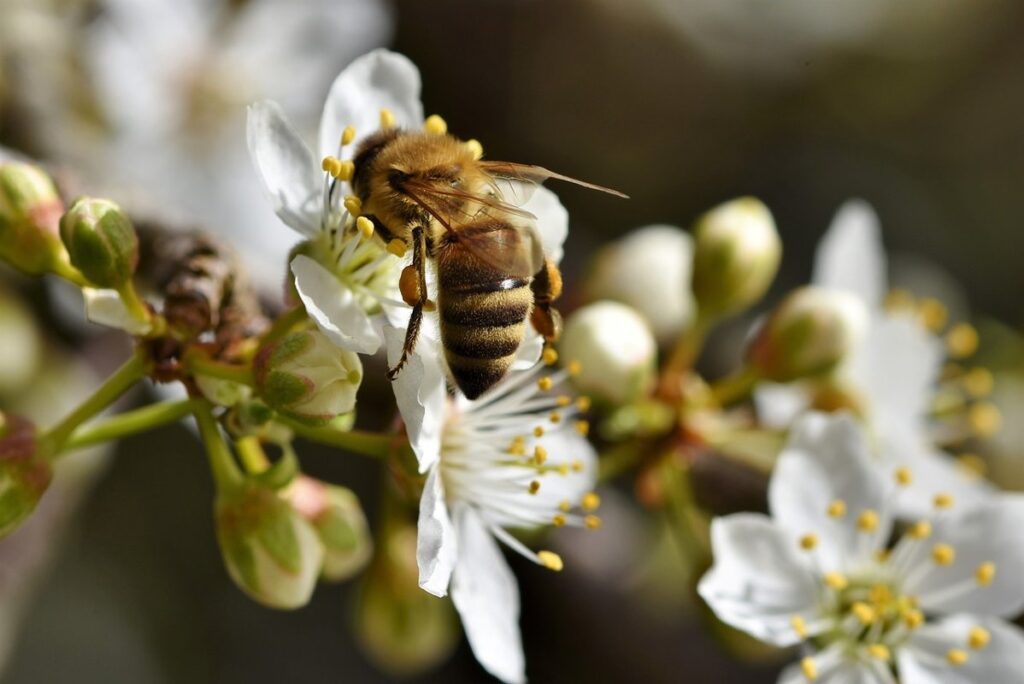
When a bee visits a flower in search of nectar or pollen, it inadvertently collects pollen from the anthers (the male reproductive parts) and deposits it onto the stigma (the female reproductive part) of another flower. This process is called pollination. As the bee moves from plant to plant, it transfers the pollen, allowing for fertilization to take place.
As a result, seeds are produced, which eventually develop into fruits, vegetables, and other edible crops. In fact, it’s estimated that one-third of the food we eat is directly or indirectly dependent on bee pollination. This includes common foods like apples, blueberries, avocados, and almonds.
To put this in perspective, a single almond tree requires around 200,000 individual bees to pollinate its flowers over the course of several days. Without these busy little pollinators, many plant species would struggle to reproduce successfully.
Impact of Bee Loss on Food Security
Bee loss can have far-reaching consequences on our global food security. The relationship between bees and human food is often overlooked, but it’s crucial to understand that one-third of the food we eat relies directly on bee pollination. If bee populations continue to decline, crop yields will suffer, and the diversity of crops will decrease.
Take, for example, almonds – a staple in many Western diets. Bees are responsible for pollinating these trees, and without them, almond production would be severely impacted. A single hive can pollinate around 200 almond trees, resulting in over $20 billion worth of almonds per year in the United States alone. If bee populations were to decline by 30%, as projected by some studies, this could lead to a significant decrease in almond yields.
Reduced crop diversity is another concern. Bees are attracted to a wide variety of flowers and crops, and their loss can have a ripple effect throughout entire ecosystems. This can lead to reduced food options for consumers and decreased resilience in the face of environmental challenges. To mitigate these effects, it’s essential to support bee conservation efforts and maintain healthy bee populations through sustainable practices like organic farming and reducing pesticide use.
Economic Value of Honeybees
Honeybees are not only crucial for pollination, but they also contribute significantly to our economy through various products and services. One of the most well-known products is honey itself, which is harvested from bee colonies and sold globally. In addition to honey, beeswax is another valuable product obtained from honeybees. It’s used in candle-making, cosmetics, and even pharmaceuticals.
But perhaps more importantly, honeybees play a vital role in pollinating high-value crops such as almonds, avocados, and apples. These crops are not only essential for our food supply but also generate significant revenue for farmers and the economy as a whole. In fact, it’s estimated that one-third of the food we eat is directly or indirectly dependent on bee pollination.
For example, California almond farmers rely heavily on honeybees to pollinate their almond trees. Without these bees, the state’s $5 billion almond industry would be severely impacted. This highlights the importance of preserving and protecting honeybee populations to maintain a stable food supply and economy. By taking steps to support bee health, such as planting bee-friendly flowers and reducing pesticide use, we can help ensure the continued economic value of these incredible pollinators.
Pollen Collection by Bees
So, how do bees actually collect pollen? In this next part of our exploration, we’ll take a closer look at their pollen collection habits.
Bee Anatomy Specially Adapted for Pollen Collection
Bees have evolved extraordinary features that enable them to collect pollen efficiently. One of their key adaptations is their mouthparts. Bees have a long, tube-shaped tongue called a proboscis, which they use to gather nectar from flowers. However, when it comes to pollen collection, the mouthparts are modified to form a structure known as a pollen basket or corbiculae.
These specialized baskets on the legs of bees allow them to collect and carry pollen back to their hives. The hairy bodies of bees also play a crucial role in pollen collection. As they move from flower to flower, pollen sticks to their hair, making it easy for them to transport it back home.
The shape and structure of bee bodies are specifically designed for pollen collection. For instance, the hairy surfaces on their legs help to trap pollen grains, preventing them from falling off during transport. This specialized anatomy enables bees to collect pollen with remarkable efficiency, often carrying up to 90% of their body weight in pollen back to the hive.
How Bees Collect and Store Pollen
When it comes to pollen collection by bees, their primary focus is on gathering and storing this essential resource. But how do they actually collect and store pollen? It’s a fascinating process that involves specialized baskets on their legs called corbiculae.
Bees use these baskets to collect and transport pollen back to the hive. They do this by landing on flowers and brushing against them with their hairy bodies, which causes pollen to stick to their corbiculae. The pollen is then carried back to the hive, where it’s stored in specialized cells within the honeycomb.
Interestingly, some bees are more efficient at collecting pollen than others. For example, bumblebees have larger corbiculae that allow them to carry more pollen than smaller species like solitary bees. This means that bumblebees can gather more resources for their colonies, giving them an advantage in areas with limited food sources.
When storing pollen, bees also take care to maintain its viability by keeping it cool and dry. They achieve this by sealing the cells containing the pollen with a layer of wax, which helps regulate the temperature and humidity levels within. This ensures that the pollen remains fresh for a longer period, allowing the colony to make the most of their resources throughout the year.
By understanding how bees collect and store pollen, we can better appreciate the intricate social structure of these incredible creatures and the importance of pollination in our ecosystem.
Why Bees Need to Collect Pollen
Bees collect pollen for several critical reasons, primarily centered around its high nutritional value. Pollen serves as an essential source of protein, which is vital for the growth and development of bee colonies. In fact, bees need about 70-80% protein from their diet to maintain optimal colony health.
Beyond just protein, pollen also contains other crucial nutrients such as carbohydrates, fats, vitamins, and minerals that help sustain bees throughout the year. For instance, a single pound of pollen is equivalent to 4 million cells, providing an immense amount of energy for bees to fly, build hives, and engage in various colony activities.
Interestingly, different plant species produce unique combinations of nutrients within their pollen. Some plants, like sunflowers and clover, are known for their rich protein content, while others may have higher concentrations of certain vitamins or minerals. Bees recognize these variations, which is why they often visit multiple flowers to gather a balanced diet.
Nectar Collection by Bees
So, you’re wondering how bees collect nectar from flowers? In this next part of our exploration, we’ll dive into the fascinating process of nectar collection.
Importance of Nectar in Bee Nutrition
Nectar plays a vital role in bee nutrition as it serves as their primary source of carbohydrates for energy. Bees rely on nectar to fuel their activities, from flying and foraging to maintaining the health of their colony. This sweet liquid is rich in sugars, which are broken down into glucose and fructose during digestion.
In a single trip out of the hive, a bee may collect nectar from multiple flowers, storing it in its honey stomach. Upon returning home, the bee regurgitates the nectar and shares it with fellow worker bees, who then store it in the honeycomb cells to be converted into honey through evaporation. This energy-dense food source is essential for the colony’s survival.
The importance of nectar in bee nutrition cannot be overstated. Without an adequate supply of nectar-rich flowers, colonies may suffer from malnutrition, leading to reduced lifespan and overall health issues. Gardeners and farmers can support local pollinators by planting a variety of nectar-rich flowers, including sunflowers, zinnias, and lavender, which provide a constant source of energy for bees throughout the growing season.
How Bees Collect and Store Nectar
When bees collect nectar, they use their long, tube-shaped tongues called proboscis to extract it from flowers. As they feed, they store the nectar in a special part of their stomach called the honey stomach or crop. This unique organ is specifically designed for storing and regurgitating nectar.
As the bee fills its honey stomach with nectar, it can hold up to 80 milligrams of liquid at any given time – that’s roughly equivalent to one-eighth of an ounce! To put this into perspective, consider this: a typical hummingbird feeder can hold about 16 ounces of sugar water. So, while the bee’s honey stomach is impressively large for its size, it still has limitations.
Once a bee’s honey stomach is full, it flies back to the hive, where it will regurgitate the nectar and share it with other bees through a process called trophallaxis. These worker bees then use specialized muscles in their abdomens to evaporate excess water from the nectar, effectively turning it into honey. This complex process requires precise temperature control, air circulation, and manipulation of water content – all critical factors in producing high-quality honey.
Why Bees Need Both Pollen and Nectar
Bees need both pollen and nectar to survive, and it’s not just about having a sweet snack. Pollen is rich in protein, fiber, and essential fatty acids, making it a vital source of nutrients for young bees, particularly larvae. Nectar, on the other hand, is primarily composed of sugars like fructose and glucose, providing energy-rich carbohydrates.
While nectar provides an instant energy boost, pollen offers sustained nutrition that’s critical for growth and development. A bee colony relies heavily on pollen to maintain its population, as it supports the production of brood (immature bees). Without adequate pollen, a colony can struggle to produce new workers and queens, ultimately threatening its survival.
In contrast, nectar serves as a quick energy source during times of high activity or when foraging is challenging. However, relying too heavily on nectar can lead to an imbalanced diet that neglects essential nutrients found in pollen. A balanced diet consisting of both pollen and nectar is crucial for maintaining the health and productivity of a bee colony.
A beekeeper’s goal should be to provide an optimal mix of these two resources by creating a diverse range of flowers with varying bloom times and nectar production levels within their apiary.
Comparison of Pollen and Nectar Collection
Let’s dive into how bees collect pollen, which is often overlooked, and compare it to their nectar collection methods for a better understanding.
Key Differences Between Pollen and Nectar Collection
When it comes to collecting resources for their colonies, bees have two primary targets: pollen and nectar. While both are essential for the colony’s survival, they serve distinct purposes and require different collection strategies.
Pollen is a protein-rich substance collected by worker bees using specialized baskets on their legs called corbiculae. This valuable resource provides the colony with much-needed protein to feed their young, repair damaged tissues, and even produce brood. Bees gather pollen from flowers, particularly those with exposed anthers, such as sunflowers or coneflowers.
Nectar, on the other hand, is a sugary liquid extracted from flowers using the bee’s long, tube-shaped tongue called a proboscis. Nectar serves as a primary energy source for the colony, fueling their daily activities and providing the necessary resources to produce honey. Bees collect nectar from various flowers, often targeting those with large, prominent blooms like roses or lavender.
While pollen and nectar collection share some similarities, there are key differences in terms of importance and collection methods. Pollen is more labor-intensive to collect due to its sticky texture and protein-rich content, whereas nectar is relatively easy to extract and store. This dichotomy highlights the complexity of bee foraging behavior and underscores the significance of both resources in maintaining a healthy colony.
Similarities in Bee Collection Methods
Despite their different collection methods, bees exhibit some remarkable similarities when it comes to gathering pollen and nectar. One of the key similarities is the role of sensory cues. Bees use their sense of smell to locate both pollen-rich flowers and nectar sources. They can detect the unique scent profiles emitted by plants, which helps them navigate towards these resources.
In fact, research has shown that honey bees can distinguish between different types of flowers based on their fragrance alone. For example, a study found that bees were able to identify and prefer sunflowers over zinnias due to their distinct scent profiles. This ability is crucial for effective pollen and nectar collection, as it allows bees to target the most rewarding sources.
Bees also rely on visual cues, such as color and shape, when collecting both pollen and nectar. For instance, bumblebees are known to visit flowers with long tubes, which they can access using their extended tongues. By combining sensory information from multiple senses, bees can create a mental map of their surroundings, directing them towards optimal collection sites.
Why Bees Can’t Survive Without Both Pollen and Nectar
Bees rely on both pollen and nectar for survival, but it’s not just about having one or the other. Without a balanced diet of both, bees can suffer from malnutrition, weakened immune systems, and even death. Pollen provides bees with protein, essential amino acids, and micronutrients, which are crucial for growth, development, and energy production.
On the other hand, nectar serves as a primary source of carbohydrates, which gives bees the energy they need to fly, forage, and perform other vital functions. When either pollen or nectar is absent, it can lead to severe consequences. For instance, a lack of pollen can cause bees to struggle with reproduction, while an absence of nectar can prevent them from storing enough energy reserves.
In extreme cases, a diet lacking both pollen and nectar can lead to Colony Collapse Disorder (CCD), where entire colonies perish due to the inability to produce new queens or support existing ones. To ensure the health and well-being of bees, it’s essential for beekeepers to provide both resources in adequate quantities, either by supplementing their diets with commercial feeders or creating environments that promote natural foraging.
Challenges Facing Bee Populations
Unfortunately, bee populations are facing a multitude of challenges that impact their ability to collect pollen and nectar effectively. We’ll explore some of these pressing issues in this section.
Habitat Loss and Fragmentation
Habit loss and fragmentation significantly impact bee populations. As natural habitats are destroyed or fragmented due to human activities like deforestation and urbanization, bees struggle to find the resources they need to survive.
Without a stable food source, bees often go hungry, which can weaken their immune systems and make them more susceptible to disease and pests. For example, in the United States alone, over 40% of bee habitats have been lost in the past few decades due to agricultural expansion and urban development. This reduction in foraging areas means that bees must travel longer distances to gather nectar and pollen, further taxing their energy reserves.
Similarly, habitat fragmentation isolates individual bee colonies from one another, reducing gene flow and making it harder for them to adapt to changing environmental conditions. In fragmented habitats, bees may also encounter invasive species that compete with them for resources. As a result, many bee species are facing local extinctions due to these disruptions in their natural habitats.
To mitigate the effects of habitat loss and fragmentation, consider supporting rewilding initiatives or planting pollinator-friendly gardens in your community. These small actions can collectively make a big difference in preserving bee populations.
Pesticide Use and Its Effects on Bees
Pesticide use is one of the most significant threats to bee populations. When we spray pesticides on our crops, they don’t just target pests; they also harm beneficial insects like bees. Research has shown that neonicotinoids, a common class of pesticides, can impair bees’ navigation and communication skills, making it harder for them to find food.
This can have long-term effects on ecosystems. Bees play a crucial role in pollination, and without them, plants would struggle to reproduce. If bee populations decline further, it could lead to reduced crop yields and altered ecosystem dynamics. A study by the University of Maryland found that widespread neonicotinoid use is linked to declining bee populations.
To minimize the impact on bees, consider using integrated pest management (IPM) techniques instead of relying solely on pesticides. IPM involves combining physical barriers, cultural controls, and biological controls to manage pests. This approach can be more effective in the long run and has fewer negative side effects for beneficial insects like bees. By making informed choices about pesticide use, we can help protect these vital pollinators and preserve ecosystem health.
Climate Change and Its Impact on Bee Populations
Climate change is having a profound impact on bee populations worldwide. One of the key consequences is the alteration of flower blooms and reduced nectar availability, which makes it harder for bees to collect food. As temperatures rise and weather patterns become more unpredictable, many plant species are shifting their flowering periods or experiencing earlier blooms.
This can be particularly challenging for bees that rely on specific flowers for certain times of the year. For example, a study in the UK found that over 30% of bee-friendly plants had shifted their flowering periods by up to six weeks due to warmer temperatures. This disruption can lead to a mismatch between plant and pollinator resources, making it difficult for bees to find the nectar they need.
In addition, reduced nectar availability is also a major concern. Many studies have shown that as climate change alters ecosystems, nectar production in flowers decreases. This is often due to increased temperatures, altered precipitation patterns, or changes in soil quality. As a result, bees may struggle to gather enough nectar to sustain themselves and their colonies.
Conclusion and Future Directions
Now that we’ve settled the debate, let’s wrap up what we’ve learned and explore some exciting future directions for understanding these busy bees.
Importance of Continuing Research
As we conclude our exploration of whether bees collect pollen or nectar, it’s essential to recognize that there is still much to be learned about these vital pollinators. The complexity and diversity of bee behavior, ecology, and physiology are testaments to the need for continued research in this field. By delving deeper into the intricacies of bee biology, scientists can unravel new insights into their feeding habits, population dynamics, and ultimately, their impact on our ecosystems.
The implications of such knowledge are far-reaching, extending beyond basic understanding to practical applications that can inform conservation efforts and agricultural practices. For instance, understanding how bees adapt to changing environmental conditions or what factors influence their pollination efficiency can help farmers optimize crop yields and reduce the reliance on pesticides. Furthermore, unraveling the mysteries of bee communication and navigation could lead to innovative solutions for mitigating colony collapse disorder.
Moreover, research in this area has significant implications for human health and well-being. Pollinators like bees are crucial components of our food supply, and their decline can have devastating effects on global nutrition and economic stability. By supporting continued research into the lives of bees, we ensure that scientists remain equipped to address emerging challenges and capitalize on opportunities for improvement.
To engage with this critical field of study, consider supporting organizations dedicated to bee conservation and scientific inquiry. Many universities, research institutions, and non-profit organizations are actively pursuing studies related to bee biology and ecology. By contributing to these efforts through donations or volunteering your time, you can help pave the way for breakthroughs in our understanding of these incredible pollinators.
Frequently Asked Questions
Can I grow a bee-friendly garden if I have limited space?
Bees don’t just rely on large spaces to collect pollen and nectar; even small gardens can be incredibly beneficial for them. Consider planting bee-friendly flowers like sunflowers, lavender, or coneflowers in pots or containers. These plants will attract bees and provide them with the resources they need.
How do I know if my local bee population is struggling?
Observe your surroundings: are there fewer bees visiting flowers? Are you noticing a decline in pollinated plants? Talk to local beekeepers, gardeners, or join online forums to gather information about the health of your area’s bee populations. This knowledge can help you make informed decisions about how to support them.
What are some common mistakes people make when trying to attract bees?
Avoid using pesticides, which can harm or kill bees. Also, steer clear of invasive plant species that might crowd out native flowers. Ensure your garden has a mix of plants with different bloom times to provide a constant source of nectar and pollen throughout the growing season.
Can I collect my own pollen or nectar for bee nutrition?
While it’s possible to collect pollen or nectar, doing so can disrupt the natural balance of the ecosystem. Beekeepers typically use specialized equipment to harvest these resources without harming the bees. If you’re interested in supporting your local bee population, consider donating funds or resources instead.
How do I help protect my local bee populations from climate change?
Support local bee-friendly initiatives and research projects that focus on understanding the impact of climate change on pollinators. You can also promote sustainable gardening practices by using drought-resistant plants and reducing water waste in your own garden. Encourage others to do the same, spreading awareness about the importance of protecting our planet’s precious pollinators.