
When growing your own cucumber plants, you might have noticed two types of flowers on the same vine: male and female. But did you know that these flowers have distinct characteristics and play different roles in the pollination process? Understanding the unique features of each flower is crucial for optimal seed production, selective breeding, and ultimately, a bountiful harvest. In this article, we’ll delve into the world of cucumber flowers, exploring the differences between male and female blooms, and what they mean for your garden’s success. By the end of this guide, you’ll be able to identify and care for these flowers like a pro, ensuring that your cucumbers receive the right amount of pollination and attention to thrive.
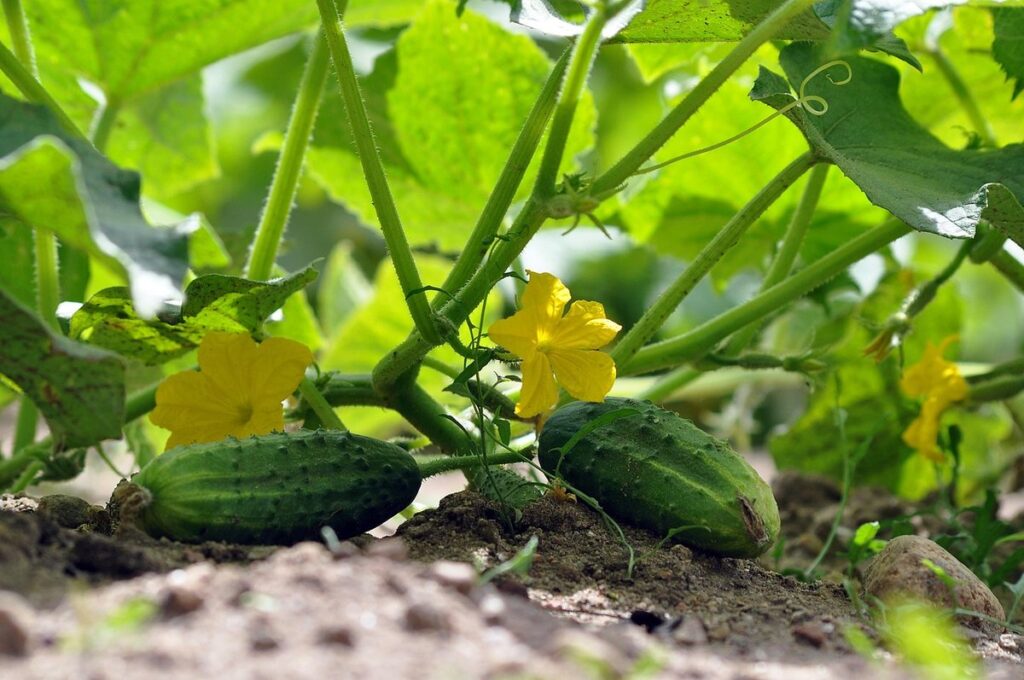
Understanding Cucumber Flower Structure
To help you better understand the unique characteristics of cucumber flowers, let’s take a closer look at the structure of both male and female blooms.
Importance of Identifying Sex in Cucumbers
Identifying male and female flowers in cucumbers is crucial for successful cultivation. This distinction impacts pollination, seed production, and overall plant efficiency. For optimal fruit set, a cucumber plant typically needs to be pollinated by at least one male flower. Pollen from the male flower fertilizes the ovules within the female flower’s receptacle.
When you’re growing cucumbers, it’s essential to have both male and female flowers present on the same plant or nearby plants for effective cross-pollination. This allows for efficient seed production and fruit growth. However, if a cucumber plant is predominantly producing one type of flower over the other, it may lead to reduced yields.
To ensure proper pollination and seed set, you can facilitate pollination by gently transferring pollen from male flowers to female flowers using a small brush or a cotton swab. This technique can be particularly helpful when working with isolated or greenhouse-grown plants where natural pollinators might be scarce.
Observing Visual Differences
When observing cucumber flowers, you’ll notice that male and female blooms have distinct external characteristics. Male flowers are typically smaller than their female counterparts, measuring around 1-2 inches in diameter. They also tend to be more delicate and slender, with a slight greenish-yellow hue.
In contrast, female flowers are larger, reaching up to 3 inches in diameter. Their color is often a vibrant yellow or cream-colored, and they have a slightly more robust texture. One of the most noticeable differences between male and female flowers is the presence of stamens and pistils. Male flowers will always have prominent stamens, which produce pollen, while female flowers will have an elongated ovary in the center, surrounded by a cluster of short, greenish-yellow style branches.
To identify male versus female flowers in your cucumber plant, look for these external differences. This knowledge can be particularly useful when deciding how to pollinate your plants – more on that later! By paying attention to the shape, size, color, and stamen/pistil presence, you’ll gain a better understanding of the reproductive process at play within your cucumber garden.
Male Cucumber Flowers: Function and Characteristics
When it comes to cucumber flowers, understanding the difference between male and female blooms is crucial for successful pollination and fruit production. Let’s take a closer look at male cucumber flowers specifically.
Role of Anthers in Pollen Production
In a male cucumber flower, the anthers play a crucial role in producing pollen. Located at the center of the flower, these small, yellowish or white structures produce microspores that develop into pollen grains. As the flower matures, the anthers begin to release their pollen through a process called dehiscence, allowing it to be dispersed by wind or insects.
Pollen production is a vital step in the pollination process, as it enables fertilization to occur between male and female flowers. The pollen grains contain the male gametes that will unite with the egg cells of the female flower during fertilization. Without adequate pollen production, fertilization would not be possible, and seed set would be severely reduced.
Interestingly, the anthers of a male cucumber flower are highly specialized to ensure efficient pollen production. They have unique ridges or crests on their surface that help to collect and store pollen grains. This specialized structure allows for maximum pollen production and dispersal, ensuring successful pollination and fertilization.
In practical terms, gardeners can promote healthy anther development by providing cucumber plants with adequate light, water, and nutrients. By maintaining optimal growing conditions, you’ll be supporting the production of healthy male flowers and, subsequently, abundant pollen for successful pollination.
Characteristics of Male Flowers
Male cucumber flowers are distinct from their female counterparts, exhibiting several key characteristics that set them apart. One of the most notable features is the absence of a pistil, which is the central part of the flower responsible for receiving pollen and fertilization. Instead, male flowers have stamens – long, thin structures that produce and release pollen into the air.
These stamens are typically longer in male flowers compared to female flowers, allowing them to reach further outwards from the center of the plant. As a result, male flowers tend to appear more prominent and noticeable on the vine. In terms of coloration, male cucumber flowers usually have a bright yellow hue, which contrasts with the pale yellow or white blooms found in female flowers.
When inspecting your cucumber plant, take note that both types of flowers often grow alongside each other, but only female flowers will develop into actual cucumbers if pollinated successfully. If you’re interested in encouraging more fruit growth, focus on providing optimal growing conditions for your plants and consider using a trellis to support the vines – this can help promote better air circulation and increase the chances of successful pollination.
Female Cucumber Flowers: Function and Characteristics
When it comes to female cucumber flowers, one of their primary functions is to produce fruit after being pollinated by their male counterparts. Let’s take a closer look at their characteristics.
Importance of Stigma and Style in Pollen Reception
In female cucumber flowers, two key components play a crucial role in receiving pollen from male flowers: the stigma and style. The stigma is the uppermost part of the pistil, while the style connects it to the ovary below. Together, they form the receptive surface for pollen grains.
When pollen from male flowers lands on the stigma, it germinates and sends a tube called a pollen tube down through the style into the ovary. This process is essential for fertilization to occur, as it allows the sperm cells to be released and fuse with the egg cells in the ovary. In essence, the stigma acts as a “landing strip” for pollen grains, while the style serves as a conduit for the pollen tube to reach the ovary.
The precise positioning of the stigma and style in female cucumber flowers ensures that they are perfectly aligned to receive pollen from male flowers. This is why female flowers have a distinct shape and orientation compared to their male counterparts, facilitating efficient pollination and seed development.
Characteristics of Female Flowers
Female cucumber flowers have several distinctive features that set them apart from their male counterparts. One of the key characteristics is the presence of a pistil, which is the central part of the flower responsible for containing the ovules where fertilization occurs. The pistil is typically longer and more prominent in female flowers compared to male flowers. This is because female flowers are designed to receive pollen from male flowers during pollination.
Female cucumber flowers also have ovaries, which are the organs that produce seeds after successful fertilization. These ovaries are usually located at the base of the pistil and play a crucial role in seed development. Another notable feature of female flowers is their typically smaller size compared to male flowers. This is because female flowers tend to have fewer petals and are often more focused on producing seeds rather than attracting pollinators.
When identifying female cucumber flowers, look for these distinctive characteristics, including the prominent pistil and ovaries. By recognizing the differences between male and female flowers, you’ll be better equipped to support your plants’ reproductive needs.
Identifying Sex Through Visual Inspection
So, how do you tell these delicate flowers apart? This section will guide you through identifying male and female cucumber flowers based on visual inspection.
Key Features for Identifying Male Flowers
When it comes to identifying male cucumber flowers through visual inspection, there are several key features to look out for. One of the most distinctive characteristics is the presence of anthers and stamens. Anthers are the pollen-producing organs located at the tips of the stamens, which are long, thin structures that arise from the center of the flower.
To spot male cucumber flowers, inspect the central part of the blossom. You should see a cluster of fine, thread-like stamens rising up from the center. These stamens will be longer and more prominent in male flowers than in female flowers. Anthers will be visible at the tips of these stamens, typically as small yellow or white structures.
In contrast to female flowers, which have a rounded, swelling appearance at the base, male flowers tend to appear slightly elongated and cylindrical. Male flowers also often have more stamens than female flowers, giving them a fuller appearance in the center. By paying attention to these visual cues, you should be able to accurately identify male cucumber flowers with ease.
Key Features for Identifying Female Flowers
When inspecting cucumber flowers, female blooms are often easier to identify due to their distinct characteristics. One key feature of female flowers is the presence of a pistil, which is the central part of the flower that contains the reproductive organs. The pistil consists of three main parts: the stigma, style, and ovary. The ovary is particularly notable in female flowers as it develops into the cucumber fruit when fertilized.
To visually identify female flowers, look for the small, rounded or teardrop-shaped structure at the center of the bloom. This is usually the ovary, which will be slightly raised and may appear slightly swollen compared to the male flower’s anther. The petals surrounding the pistil are typically smaller in size and number compared to those found on male flowers.
When examining your cucumber plants, keep an eye out for these telltale signs of female flowers: a prominent ovary and a cluster of smaller petals surrounding the central pistil. This will help you determine which blooms are suitable for pollination or have already been fertilized to produce cucumbers.
Sexual Dimorphism in Cucumber Flowering
Now that we’ve discussed the basics of cucumber flowers, let’s dive into one fascinating aspect: sexual dimorphism, where male and female flowers show distinct differences.
Influence on Plant Productivity
Sexual dimorphism in cucumber flowering has a significant impact on plant productivity. One of the most notable effects is on seed set and fruit production. Female flowers are responsible for producing seeds, while male flowers produce pollen. When there’s an imbalance between the number of male and female flowers, it can lead to reduced seed set and lower fruit yield.
In ideal conditions, a ratio of 2-3 male flowers to every 1 female flower is necessary for optimal seed production. However, this balance can be disrupted by various factors such as climate change, pests, or diseases that affect the plant’s ability to produce functional sex organs. As a result, some cucumber varieties may exhibit reduced fertility, leading to lower yields and decreased economic returns.
To mitigate these effects, gardeners can take steps to promote balanced flowering patterns. This includes pruning the plant to encourage more female flowers to develop, providing optimal growing conditions, and implementing integrated pest management techniques to prevent damage to the plant’s reproductive organs.
Breeding Implications for Farmers
Understanding the difference between male and female cucumber flowers is crucial for farmers who want to optimize their breeding programs. By selecting for desirable traits such as high yields, disease resistance, or improved flavor, farmers can create new varieties that meet specific market demands.
When breeding cucumbers, it’s essential to identify the sex of the parent plants, as this affects seed production and quality. Male flowers are typically sterile, producing pollen but no seeds, while female flowers produce fruit but require pollination from male flowers for fertilization. By selecting for female parents with desirable traits, farmers can pass these characteristics on to their offspring.
To implement selective breeding, farmers should observe the sex of each plant and choose parent plants that exhibit desired traits. For example, if a farmer wants to develop a disease-resistant variety, they would select healthy, disease-free female plants as parents. By understanding the sex of their cucumber flowers, farmers can make informed decisions about which plants to use for breeding, ultimately leading to more efficient and effective selective breeding programs.
Practical Applications: Cultivating Cucumbers with Knowledge
Now that you know how to identify and understand male and female cucumber flowers, let’s explore some practical ways to cultivate these plants in your own garden. By applying this knowledge, you can optimize your crop yields.
Tips for Enhancing Pollination
When it comes to cultivating cucumbers, pollination is a crucial factor in ensuring a bountiful harvest. By understanding and utilizing the characteristics of both male and female flowers, gardeners can optimize pollination and enjoy healthier, more productive plants.
To begin with, make sure to plant a mix of male and female cucumber plants in your garden. Male flowers produce pollen and are responsible for fertilizing the female flowers, which contain the ovules that develop into cucumbers. Planting multiple male plants can increase the chances of successful pollination.
Another key tip is to allow the male flowers to bloom first. This will give them time to release their pollen before the female flowers open, increasing the likelihood of successful fertilization. You can also gently vibrate the plant in the morning to help dislodge any loose pollen and encourage it to fall onto the female flowers.
Finally, avoid pruning off too many male flowers, as this can reduce the amount of pollen available for pollination. A general rule of thumb is to allow 2-3 male flowers to bloom for every female flower. By implementing these tips, you’ll be well on your way to optimizing pollination and enjoying a thriving cucumber crop.
Breeding Programs for Improved Varieties
By understanding the sex differentiation of cucumber flowers, you can take advantage of this knowledge to create new and improved varieties through selective breeding. This process involves identifying and isolating desirable traits in individual plants, which are then bred together to produce offspring with enhanced characteristics.
To begin, select a specific trait you’d like to improve, such as increased disease resistance or higher yield. Next, identify individual plants that exhibit this trait, paying close attention to the sex of their flowers. For example, if you’re looking for improved resistance to powdery mildew, you may choose female plants with larger and more robust sepals.
Once you’ve selected your parent plants, cross-pollinate them by transferring pollen from a male flower to a female flower of the same variety. This can be done manually using a small brush or by allowing bees to do the work for you. Be sure to keep careful records of your selections and breeding history, as this will aid in identifying the specific traits you’re seeking to improve.
Through repetition and selection over multiple generations, you’ll begin to see the emergence of new varieties with desirable characteristics. This process can be time-consuming, but the end result is well worth the effort – a unique cucumber variety that meets your specific needs and preferences.
Frequently Asked Questions
How can I ensure my cucumber plants have a balanced ratio of male to female flowers for optimal pollination?
To achieve an ideal balance, monitor your plants’ flowering pattern and remove any weak or damaged flowers. This will encourage the remaining flowers to develop and thrive, leading to a more efficient pollination process.
What if I notice that one plant is producing mostly male flowers while another has predominantly female blooms? Can I still cross-pollinate?
Yes, you can still successfully cross-pollinate between these plants by transferring pollen from the male flower of one plant to the stigma of the female flower on another. This will facilitate seed production and ensure a balanced genetic mix.
How often should I inspect my cucumber flowers for signs of stress or disease that could impact pollination?
Regularly check your plants every 2-3 days, paying close attention to changes in color, texture, or growth patterns. Early detection is key to preventing the spread of diseases like powdery mildew or fusarium wilt.
Can I use commercial beekeeping equipment to enhance pollination in my cucumber patch, or will this disrupt natural processes?
While attracting native pollinators can be beneficial, introducing commercial beekeeping equipment may not necessarily increase pollination rates. Instead, focus on creating a welcoming environment for local bees and other beneficial insects through practices like companion planting.
How do I handle a situation where I’ve inadvertently removed the male flowers from my cucumber plant, leaving only female blooms?
If you’ve accidentally removed the male flowers, consider transferring pollen from another male flower to the receptive stigma of the remaining female flowers. This will help ensure successful pollination and seed set for your cucumbers.