
Garden paths are more than just a way to get from one part of your yard to another. They can be an essential element in creating a beautiful and functional outdoor space, but only if designed and maintained properly. One key aspect of garden path design is incorporating mulch, which offers numerous benefits for both the plants and the gardener.
Mulch helps suppress weeds that can compete with your desired plants for water and nutrients. It also regulates soil temperature, keeping it cooler in the summer and warmer in the winter. In this article, we’ll explore how to use mulch effectively in garden paths and provide tips on design and maintenance.
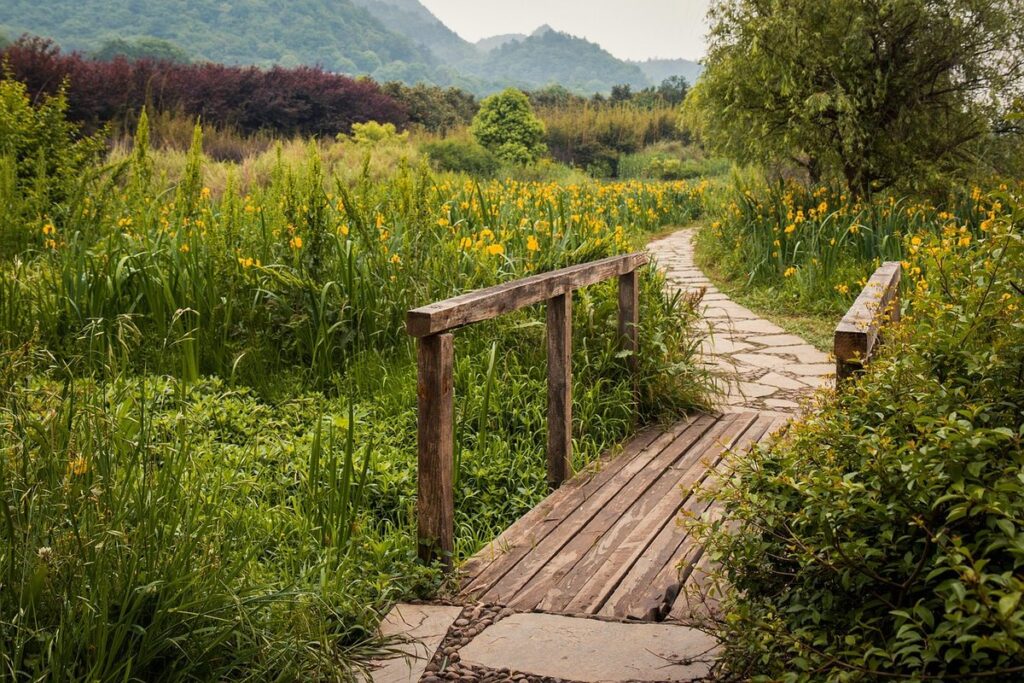
What are Garden Paths?
Garden paths can be a real issue for gardeners, especially when trying to create a beautiful and low-maintenance space. Let’s start by understanding what exactly they are.
Definition and Purpose
A garden path is essentially an area of landscape design that draws visitors through a winding pathway, often surrounded by beautiful plants and features. It’s usually a meandering route that invites exploration, rather than a direct, straightforward walkway. These paths are crucial in creating an immersive experience for those who stroll through the space.
Effective garden paths not only add visual appeal but also encourage people to slow down and take in their surroundings. This design element is particularly important in residential gardens, as it can create a sense of seclusion from the rest of the property while allowing visitors to appreciate its unique features. By incorporating curves, bends, and other meandering elements, garden paths provide an enjoyable journey for those who use them.
A well-designed garden path should be functional, yet aesthetically pleasing. This requires careful consideration of factors such as foot traffic flow, plant selection, and materials used in construction. Homeowners can create an effective garden path by incorporating features like stepping stones, lanterns, or water features to break up the space.
Types of Garden Paths
When it comes to designing your garden path with mulch, one of the most important decisions you’ll make is choosing the right type of design. Garden paths can be tailored to fit your personal style and complement your outdoor space. There are several types of garden paths to consider, each offering its own unique benefits.
Meandering garden paths are a popular choice for those who want to create a whimsical atmosphere in their garden. These paths wind and curve through the landscape, often incorporating natural features like trees or boulders into the design. Straight garden paths, on the other hand, offer a clean and modern look that’s perfect for smaller spaces or formal gardens.
Curved garden paths are another option to consider, providing a sense of fluidity and movement in your outdoor space. When designing your garden path, think about how you want to use it. Will you be using it as a main thoroughfare, or just as a way to access certain areas of the garden? Consider the size of the area, the style of your home, and your personal preferences when choosing a design.
By selecting the right type of garden path for your mulched landscape, you’ll create a beautiful and functional outdoor space that enhances your property’s value.
Designing a Functional Garden Path
When it comes to designing a functional garden path, choosing the right mulch is just one piece of the puzzle – let’s explore how to create a beautiful and low-maintenance pathway.
Measuring and Planning the Pathway
When designing a functional garden path with mulch, measuring and planning are crucial steps to ensure it fits the available space and serves its intended purpose. Begin by taking precise measurements of the area where you plan to install the garden path. Consider not only the length but also the width, as well as any obstacles or irregularities that may affect its layout.
To plan effectively, think about how you want to use your garden path. Do you envision a meandering path that encourages leisurely strolls, or a more direct route for easy access? Consider the mature size of plants and trees in your design to avoid overcrowding or future maintenance issues. For example, if you’re planning a pathway through a dense shrub bed, factor in the growth rate of those shrubs over time.
Aim to leave at least 3-4 feet of clearance on either side of the path for comfortable navigation and easy maintenance. This also allows for mulch spreading and future plant additions without encroaching on the walking surface. By carefully measuring and planning your garden path, you’ll be able to create a beautiful, functional space that enhances your outdoor living experience.
Choosing the Right Mulch for Your Garden Path
When it comes to designing a functional garden path, choosing the right mulch is more than just an aesthetic decision. It plays a crucial role in maintaining the overall appearance and functionality of the space. The type of mulch you select can make or break the ambiance of your garden, so it’s essential to get it right.
Consider the color palette of your garden beds and surrounding areas when selecting mulch. A mulch that complements these colors will create a cohesive look, whereas one that clashes will detract from the overall appearance. For example, if you have red roses and bluebells, a neutral-colored mulch like cedar or cypress would be an excellent choice.
Another factor to consider is the durability of the mulch. Some mulches, like wood chips, can break down quickly and need frequent replenishment. Others, like gravel or stone, are more long-lasting but may require occasional weeding between the gaps. Think about your maintenance schedule and lifestyle when selecting a mulch that fits your needs.
Ultimately, choosing the right mulch for your garden path involves considering both its appearance and functionality. By taking the time to research and select a suitable option, you can enjoy a beautiful, low-maintenance garden space for years to come.
Benefits of Using Mulch in Garden Paths
When it comes to creating beautiful and low-maintenance garden paths, incorporating mulch is a simple yet effective solution. Let’s explore its numerous benefits for your outdoor space now.
Weed Suppression and Erosion Control
Mulch is an effective tool for suppressing weeds and preventing erosion in garden paths. Weeds compete with plants for water, nutrients, and light, making it challenging to maintain a beautiful and healthy garden. Mulch prevents this competition by blocking weed seeds from germinating and growing. Organic mulches like wood chips, bark, or leaves are excellent choices as they suppress weeds naturally.
In addition to weed suppression, mulch also helps prevent erosion in sloping areas of the garden path. When rainfall hits bare soil, it can cause erosion and damage to plants. Mulch holds the soil in place, reducing runoff and minimizing soil loss. This is particularly crucial for garden paths with significant slopes or water drainage issues.
To get the most out of mulch for weed suppression and erosion control, apply a 2-3 inch layer of organic mulch around plants. Replenish it as needed to maintain its effectiveness. Consider combining mulching with other methods like regular weeding and proper soil preparation to create a robust weed management system.
Soil Temperature Regulation and Retention
Mulch plays a crucial role in regulating soil temperature and retaining moisture, both of which are essential for optimal plant growth. When you apply mulch to your garden paths, it acts as a protective barrier that prevents the soil from getting too hot or cold. This is especially important during extreme weather conditions like scorching summers and freezing winters.
By insulating the soil, mulch helps retain moisture, reducing evaporation and runoff. This means plants don’t have to work harder to absorb water, which can lead to healthier roots and increased plant growth. Mulch also regulates soil temperature by absorbing excess heat during hot periods and releasing it slowly during cooler periods.
For example, a 2-3 inch layer of organic mulch like wood chips or bark can keep the soil around 10°F (5°C) cooler than the air temperature above it. This makes it an ideal solution for protecting plants from frost damage or heat stress. To maximize its benefits, apply a 3-inch thick layer of mulch in the spring and replenish as needed throughout the growing season.
Mulch also suppresses weeds that compete with your desired plants for water and nutrients. With these benefits combined, using mulch in garden paths is an effective strategy to create a thriving environment for your plants.
Popular Types of Mulch for Garden Paths
When it comes to mulching your garden paths, there are several popular types to choose from, each offering its own unique benefits and aesthetic appeal. Let’s explore some of our favorites below!
Organic Mulches (Wood Chips, Bark, Leaves)
Organic mulches are a popular choice for garden paths due to their natural and eco-friendly properties. Wood chips and bark are two of the most common types used, and they offer several benefits. For instance, they help retain moisture in the soil, suppress weed growth, and regulate soil temperature.
However, there are also some drawbacks to consider. Organic mulches can break down over time and lose their effectiveness, requiring regular replenishment. They may also attract pests like termites or ants if not properly maintained.
Another organic option is leaves, which can be shredded and used as a mulch. This method has several advantages, including being free and readily available. However, it can be messy to apply and may not retain its effectiveness for as long as other types of mulch.
To get the most out of your organic mulch, make sure to apply it at the right depth (typically 2-3 inches) and replenish it regularly. It’s also essential to keep an eye out for pests and diseases that can be attracted to decaying plant material. By choosing the right type of organic mulch and following proper application and maintenance techniques, you can enjoy its many benefits while minimizing its drawbacks.
Inorganic Mulches (Gravel, Decomposed Granite)
Inorganic mulches, such as gravel and decomposed granite, are popular choices for garden paths due to their unique benefits. One of the main advantages is that they don’t break down over time like organic materials do, which means you won’t need to reapply them frequently. Additionally, inorganic mulches are more resistant to pests and diseases, making them a low-maintenance option.
However, there are also some disadvantages to consider. For instance, inorganic mulches can be quite expensive compared to other options, especially for large areas. They can also become slippery when wet, which may be a concern for walkways with high foot traffic. Furthermore, some types of gravel and decomposed granite may not be suitable for certain plants or soil types.
To get the most out of inorganic mulches, it’s essential to choose the right type for your specific garden path needs. Consider factors like drainage, plant growth, and maintenance requirements when selecting a material. By doing so, you can enjoy the benefits of inorganic mulches while minimizing their drawbacks.
Maintenance and Upkeep of Garden Paths
To keep your garden path looking its best, regular maintenance is crucial. This section will walk you through essential tasks for upkeep and care.
Regular Cleaning and Replenishment
Regular cleaning and replenishment are crucial steps to maintain the effectiveness of mulch on your garden paths. Mulch can become compacted over time, preventing water and air from reaching plant roots, while also making it more susceptible to weed growth. To prevent this, rake your mulch regularly, ideally every 2-3 weeks during peak growing seasons.
Remove any debris, dead leaves, or weeds that have accumulated on top of the mulch. Use a garden fork or a rake with flexible tines to gently loosen and turn over the mulch, avoiding any damage to underlying plants. This will also help prevent mulch from becoming anaerobic, which can lead to an unpleasant odor.
As for replenishment, add fresh mulch every 1-2 years, depending on your climate and plant types. A general rule of thumb is to maintain a depth of 3-4 inches (7.5-10 cm). Regular replenishment will help maintain the mulch’s ability to retain moisture, suppress weeds, and regulate soil temperature.
Repairing and Resurfacing the Pathway
As a mulched garden path owner, it’s inevitable that over time you’ll need to repair and resurface sections of the path. This can be due to various factors such as weather conditions, foot traffic, or even pests like moles digging under the surface.
When repairing damaged areas, start by clearing away any debris, leaves, or weeds that may have accumulated. If the damage is minor, you might simply need to replenish the existing mulch layer with a few inches of fresh material. This will not only cover up the imperfections but also maintain the overall appearance and functionality of your garden path.
However, if the damage is more extensive, it’s best to remove the damaged section entirely and replace it with new mulch or even consider laying down a new base course. Make sure to inspect the area underneath for any signs of moisture or pest activity before proceeding.
In addition to repairing individual sections, you may also need to resurface your entire garden path periodically, typically every 2-3 years depending on usage and weather conditions. This will help maintain its appearance, prevent weeds from growing through the mulch, and keep it safe for walking.
Adding Aesthetic Appeal with Mulched Garden Paths
Let’s get creative and explore some beautiful ways to add an extra layer of charm to your garden paths using decorative mulch and design ideas that are easy on the eye. We’ll cover some inspiring examples for you!
Color Options and Texture Variations
When choosing mulch for your garden path, you may think it’s just about function and protection against weeds. However, the right type of mulch can add a pop of color and texture to the area, making it a beautiful extension of your garden.
Consider using colored mulches like red cedar or black walnut for a dramatic effect. These varieties not only repel insects but also bring warmth and depth to the space. You can also opt for natural cypress shavings in earthy tones that blend seamlessly with the surrounding foliage.
If you want to add some contrast, try mixing different textures by layering coarse mulch at the bottom and finer ones on top. For instance, use larger wood chips or logs as a base and cover them with smaller, more uniform pieces of bark. This layered approach creates visual interest without overwhelming the senses.
Remember, when selecting mulch for color and texture, keep in mind your garden’s overall style and theme. By mixing and matching different types and textures, you can create a unique and inviting ambiance that extends from your garden beds into your walkways.
Incorporating Additional Decorative Elements
As you’ve incorporated mulched garden paths into your outdoor space, it’s time to take it up a notch and add some extra flair with decorative elements. These can elevate the ambiance and functionality of your garden, making it an even more inviting oasis.
Consider incorporating lighting to highlight specific areas or create a warm ambiance in the evening. Solar-powered pathway lights are a great option, as they’re energy-efficient and easy to install. You can place them along the mulched path, around planters, or near seating areas to create a sense of depth and visual interest.
Another idea is to add seating areas, such as built-in benches or cozy nooks with pillows and blankets. This will encourage you to linger in your garden, enjoying the fresh air and peaceful atmosphere. You can also incorporate water features like small fountains or birdbaths to create a soothing sound that complements the visual appeal of your mulched path.
Remember to balance these decorative elements with the overall aesthetic of your garden, ensuring they don’t overwhelm the space. With a little creativity, you can transform your garden into a serene retreat that’s perfect for relaxation and entertainment.
Frequently Asked Questions
Can I use mulch with other types of garden paths, like gravel or brick?
Yes, you can definitely combine mulch with other materials to create a unique look for your garden path. In fact, mixing mulch with gravel or brick can add texture and interest to the area while still providing the benefits of weed suppression and soil temperature regulation.
How often should I replenish the mulch in my garden path?
The frequency of replenishing mulch depends on factors like rainfall, foot traffic, and plant growth. As a general rule, aim to replenish 2-3 inches of mulch every year or as needed. You can also check for signs of worn-out mulch, such as bare spots or uneven coverage.
Can I use organic mulch in areas with heavy shade?
While organic mulches like wood chips and bark are popular choices, they may not be the best option for heavily shaded areas. In these cases, consider using inorganic mulches like decomposed granite or gravel that can maintain their effectiveness even in low-light conditions.
How do I deal with weeds growing through my mulched garden path?
Weeds can still grow up through the mulch, especially if it’s not applied thickly enough. To combat this, make sure to apply a 3-4 inch layer of mulch and keep an eye out for emerging weeds. You can also use landscape fabric or other weed barriers to prevent weeds from growing in the first place.
Can I use recycled materials like old wood or leaves as mulch?
Yes, you can definitely repurpose old wood, leaves, and other natural materials as mulch. Just be sure to compost them first to break down any potential pathogens and ensure they’re free of pests and diseases. This eco-friendly approach not only saves money but also reduces waste in your garden.