
Are you dreaming of a beautiful, low-maintenance garden that attracts pollinators and adds a pop of color to your outdoor space? A meadow garden is the perfect solution. By incorporating drought-tolerant grasses and vibrant wildflowers into your design, you can create a stunning oasis with minimal upkeep. But where do you start when choosing these gorgeous plants for your meadow garden?
In this article, we’ll walk you through everything you need to know about selecting and caring for the perfect mix of meadow garden plants. We’ll cover tips for small spaces and natural pest control methods that are gentle on the environment but tough on pests. Whether you’re a seasoned gardener or just starting out, you’ll discover how to create a thriving meadow garden that’s perfect for attracting pollinators and adding beauty to your yard.
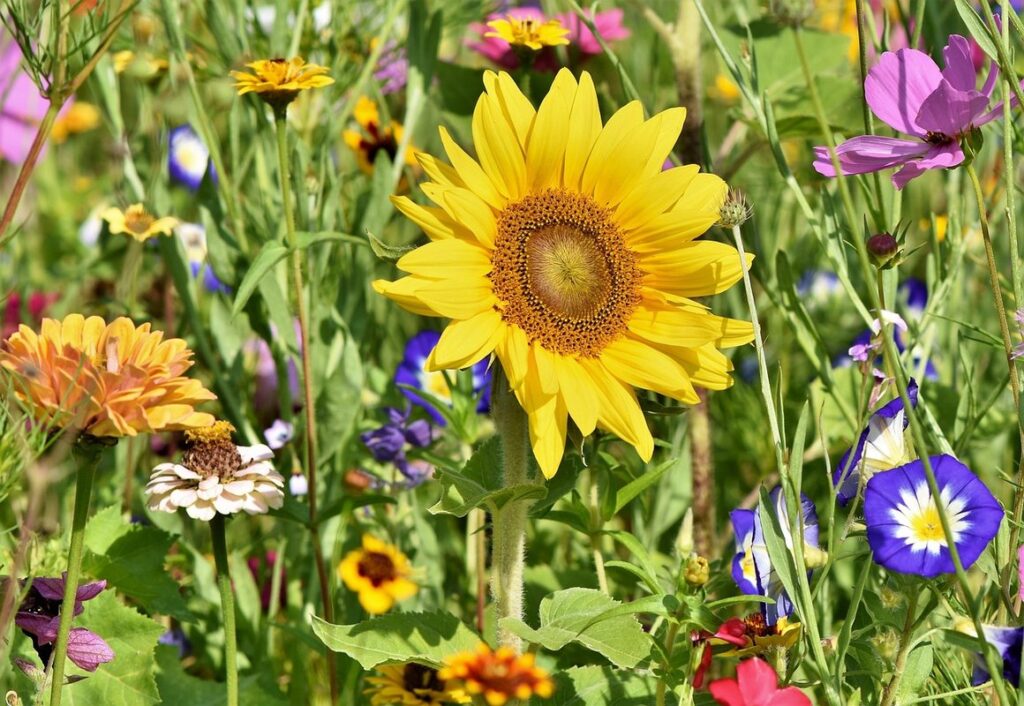
Planning Your Meadow Garden
Now that you’ve chosen your meadow garden plants, let’s talk about how to plan a beautiful and thriving space that showcases their natural beauty. This is where things get really fun!
Assessing Your Yard’s Conditions
Before selecting plants for your meadow garden, it’s essential to assess its conditions to ensure you choose species that will thrive. Start by observing the sunlight your yard receives throughout the day. Some meadow plants require full sun (six hours or more of direct sunlight), while others prefer partial shade.
Consider the soil type in your yard as well. Meadow gardens can tolerate a range of soils, but some plants perform better in specific conditions. For instance, if you have heavy clay soil, choose plants that are adapted to this environment, like tall grasses and wildflowers with deep taproots.
Moisture levels also play a significant role in selecting the right meadow plants. Some species can tolerate drought, while others require consistent moisture. Assess your yard’s drainage patterns and water supply to determine which types of plants will be most resilient. Take note of any microclimates within your yard that might impact plant growth.
By taking these factors into account, you’ll be better equipped to choose the perfect meadow garden plants for your specific conditions, ensuring a vibrant and healthy garden.
Understanding Meadow Plant Types
When it comes to creating a beautiful meadow garden, understanding the different types of plants that thrive in these conditions is essential. Let’s start with the three main categories: grasses, wildflowers, and shrubs.
Grasses are an excellent choice for meadow gardens, as they provide a naturalistic backdrop for your wildflowers and can help to stabilize the soil. Look for varieties like Little Bluestem, Indiangrass, and Big Bluestem, which are all native to North America and drought-tolerant. Wildflowers, on the other hand, add splashes of color and texture to your meadow garden. Choose a mix of perennial species like black-eyed Susans, coneflowers, and cosmos that will come back year after year.
Shrubs can also be used to add structure and interest to your meadow garden. Consider native shrubs like butterfly bush, ninebark, or beautyberry, which provide food and shelter for pollinators and other wildlife. When selecting plants for your meadow garden, remember to choose species that are suitable for your climate and soil type. This will ensure that they thrive and provide years of beauty and enjoyment.
Selecting Low-Maintenance Plants
When it comes to creating a low-fuss meadow garden, choosing plants that require minimal maintenance is essential. Let’s explore some beautiful options for you to consider in this section.
Wildflowers: Colorful and Easy to Grow
When it comes to adding color and vibrancy to your meadow garden, wildflowers are an excellent choice. Not only do they thrive in meadow conditions, but they also attract a variety of pollinators, such as bees and butterflies. Let’s take a look at some popular species that are sure to impress.
Coneflowers (Echinacea) are a staple in many meadow gardens, with their large, showy blooms attracting all sorts of wildlife. Black-eyed Susans (Rudbeckia) add a bright, cheery touch with their daisy-like flowers and delicate petals. Cosmos (Cosmos bipinnatus) are another favorite, with their feathery foliage and airy blooms adding a light, airy texture to the garden.
These wildflowers not only attract pollinators but also provide visual interest throughout the growing season. Plant them in clusters or scatter them throughout your meadow for a natural, effortless look. Remember to choose varieties that are suitable for your climate and soil type, and don’t be afraid to mix and match different species for a unique blend of colors and textures. With their ease of growth and low maintenance requirements, wildflowers are the perfect addition to any meadow garden.
Drought-Tolerant Grasses for a Low-Maintenance Look
When it comes to creating a beautiful and low-maintenance meadow garden, incorporating native grasses is an excellent choice. These incredible plants have adapted over time to thrive in their local environment, making them perfect for areas with varying climate conditions.
One of the most significant benefits of using drought-tolerant grasses in your meadow garden is their ability to withstand dry spells without losing their vibrant appearance. Native grasses such as Blue Grama Grass and Buffalo Grass are ideal options, as they can survive with minimal watering. This not only saves you time and resources but also reduces the environmental impact associated with excessive water usage.
To incorporate drought-tolerant grasses into your meadow garden, start by selecting native species that suit your local climate. Plant them in well-draining soil and provide occasional maintenance such as mowing or pruning to promote healthy growth. By doing so, you’ll enjoy a lush, vibrant landscape that requires minimal upkeep while still attracting pollinators and other beneficial wildlife.
Some popular drought-tolerant grasses for meadow gardens include Little Bluestem, Indian Grass, and Switchgrass. These plants are not only beautiful but also provide erosion control, soil stabilization, and habitat creation for local wildlife. By choosing native grasses, you’ll be supporting biodiversity in your garden while enjoying a low-maintenance landscape that requires less water, fertilizer, and other chemicals.
Incorporating Native Plants for Biodiversity
To create a thriving meadow garden, incorporating native plants is key for supporting local biodiversity and attracting pollinators to your space. Let’s explore how to make this work seamlessly in your design.
The Importance of Native Plant Species
When it comes to creating a thriving meadow garden, incorporating native plant species is crucial for maintaining biodiversity and preserving local ecosystems. Native plants have co-evolved with the local climate, soil, and wildlife over thousands of years, making them perfectly adapted to their environment.
By choosing native plants, you’ll be supporting local pollinators, such as bees and butterflies, which rely on these plants for food and shelter. In fact, it’s estimated that 75% of pollinator species are threatened or endangered, largely due to the decline of native plant populations. By incorporating native species into your meadow garden, you can help reverse this trend and provide a vital source of nectar-rich flowers.
For example, if you’re gardening in the Midwest region of North America, consider planting native species like black-eyed Susan (Rudbeckia hirta) or purple coneflower (Echinacea purpurea). These plants are not only beautiful but also provide essential food and habitat for local wildlife. When selecting native plants, make sure to choose species that are well-suited to your specific climate zone and soil type.
Examples of Beneficial Native Plant Species
When it comes to choosing native plant species for your meadow garden, there are countless options that can bring unique characteristics and benefits. For instance, the Butterfly Weed (Asclepias tuberosa) is a vibrant perennial that attracts pollinators with its bright orange or yellow flowers. This low-maintenance plant thrives in well-drained soil and full sun, making it an ideal choice for meadow gardens.
Another excellent option is the Blazing Star (Liatris spp.), which produces showy purple or pink spikes of flowers that attract butterflies and hummingbirds. Its drought tolerance and ease of growth make it perfect for areas with limited watering schedules. Meanwhile, the Bee Balm (Monarda didyma) offers a unique combination of fragrant foliage and red, pink, or purple flowers that are rich in nectar and attract pollinators.
These native plant species not only add beauty to your meadow garden but also support local biodiversity. By incorporating them into your design, you’ll be creating a haven for native wildlife and reducing the need for pesticides and fertilizers. So why not start exploring some of these fantastic options today?
Considerations for Small or Challenging Spaces
When working with a small or challenging garden space, it’s essential to choose meadow plants that thrive in tight areas and require minimal maintenance. This section shares expert tips on selecting the perfect plants for your compact meadow garden.
Designing a Meadow Garden for Small Yards
Creating a beautiful meadow garden is not just reserved for large open spaces. With a little creativity and planning, you can bring this charming landscape to even the smallest of yards. When designing a meadow garden for small spaces, it’s essential to choose compact plants that won’t outgrow their containers or spread beyond control.
Look for varieties like miniature milkweed, baby blue catmint, and dwarf coneflower, which are specifically bred for small gardens. These compact plants will thrive in containers or smaller beds, providing a burst of color without overwhelming the space. Consider using tiered planters or hanging baskets to maximize vertical space, adding depth and visual interest to your meadow garden.
Another clever way to create a sense of openness is by using vertical elements like trellises or obelisks. These can be used to support climbing plants, such as clematis or honeysuckle, while also creating a sense of height and structure in the space. By carefully selecting compact plants and incorporating vertical elements, you can create a stunning meadow garden that’s perfect for even the smallest yard.
Transforming Problem Areas with Meadow Plants
Meadow plants are often overlooked for problem areas in gardens due to their association with large expanses of open land. However, they can be incredibly effective at revitalizing challenging spaces such as slopes and areas with poor soil quality.
When dealing with slopes, meadow plants offer a low-maintenance solution that can help stabilize the soil while adding beauty to the space. For instance, native grasses like little bluestem (Andropogon scoparius) are well-suited for slopes due to their deep root systems and ability to hold onto the soil. These grasses also add a natural aesthetic with their varying hues of purple, blue, and green throughout the growing season.
In areas with poor soil quality, meadow plants can help bring in beneficial nutrients while tolerating adverse conditions. For example, plants like bee balm (Monarda didyma) and coneflower (Echinacea purpurea) are known to thrive in conditions with low pH levels or nutrient deficiencies. They also attract pollinators like bees and butterflies, making them a great choice for areas that need a little TLC.
Maintenance Tips for a Thriving Meadow Garden
To keep your meadow garden looking its best, it’s essential to establish a regular maintenance routine that includes tasks such as mowing and pruning at the right times. By doing so, you’ll prevent damage and encourage healthy growth.
Seasonal Care: Preparing Your Meadow for Each Season
As the seasons change, it’s essential to adapt your meadow garden care routine to ensure it remains healthy and thriving. In spring, remove any dead plant material that may have accumulated over winter, taking care not to damage emerging shoots. This will help prevent disease from spreading and give your plants a fresh start.
In summer, focus on maintaining moisture levels by watering during dry spells and mowing high to encourage tall grasses and flowers to bloom. Regularly inspect your meadow for signs of pests or diseases, such as aphids, powdery mildew, or fungal growth. Control any issues promptly to prevent them from spreading.
Autumn brings a time for harvest – cut back spent flowers and foliage to promote new growth in the spring. This also helps prevent seed dispersal and maintains your meadow’s appearance. In winter, protect your plants from extreme weather conditions by applying a layer of mulch or straw to retain moisture and regulate soil temperature.
By following these seasonal care tips, you’ll be able to enjoy your beautiful meadow garden throughout the year.
Managing Weeds and Pests in Your Meadow
Managing weeds and pests in your meadow garden requires a thoughtful approach that balances natural methods with effective control. As you nurture your beautiful meadow plants, it’s essential to prevent weeds from competing for resources and attracting pests that can damage your blooms.
Start by cultivating a diverse mix of native wildflowers and grasses that are adapted to your local climate. This will create a resilient ecosystem that’s less susceptible to invasive species. For example, planting purple coneflower or black-eyed Susan alongside switchgrass and little bluestem will establish a strong root system that crowds out weeds.
To control weeds naturally, try using mulch or physical barriers like cardboard sheets. These methods suppress weed growth without harming the environment. When dealing with pests, opt for Integrated Pest Management (IPM) techniques that combine physical barriers, biological controls, and targeted applications of insecticidal soap or neem oil. Regularly monitor your meadow’s soil health and adjust your maintenance strategies as needed to maintain a balanced ecosystem.
Frequently Asked Questions
What are some common mistakes to avoid when designing a meadow garden?
When selecting plants, don’t make the mistake of choosing too many species that require similar growing conditions. This can lead to overcrowding and make maintenance more challenging. Instead, opt for a mix of plants with varying needs to create a balanced ecosystem.
Can I use non-native plants in my meadow garden, or do I have to stick to native species?
While native plants are recommended for their benefits to local ecosystems, you can still use some non-native plants in moderation. However, make sure they’re not invasive and won’t harm the environment. Consider consulting with a local expert or checking plant labels for “invasive potential” before making your final selection.
How do I choose between wildflowers and drought-tolerant grasses for my meadow garden?
It ultimately depends on your desired aesthetic and level of maintenance. Wildflowers provide vibrant color but may require more frequent watering, while drought-tolerant grasses are low-maintenance but might not offer the same visual impact. Consider a mix of both to create a diverse and resilient ecosystem.
Can I incorporate edible plants into my meadow garden?
Yes, incorporating edible plants like herbs or wildflowers that produce berries can add an extra layer of functionality to your meadow garden. Just ensure they’re well-suited to your climate and growing conditions, and consider any necessary precautions for safe consumption.
How do I control weeds in my meadow garden without using herbicides?
Weeds can be managed through a combination of techniques like mulching, hand-pulling, or using natural herbicides like vinegar. Regularly monitoring your meadow garden and addressing weed issues promptly will also help prevent them from becoming overgrown.