
Terrariums have become increasingly popular among plant enthusiasts due to their stunning visual appeal and low-maintenance requirements. One of the key factors that make terrariums stand out is the use of succulents, which thrive in these mini-garden ecosystems. If you’re new to succulent care or want to create a beautiful display for your home, building a terrarium with succulents can be an ideal project.
This article will guide you through the process of designing and maintaining a thriving terrarium filled with low-maintenance succulent species. We’ll cover essential tips on planting, design, and care to ensure that your mini-garden ecosystem flourishes for years to come. By following our expert advice, you can create a stunning display of colorful plants in a self-sustaining environment that requires minimal upkeep. Whether you’re a seasoned plant lover or just starting out, this article will help you achieve the perfect terrarium with succulents.
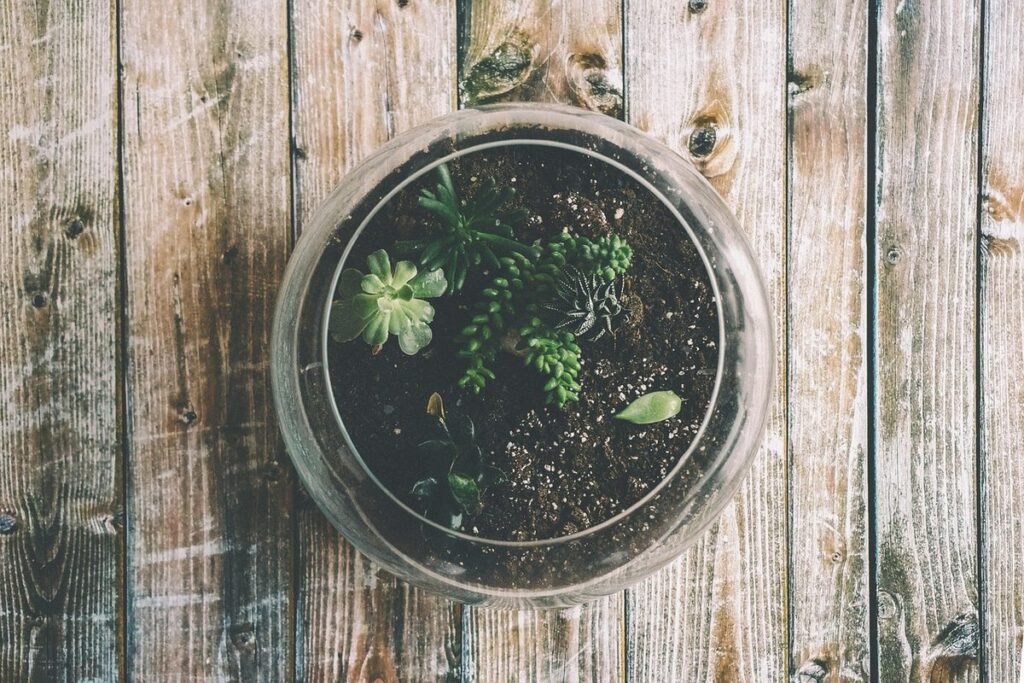
Choosing the Right Succulent Species for Your Terrarium
When it comes to building a thriving mini-garden, selecting the right succulent species is crucial. This section will help you make informed decisions based on your terrarium’s specific needs and conditions.
Types of Succulents Suitable for Terrariums
When it comes to choosing succulents for your terrarium, there are several popular and low-maintenance species that thrive in these environments. Let’s take a look at some of the most suitable options.
Aloe vera is an excellent choice for terrariums due to its ability to tolerate high humidity levels. Its thick leaves can store water, making it a great option for those who tend to forget to water their plants. Echeveria and crassula are also popular choices, with their stunning rosettes adding visual appeal to your mini-garden. These succulents come in a variety of colors and shapes, allowing you to choose the perfect combination for your terrarium.
Another great option is sedum, which can thrive in low-light conditions and requires minimal watering. This makes it an ideal choice for those who want to create a terrarium that’s easy to maintain. When selecting succulents for your terrarium, consider factors such as lighting, temperature, and humidity levels to ensure the best results. With these species, you’ll be well on your way to creating a thriving mini-garden that requires minimal maintenance.
Factors to Consider When Selecting a Succulent
When selecting succulent species for your terrarium, it’s essential to consider their specific needs and requirements. Light requirements are a crucial factor to consider, as some succulents thrive in bright, direct sunlight, while others prefer filtered or indirect light. Research the specific lighting needs of each species you’re interested in, and ensure that your terrarium provides the necessary conditions.
Temperature tolerance is another critical factor to consider. Some succulents can tolerate extreme temperatures, while others are sensitive to even slight fluctuations. Be sure to choose succulents that match the temperature range of your home or office environment.
Watering needs also play a significant role in the success of your terrarium. Overwatering is a common mistake when it comes to succulents, as they’re prone to root rot and other issues. Choose succulent species that have similar watering requirements, and ensure you’re not overwatering by checking the soil moisture regularly.
When selecting succulent species for your terrarium, consider their unique needs and requirements to create a thriving mini-garden. By choosing species with compatible light, temperature, and watering needs, you’ll be well on your way to creating a beautiful and self-sustaining ecosystem.
Ensuring Diversity in Your Terrarium Selection
When selecting succulent species for your terrarium, it’s essential to ensure diversity within your ecosystem. This means choosing multiple plants that complement each other’s growing conditions, rather than relying on a single type. For instance, if you’re creating a low-light terrarium, pair a shade-tolerant succulent like Pilea with a more light-sensitive species like Haworthia.
When selecting diverse species, consider factors such as light requirements, watering needs, and growth habits. Pairing plants with different textures, shapes, and colors will create visual interest within your terrarium. For example, combining the smooth, rounded leaves of Echeveria with the dramatic, pointed foliage of Aloe vera adds depth to your mini-garden.
Aim for a balance between species that share similar growing conditions and those that offer contrasting requirements. This diversity not only creates a visually appealing display but also fosters a healthier ecosystem within your terrarium. By carefully selecting multiple succulent species, you’ll create a thriving, resilient environment that requires less maintenance over time.
Designing and Building a Terrarium
Now that you’ve chosen your terrarium plants, it’s time to get creative with the design and construction of your mini-garden. This is where the magic happens!
Materials Needed for Terrarium Construction
When it comes to creating a beautiful and long-lasting terrarium, having the right materials is crucial. To get started, you’ll need some essential items that will help bring your mini-garden to life.
First and foremost, you’ll need a glass container that fits your vision. This can be an old jar, a glass vase, or even a decorative aquarium. Make sure it’s clean and dry before proceeding with the terrarium construction process. You can also choose from various shapes, sizes, and styles, such as clear glass, frosted glass, or mercury glass.
Next, you’ll need a substrate to line the container. This can be small rocks, pebbles, or even activated charcoal. The substrate helps with drainage and prevents waterlogged soil. Some popular options include sphagnum moss, coconut coir, or perlite.
For decoration, consider adding some decorative rocks, pebbles, or shells around the container’s base. You can also incorporate plants, succulents, or other miniature elements like mosses or air plants.
Some additional materials you might need include a spray bottle for watering, tweezers for placing small plants, and a spoon for mixing soil and substrate.
Tips for Creating an Aesthetically Pleasing Design
When creating an aesthetically pleasing design for your terrarium, consider the colors, textures, and shapes of the succulents and decorative elements. Balance warm-toned succulents like aloe vera with cool-toned ones like echeveria to create visual interest. For texture, combine smooth-leaved plants like crassula with hairy ones like gasteria.
To achieve harmony, group similar-shaped plants together or place tall plants at the back and shorter ones in front. Consider the shape of your terrarium container too – a curved glass container can complement rounded succulent leaves, while a square one pairs well with angular shapes.
When selecting decorative elements, choose items that complement the colors and textures of your plants. Pebbles or small rocks can add visual interest, but avoid overusing them as they can create an unbalanced look. Use just enough to leave space for the soil and plants to thrive. Experiment with different arrangements until you find one that feels visually appealing to you – after all, it’s about creating a mini-garden that brings you joy!
Terrarium Size and Shape Considerations
When choosing the right terrarium size and shape, it’s essential to consider the type of succulents you’re planting and their growth habits. If you’re planning to grow vining succulents like String of Pearls or Rattlesnake Plant, a larger, more vertical space will be necessary to accommodate their spreading growth. On the other hand, compact succulents like Echeveria or Crassula thrive in smaller, shallow containers.
Aim for a terrarium size that’s at least 6-8 inches deep to provide enough room for root growth and drainage. Avoid using containers that are too tall and narrow, as this can lead to waterlogged soil and root rot. A wide, shallow container will also help prevent moisture from becoming trapped and encourage air circulation.
Consider the shape of your terrarium as well. A rectangular or square-shaped container is ideal for succulents with a more compact growth habit, while a taller, cylindrical container suits vining plants better. Ultimately, choose a size and shape that complements the unique characteristics of your selected succulent species.
Planting Succulents in Your Terrarium
When planting succulents in your terrarium, it’s essential to choose a well-draining potting mix and handle the roots gently to prevent damage. This section will walk you through those crucial steps.
Preparing the Soil for Planting
When it comes to planting succulents in your terrarium, one of the most crucial steps is preparing the soil. The right substrate can make all the difference between a thriving mini-garden and a failing one.
The importance of selecting a suitable substrate cannot be overstated. It plays a vital role in facilitating healthy root growth by providing adequate drainage and preventing waterlogged conditions within the terrarium. Waterlogged soil can lead to root rot, which is often fatal for succulents. On the other hand, a well-draining substrate ensures that excess water is able to escape, allowing your plants’ roots to breathe and grow healthily.
For this reason, it’s essential to choose a substrate specifically designed for terrariums or cacti and succulent planters. These substrates are typically made from a mix of inorganic materials such as perlite, vermiculite, and sand, which provide excellent drainage while retaining moisture. Avoid using regular potting soil, as it can compact over time and hinder root growth.
When selecting a substrate for your terrarium, look for products that are labeled as “well-draining” or “designed for cacti and succulents.” These will usually be a blend of the above-mentioned materials. You can also mix your own custom blend using a combination of perlite, vermiculite, and sand to achieve the perfect balance for your terrarium’s specific needs.
Planting Techniques for Succulent Terrariums
When planting succulent terrariums, it’s essential to consider the unique conditions of these miniature ecosystems. To ensure optimal growing conditions for your succulents, you’ll want to adopt a thoughtful layering approach.
Start by adding a layer of small rocks or pebbles at the bottom of the terrarium. This will help with drainage and prevent waterlogged soil. Next, add a layer of activated charcoal or sphagnum moss to absorb excess moisture and regulate humidity.
Now it’s time for the succulents themselves. Plant them in the center of the terrarium, leaving enough space between each plant for proper air circulation. A good rule of thumb is to plant succulents 2-3 inches apart from one another. Be mindful of the depth at which you plant your succulents – aim for a depth that’s about one-third to one-half of the plant’s height.
As you layer and arrange your terrarium, remember to avoid over-crowding. This can lead to moisture buildup and root rot, ultimately causing more harm than good. With careful planning and attention to detail, you’ll create a thriving mini-garden that will bring joy and serenity to any room.
Initial Watering and Post-Planting Care
After planting your succulent in the terrarium, it’s essential to focus on providing the right conditions for growth. Initial watering is crucial, but it’s equally important to avoid overwatering, which can lead to root rot and other problems. When you first plant your succulent, don’t water it immediately. Instead, let the soil settle for at least 24 hours to allow the roots to establish themselves. This period allows the soil to absorb excess moisture from the planting process, preventing waterlogged conditions that can harm your succulent.
When you do water, make sure to do so gently but thoroughly. Water your terrarium by placing it in a saucer of water and letting it sit for 10-15 minutes before removing any excess water. Avoid getting water on the leaves or crown of the plant, as this can lead to rot and other issues. Stick to this watering schedule for the first week after planting, then gradually increase frequency based on your terrarium’s conditions. Remember, succulents are adapted to dry environments, so it may take some time for them to adjust to their new surroundings.
Maintaining Your Terrarium
To keep your terrarium thriving, it’s essential to master a few simple maintenance habits that will ensure your plants receive the right amount of care and attention. This includes tasks like watering, pruning, and repotting.
Understanding Humidity and Temperature Requirements
When you create a terrarium, you’re essentially building a miniature ecosystem that can support a wide range of plant species. However, this closed environment also means it’s prone to fluctuations in temperature and humidity levels. To maintain optimal conditions for your plants, it’s essential to understand how terrariums create their own microclimate.
A terrarium creates its own microclimate due to the way it traps moisture and heat inside the container. The glass or plastic walls of the terrarium allow sunlight to enter, warming up the air inside, while also trapping water vapor from the plants’ transpiration process. This can lead to high humidity levels if not managed properly.
To maintain optimal humidity levels, make sure to provide adequate ventilation for your terrarium. You can achieve this by slightly opening the lid or using a mesh top. Regularly misting the interior of the terrarium with water is also crucial in maintaining healthy humidity levels.
Watering Tips for a Thriving Terrarium Ecosystem
Watering succulents in a terrarium can be a delicate process. In a closed environment, it’s easy to overwater, which can lead to root rot and the demise of your mini-garden. So, how often should you water? The answer lies in observation. Check the soil moisture by sticking your finger into the soil up to the first knuckle. If the soil feels dry, it’s time to water.
Use a spray bottle to mist the terrarium lightly, avoiding direct contact with the plants’ leaves. This method is gentler than pouring water directly onto the soil and helps prevent overwatering. Signs of underwatering include wrinkled or shriveled leaves, while signs of overwatering are droopy leaves and a soft, mushy texture to the stems.
To avoid these issues, create a watering schedule that suits your terrarium’s specific needs. Water every 7-10 days during the spring and summer months when plants are actively growing. Reduce frequency to once every 4 weeks in the fall and winter when plants are dormant. By paying attention to your plants’ responses and adjusting your watering routine accordingly, you’ll create a thriving mini-garden that will flourish for years to come.
Monitoring and Adjusting Your Terrarium’s Environment
Regular checks are crucial to ensure your terrarium’s environment remains conducive for growth. Start by monitoring temperature fluctuations, keeping it within a range of 65-75°F (18-24°C) during the day and around 55-65°F (13-18°C) at night. This allows most succulents to thrive, but some species have specific requirements.
Check your terrarium’s humidity levels as well. A general guideline is to maintain a humid microclimate within the terrarium, ideally between 40-60%. You can do this by placing the terrarium on a tray filled with water and pebbles or using a humidifier specifically designed for indoor plants.
Keep an eye out for condensation buildup, which can lead to mold and root rot if not addressed. If you notice excessive condensation, it may be necessary to adjust your watering schedule or increase air circulation around the terrarium.
Remember that some succulents prefer higher humidity levels than others. Research specific needs for your plants to ensure their well-being. By regularly monitoring temperature and humidity, you’ll be able to make adjustments as needed to maintain a thriving environment for your terrarium’s inhabitants.
Troubleshooting Common Issues in Terrarium Succulents
We’ve all been there: beautiful terrarium succulent one day, struggling to thrive the next. Let’s tackle some of the most common issues and get your mini-garden back on track.
Identifying Signs of Overwatering or Underwatering
As a terrarium succulent owner, it’s essential to recognize early warning signs of water-related problems. Overwatering and underwatering can both be detrimental to your mini-garden, causing stress, disease, and even death. To prevent this, let’s examine the telltale signs of each issue.
Overwatering often manifests as yellowing or droopy leaves, while underwatering causes scorching or wrinkled skin. Be cautious of an excessive buildup of condensation on the glass walls – it may be a sign that your terrarium is too humid and needs more air circulation. Monitor your succulents’ roots; if they’re waterlogged, the stems will become mushy.
Conversely, underwatering causes dehydration, which can be identified by curled or wrinkled leaves, reduced growth rate, and an increase in leaf drop. A visual check for moisture levels is crucial – gently lift a few leaves to assess their firmness. If you notice any of these symptoms, adjust your watering schedule accordingly. Regularly inspect your terrarium’s conditions to ensure optimal care and prevent water-related disasters from occurring.
Addressing Pests and Diseases in Your Terrarium
As you tend to your terrarium succulents, it’s not uncommon to encounter pests and diseases that can threaten their health. Identifying these issues early on is crucial for taking corrective action and preventing them from spreading.
Some common pests to watch out for are spider mites, mealybugs, and scale insects. These tiny creatures feed on the sap of your succulents, causing damage and discoloration. To prevent infestations, make sure to inspect your plants regularly and quarantine any new additions before introducing them to your terrarium.
For treatment, a gentle soap solution or neem oil can be effective in controlling pest populations. However, for severe cases, you may need to use insecticidal soap or horticultural oil.
Diseases like root rot and leaf spot can also occur when the terrarium’s environment becomes too humid or waterlogged. To prevent these issues, ensure proper drainage and avoid overwatering. Regularly remove any dead or dying leaves to maintain air circulation and reduce moisture accumulation.
Reviving Stressed or Dying Succulent Plants
Rescuing stressed succulents is often a matter of patience and gentle care. When your terrarium succulents start showing signs of distress, such as yellowing leaves, droopy stems, or an unusual odor, it’s essential to take immediate action. Start by removing the plant from its container to inspect its roots for any sign of rot or mold.
Next, assess the environment within the terrarium and make necessary adjustments. Check the temperature range and ensure it falls between 40-80°F (4-27°C). Also, verify that the humidity level is optimal, between 40-60%. If you suspect overwatering, let the plant dry out slightly before rehydrating.
When repotting or adjusting the terrarium’s environment, handle the plants carefully to avoid causing further stress. You can also try removing any dead or dying leaves to prevent the spread of disease and encourage new growth. With gentle care and patience, your stressed succulents will recover in no time. Remember, it’s normal for terrariums to experience fluctuations in temperature and humidity, but with attention to detail and a nurturing approach, you can revive even the most struggling plants.
Conclusion: Tips for Creating a Thriving Terrarium Community
Now that you’ve cultivated your own mini-garden, let’s share some expert advice on how to create a thriving terrarium community that brings joy and beauty to yourself and others.
Recap of Key Takeaways from This Guide
As you’ve reached the end of this comprehensive guide to creating a thriving terrarium ecosystem, let’s recap the essential points to ensure your mini-garden flourishes. By now, you’re well-versed in choosing the right succulents for your terrarium, selecting a suitable container and substrate, and designing an efficient watering system.
To create a healthy environment, remember to monitor temperature fluctuations and provide sufficient light for your plants. Aim for 1-3 hours of direct sunlight or 4-6 hours of indirect light, depending on the type of succulent. Be cautious not to overwater, as this can lead to root rot and other issues.
When selecting plants, focus on species that thrive in low-light conditions, such as Echeveria or Crassula. Also, consider a mix of flowering and non-flowering varieties to add visual interest and diversity to your terrarium. Avoid overcrowding, leaving enough space for air circulation and growth.
Other key takeaways from this guide include:
* Maintaining humidity levels between 40-60% through proper watering and misting
* Rotating your terrarium regularly to prevent uneven lighting and promote healthy growth
* Pruning or repotting as needed to maintain the health and appearance of your plants
By incorporating these best practices into your care routine, you’ll be well on your way to creating a thriving mini-garden that brings joy and serenity to your space. With this guide as your reference, you’re now equipped with the knowledge to build a self-sustaining ecosystem that will flourish for years to come.
Frequently Asked Questions
Can I use a pre-existing terrarium or reuse an old container for my succulent project?
You can repurpose an old container, but ensure it’s clean and free of any lingering pests or diseases. However, keep in mind that reusing a terrarium may lead to contamination issues if the soil hasn’t been properly sterilized. If you’re unsure, consider using a new container specifically designed for terrariums.
How often should I water my succulent terrarium to maintain optimal humidity levels?
Water your terrarium sparingly, as overwatering is common in these ecosystems. Check the moisture level by gently poking the soil with your finger or a chopstick. Water only when the soil feels dry to the touch, usually every 7-10 days depending on temperature and humidity.
Can I grow different types of succulents together in the same terrarium, or will they compete for resources?
Yes, combining low-maintenance succulent species can create a visually appealing display. However, choose varieties with similar light, water, and temperature requirements to ensure they thrive together. Research compatible succulent pairs or triplets before planting them side by side.
What’s the ideal size for my terrarium based on the number of plants I plan to include?
A good rule of thumb is to allocate about 1-2 square inches (6-12 cm²) per plant, considering their mature size and growth habits. For a small terrarium with multiple plants, opt for compact or trailing species that won’t overwhelm each other.
How can I prevent pests like spider mites or mealybugs from infesting my succulent terrarium?
To minimize the risk of pest infestations, ensure your terrarium receives bright, indirect light and maintain a moderate temperature between 65°F to 75°F (18°C to 24°C). Regularly inspect your plants for signs of pests and address any issues promptly.