
Cabbage is one of the most widely consumed vegetables globally, but have you ever stopped to think about how it grows into those perfectly formed heads we’re all familiar with? The formation of cabbage heads is a complex process influenced by a combination of factors, including anatomy, environmental conditions, and genetics. Research has shown that understanding these dynamics can significantly impact commercial production yields and quality. By exploring the science behind cabbage head formation, farmers and growers can make data-driven decisions to optimize their crops and meet increasing demand for this versatile vegetable. In this article, we’ll delve into the intricacies of cabbage head formation, examining the role of anatomy, environmental factors, and genetics in shaping the perfect head.
Understanding Cabbage Anatomy
When it comes to growing a perfectly formed cabbage head, understanding its anatomy is key. Let’s break down the different parts of a cabbage plant that contribute to its signature tight cluster.
The Structure of a Mature Cabbage Head
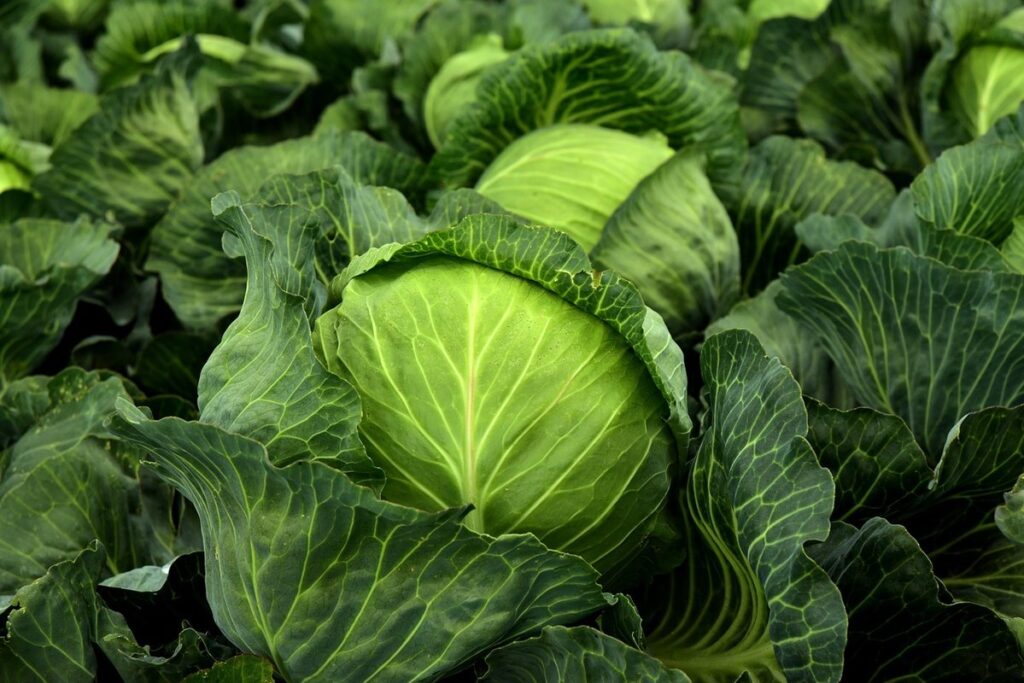
A mature cabbage head is comprised of several distinct components that work together to create its characteristic shape and structure. The outer leaves, also known as the wrapper leaves, form a protective layer around the inner contents. These leaves are typically thicker and more fibrous than the inner leaves.
As you move inward, the inner leaves become progressively smaller in size and more delicate in texture. They provide additional support to the head’s core, which is composed of tightly packed leaf cells that give cabbage its crunch and density. The innermost layer, often referred to as the bud or heart, is usually the most tender part of the cabbage.
The combination of these components allows the cabbage head to maintain its shape and structure even when harvested or stored for an extended period. This unique arrangement enables the cabbage to be easily transported, handled, and consumed without compromising its quality or nutritional value. By understanding the intricate details of a mature cabbage head’s anatomy, gardeners can optimize their growing conditions to produce healthier, more resilient crops.
Factors Affecting Cabbage Size and Shape
When it comes to cabbage head formation, several key factors come into play that can significantly impact its size and shape. Soil quality is one of the most critical factors, as it directly affects nutrient availability and root development. Well-draining, rich soil with a pH between 6.0 and 7.0 is ideal for promoting healthy growth.
Temperature also plays a significant role in cabbage head formation. Cabbage prefers cooler temperatures, typically between 60°F to 75°F (15°C to 24°C), which slow down its growth rate and encourage denser heads. Water availability is another crucial factor, as consistent moisture levels help prevent bolting and promote even growth.
Genetics also play a significant role in determining cabbage size and shape. Certain varieties are bred for specific characteristics, such as compactness or larger head size. By selecting the right variety and providing optimal growing conditions, you can encourage the formation of dense, well-formed cabbage heads.
In addition to these factors, proper fertilization and pruning techniques can also impact cabbage head development. For example, regular fertilization with balanced fertilizers can promote healthy growth, while strategic pruning can help control plant height and direct energy towards head formation.
The Role of Growth Regulators in Head Formation
Growth regulators play a crucial role in controlling the cabbage head’s growth and development, influencing its final shape and size. Let’s explore how they contribute to this process.
Ethylene Production and Its Effects on Head Development
Ethylene production plays a crucial role in regulating cabbage head formation, particularly when it comes to leaf expansion and abscission. As a plant grows, ethylene is produced naturally as part of its defense mechanisms and stress responses. In the case of cabbage, this ethylene production influences the rate at which leaves expand and eventually fall off.
For example, when ethylene levels are high, new leaves will grow faster, while older leaves begin to senesce (or age) more quickly. This process of leaf abscission is a natural part of plant development, but it can be accelerated or slowed down depending on environmental factors such as temperature and moisture.
To encourage optimal head formation in cabbage, farmers often manipulate ethylene production by adjusting growing conditions. For instance, maintaining optimal temperatures between 60-70°F (15-21°C) helps regulate ethylene levels, promoting even leaf expansion and abscission. By understanding the role of ethylene in cabbage head formation, growers can make informed decisions about when to harvest their crops for maximum quality and yield.
Other Hormones Involved in Cabbage Head Development
In addition to ethylene, several other hormones play crucial roles in cabbage head development. One of these key players is auxin, a growth regulator responsible for cell elongation and expansion. Auxins help stimulate the growth of new cells, allowing the bud to swell and develop into the characteristic cabbage head shape.
Another important hormone involved in this process is gibberellin, which promotes stem elongation and encourages the formation of new leaves. Gibberellin works in conjunction with auxin to regulate cell division and expansion, ensuring that the cabbage head grows at an optimal rate.
As these hormones interact, ethylene production increases, stimulating a response that helps coordinate the growth of the cabbage head. The balance between auxins, gibberellins, and ethylene is essential for proper head formation and development. For example, research has shown that applications of auxin can significantly enhance cabbage yields by promoting vigorous stem growth and encouraging more uniform head formation.
To promote healthy head development, gardeners can consider using hormone-based plant growth regulators in conjunction with optimal growing conditions to support the delicate balance between these hormones.
Environmental Factors Influencing Head Formation
When it comes to cabbage head formation, environmental factors play a crucial role in determining its size, shape, and overall quality. Let’s explore how weather conditions, temperature fluctuations, and soil composition impact this process.
Temperature: Its Impact on Cabbage Growth
When it comes to cabbage growth and head formation, temperature plays a crucial role. Optimal temperatures vary depending on the stage of growth, but generally, cabbages thrive between 60°F (15°C) and 75°F (24°C). Temperatures outside this range can have detrimental effects.
Too-low temperatures slow down growth and can lead to poor head formation. Cabbage plants grown in temperatures below 50°F (10°C) may experience stunted growth, increased risk of disease, and reduced yields. Conversely, too-high temperatures above 85°F (29°C) can cause excessive transpiration, leading to water stress and potential bolting – a phenomenon where the plant focuses energy on flowering instead of head formation.
To mitigate these effects, ensure your cabbage crop receives temperatures within the optimal range during different growth stages. For example, seedlings require cooler temperatures around 65°F (18°C) for germination, while mature plants benefit from warmer temperatures up to 75°F (24°C). By controlling temperature fluctuations and providing a stable environment, you can promote healthy head formation and maximize your cabbage crop’s potential.
Water Availability and its Effects on Head Development
Water availability plays a significant role in cabbage head formation. Adequate water supply is crucial for healthy plant growth and development. However, both drought stress and overwatering can negatively impact head formation.
Drought stress occurs when the plant doesn’t receive enough water, causing it to focus its energy on survival rather than producing a large, dense head. This leads to smaller, lighter heads with loose, fragile leaves. To avoid drought stress, ensure your crop receives at least 1-2 inches of water per week through rainfall or irrigation.
On the other hand, overwatering can cause nutrient deficiencies and root rot, further compromising head formation. Excessive moisture causes the plant’s roots to become susceptible to disease, reducing its ability to absorb essential nutrients like nitrogen, phosphorus, and potassium – all critical for head development.
To strike a balance, water your cabbage crop when the top 2-3 inches of soil feels dry to the touch. Monitor weather forecasts and adjust your watering schedule accordingly. By providing consistent moisture levels, you’ll promote healthy plant growth and help develop a robust, well-formed cabbage head.
Breeding and Genetics in Cabbage Head Formation
When it comes to growing cabbages, understanding the role of breeding and genetics can make all the difference in creating perfect heads. Let’s dive into how these factors influence head formation.
The Role of Inheritance in Shaping Cabbage Heads
When it comes to cabbage head formation, genetic factors play a significant role in determining its shape, size, and texture. Commercial cabbage breeding programs rely heavily on understanding the principles of inheritance to develop desirable traits. The shape of a cabbage head is influenced by multiple genes that interact with each other, resulting in the characteristic dome or barrel shape.
Inheritance patterns can be complex, but breeders use genetic concepts such as dominance and recessiveness to predict trait expression. For example, a dominant allele may code for larger leaves, while a recessive allele codes for smaller leaves. By combining these alleles, breeders can create plants with specific traits.
The genetic contribution to cabbage head size is also influenced by factors like cell division rate and meristem activity. Breeders select parents with desirable traits, such as compact growth or large leaf size, to create offspring with improved head characteristics. Understanding inheritance patterns enables commercial breeding programs to develop new varieties that meet market demands for specific traits, such as increased yield or resistance to disease.
Key Traits for Improved Head Formation
When it comes to improved head formation in cabbage varieties, several key genetic traits have been selected for and bred into modern strains. Disease resistance is a crucial aspect, as fungal diseases like club root and downy mildew can significantly impact yields. Modern breeding has focused on incorporating genes that provide enhanced resistance to these pathogens, resulting in healthier and more resilient plants.
Another significant improvement is the increase in yields, made possible by selecting for traits that promote faster growth rates and denser head formation. This has led to higher overall production and reduced costs for farmers. Improved quality is also a key trait, as consumers increasingly demand high-quality cabbage heads with minimal defects or blemishes.
Examples of successful breeding programs can be seen in varieties like ‘Ned Brood’ and ‘Dwarf Green Danver’, which exhibit exceptional head formation, disease resistance, and yields. By selecting for these desirable traits, breeders have been able to create more robust and productive cabbage varieties that meet the demands of modern agriculture.
Practical Applications of Cabbage Head Formation Research
Let’s dive into some real-world uses for our newfound understanding of cabbage head formation, from improving crop yields to developing new products.
Implications for Commercial Production
For commercial cabbage producers, understanding the science behind head formation can have a significant impact on their operations. Research has shown that proper management of plant growth stages and factors such as temperature, light, and water availability can lead to improved yield and quality.
Studies have demonstrated that optimal growing conditions for cabbage head formation include temperatures between 60°F and 75°F (15°C and 24°C), sufficient moisture levels, and adequate sunlight. By replicating these conditions in commercial settings, producers may be able to achieve higher yields and better head quality. Additionally, research suggests that applying plant growth regulators can help improve head size and shape.
To implement these findings in practice, producers can focus on optimizing their growing conditions through techniques such as precision irrigation and temperature control. Regular monitoring of plants during the critical stages of head formation is also crucial for identifying potential issues early on. By integrating this knowledge into their production strategies, commercial cabbage growers may be able to increase efficiency and profitability.
Future Directions for Research and Development
As research on cabbage head formation continues to evolve, several emerging areas of study hold promise for improving yields and reducing costs for commercial growers. One exciting development is the integration of precision agriculture techniques into cabbage cultivation. By leveraging technologies such as drones, satellite imaging, and sensor systems, farmers can optimize planting schedules, water usage, and fertilizer application with unprecedented accuracy.
For instance, a California-based farm used precision agriculture to increase their cabbage yields by 25% while reducing water consumption by 30%. This approach also enabled the farmer to detect early signs of pests or diseases, allowing for targeted interventions that minimized chemical use. Another promising area is genetic engineering, which could lead to cabbage varieties with enhanced disease resistance and improved head formation characteristics.
However, these advancements come with challenges, such as higher upfront costs for technology and infrastructure, as well as potential regulatory hurdles. As growers consider adopting new technologies or breeding techniques, it’s essential to weigh the benefits against the expenses and assess their compatibility with existing operations.
Conclusion: Integrating Knowledge on Cabbage Head Formation
In conclusion, understanding the science behind cabbage head formation is essential for gardeners and farmers who want to grow high-quality heads. By knowing how temperature, humidity, and nutrient levels affect head formation, you can take steps to optimize growing conditions. For example, ensure that your cabbage plants receive adequate moisture during the critical period of head formation, but avoid overwatering which can lead to rot and reduced yields. Additionally, maintain a consistent temperature between 60-70°F (15-21°C) to promote healthy growth and prevent bolting. By integrating this knowledge into your farming practices, you’ll be able to produce better cabbage heads that meet the needs of your customers or family. This will also help you troubleshoot common issues related to head formation.
Frequently Asked Questions
What factors should I prioritize when trying to control the size of my cabbage heads?
When attempting to regulate cabbage head size, it’s essential to focus on a combination of environmental factors, such as temperature and water availability, along with genetic considerations. Research has shown that factors like high temperatures during head formation can lead to larger heads, while cooler temperatures may result in smaller ones. Additionally, breeding programs have identified key traits that contribute to optimal head size.
Can I use growth regulators to promote consistent cabbage head formation across my entire crop?
Yes, growth regulators such as auxins and gibberellins are commonly used to enhance cabbage head formation. However, their application must be carefully timed and managed to avoid over-promotion or under-stimulation of the plant’s natural processes. A well-executed growth regulator program can lead to more uniform heads, but improper use may have negative consequences.
How do different cabbage varieties respond to environmental stressors like drought?
Cabbage head formation is significantly influenced by water availability, with some varieties more tolerant than others. Research has identified specific traits that confer drought resistance and improved water-use efficiency. By selecting or breeding for these characteristics, growers can produce higher-yielding crops even under challenging conditions.
What are the limitations of relying solely on breeding programs to improve cabbage head formation?
Breeding programs have made significant strides in enhancing cabbage quality and yield, but they also have their limitations. Inheriting desirable traits from parent plants can sometimes lead to unintended consequences or reduced adaptability to specific environmental conditions. Therefore, growers may need to combine traditional breeding with other approaches, such as precision agriculture or innovative cultivation methods.
How can I troubleshoot issues related to inconsistent cabbage head formation in my commercial operation?
To address inconsistencies in cabbage head formation, start by reviewing your production practices and identifying potential points of failure. This might involve adjusting temperature controls, monitoring water usage, or revisiting your fertilizer application schedule. Consult with experts or conduct further research to pinpoint the root cause of the issue and implement targeted improvements.