
Are you growing Brussels sprouts in your garden? If so, you’re probably eager to maximize their potential. While these delicious veggies can be finicky, staking them is an essential step towards promoting healthy growth and preventing those pesky stalks from toppling over. But which variety should you choose for staking? And what’s the best way to stake them in the first place?
In this article, we’ll explore everything you need to know about staking Brussels sprouts effectively. From choosing the right variety to harvesting and troubleshooting common issues, we’ll cover it all. We’ll dive into expert tips on how to promote healthy growth and maximize yields, so you can enjoy a bountiful harvest of these nutritious veggies. Whether you’re a seasoned gardener or just starting out, this guide will help you take your Brussels sprouts staking skills to the next level.
Understanding Brussels Sprouts and Their Needs
To grow healthy Brussels sprouts, it’s essential to understand their specific needs and characteristics, which will be discussed below. Let’s dive into what makes these little veggies thrive in your garden.
What are Brussels Sprouts?
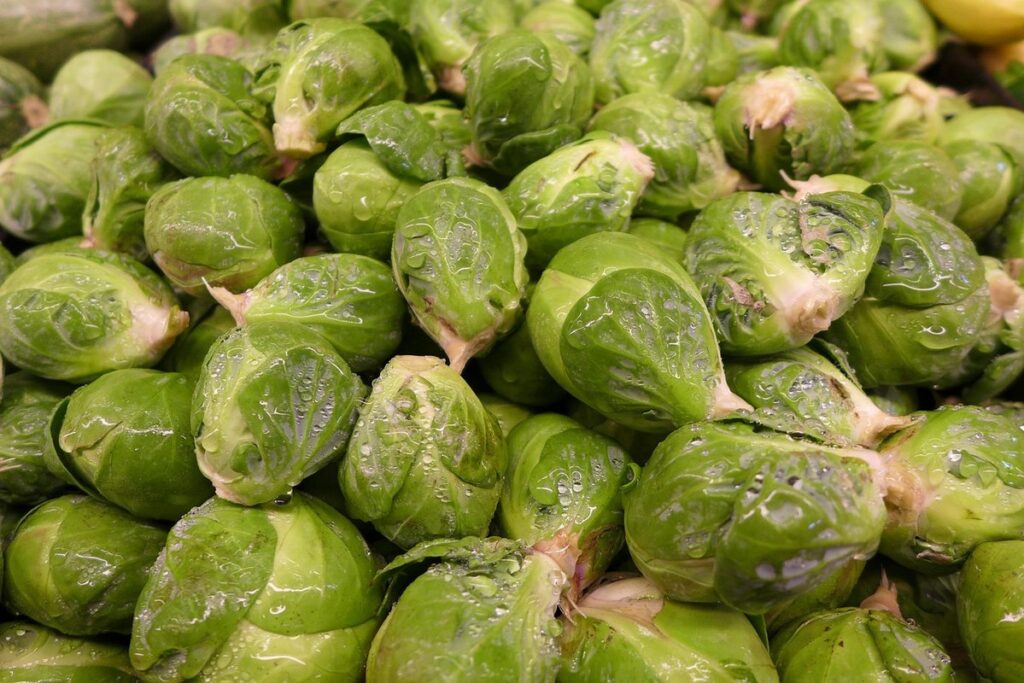
Brussels sprouts are one of the most versatile and nutritious vegetables you can grow in your garden. Originating from Belgium, these small, green buds have been a staple in European cuisine for centuries. Not only do they taste great, but Brussels sprouts are also packed with essential vitamins, minerals, and antioxidants.
Rich in vitamins C and K, as well as folate and fiber, Brussels sprouts offer a wealth of health benefits when consumed. They’re particularly high in sulforaphane, a compound that’s been shown to have anti-inflammatory properties and may even help prevent certain types of cancer. With their sweet, slightly bitter flavor and crunchy texture, it’s no wonder they’re a favorite among chefs and home cooks alike.
In recent years, Brussels sprouts have experienced a surge in popularity, with many creative recipes showcasing their unique taste and nutritional profile. From roasted side dishes to stir-fries and salads, the possibilities are endless. Whether you’re a seasoned gardener or just starting out, learning how to stake your Brussels sprouts is an essential skill for any grower looking to maximize yields and minimize damage from strong winds or heavy rain.
Choosing the Right Variety for Staking
When it comes to staking Brussels sprouts, choosing the right variety is crucial. Some varieties are more suitable for staking than others due to their growth habits and plant height. When selecting a variety, look for those that have a compact or dwarf growth habit, as they tend to produce smaller plants that are easier to stake.
Some popular varieties of Brussels sprouts that excel in staking include ‘Red Ball’, ‘Long Island Improved’, and ‘Jade Cross’. These varieties typically grow to be around 2-3 feet tall, making them ideal for staking. On the other hand, varieties like ‘Falstaff’ and ‘Rubine’ tend to grow much taller (up to 4-5 feet) and may require more extensive support.
In addition to plant height, consider disease resistance when selecting a variety for staking. Some Brussels sprouts varieties are bred to be resistant to common diseases such as powdery mildew and downy mildew. Look for varieties that have been specifically labeled as “resistant” or “treated” to minimize the risk of disease.
Ultimately, it’s essential to choose a variety that suits your specific climate, soil type, and growing conditions. This will help ensure that your Brussels sprouts plants thrive with minimal support.
Preparing the Soil and Planting for Staking
Before you start staking your Brussels sprouts, it’s essential to prepare the soil properly and plant them at the right depth. This step is crucial for a healthy and robust plant.
Optimizing Soil Conditions for Brussels Sprouts
Preparing the soil for Brussels sprouts staking is just as crucial as selecting the right stakes and training system. A well-prepared soil will give your plants a solid foundation to grow strong and healthy.
To start, check the pH level of your soil. Brussels sprouts prefer a slightly acidic to neutral soil pH, ranging from 6.0 to 7.0. If your soil is too alkaline or acidic, it can affect nutrient availability and plant growth. Test your soil and adjust the pH if necessary. Adding organic matter like compost or well-rotted manure can help balance out the pH.
Brussels sprouts also require a rich source of nutrients to produce high-quality crops. Ensure your soil has adequate nitrogen, phosphorus, and potassium levels. A balanced fertilizer specifically formulated for brassicas can provide the necessary boost. Additionally, incorporating organic matter like leaf mold or green compost tea can improve soil structure and fertility.
By optimizing your soil conditions, you’ll be giving your Brussels sprouts a head start on a healthy growth cycle.
Proper Planting Techniques for Staked Brussels Sprouts
When planting Brussels sprouts for staking, it’s essential to get the initial setup right. To begin with, you’ll want to sow the seeds about 1-2 inches deep and 2-3 feet apart in rows that are around 3-4 feet apart. This will give the plants room to spread out as they grow.
As you’re planting for staking, you’ll be arranging the sprouts in a way that allows them to grow upwards towards the trellis or stake. To facilitate this, plant three to four seeds together, with the seedlings spaced evenly around 6-8 inches apart once they’ve germinated. Make sure the strongest seedling is removed, and the remaining two or three are thinned out.
When placing the sprouts on the stake, start by positioning them about halfway up the trellis, allowing room for growth as the plants mature. This will help keep the stalks upright and encourage even growth along the stem. By getting the initial planting right, you’ll be setting yourself up for success when it comes to staking your Brussels sprouts.
The Art of Staking Brussels Sprouts
When it comes to growing delicious and healthy Brussels sprouts, staking is a crucial technique that requires some finesse. Here’s how to properly stake your Brussels sprouts for optimal results.
Types of Stakes Used for Brussels Sprouts
When it comes to staking Brussels sprouts, you’ll want to choose a stake that’s sturdy enough to support the weight of the plants, yet gentle enough not to damage them. The type of stake you use will depend on several factors, including the size and density of your Brussels sprouts plants, as well as your personal preference.
One popular option is wooden stakes, which can be made from untreated wood or bamboo. These are a good choice for smaller Brussels sprouts plants, as they’re lightweight and easy to insert into the soil. However, they may not provide enough support for larger plants, so it’s essential to use multiple stakes if necessary. You can also try using metal stakes, which offer greater durability and stability than wooden ones. These are particularly useful for heavier Brussels sprouts plants or those growing in windy areas.
Bamboo stakes are another option worth considering. They’re lightweight, eco-friendly, and can be easily reused year after year. Plus, they won’t leave any metallic residues that could harm your plants.
How to Stake Brussels Sprouts Effectively
Staking Brussels sprouts effectively requires attention to detail and a gentle touch. To begin, select sturdy stakes made from materials like bamboo, metal, or wood that can support the weight of the plant without toppling over.
For individual plants, tie each stem to the stake using twine or clips at least 6 inches above the soil line. This will prevent damage to the plant and encourage upright growth. Make sure to leave enough space between each stake for easy access and to prevent overcrowding.
To maintain a stable structure, prune any weak or spindly growth that may be competing with the main stem for water and nutrients. This will help direct energy towards producing healthy, well-formed sprouts. Regular pruning also promotes air circulation around the plant, reducing the risk of disease.
By following these simple steps, you can create a sturdy support system that allows your Brussels sprouts to thrive without becoming top-heavy or vulnerable to wind damage. Remember to check on your plants regularly and make adjustments as needed to ensure their continued health and success.
Managing Growth and Promoting Healthy Plants
As you enjoy the fruits of your labor, it’s essential to keep an eye on your Brussels sprouts’ growth patterns to ensure they stay healthy and strong throughout their entire life cycle. We’ll cover key strategies for promoting optimal growth.
Controlling Height and Encouraging Bushy Growth
To control the height of staked Brussels sprouts and encourage bushy growth, you’ll want to consider pruning techniques that promote a balanced, compact plant. Prune off the top set of leaves on each stem, about an inch from the main bud. This will help redirect energy towards producing more side shoots, which in turn encourage thicker, bushier growth.
Another technique is to pinch off the growing tips of the stems as they emerge. This will also divert energy towards lateral growth, creating a more compact plant with plenty of sprouts. Be sure to remove any weak or spindly growth that’s not producing well. For example, if you notice one stem has significantly fewer sprouts than another, consider removing it altogether.
By pruning regularly and promoting bushy growth, you can prevent legginess in your staked Brussels sprouts. A good rule of thumb is to prune every 2-3 weeks, focusing on any new growth that emerges. This will keep your plants looking their best while maximizing yield.
Dealing with Common Pests and Diseases Affecting Staked Brussels Sprouts
Dealing with common pests and diseases that affect staked Brussels sprouts is crucial to maintaining healthy plants. Some of the most common issues you may encounter include aphids, whiteflies, and spider mites, which can be identified by their distinctive appearances and behaviors.
Aphids are small, soft-bodied insects that feed on plant sap, causing curled or distorted leaves. Whiteflies are tiny flying insects that also feed on plant sap, leaving behind a sticky substance called honeydew. Spider mites are tiny, spider-like insects that spin fine webs and cause yellowing or bronzing of leaves.
To manage these pests, use neem oil or insecticidal soap to control infestations. Regularly inspect your plants for signs of pest activity and remove any affected areas. Keep your garden clean, removing weeds and debris that can harbor pests.
Diseases such as powdery mildew, botrytis, and club root can also affect staked Brussels sprouts. These diseases can be identified by their distinct symptoms: a white, powdery coating on leaves (powdery mildew), black or brown spots on leaves (botrytis), or swelling of the stem and roots (club root).
To manage these diseases, maintain good air circulation around your plants, remove any infected areas, and use fungicides as needed. By taking proactive steps to monitor for pests and diseases, you can protect your staked Brussels sprouts from damage and ensure a healthy harvest.
Harvesting Your Staked Brussels Sprouts
Now that you’ve successfully staked your Brussels sprouts, it’s time to harvest them at their peak flavor and tenderness. Here are some essential tips for harvesting your staked sprouts like a pro.
Determining the Optimal Time for Harvest
When determining the optimal time for harvest, it’s essential to look out for signs of maturity. One way to check is by gently tugging on a sprout; if it comes off easily, it’s ready to be picked. The color of the leaves can also indicate ripeness – a deeper green or yellow tint typically signals that the sprouts are mature.
Another important factor to consider is the size and firmness of the sprouts. Harvest them when they’re between 1-2 inches in diameter and have a slight firmness to the touch, similar to a fresh broccoli floret. Be mindful not to wait too long, as over-maturity can lead to decreased flavor and texture.
For staked Brussels sprouts, which tend to grow more compactly than unstaked varieties, it’s often best to harvest when the largest sprout reaches 1-2 inches in diameter. This will ensure that the rest of the crop continues to mature evenly. Keep an eye on your plants daily, as they can quickly go from perfectly ripe to overripe. Harvesting at the optimal time will not only result in better flavor but also encourage continued production throughout the season.
Techniques for Hand-Harvesting Staked Brussels Sprouts
When hand-harvesting staked Brussels sprouts, it’s essential to handle the delicate buds with care to prevent damage and promote continued growth. Begin by inspecting the plant for mature sprouts, which should be firm and tightly closed. Gently grasp each bud between your thumb and index finger, taking care not to squeeze too hard.
To harvest a single bud, twist it gently but firmly in a downward motion, leaving a small piece of stem attached. This will help prevent the plant from being damaged further down the line. It’s also crucial to maintain plant health by removing any yellow or wilted leaves, which can harbor disease and attract pests.
When harvesting multiple buds, work from the bottom up to avoid damaging previously harvested sprouts. Make clean cuts with a sharp tool, such as scissors or pinchers, to prevent crushing the stems. By following these steps, you’ll be able to enjoy your staked Brussels sprouts for weeks to come while keeping the plant healthy and thriving.
Troubleshooting Common Issues with Staked Brussels Sprouts
Don’t worry if your staked Brussels sprouts aren’t thriving – we’ve got solutions to common problems, from yellowing leaves to poor bud formation. Let’s troubleshoot together!
Addressing Common Problems with Stakes and Support Systems
As you’re growing your Brussels sprouts, it’s not uncommon to encounter issues with stakes and support systems. One common problem is loose stakes that can’t provide the necessary support for heavy crops. To address this, make sure to drive stakes at least 12 inches deep into the soil and secure them firmly to the plant using twine or wire. This will prevent them from toppling over in windy conditions.
Another issue you may face is damaged stakes due to poor quality materials or harsh weather conditions. In such cases, replace the damaged stake with a sturdy one, and consider coating it with a layer of mulch to protect it from further damage. It’s also essential to check your stakes regularly for signs of wear and tear.
If your plants are growing unevenly, causing the support system to become unstable, adjust the stakes accordingly. You can also use additional support structures like tomato cages or trellises to provide extra stability. By being proactive in addressing these common issues, you’ll be able to keep your Brussels sprouts healthy and thriving throughout their growth cycle.
Overcoming Challenges Related to Plant Growth and Health
When it comes to staked Brussels sprouts, plant growth and health can be just as challenging as getting them to grow upright. Nutrient deficiencies and environmental stressors can quickly set back even the most promising plants.
One of the main nutrient deficiencies you might encounter with staked Brussels sprouts is calcium deficiency, which can cause leaves to curl up or develop brown edges. To address this issue, make sure your soil pH is within the optimal range for Brussels sprouts (around 6.0-7.0). You can also add crushed eggshells or dolomitic limestone to provide a calcium boost.
Environmental stressors like extreme temperatures and moisture fluctuations can also hinder plant growth. Make sure your staked plants receive at least six hours of direct sunlight per day, but avoid exposing them to intense heat during peak summer months. Water your plants consistently, but avoid overwatering, which can lead to root rot and other problems.
By being aware of these potential issues and taking proactive steps to address them, you’ll be better equipped to overcome common challenges related to plant growth and health when growing staked Brussels sprouts.
Conclusion and Additional Tips for Success
Now that you’ve learned the ins and outs of Brussels sprouts staking, let’s wrap up with some final tips to guarantee a bountiful harvest.
Recap of Key Takeaways for Staking Brussels Sprouts
To recap, let’s break down the key takeaways for successful staking of Brussels sprouts. First and foremost, proper timing is crucial. We discussed how to identify when to stake your Brussels sprouts, taking into account factors such as weather conditions and plant growth stage.
Next, we covered various staking techniques, including using tomato cages, trellises, and stakes with twine or wire. Each method has its pros and cons, but the most important thing is to find a system that works for you and your specific growing environment.
Additionally, we emphasized the importance of providing adequate support to prevent damage from wind and weight. This can be achieved by gently tying the stems to the staking material using soft twine or clips, making sure not to constrict the plant’s growth.
Finally, remember that successful staking is an ongoing process. Regularly check on your Brussels sprouts and adjust their staking as needed to ensure optimal support and prevent potential issues like leg damage or root suffocation. By following these guidelines, you’ll be well on your way to a bountiful harvest of delicious, stress-free Brussels sprouts.
Final Thoughts and Recommendations for Future Growth
As you’ve successfully staked and harvested your Brussels sprouts, it’s essential to reflect on what worked well and what didn’t. Reflecting on your experience will help you refine your technique for future seasons.
Consider the following key takeaways from this comprehensive guide:
* Plan ahead: Make sure to choose a variety of Brussels sprouts that suits your climate and growing conditions.
* Prepare the soil: Ensure it’s fertile, well-draining, and pH-balanced to promote healthy growth.
* Stake correctly: Use sturdy stakes or trellises to support the plants without causing damage.
For future growth, we recommend:
* Diversifying your crop rotation to avoid depleting the soil of nutrients
* Incorporating companion planting techniques to enhance pest resistance and flavor
* Monitoring temperature fluctuations and adjusting your staking strategy accordingly
By implementing these lessons learned and best practices, you’ll be well on your way to becoming a Brussels sprouts expert. Happy growing!
Frequently Asked Questions
Can I stake Brussels sprouts that have already started growing?
Yes, you can still stake Brussels sprouts even if they’ve already begun to grow. In fact, staking them earlier rather than later can help prevent damage and promote healthy growth. Simply choose the right type of stake for your plant’s size and install it carefully to avoid causing further stress.
How often should I check on my staked Brussels sprouts?
Regular checks are essential when growing staked Brussels sprouts. Inspect your plants at least once a week, making sure that stakes remain secure and adjusting as needed. This will help prevent damage from wind or pests and promote optimal growth.
What if I notice fungal diseases affecting my staked Brussels sprouts?
Fungal diseases can be common among staked Brussels sprouts. If you notice signs of infection, remove any affected leaves or stems immediately to prevent the disease from spreading. Increase air circulation around your plants by providing adequate space between rows and using row covers.
Can I use other types of supports instead of traditional stakes for my Brussels sprouts?
While traditional stakes are often recommended for staking Brussels sprouts, you can experiment with alternative support systems like tomato cages or trellises. Just ensure that the chosen support is sturdy enough to hold your plant’s weight and provides sufficient air circulation.
How do I adjust my staking technique if I notice uneven growth on one side of the plant?
Uneven growth is a common issue when growing staked Brussels sprouts. To address this, gently tie the affected stem to its stake with twine or clips, making sure not to constrict the plant’s growth. For optimal results, consider rotating your plants regularly to ensure even exposure to sunlight and air circulation.