
Are you ready to unlock the secret to growing your very own avocado tree from scratch? Avocado seed germination is an exciting process that can be both rewarding and challenging. With millions of avocados consumed worldwide every day, it’s surprising that many people don’t know how to coax a new tree out of its seed. But don’t worry, we’re about to demystify the art of avocado seed germination for you! In this comprehensive guide, we’ll walk you through step-by-step instructions on preparing your seeds, overcoming common obstacles, and nurturing healthy seedlings into robust trees. Whether you’re a seasoned gardener or a beginner, our expert advice will help you succeed in growing your own delicious and nutritious avocado tree from the comfort of your own home. Let’s get started!
Understanding Avocado Seeds and Their Potential
Avocado seeds are often discarded, but they hold a secret: potential for growth into a new tree. Let’s explore their inner workings and unlock their germination secrets together.
What Makes Avocado Seeds Unique?
Avocado seeds are truly one-of-a-kind wonders, and it’s not hard to see why they’ve gained so much attention in recent years. To start with, these tiny seeds can grow into full-fledged avocado trees that produce a bountiful harvest of delicious fruit. But what exactly makes them unique?
One notable characteristic is their size: depending on the type of avocado from which they come, the seed itself can range from 1-5 inches in length and weigh anywhere between 0.25 to 1 pound. That’s quite substantial for a tiny seed! Their shape is also noteworthy – typically egg-shaped or oval, with a pointed end at one end and a rounded base at the other.
In terms of composition, avocado seeds are surprisingly rich in nutrients and have been found to contain several valuable compounds, including antioxidants, vitamins, and minerals. They’re even edible (yes, you read that right!) and can be roasted like nuts for a tasty snack. It’s no wonder then that many people are getting excited about the prospect of cultivating their own avocado trees from seed, rather than buying expensive saplings from nurseries.
Factors Influencing Seed Viability and Germination Rates
External factors play a significant role in determining seed germination rates and viability. Temperature is one such factor, with ideal ranges varying between 65°F to 75°F (18°C to 24°C) for optimal growth. Humidity levels also matter, as avocado seeds require consistent moisture to initiate germination. Aim for a relative humidity of 70-80% in the propagation environment.
Improper handling can also impact seed viability. For instance, if the seed is exposed to extreme temperatures or drying conditions during storage, it may not germinate successfully. Similarly, washing the seed with soap or other chemicals can damage its surface and hinder germination. To avoid this, gently rinse the seed under running water, making sure to remove any dirt without applying too much pressure.
Temperature fluctuations within a specific range can also stimulate growth. This is why it’s crucial to maintain consistent temperatures in your propagation setup.
Importance of Using Healthy Seeds for Successful Germination
When it comes to successfully germinating an avocado seed, selecting high-quality seeds is crucial. This may seem obvious, but many people overlook this critical step, only to be left with disappointing results. Using healthy seeds is essential for optimal growth and development of the seedling.
A poor-quality seed can lead to a range of issues, including slow or failed germination, weak root systems, and even disease susceptibility. Healthy seeds, on the other hand, have a much higher chance of sprouting successfully. Look for seeds that are firm, plump, and free of visible cracks or blemishes.
When purchasing avocado seeds or collecting them from your own ripe avocados, make sure to choose ones with a good balance between size and quality. Larger seeds may seem more appealing, but they can also be more prone to rotting due to their increased surface area.
Preparing Avocado Seeds for Germination
To get started, you’ll want to carefully prepare your avocado seeds by washing and drying them thoroughly to ensure a healthy germination process. This step is crucial to prevent any potential issues down the line.
Cleaning and Drying the Seeds
When handling avocado seeds, it’s essential to clean and dry them properly to prevent mold growth and contamination. Start by gently washing the seeds with mild soap and lukewarm water to remove any remaining pulp or debris. Rinse the seeds thoroughly under running water to ensure all soap residue is removed.
Next, pat the seeds dry with a paper towel to remove excess moisture. This step is crucial in preventing fungal growth, which can lead to mold and rot. You can also use a clean cloth or soft brush to gently scrub away any stubborn pulp or fibers.
To further enhance drying, place the cleaned avocado seeds on a wire rack or paper towels in a dry, well-ventilated area. Allow them to air-dry for at least 24 hours before proceeding with germination. Avoid direct sunlight and high temperatures, as these can cause the seeds to dehydrate too quickly or become damaged.
Remember, proper drying helps ensure optimal germination rates and prevents potential issues down the line.
Scoring or Grading the Seeds for Better Absorption
Scoring or grading the seeds is a technique that can enhance seed germination by allowing more water to penetrate and reach the embryo. To score an avocado seed, you’ll need a sharp object like a knife or a file, and carefully cut around 1/4 inch into the seed, creating a small incision on the top equator of the seed. This will help break down the hard outer shell and increase water absorption.
Scoring can have several benefits for your avocado seeds, including improved germination rates and faster sprouting times. By allowing more water to penetrate, scoring creates an optimal environment for the embryo to grow and develop. However, it’s essential to note that scoring is not a foolproof method and may not work for all seeds.
Some studies suggest that scoring can increase seed germination by up to 30%, but this can vary depending on factors like seed quality and storage conditions. To achieve better results with scored seeds, make sure to store them in a humid environment and keep the soil consistently moist during the germination process.
Seed Stratification: A Crucial Step for Dormancy Breakdown
When it comes to germinating avocado seeds, seed stratification is a crucial step that helps break down dormancy. This process involves simulating the conditions of the avocado tree’s natural environment, which triggers the seed to grow.
The optimal temperature range for stratification is between 40°F and 50°F (4°C to 10°C). You can achieve this by placing the seeds in a sealed plastic bag or airtight container filled with moist peat moss. Keep the container in the refrigerator, making sure it’s not too cold that it freezes.
The duration of stratification varies depending on the type of avocado seed and its level of dormancy. Generally, you can expect to wait anywhere from 3 to 12 weeks for the seeds to break down their dormancy. After this period, remove the seeds from the refrigerator and submerge them in water. Within a few days, you should start seeing root growth.
By following these steps, you’ll be giving your avocado seeds the best chance at successful germination. Remember, stratification is an essential step that mimics the natural environment of the tree, helping to break down dormancy and initiate growth.
Methods for Avocado Seed Germination
To successfully germinate your avocado seed, you’ll want to try out one of three popular methods: water bath, paper towel, or potting soil. Each method has its own unique benefits and requirements.
Water Soaking Method: A Simple yet Effective Approach
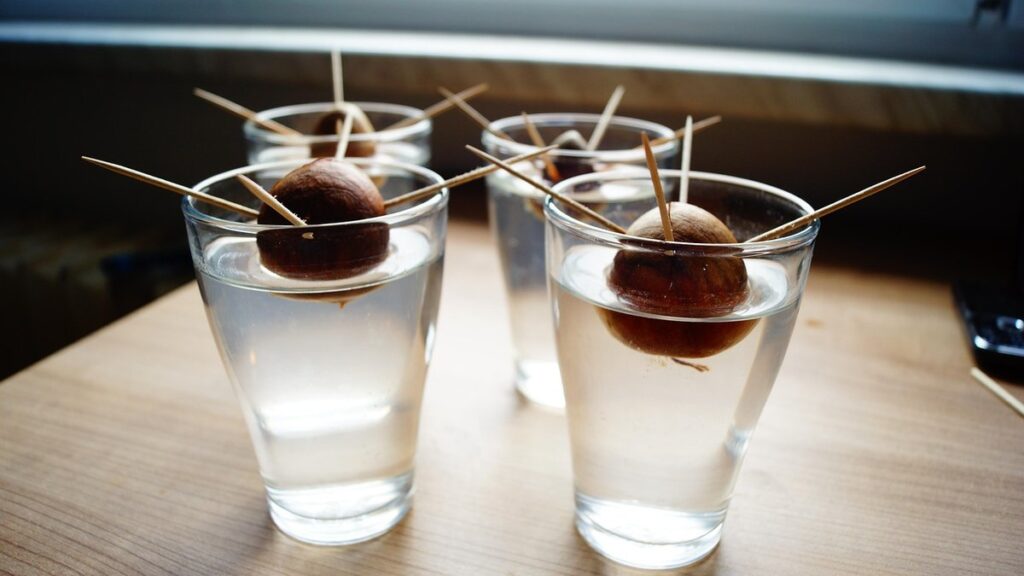
Soaking an avocado seed in water is one of the simplest and most effective methods to initiate germination. This method mimics the natural process of a seed being exposed to moisture after falling from its parent tree.
To start, place the avocado seeds in a cup or container filled with lukewarm water. The ideal temperature for soaking should be around 70-80°F (21-27°C). Leave the seeds submerged in the water for 24-48 hours. This allows the seed to absorb enough moisture to trigger germination.
During this time, observe your seeds closely and discard any that float to the surface or appear damaged. The healthy seeds will typically sink to the bottom of the container. After the soaking period has passed, carefully remove the seeds from the water and pat them dry with a paper towel.
Plant the soaked avocado seed about 1-2 inches deep in a well-draining potting mix, and keep it in a warm location. Water regularly but avoid overwatering.
Direct Sowing Method: Planting Seeds in Soil
When it comes to direct sowing avocado seeds in soil, this method is ideal for gardeners who want to skip the rooting hormone step and jump straight into planting. To begin, choose a container that’s at least 6-8 inches deep to accommodate the seedling’s growth.
Fill the container with a well-draining potting mix, and make sure it’s moist but not waterlogged. Next, place the avocado seed in the soil, with the wide end facing upwards. The ideal sowing depth is about 2-3 times the length of the seed, which will be around 1-2 inches deep for most varieties.
Keep the soil temperature between 65°F to 75°F (18°C to 24°C), as this will promote healthy germination and growth. Some gardeners swear by covering the container with a clear plastic bag or cloche to create a mini-greenhouse effect, which can help maintain humidity and warmth. Water sparingly until roots develop, then gradually increase watering as the seedling grows.
Hydroponic or Aeroponic Systems for Enhanced Growth
Using hydroponic or aeroponic systems for growing avocado seedlings can significantly enhance their growth rates and overall health. These soilless cultivation methods provide the perfect environment for avocado seedlings to thrive, promoting faster root development and healthier plant growth.
In a hydroponic system, nutrients are delivered directly to the roots through a nutrient-rich solution rather than being absorbed from the surrounding soil. This allows for more efficient nutrient uptake and utilization by the plant, resulting in rapid growth rates. Aeroponic systems work similarly but use misting nozzles to deliver water and nutrients to the roots, creating an even healthier environment.
By using either of these methods, you can expect a 20-30% increase in seedling growth rates compared to traditional soil-based cultivation. This is especially beneficial for avocado seeds, which can be notoriously slow to germinate and grow. With hydroponics or aeroponics, you can enjoy faster and healthier seedlings, giving them the best possible start in life.
Some popular types of hydroponic systems for growing avocado seedlings include NFT (nutrient film technique) and DWC (deep water culture). When choosing a system, consider factors such as space constraints, budget, and desired level of control.
Common Challenges and Solutions During Germination
As you start germinating your avocado seed, don’t get discouraged by common obstacles that can slow down progress. Let’s tackle them together and find solutions to overcome these challenges smoothly.
Identifying Causes of Poor Germination Rates
Identifying Causes of Poor Germination Rates is crucial to successfully growing avocado trees from seed. One of the most common causes of poor germination rates is inadequate moisture. Avocado seeds require consistent and adequate water to germinate, but overwatering can be just as detrimental as underwatering. To ensure optimal germination, make sure the soil is consistently moist but not waterlogged.
Temperature is another critical factor in avocado seed germination. Most varieties of avocados prefer warmer temperatures between 65°F to 75°F (18°C to 24°C) for optimal growth. However, some species like the ‘Winter Mexican’ variety can tolerate cooler temperatures around 55°F (13°C). If your seeds are not germinating within a few weeks, check that the temperature is within this range.
Inadequate light and poor soil quality can also impede germination rates. Avocado seeds prefer indirect sunlight and well-draining potting mix to develop roots effectively.
Overcoming Seed Rot and Mold Growth Issues
One of the most common challenges you may encounter during avocado seed germination is seed rot and mold growth. To prevent this, it’s essential to handle the seeds properly from the start. Make sure to dry the seeds thoroughly after cleaning them, as excess moisture can lead to fungal growth.
Maintain a clean environment for your avocado seeds by washing your hands before handling them and keeping the area around the seeds free of dust and debris. Regularly sterilize any tools or equipment used in the process with a solution of 1 part bleach to 9 parts water.
To address existing mold growth, carefully remove any affected areas with a sterile instrument. Disinfect the seed and its container before attempting to revive it. If the seed is severely damaged, consider starting fresh with a new one. By taking these precautions and addressing potential issues promptly, you can minimize the risk of seed rot and mold growth, ensuring a successful germination process.
When storing your seeds, keep them in an airtight container to maintain a consistent moisture level. This will help prevent over- or under-watering, which can also contribute to fungal growth. Regularly inspect your seeds for signs of decay or mold, taking action as soon as you notice any issues.
Understanding the Role of Light in Avocado Seed Development
Light plays a crucial role in avocado seed germination and development. It influences not only the rate of growth but also the overall health of the seedling. The optimal lighting conditions for avocado seeds vary depending on their stage of development.
During the initial stages, avocado seeds require indirect light to photosynthesize and develop their embryonic tissues. Direct sunlight can be too intense and may cause damage or even kill the delicate seed. Place the seed near a sunny window with a sheer curtain to filter out harsh rays.
As the seedling develops, it requires more intense light for photosynthesis. Aim for 12-14 hours of photoperiods (daylight exposure) and maintain temperatures between 65-75°F (18-24°C). However, be cautious not to overexpose the seedling to direct sunlight, especially during peak hours when UV rays are strongest.
Keep in mind that avocado seeds grown indoors may require supplemental lighting. You can use grow lights specifically designed for seedlings to provide the necessary spectrum and intensity. By providing optimal light conditions, you’ll be giving your avocado seedling the best chance to thrive and develop into a healthy tree.
Post-Germination Care and Transplanting
Now that you’ve successfully germinated your avocado seed, it’s time to learn how to give your tiny sprout the best chance at growing into a healthy tree by following proper post-germination care and transplanting procedures.
Providing Optimal Environmental Conditions for Seedlings
Once your avocado seed has germinated, it’s essential to provide optimal environmental conditions for healthy growth. Avocado seedlings prefer temperatures between 65°F (18°C) and 75°F (24°C), which is slightly cooler than their ideal growing temperature of around 70°F (21°C). Avoid placing them near heating vents or radiators, as this can cause the soil to dry out too quickly.
Maintaining a relative humidity level of 40-60% will help prevent water stress. You can cover your seedlings with clear plastic bags or cloches to create a mini-greenhouse effect and maintain high humidity. However, ensure proper air circulation by removing the covering during the hottest part of the day.
Light is also crucial for seedling growth. While avocado trees prefer partial shade in their mature form, young seedlings need bright indirect light. A south-facing window or grow lights can provide the necessary illumination. Aim to provide 12-14 hours of light per day, gradually increasing the duration as your seedling grows stronger.
Keep an eye on your seedling’s response to these conditions and adjust accordingly. If you notice signs of over-watering or under-watering, make adjustments to the temperature, humidity, or lighting.
Nutrient-Rich Soil for Fostering Strong Root Development
When it comes to growing a healthy avocado seedling from scratch, providing nutrient-rich soil is crucial for fostering strong root development. As we’ve discussed earlier, the key to successful germination lies in creating an optimal environment that mimics the seed’s natural conditions.
To do this, you’ll need to ensure your soil provides essential macronutrients and micronutrients. Macronutrients like nitrogen (N), phosphorus (P), and potassium (K) are vital for promoting healthy growth. Nitrogen is responsible for leafy green development, while phosphorus supports root growth and flowering. Potassium, on the other hand, aids in overall plant health and resistance to disease.
Micronutrients like boron (B), copper (Cu), iron (Fe), manganese (Mn), molybdenum (Mo), zinc (Zn), and sulfur (S) play a lesser but still crucial role. These micronutrients help regulate various physiological processes, from photosynthesis to nutrient uptake.
When selecting a potting mix for your avocado seedling, look for one that’s specifically formulated for tropical plants or orchids. Avoid using regular garden soil as it can be too dense and may cause waterlogging issues. Instead, opt for a well-draining mix with a pH between 6 and 7 to ensure optimal nutrient availability.
Transplanting Seedlings: Timing and Techniques for Success
Transplanting seedlings is an essential step in their growth and development. As your avocado seedling grows its first set of leaves, it’s time to transplant it into a larger container or directly into the ground. The ideal time for transplanting depends on the size of the seedling and the growing conditions.
In general, wait until the seedling has 2-3 sets of true leaves before transplanting. This is usually around 6-8 weeks after germination. If you’re planting in a container, choose one that’s at least 1-2 gallons larger than the original pot to give the roots room to grow.
When transplanting directly into the ground, select a location with full sun and well-draining soil. Dig a hole twice as wide and just as deep as the root ball, and gently place the seedling in the center. Water thoroughly to settle the soil around the roots. Harden off your seedling by gradually exposing it to outdoor conditions over 7-10 days before transplanting to minimize shock.
Keep in mind that avocado trees prefer a slightly acidic soil pH between 6.0 and 7.0. Make sure the soil is not compacted, as this can lead to root bound growth. Water regularly but avoid overwatering, which can cause root rot.
Frequently Asked Questions
What is the optimal temperature range for avocado seed germination?
The ideal temperature for avocado seed germination is between 65-75°F (18-24°C). Avoid placing seeds near heating vents, radiators, or drafty areas to maintain a stable environment.
How often should I water my avocado seedlings during stratification?
Keep the soil consistently moist but not waterlogged. Check the soil every few days and only add water when it feels dry to the touch. This will help break dormancy without causing rot or mold growth.
Can I use any type of container for seed germination, or are there specific requirements?
Opt for a clean glass jar or container with a wide mouth, allowing for easy access and observation. Avoid using plastic containers that may inhibit root development or cause moisture buildup.
How long does it take for avocado seeds to sprout after stratification, and what signs should I look for?
Typically, seeds will germinate within 3-6 weeks after stratification. Look for a white taproot emerging from the seed, followed by the growth of two small leaves or a single leaf with a noticeable stem.
What are some common mistakes to avoid when preparing avocado seeds for germination?
Steer clear of using contaminated or rotten seeds, as this can lead to poor germination rates or even disease transmission. Also, be cautious not to over- or under-score the seed, as this can affect absorption and subsequent growth.