
Are you tired of battling aphid infestations in your garden or farm? Do you wish there was a chemical-free solution to keep these pesky pests under control? You’re not alone. Aphids can quickly multiply and wreak havoc on your crops, but introducing ladybugs into the mix can be just what you need. These tiny insects are natural predators of aphids, and by establishing a healthy ladybug colony, you can say goodbye to chemical pesticides and hello to a balanced ecosystem.
In this article, we’ll delve into the benefits of ladybug infestations for aphid control, exploring how these beneficial bugs can thrive in your garden or farm. We’ll cover everything from the importance of creating an inviting environment for ladybugs to establishing a sustainable population. By the end of this post, you’ll be equipped with the knowledge to naturally manage aphids and enjoy a healthier, more vibrant harvest.
Introduction to Ladybugs and Aphids
Let’s start with the basics: ladybugs and aphids have a long history together, with ladybugs preying on aphid populations. This relationship is essential to understanding how to harness their power against garden pests.
What are Ladybugs?
Ladybugs are small, oval-shaped insects that belong to the family Coccinellidae. There are over 6,000 known species of ladybugs, but only a few are commonly found in gardens and homes. These tiny creatures play a vital role in ecosystems worldwide, serving as both predators and prey for other animals.
Ladybugs are typically between 1-10 millimeters in length, with some species growing up to 12 mm. They have a distinctive rounded body shape, usually yellow or red in color, with black spots or markings. Their elongated antennae help them navigate through their surroundings, while their six small legs enable them to crawl and walk on various surfaces.
As beneficial insects, ladybugs are crucial for maintaining a balanced ecosystem. They primarily feed on aphids, mealybugs, and other soft-bodied insects, which helps prevent damage to plants and crops. In fact, research suggests that ladybugs can consume up to 60 times their own body weight in aphids each day! By introducing ladybugs into your garden or indoor space, you’re not only reducing pest populations but also promoting a healthy environment for your plants to thrive.
Understanding Aphid Infestations
Aphids are one of the most common and destructive garden pests, feeding on plant sap to cause curled leaves, stunted growth, and reduced yields. But have you ever wondered why aphid infestations can get out of control so quickly? Understanding their behavior, life cycle, and impact is crucial in effectively managing these pests.
Aphids reproduce rapidly, with some species able to produce live young within a week of hatching from eggs. This means that even a small initial infestation can escalate into a full-blown problem in no time. The female aphid can lay up to 80 eggs at a time, and her young ones are born pregnant, ready to start the cycle again.
The damage caused by aphids goes beyond aesthetic appeal; it also affects plant health and your pocketbook. Studies have shown that aphid infestations can reduce crop yields by up to 30%, resulting in significant economic losses for farmers worldwide. From a ecological perspective, aphid colonies can also serve as a food source for other pests like ants, bees, and wasps, creating a ripple effect on the garden’s ecosystem balance.
By understanding the complex dynamics of aphid infestations, you’ll be better equipped to prevent them from taking over your garden. In our next section, we’ll explore how ladybugs come into play as natural predators of these pesky pests.
The Connection Between Ladybugs and Aphids
In the garden ecosystem, ladybugs and aphids have a delicate yet intriguing relationship. Ladybugs are natural predators of aphids, preying on these sap-sucking insects with ease. But what’s fascinating is that this predator-prey relationship isn’t just beneficial for ladybugs; it also has advantages for aphid colonies.
When ladybugs feed on aphids, they help maintain a balance in the ecosystem by controlling aphid populations. This, in turn, prevents aphid-transmitted plant viruses from spreading and reduces the risk of severe plant damage. Ladybugs also contribute to soil health by consuming aphid feces and other debris that can harm plants.
Interestingly, aphid colonies often adapt to coexist with ladybug populations by developing defense mechanisms against these predators. For example, some aphid species produce chemical signals that warn nearby aphids of impending danger from ladybugs. By understanding this intricate dance between ladybugs and aphids, gardeners can harness the power of natural pest control and create a balanced ecosystem where both species thrive.
Benefits of Introducing Ladybugs for Aphid Control
Now that you’ve learned how to introduce ladybugs into your garden, let’s explore the numerous benefits they provide in controlling aphid populations effectively.
Natural Pest Control Methods
Introducing ladybugs as a preferred method of aphid control is particularly appealing due to its natural and environmentally-friendly approach. Unlike chemical pesticides, which can have devastating effects on both human health and the ecosystem, ladybugs offer a safer solution.
Ladybugs are voracious predators that feed exclusively on aphids, making them an efficient means of controlling infestations. They are also free from the side effects associated with chemical pesticides, such as toxicity to beneficial insects or harm to pets and children. By introducing ladybugs into your garden or indoor space, you can effectively manage aphid populations without subjecting yourself or others to potential risks.
In addition to their natural characteristics, ladybugs are relatively low-maintenance and easy to care for. They require minimal housing and feeding, making them a cost-effective solution compared to repeated chemical applications. Furthermore, introducing ladybugs encourages a balanced ecosystem within your garden or indoor space, promoting biodiversity and healthy plant growth.
Ladybug Species Suitable for Aphid Control
When it comes to introducing ladybugs for aphid control, not all species are created equal. Some are more effective and easier to find than others. Among the most suitable ladybug species for controlling aphids are Harmonia axyridis, Coccinella septempunctata, and Propylea quatuordecimpunctata.
Harmonia axyridis, also known as the multicolored Asian lady beetle, is widely distributed across North America and Europe. It’s a highly effective predator of aphids, with a single individual capable of consuming up to 60 aphids per day. Coccinella septempunctata, the seven-spotted ladybug, is another popular choice for aphid control. Native to Europe but now found in many parts of North America, it’s known for its voracious appetite and ability to tolerate a range of temperatures.
Propylea quatuordecimpunctata, the fourteen-spotted lady beetle, is also worth considering. Found primarily in Asia but introduced to other parts of the world, it’s an aggressive hunter that can devour large numbers of aphids. When introducing these species for aphid control, be sure to choose a reputable supplier and release the ladybugs at the peak of their activity, usually during warmer months. This will ensure they’re most effective in controlling aphid populations.
Establishing a Ladybug Colony
To establish a healthy ladybug colony, it’s essential to create an environment that mimics their natural habitat. Ladybugs thrive in warm and sunny areas with abundant vegetation, so choose a spot near your garden that receives at least six hours of direct sunlight. Ensure the area is also well-ventilated to prevent moisture buildup.
For a ladybug colony to succeed, they need access to food sources rich in nectar and pollen. Plant native flowers like marigolds, sunflowers, or lavender nearby, which are known to attract aphids. These plants will provide both shelter and sustenance for the ladybugs, making them more likely to stay.
In addition to providing a welcoming environment, it’s crucial to introduce the right food sources from the start. Consider adding a shallow dish of sugar water (four parts water to one part sugar) or a liquid aphid lure as an attractant. Place these near the colony area to encourage the ladybugs to feed on the introduced prey.
By creating a suitable environment and providing the necessary food sources, you can establish a thriving ladybug colony that will help control aphid populations naturally.
Preparing Your Garden for a Ladybug Infestation
Before bringing these beneficial insects into your garden, make sure you’re creating an environment that will support their survival and effectiveness in controlling aphid populations. This involves preparing your garden for a ladybug infestation.
Creating an Attractive Environment
When it comes to creating an attractive environment for ladybugs, you’ll want to focus on providing them with the essentials they need to thrive. This includes nectar-rich flowers that will serve as a food source and shelter from predators. Consider planting a mix of flowers that bloom at different times of the year, such as marigolds, sunflowers, and zinnias. These flowers are not only beautiful but also rich in nectar, making them an ideal choice for attracting ladybugs.
In addition to planting nectar-rich flowers, reducing pesticide use is crucial when trying to create a welcoming environment for ladybugs. Pesticides can harm or even kill these beneficial insects, so it’s essential to adopt more natural methods of pest control. Instead, try using neem oil, insecticidal soap, or introducing other beneficial insects that prey on aphids, such as lacewings or parasitic wasps. By reducing your reliance on pesticides and creating a diverse, vibrant garden ecosystem, you’ll be well on your way to attracting ladybugs and saying goodbye to those pesky aphids for good!
Providing Shelters and Hiding Places
When introducing ladybugs into your garden for aphid control, it’s essential to provide them with sheltered areas where they can hide from predators and harsh weather conditions. Ladybugs are natural hunters, but even they need protection when facing threats like birds, spiders, or strong winds.
To create a welcoming environment, consider adding some ladybug-friendly hiding places around your garden. This could be as simple as placing rocks or logs near the affected plants, providing a sheltered spot for ladybugs to rest and feed. Another option is to install a ladybug house or insect hotel, which can serve as a cozy retreat from the elements.
Remember that ladybugs are attracted to dark, moist areas with some cover. Avoid using pesticides in your garden, as these can harm not only aphids but also beneficial insects like ladybugs. By providing shelter and protection, you’ll be supporting the health and well-being of your ladybug population, allowing them to thrive and effectively control aphid infestations.
Maintaining a Balanced Ecosystem
To maintain a balanced ecosystem and encourage ladybugs to stay, it’s essential to create a welcoming environment that meets their needs. Ladybugs require specific conditions to thrive, including a diverse range of host plants that provide nectar, pollen, and aphids for food. Incorporating native plants into your garden will not only attract ladybugs but also support the local ecosystem.
Some beneficial host plants include milkweed, dill, fennel, and angelica. These plants provide essential nutrients for ladybug larvae and adults alike. For example, the nectar-rich flowers of angelica act as a vital energy source for ladybugs during their migratory periods.
In addition to providing food sources, maintain a balanced soil ecosystem by introducing beneficial microorganisms through composting or using natural fertilizers. This will promote healthy plant growth, reducing the need for pesticides that can harm ladybugs and other beneficial insects. By creating this balanced environment, you’ll be well on your way to supporting an effective aphid control system that relies on these natural predators.
Monitoring Ladybug Populations
To effectively utilize ladybugs as a natural solution, it’s essential to monitor their populations and ensure they’re thriving in your garden. This means tracking their numbers and identifying any potential threats to their survival.
Identifying Ladybug Activity
Identifying ladybug activity is crucial for understanding their effectiveness in managing aphid populations. To do this, you need to be aware of the different stages of a ladybug’s life cycle: eggs, larvae, and adult.
Ladybug eggs are usually white or yellowish in color, oval-shaped, and about 1-2 mm in length. They’re often laid on the underside of leaves or stems, where aphids tend to congregate. If you notice clusters of these tiny eggs, it’s a sign that ladybugs have taken up residence.
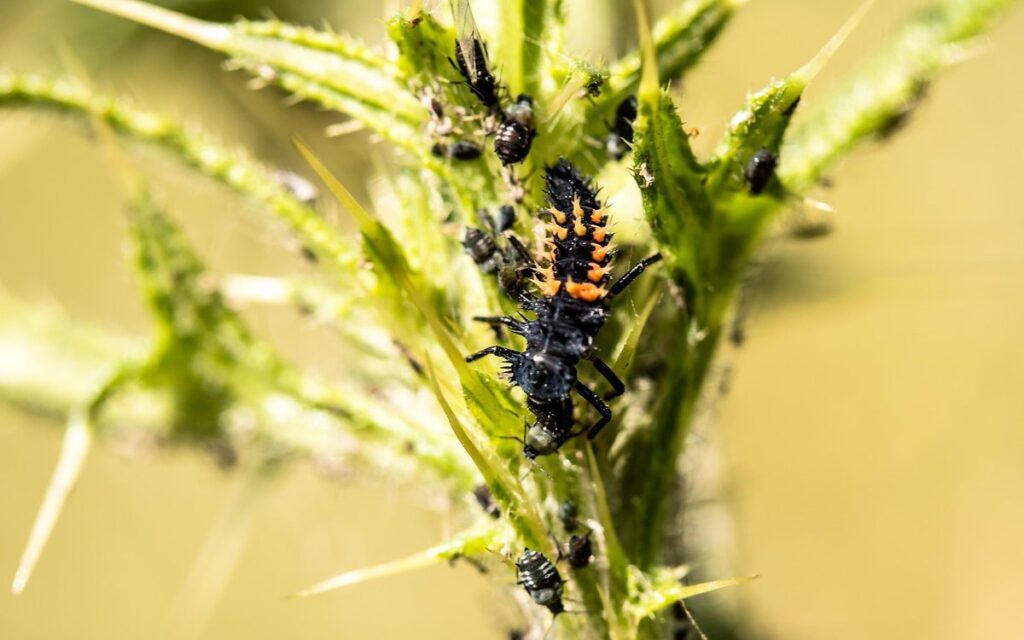
The larvae stage is even more telling. Ladybug larvae are usually elongated and hairy, with yellow or orange markings. They’re voracious eaters, consuming large numbers of aphids in preparation for their own development. If you spot several of these plump, fleshy creatures on your plants, it’s a good indication that the ladybugs are working hard to control aphid populations.
As adult ladybugs emerge, they begin to patrol the surrounding area, searching for food and mates. Look for shiny black or red bodies with white spots, often seen flying between plants or perched on leaves.
Tracking Aphid Populations
Monitoring aphid populations is an essential step in determining the effectiveness of your ladybug introduction. By tracking population sizes and damage levels, you can accurately assess the severity of the infestation and make informed decisions about additional control measures.
One common method for tracking aphid populations is through visual inspection. Regularly walk through your garden or orchard to observe the number of aphids on plants. Look for signs of aphid activity such as curled or distorted leaves, sticky honeydew droplets, or actual aphids on stems and leaves. Keep a record of the dates and locations where you find high concentrations of aphids.
Another effective method is using sticky traps or yellow cards to capture aphids. Place these in areas prone to aphid infestation, such as near weeds or under tree canopies. This will give you an idea of the population size and help identify any hotspots. By combining these methods, you’ll be able to accurately assess the severity of your aphid problem and make informed decisions about introducing ladybugs into your garden.
Keep in mind that timing is everything when it comes to introducing ladybugs. The best time for introduction is typically during periods of low pest pressure and optimal temperatures for ladybug activity.
Adjusting Your Strategy as Needed
As you introduce ladybugs into your garden to combat aphids, it’s essential to monitor their performance and adjust your strategy as needed. This involves keeping a close eye on the population size, dispersal, and effectiveness against aphid infestations.
To evaluate the success of your ladybug introduction, consider the following factors:
* Are the aphid populations decreasing?
* Are new ladybugs arriving at the site or are they remaining in place?
* Is there sufficient food (nectar) available for the ladybugs?
If you notice that the ladybugs are struggling to control the aphid population or if they’re not dispersing effectively, reassess your strategy by asking yourself:
* Have I provided an adequate food source for the ladybugs?
* Are the ladybugs being introduced at a suitable location within the garden?
* Is there sufficient shelter and habitat available for them to thrive?
Consider making adjustments such as relocating the ladybug release site, supplementing with additional food sources (e.g., sugar-water feeders), or introducing other beneficial insects that prey on aphids.
Challenges and Limitations
While ladybugs are a natural and effective solution for aphid infestations, there are some challenges and limitations to consider when using them as a control method. Let’s take a closer look at these potential drawbacks.
Potential Drawbacks of Ladybug Infestations
While ladybugs are an effective and natural solution for aphid infestations, there are some potential drawbacks to consider when introducing them into your garden. One of the main concerns is competition with other beneficial insects. Ladybugs feed on aphids, but they also consume nectar and pollen, which can lead to competition with other pollinators like bees and butterflies. This can be particularly problematic if you have a diverse range of beneficial insects in your garden.
Another potential drawback is the risk of disease transmission. Ladybugs, like any insect, can carry diseases that can harm plants or other beneficial insects. For example, some species of ladybugs are known to transmit fungal diseases like powdery mildew and downy mildew. To minimize this risk, it’s essential to source your ladybugs from a reputable supplier and introduce them into your garden in moderation.
If you do decide to introduce ladybugs into your garden, make sure to monitor their population closely and adjust the number of introductions as needed. This will help prevent overpopulation and reduce the likelihood of disease transmission.
Managing Ladybug Populations
As you’ve successfully introduced ladybugs into your garden to combat aphids, it’s essential to manage their populations effectively. This ensures they remain a beneficial force without causing harm to other plants or becoming a nuisance.
To control population sizes, it’s crucial to monitor the ladybug population closely. Start by observing their behavior and habitat preferences. Ladybugs tend to thrive in areas with an abundance of food sources, such as aphid colonies, and suitable shelter. Understanding these factors can help you take preventative measures.
Some effective techniques for managing overpopulation include providing alternative food sources and shelter. Introduce other beneficial insects, like lacewings or parasitic wasps, which compete with ladybugs for resources. Also, ensure there’s a diverse range of plant species to encourage natural predation.
Additionally, consider culling the population by releasing new aphid colonies in areas far from the existing ladybug populations. This will encourage them to disperse and establish new habitats, reducing overcrowding. By implementing these strategies, you can maintain an optimal ladybug population, ensuring they continue to provide effective control over aphids without becoming a problem themselves.
Frequently Asked Questions
Can I introduce ladybugs to my garden if it’s already been treated with pesticides?
No, introducing ladybugs to a garden that has recently been treated with pesticides can be counterproductive. Ladybugs are susceptible to pesticide residues and may not survive or thrive in such an environment. It’s essential to wait until the soil and plants have been thoroughly cleansed of any chemical residues before introducing beneficial insects like ladybugs.
How do I know if my ladybug infestation is working effectively against aphids?
Identifying effective ladybug activity can be done by monitoring their populations, observing their behavior, and tracking the decline in aphid numbers. Regularly inspect your garden or farm for signs of ladybug presence, such as their distinctive spots or eggs on plant stems. Also, keep an eye out for a decrease in aphid colonies.
Can I combine ladybugs with other natural pest control methods?
Yes, combining ladybugs with other natural pest control methods can create a powerful and sustainable pest management strategy. Techniques like introducing beneficial nematodes, using neem oil, or practicing crop rotation can complement the work of your ladybug colony, creating a balanced ecosystem that minimizes chemical reliance.
What’s the ideal temperature range for maintaining a healthy ladybug population?
The ideal temperature range for ladybugs is between 65°F (18°C) and 85°F (29°C). Most species thrive in temperatures within this range. However, some species like the seven-spotted lady beetle prefer warmer conditions above 70°F (21°C), while others may be more tolerant of cooler temperatures.
How long does it take for a ladybug colony to establish itself after introduction?
The establishment time for a ladybug colony can vary depending on several factors such as the size of the initial introduction, environmental conditions, and the presence of food sources. Generally, it can take anywhere from a few weeks to several months for a thriving ladybug population to develop after introducing them to your garden or farm.