
The never-ending battle against aphids! We’ve all been there, watching those pesky little pests suck the life out of our precious plants. But what if I told you there’s a way to turn the tables and have nature do the work for you? Attracting beneficial insects that prey on aphids is one of the most effective ways to control their populations naturally. By understanding which predators are your best allies, you can integrate them into your garden’s ecosystem and reduce your reliance on chemical pesticides. In this article, we’ll explore the world of aphid predators in the garden, covering everything from beneficial insects to physical barriers and biological controls. With a little knowledge and planning, you’ll be well on your way to creating a balanced and thriving garden that’s resistant to aphid infestations.
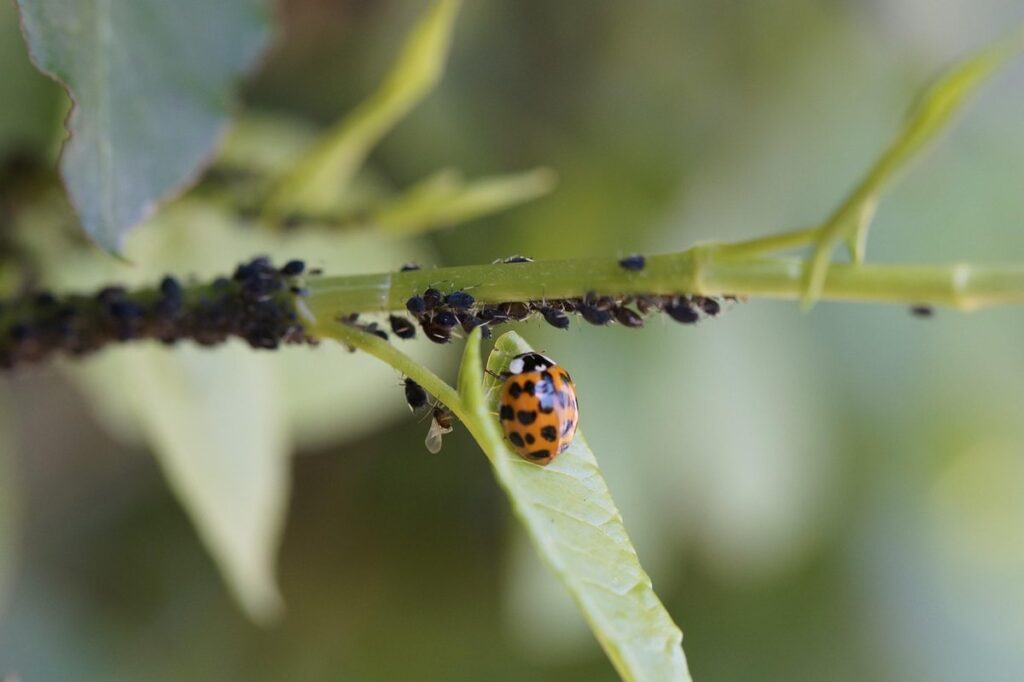
Understanding Aphids and Their Impact
To truly appreciate the importance of aphid predators, it’s essential to understand what aphids are and how they can impact your garden. Let’s take a closer look at these pesky insects.
What Are Aphids?
Aphids are one of the most common and frustrating pests you’ll encounter in your garden. These tiny, soft-bodied insects can be found on a wide range of plants, from vegetables and fruits to flowers and trees. Aphids are typically between 1-3 millimeters in length and have a distinctive pear-shaped body with two long, slender appendages called cornicles or siphunculi protruding from their rear end.
As aphid colonies grow, they can cause significant damage to your plants by sucking sap from leaves, stems, and flowers. This can lead to curled or distorted leaves, stunted growth, and reduced yields. In severe cases, aphids can also transmit plant viruses, further weakening the plant’s defenses.
To identify aphids on your plants, look for clusters of tiny eggs, live insects, or a sticky substance called honeydew on the leaves and stems. Regularly inspecting your plants and catching infestations early is key to preventing long-term damage. If you suspect an aphid problem, isolate the affected plant and treat it promptly with insecticidal soap or neem oil to prevent further spread.
The Consequences of an Aphid Infestation
An aphid infestation can have far-reaching consequences for your garden’s health and productivity. One of the most significant effects is stunted plant growth, as aphids feed on sap, depriving plants of essential nutrients. This can lead to weakened roots, reduced foliage, and decreased yields.
Aphid infestations can also spread diseases between plants, further compromising their health. For example, ants often farm aphids for their honeydew, which can attract other pests and create an ideal environment for fungal growth.
If left unchecked, aphid populations can spiral out of control, consuming massive amounts of sap and causing irreparable damage to your garden’s ecosystem. In severe cases, an infestation can even lead to the death of affected plants.
To mitigate these effects, monitor your garden regularly for signs of aphids, such as curled or distorted leaves, sticky honeydew droplets, or the presence of ants. Early detection allows you to take swift action and introduce beneficial predators to control the population, preventing long-term damage to your garden’s health and productivity.
Natural Predators of Aphids
Let’s take a closer look at some beneficial insects that naturally keep aphid populations under control, and how you can attract them to your garden.
Ladybugs: A Classic Aphid Predator
Ladybugs are one of the most iconic and effective aphid predators in gardens. These small, round beetles play a vital role in controlling aphid populations, which can quickly get out of hand if left unchecked. In fact, research suggests that ladybugs can consume up to 60 times their own body weight in aphids per day!
But how do these beneficial bugs work their magic? Ladybug life cycles typically consist of four stages: egg, larva, pupa, and adult. Female ladybugs lay eggs near aphid colonies, which then hatch into hungry larvae that feed on the aphids. As the larvae grow, they shed their skin multiple times before entering a pupal stage, where they transform into adults. Adult ladybugs continue to feed on aphids and can also lay more eggs to sustain the population.
To attract these beneficial bugs to your garden, plant a diverse range of flowers that provide nectar and pollen, such as marigolds, cosmos, and lavender. Ladybugs also require sheltered areas with adequate food sources for their larvae, so consider incorporating native plants or creating a ladybug-friendly habitat within your garden.
Lacewings: Another Effective Aphid Predator
Lacewings are an often-overlooked but highly effective natural predator of aphids. These delicate-looking insects play a crucial role in maintaining the balance of your garden’s ecosystem. Lacewings undergo a complete metamorphosis, with four life stages: egg, larva, pupa, and adult.
The larvae of lacewings are voracious predators that feed on aphids, scales, mealybugs, and even spider mites. They can consume up to 40 times their own body weight in a single day, making them a valuable addition to an integrated pest management strategy. To encourage lacewing populations in your garden, provide a source of food for the adults, such as aphid-infested plants or a sugar-water feeder.
Lacewings are also beneficial because they can lay eggs on a wide range of host plants, increasing their chance of survival and allowing them to colonize new areas. By incorporating lacewings into your garden’s ecosystem, you can reduce the need for chemical pesticides and create a more sustainable and balanced environment.
Encouraging Beneficial Insects
To attract and support beneficial insects, it’s essential to create a welcoming environment that fosters their presence and activity in your garden. This includes providing shelter and food for these tiny predators.
Creating a Habitat for Beneficials
When creating a habitat for beneficial insects like aphid predators, it’s essential to design a garden that not only attracts these helpful creatures but also provides them with the resources they need to thrive. This means selecting plants that are rich in nectar and pollen, as well as those that serve as food sources for the predators.
Choose plants like lavender, coneflower, and cosmos, which are known to attract aphid predators such as lady beetles and lacewings. These plants are also beneficial for bees and butterflies, making them a great addition to your garden. Consider incorporating native plants, which have evolved alongside local beneficial insects, providing the perfect match.
Incorporating different types of habitats within your garden can also help create a diverse ecosystem that supports beneficial insects. For example, adding some bare ground or rocks will provide shelter for lady beetles and other predators. By creating this habitat, you’ll not only attract aphid predators but also support a balanced and thriving ecosystem in your garden.
When selecting plants, consider their growth habits as well – tall plants like sunflowers can serve as a hiding spot for small predators.
Avoiding Pesticides That Harm Beneficials
When it comes to managing aphids in your garden, it’s essential to use pesticides judiciously and avoid those that can harm beneficial insects. Common culprits include neonicotinoids, pyrethroids, and organophosphates, which can decimate not only aphid predators but also bees, butterflies, and other pollinators.
These broad-spectrum pesticides often lack specificity, targeting a wide range of insects indiscriminately. For instance, neonicotinoids have been linked to bee colony declines worldwide. To avoid harming beneficials, opt for targeted, organic methods instead. Insecticidal soap and horticultural oil can be effective against aphids without posing risks to predators like ladybugs or lacewings.
Consider also adopting integrated pest management (IPM) strategies that prioritize cultural controls – techniques like crop rotation, pruning, and biological control. For example, introducing natural predators like parasitic wasps or aphid midges can help regulate aphid populations without requiring pesticides altogether. By adopting these approaches, you’ll not only safeguard beneficial insects but also promote a balanced ecosystem in your garden.
Alternative Methods for Controlling Aphids
While natural predators are wonderful, sometimes their numbers aren’t enough, and we need to explore alternative methods for keeping aphid populations under control. We’ll dive into some effective techniques in this section.
Physical Barriers: A Non-Toxic Solution
When it comes to controlling aphids, physical barriers can be an effective and non-toxic solution. One such method involves using fine mesh screens to prevent these pesky insects from reaching your plants in the first place. These screens have openings as small as 1/8 inch, which is too small for aphids to pass through.
Another option is to use fine-netted row covers, which provide a physical barrier between your plants and the surrounding environment. By drape these lightweight fabrics over rows of plants, you can prevent aphids from landing on them in the first place. These materials allow sunlight and water to reach your plants while keeping pests at bay.
To implement this method, start by selecting a fine mesh screen or row cover that is specifically designed for gardening. Cut it to size using scissors or a sharp knife, making sure to leave enough room for air circulation and plant growth. Then, drape the material over the affected area, securing it with stakes or weights as needed. Regularly inspect your plants for signs of aphid infestation, and replace the barrier as needed to maintain its effectiveness.
Biological Control Methods: Using Nematodes
Nematodes are microscopic worms that can be used to control aphid populations. They belong to the phylum Nematoda and are known for their ability to parasitize insects, including aphids. When applied to an infested area, nematodes seek out aphids and other soft-bodied insects, where they feed on their internal organs and eventually kill them.
To use nematodes effectively, it’s essential to choose the right species. Steinernema feltiae (Sf) is a popular choice for aphid control as it can survive in a wide range of temperatures and can be applied directly to soil or water. When applying Sf nematodes, mix 1-2 billion organisms per liter with water according to the manufacturer’s instructions.
Timing is also crucial when using nematodes. Apply them at night, when aphid populations are most active, for optimal results. The nematodes will seek out and infect aphids within a few hours of application, providing long-term control without leaving toxic residues behind. This natural approach to pest management can be an effective addition to your integrated pest management (IPM) strategy.
Integrated Pest Management (IPM) for Aphids
For effective aphid control, understanding Integrated Pest Management (IPM) is crucial to minimize harm to beneficial insects and your garden’s ecosystem. IPM strategies will be explored in this section.
Monitoring Your Garden for Aphid Activity
Monitoring your garden for aphid activity is crucial to implementing effective Integrated Pest Management (IPM) strategies. Regular monitoring allows you to detect potential issues early on, preventing infestations from getting out of hand. Set aside time each week to inspect your plants thoroughly, looking for telltale signs of aphid activity, such as curled or distorted leaves, sticky honeydew droplets, and actual aphids.
Keep a gardening journal to track your findings, noting which areas are most susceptible to infestation and the types of aphids you encounter. This information will help you tailor your IPM approach to address specific challenges in your garden. For example, if you notice that certain plants consistently attract aphid populations, consider rotating these crops or using row covers to reduce the risk.
Use this data to inform your decision-making process when implementing control measures. For instance, if monitoring reveals a small infestation on one plant, a targeted approach like introducing natural predators may be more effective than spraying pesticides across the entire garden. By regularly monitoring your garden and adjusting your strategies accordingly, you’ll be better equipped to manage aphid populations and maintain a balanced ecosystem.
Combining Methods for Optimal Results
When it comes to managing aphids in your garden, combining different methods is key to achieving optimal results. This integrated approach is known as Integrated Pest Management (IPM), and it’s a holistic strategy that considers the complex relationships between pests, their environment, and other factors.
Biological control methods, such as introducing beneficial insects like ladybugs or lacewings, can be paired with physical barriers like fine mesh or fine netting to prevent aphid migration. For example, you can create a “pest-free zone” around vulnerable plants by placing a fine-mesh cage over them, while also releasing natural predators in the surrounding area.
Similarly, you can combine cultural controls like pruning infested areas and improving air circulation with biological controls like introducing beneficial nematodes to attack aphid eggs. By combining multiple methods, you can create a comprehensive IPM approach that addresses aphids from all angles, reducing the risk of resistance and ensuring long-term garden health. This multi-faceted approach also encourages diversity and resilience in your garden ecosystem.
Maintenance and Prevention
To keep those pesky aphids under control, it’s essential to know how to maintain a healthy environment that supports your beneficial insects. Regular monitoring and prevention strategies can make all the difference in keeping your garden balanced.
Regular Pruning: A Key Component of Aphid Control
Regular pruning is an essential aspect of maintaining healthy plants and preventing aphid infestations. When you prune your plants regularly, you remove any weak or damaged growth that can provide a haven for aphids to colonize. By removing these areas, you reduce the likelihood of aphid populations taking hold.
When it comes to pruning, timing is everything. Prune your plants in the spring as new growth emerges, and again in the summer when they’re most active. This helps keep your plants tidy and promotes healthy growth.
To effectively prune for aphid control, focus on removing any dead or diseased wood, as well as crossing branches that can rub against each other and create damage. Cut back any weak or spindly growth to encourage bushy, vigorous new shoots. By incorporating regular pruning into your maintenance routine, you’ll not only keep your plants looking their best but also create an environment less conducive to aphid infestations.
Some plants, such as roses and clematis, are particularly prone to aphids. Make sure to prune these regularly to keep them healthy and pest-free.
Winterizing Your Garden to Prevent Aphid Pests
As winter approaches, it’s essential to prepare your garden for the cold months ahead. However, this is also a critical time to prevent aphid pests from overwintering and causing damage come springtime. One way to do this is by winterizing your garden.
To begin, evaluate your garden’s condition before the first frost. Remove any debris, dead plant material, and weeds that could provide shelter for aphids. This will help reduce their chances of survival and make it easier to inspect your garden in the spring.
Another key step is to choose plants that are resistant to aphid infestations or those that repel them naturally. Some examples include marigolds, chives, and garlic, which can be planted around the perimeter of your garden to deter aphids. Additionally, prune any perennials to a height of about 3-4 inches from the ground, as this will help prevent water from accumulating in the plant’s crown and reduce the likelihood of aphid infestations.
Regularly inspect your garden for signs of aphid activity during the winter months, such as curled or distorted leaves. This can also be an opportunity to address any other issues that may have developed over the growing season. By taking these proactive steps, you’ll be better equipped to manage aphid pests and protect your garden when warmer weather returns.
Frequently Asked Questions
Can I use a combination of aphid predators and physical barriers to control aphids effectively?
Yes, integrating multiple methods can lead to more effective aphid control. By combining the benefits of beneficial insects with physical barriers, you can create a robust defense against aphid infestations. This approach allows you to target different stages of aphid development, ensuring that no single method is overwhelmed by the pest population.
How do I know which type of aphid predator to introduce first in my garden?
Start by identifying the types of plants and areas most affected by aphids. Then, choose beneficial insects known to thrive in similar environments or target specific pests. Ladybugs and lacewings are versatile options that can adapt to various conditions.
Can I use nematodes in conjunction with other biological control methods?
Yes, integrating nematodes with other biological controls like beneficial insects can enhance overall pest management. Nematodes help eliminate soil-borne aphid larvae, while beneficial insects target adult aphids and nymphs. This multi-pronged approach ensures that all stages of the aphid life cycle are addressed.
What’s the best way to maintain a healthy population of beneficial insects in my garden?
To encourage long-term stability, ensure a diverse range of plants and habitats for beneficial insects. Incorporate native flowers, avoid using broad-spectrum pesticides, and maintain a balanced ecosystem through regular pruning and monitoring.
Can I use aphid predators indoors, or are they only suitable for outdoor gardens?
While many beneficial insects thrive in both indoor and outdoor environments, some may have specific temperature or humidity requirements. Research the needs of your chosen predator species to ensure their survival and effectiveness within your desired space.