
As you’re about to discover, genetically modified tomatoes have become a staple in many supermarkets. But have you ever stopped to think whether those juicy red tomatoes on your plate are indeed GMOs? The answer might surprise you. Genetically modified organisms (GMOs) refer to plants that have been engineered to resist pests or tolerate specific conditions, and tomatoes are no exception. While the benefits of GMO tomatoes may seem appealing – increased yields and reduced pesticide use – there are also potential drawbacks, labeling debates, and environmental impacts to consider. In this article, we’ll delve into the world of GMO tomatoes, exploring their benefits, risks, and everything in between, so you can make an informed decision about what’s on your plate.
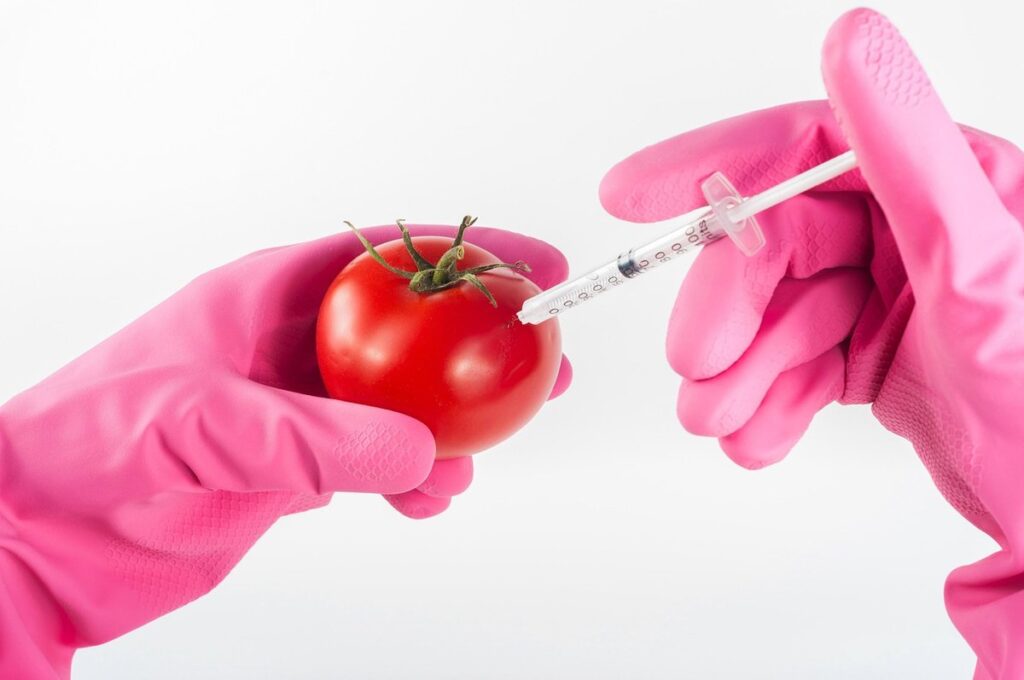
What are GMOs and How Do They Work?
Let’s take a closer look at what GMOs actually are, how they’re created, and what that means for the food we eat. We’ll break it down in simple terms so you understand the basics.
Definition of GMOs
Genetically modified organisms (GMOs) are living beings whose genetic material has been altered using biotechnology to introduce new traits. This process involves inserting genes from one species into the DNA of another, creating a new combination that wouldn’t occur naturally. Genetic engineering is the core principle behind GMO creation, allowing scientists to enhance crop yields, disease resistance, and pest tolerance.
Think of it like breeding two parent plants with desirable qualities. In traditional breeding, farmers select parents based on traits they want to pass down to their offspring. With genetic modification, scientists directly introduce those traits into a plant’s DNA using gene editing tools. The purpose of GMOs in agriculture is to address global food security challenges by developing crops that can withstand environmental stresses and produce higher yields.
Farmers have been experimenting with cross-breeding techniques for centuries, but genetic engineering takes it to the next level by allowing for precise modifications. This enables the creation of crops tailored to specific climates, soil types, or pest pressures, making farming more efficient and sustainable.
Benefits and Drawbacks of GMOs
Genetically modified organisms (GMOs) have been a topic of debate for years, and it’s essential to understand both their benefits and drawbacks before making an informed decision. As we explore the world of GMOs through the lens of tomatoes, let’s examine why they’re used in agriculture.
The benefits of GMOs are numerous. For instance, genetically modified crops can increase crop yields by up to 30%, which means more food for a growing global population. They also offer disease resistance, reducing the need for pesticides and herbicides that can harm the environment. Additionally, GMOs can improve nutritional content, making them a healthier option for consumers. For example, vitamin-enriched golden rice is a genetically modified crop that aims to combat vitamin A deficiency in developing countries.
However, there are also potential drawbacks to consider. The increased use of GMOs has raised concerns about environmental impact, including the development of pesticide-resistant “superweeds.” Some research suggests that consuming GMOs may pose health risks, although more studies are needed to confirm this. Moreover, the economic implications of GMOs can be devastating for small-scale farmers who lack access to these technologies and struggle to compete with larger corporations that dominate the market. As a consumer, it’s crucial to weigh these factors when deciding whether or not to support GMOs in agriculture.
The Truth About Tomatoes Being Genetically Modified
Let’s dive into the facts surrounding tomatoes and genetic modification, as we explore the reality behind some of your favorite varieties. Many commercial tomato crops contain genetically modified (GM) traits that may surprise you.
History of Tomato Breeding
Tomato breeding has been an ongoing process for centuries, with farmers and breeders selecting plants with desirable traits like size, color, and flavor. The earliest recorded tomato cultivation dates back to the 7th century in South America, where indigenous people prized the small, yellow fruit for its nutritional value.
As European explorers introduced tomatoes to their continent, breeders began experimenting with cross-pollination techniques to enhance the fruit’s characteristics. By the 18th and 19th centuries, tomato varieties had multiplied, offering a range of sizes, shapes, and colors. For instance, the famous Brandywine heirloom tomato was developed in the 1800s for its unique flavor profile.
However, early attempts at genetic modification were hindered by limited understanding of genetics and technology. The first reported attempts to genetically modify tomatoes occurred in the 1980s using a technique called protoplast fusion. While successful in some instances, these experiments faced significant limitations due to low efficiency rates and difficulties in transferring desirable traits between species.
Despite these challenges, modern plant breeding has made tremendous strides in developing high-yielding, disease-resistant tomato varieties. Advances in biotechnology have enabled scientists to pinpoint specific genes responsible for desirable traits, allowing for more precise manipulation of the genetic makeup of tomatoes.
Are Most Commercial Tomatoes GMO?
Many people assume that all commercial tomatoes are genetically modified (GMO), but this is not entirely accurate. While some tomato varieties have been genetically engineered to enhance their shelf life or disease resistance, many others are the result of conventional breeding techniques.
Conventional breeding has enabled farmers and plant breeders to create a vast array of tomato varieties with desirable traits such as flavor, texture, and color. For instance, popular cherry tomato varieties like ‘Sungold’ and ‘Sweet 100’ owe their existence to decades of selective breeding for specific characteristics.
To identify whether a particular tomato is GMO, look for the use of genetic markers. Many commercial tomatoes are developed using marker-assisted selection (MAS), which involves identifying genes associated with desirable traits through DNA analysis. However, this doesn’t necessarily mean the resulting variety is genetically modified in the classical sense. Even non-GMO varieties can benefit from MAS to improve their yield or disease resistance.
As a consumer, it’s essential to be aware of these nuances when considering whether tomatoes are GMO or not. If you’re looking for non-GMO options, choose heirloom or locally grown tomatoes, and always check with the grower or supplier about their breeding practices.
Genetically Modified vs. Heirloom Tomatoes
Now that we’ve explored the basics of genetically modified tomatoes, let’s dive into the differences between GM and heirloom varieties. You’ll learn how these two types compare in terms of taste, nutritional value, and more.
Characteristics of Heirloom Tomatoes
Heirloom tomatoes have become increasingly popular among gardeners and chefs for their unique characteristics that set them apart from hybrid varieties. One of the most distinctive features of heirloom tomatoes is their diverse range of flavors, which can be sweet, tangy, or even slightly bitter. Their textures also vary, with some having a soft, juicy pulp and others being more firm and meaty.
The appearances of heirloom tomatoes are equally as varied, with colors ranging from deep reds to vibrant yellows, oranges, and purples. Their shapes can be spherical, oval, or elongated, adding visual appeal to any dish. Chefs love heirloom tomatoes for their ability to add a pop of color and flavor to salads, sauces, and sandwiches.
If you’re interested in growing your own heirloom tomatoes, look for varieties that are disease-resistant and suitable for your climate. Some popular heirloom tomato varieties include ‘Brandywine’, ‘Cherokee Purple’, and ‘San Marzano’. When selecting an heirloom variety, consider the flavor profile you want to achieve in your cooking. With proper care and attention, heirloom tomatoes can thrive in your garden, providing a delicious and unique addition to your meals.
Are Some Heirloom Tomatoes Actually GMOs?
The controversy surrounding heirloom tomatoes has led to a disturbing discovery: some of these supposedly natural varieties may contain genetically modified traits. This revelation challenges the long-held assumption that heirlooms are inherently non-GMO. Research has shown that many commercial tomato varieties, including some marketed as heirlooms, have undergone genetic modification through cross-breeding with modern, high-yielding strains.
This process, known as “mutagenesis,” involves exposing seeds to radiation or chemicals to induce random mutations. While this may not fit the traditional definition of GMOs (which typically involve direct gene editing), it can still result in unintended genetic changes that alter the plant’s characteristics. For consumers seeking non-GMO produce, this raises questions about the accuracy of labels and the need for more stringent regulations.
When shopping for heirloom tomatoes, be aware that even if a label claims “non-GMO,” it may not necessarily mean the product is entirely free from genetically modified traits. Consider sourcing your tomatoes from local farmers or growers who adhere to strict non-GMO standards, or opt for certified organic produce.
Labeling and Regulation of Genetically Modified Foods
So, how are genetically modified foods regulated? Let’s dive into the labeling and regulation process to get a better understanding of what you’re eating.
The Debate Over GMO Labels
The debate over labeling genetically modified foods has been ongoing for years, and it’s a crucial issue to consider when deciding whether tomatoes are GMO. Some argue that mandatory labeling is essential for consumer choice, allowing people to make informed decisions about the food they eat. This perspective is particularly important for those with dietary restrictions or preferences.
On the other hand, opponents of mandatory labeling claim that it would be an unnecessary burden on manufacturers and could lead to increased costs for consumers. They also argue that genetic modification does not inherently pose a risk to human health.
Some countries have implemented labeling requirements, such as Europe’s “GM-free” label. In contrast, the United States has no federal requirement for labeling GMO foods, although some states like Vermont have enacted their own laws. When shopping for tomatoes or any other genetically modified food, keep in mind that even if a product isn’t labeled as GMO, it could still contain GM ingredients.
To make informed choices about your diet, look for third-party certifications like the Non-GMO Project Verified seal, which indicates that a product meets certain standards for genetic modification.
Regulatory Agencies and Their Roles
When it comes to regulating genetically modified foods like tomatoes, government agencies play a crucial role. In the United States, two main regulatory bodies are responsible for overseeing GMOs: the FDA and the USDA.
The FDA is primarily concerned with ensuring the safety of genetically engineered crops. They review data on the composition and nutritional content of GMOs before they can be marketed. For instance, if a tomato were genetically modified to have a longer shelf life or enhanced disease resistance, the FDA would need to approve it through a rigorous scientific evaluation process.
The USDA’s role is slightly different. They focus on ensuring that GMOs are properly labeled and do not pose any environmental risks. This means that if a GMO tomato were developed, the USDA would require that its label indicate that it contains genetically modified material.
As consumers, knowing which regulatory agencies oversee GMOs can help you make informed choices about the food you buy.
The Science Behind Genetically Modified Tomatoes
So, you’re wondering how scientists create genetically modified tomatoes that are disease-resistant and drought-tolerant. Let’s dive into the fascinating science behind it.
Tomato Genome Research
The tomato genome has been extensively studied over the years, leading to significant breakthroughs in our understanding of its genetic makeup. In 2010, a team of scientists successfully mapped the tomato genome for the first time, making it one of the most studied plant genomes. This comprehensive analysis revealed that tomatoes contain around 34,000 genes, with many having similar functions across different species.
The mapping of the tomato genome has not only helped us understand its genetic makeup but also identified areas where improvements can be made. For instance, scientists have pinpointed specific genes responsible for factors such as flavor, texture, and disease resistance. This knowledge has paved the way for targeted modifications to improve these traits in commercial tomatoes.
One significant finding from the tomato genome research is that many modern tomato varieties share a common ancestor with wild tomatoes. This suggests that even genetically modified (GM) tomatoes are still closely related to their non-GM counterparts. While this may raise concerns, it also highlights the potential benefits of genetic modification in improving crop yields and resilience while minimizing environmental impact.
Techniques Used in Genetic Engineering
Genetic engineering techniques are used to modify tomato crops by making precise changes to their DNA. One of these tools is CRISPR/Cas9, a gene editing technology that allows scientists to target and edit specific genes with ease. This method is highly precise, allowing researchers to make targeted edits without introducing foreign DNA.
CRISPR/Cas9 works by using a small RNA molecule called guide RNA to locate the desired gene sequence in the tomato’s genome. The Cas9 enzyme then cuts the DNA at that location, allowing scientists to insert or edit the existing genes. This process is faster and more efficient than traditional genetic engineering methods, reducing the risk of off-target effects.
Tomato breeders can use CRISPR/Cas9 to improve crop traits such as resistance to pests and diseases, improved yields, and enhanced nutritional content. For example, scientists have used CRISPR/Cas9 to introduce a gene that makes tomatoes more resistant to bacterial spot disease. This technology allows researchers to create healthier, more resilient crops without introducing foreign DNA, addressing one of the primary concerns surrounding GMOs.
The Impact of Genetically Modified Tomatoes on Environment and Health
As we continue exploring the world of genetically modified tomatoes, let’s delve into the potential consequences these altered crops may have on our environment and personal health. We’ll examine both sides of this debate closely.
Environmental Concerns
Genetically modified (GM) crops like tomatoes have raised significant environmental concerns. One of the primary issues is pesticide resistance. When a crop is engineered to be resistant to certain pesticides, it can lead to the overuse of these chemicals, resulting in the development of “superweeds” that are impervious to herbicides. This not only harms the environment but also threatens the efficacy of the very pest management strategies designed to protect crops.
Cross-pollination and gene flow are other concerns associated with GM crops. The possibility of transgenic pollen contaminating non-GM crops or wild relatives can lead to unintended genetic changes in these populations, potentially altering their ecological roles within ecosystems. For instance, a study on corn found that transgenic pollen could travel up to 11 kilometers, posing risks to non-target species.
Research suggests that GMOs can have detrimental effects on ecosystems and biodiversity. A meta-analysis of 19 studies found that GM crops were associated with lower crop yields, reduced soil fertility, and increased susceptibility to pests and diseases. These findings highlight the importance of careful risk assessment and regulation in the development and deployment of GM crops like tomatoes.
Human Health Impacts
The debate surrounding genetically modified (GM) foods and their impact on human health has been ongoing for years. One of the main concerns is whether GM tomatoes could cause allergic reactions in some individuals. Research suggests that GM crops are no more likely to trigger allergies than their non-GM counterparts. However, some studies have raised concerns about potential allergenicity due to changes in protein composition.
Another concern is the production of toxins by GM plants. Some argue that genetic modification can lead to an increase in toxic compounds. But scientific evidence suggests that GM tomatoes are no more likely to produce toxins than conventionally grown tomatoes. The World Health Organization (WHO) and other reputable health organizations have extensively reviewed the safety of GM foods, including tomatoes.
Unintended nutritional changes are another potential concern when consuming GM foods. However, regulatory agencies like the US FDA require thorough testing before approving new GM crops. These tests include analysis of nutrient content to ensure that it is within safe limits.
In reality, many countries, including the United States, Canada, and Australia, have robust regulations in place to ensure the safety of GM foods. When shopping for tomatoes, you can be confident in your choice if they are certified as genetically modified or non-GM.
Conclusion: Are Tomatoes Really GMO?
Now that we’ve explored the complexities of genetically modified organisms (GMOs) and tomatoes, let’s summarize our findings and bring this debate full circle. What have we learned about these juicy red fruits?
Recap of Key Points
As we conclude our exploration of whether tomatoes are genetically modified organisms (GMOs), let’s recap the key points that have led us to this understanding. We’ve discussed the history of tomato cultivation and breeding, which has involved selecting desirable traits through cross-pollination and hybridization. This process can be considered a form of genetic modification.
However, most commercial tomatoes on the market today are likely to contain genetically engineered (GE) traits, such as resistance to pests or diseases. This is due in part to the widespread use of GE technology by large-scale agricultural producers.
Despite these developments, it’s essential for consumers to understand that not all GMOs are created equal. Some tomato varieties may be naturally bred through traditional methods, while others have been genetically engineered using recombinant DNA technology.
Ultimately, most commercial tomatoes sold in supermarkets are indeed GMOs due to the prevalence of GE traits and hybridization practices in modern agriculture. However, for those seeking non-GMO options, it’s not impossible to find them – just be sure to check the label or seek out local farmers’ markets where producers may offer more transparent labeling.
Implications for Consumers and Growers
For consumers who prioritize avoiding genetically modified foods, the implications of tomatoes being potentially GMO are significant. With many commercial tomato varieties relying on genetic modification to enhance traits such as disease resistance and yield, it’s essential for consumers to understand their options. One approach is to seek out heirloom or organic varieties, which by definition cannot be genetically modified. These options may come with a higher price tag, but they offer a way to avoid GMOs altogether.
Growers considering adopting GMOs in their operations must also weigh the pros and cons. While genetic modification can provide benefits such as increased crop resilience and reduced chemical usage, it’s crucial to consider the potential long-term effects on soil health and biodiversity. Some growers are exploring alternative approaches like agroecology, which prioritizes soil health and ecosystem services over high yields.
When navigating the complex landscape of genetically modified crops, consumers and growers can take several steps. For consumers, this may involve doing thorough research on the tomato varieties they purchase, looking for third-party certifications or labels that indicate non-GMO status. Growers, on the other hand, should consider factors like seed costs, labor requirements, and market demand when deciding whether to adopt GMOs. Ultimately, finding a balance between productivity and environmental sustainability will be key in shaping the future of tomato production.
Frequently Asked Questions
Can I still grow non-GMO tomatoes, even if most commercial ones are genetically modified?
Yes, it’s absolutely possible to grow non-GMO tomatoes using heirloom seeds or traditional breeding methods. Many gardeners and farmers choose to do so for various reasons, including preserving genetic diversity, improving crop resilience, and reducing reliance on industrial agriculture. By growing your own tomatoes, you can enjoy the benefits of locally sourced, chemical-free produce.
How do I know if a tomato is genetically modified or not?
The labeling of GMO foods is a complex issue, but generally, companies are required to label products containing genetically modified ingredients. However, this doesn’t necessarily mean that every non-labeled product is GMO-free. If you’re concerned about the genetic makeup of your tomatoes, look for certifications like “non-GMO” or “heirloom,” and consider sourcing from reputable local farmers who can provide more information.
What are the chances of genetically modified traits being passed on to future generations?
Genetically modified organisms (GMOs) do not necessarily pass on their genetic modifications to subsequent generations. However, the introduction of new genes can still have long-term effects on plant biology and ecosystems. The impact of GMO traits on future generations depends on various factors, including the specific modification, environmental conditions, and interactions with other organisms.
Can I use genetically modified tomatoes in my cooking without worrying about health effects?
While there is ongoing debate about the safety of GMOs for human consumption, numerous scientific studies have shown that genetically engineered crops are safe to eat. However, some critics argue that long-term effects may not be fully understood yet. To minimize potential risks, consider choosing organic or locally grown produce, and maintain a balanced diet with varied nutrient sources.
How can I help support sustainable agriculture and reduce my reliance on industrial GMOs?
Supporting local farmers and heirloom seed initiatives is an excellent way to promote sustainable agriculture. You can also participate in community-supported agriculture (CSA) programs, which provide fresh produce while encouraging environmentally friendly farming practices. Additionally, consider advocating for stricter labeling regulations and supporting organizations that work towards a more equitable food system.