
When it comes to managing kitchen waste, there are many options available, but two popular methods have gained significant attention: bokashi and composting. You’re probably wondering which one is best for you, but before making a decision, let’s dive into the key differences between these two approaches. Bokashi and composting share some similarities, but they also have distinct benefits and drawbacks when it comes to reducing waste and minimizing environmental impact. In this article, we’ll explore the ins and outs of bokashi and composting, highlighting their advantages, disadvantages, and eco-friendliness. By understanding the differences between these methods, you’ll be equipped with the knowledge needed to choose the best approach for your kitchen waste management needs and reduce your ecological footprint.
What is Bokashi and How Does it Work?
Bokashi is a unique fermentation process that turns food scraps into a nutrient-rich compost, but how exactly does it work its magic on your kitchen waste. Let’s dive in and explore this fascinating method.
The Science Behind Bokashi Fermentation
Bokashi fermentation is a unique process that involves the use of microorganisms to break down organic matter into a nutrient-rich fertilizer. This process begins with the addition of bokashi powder or bran to food waste, which contains beneficial microbes such as lactobacillus and saccharomyces. These microbes feed on the organic matter, producing amino acids, vitamins, and other essential nutrients in the process.
Unlike traditional composting, bokashi fermentation occurs anaerobically, meaning it takes place in the absence of oxygen. This allows for a faster breakdown of organic matter, typically within 1-2 weeks, compared to several months or even years with traditional composting methods. The resulting liquid fertilizer is rich in microorganisms and nutrients, making it an ideal addition to soil.
To replicate this process at home, you can simply add bokashi powder or bran to your food waste, mix well, and wait for the magic to happen. Keep in mind that a 1:10 ratio of bokashi to organic matter is recommended for optimal results. By harnessing the power of microorganisms, bokashi fermentation offers a faster, more efficient alternative to traditional composting methods.
Benefits of Using a Bokashi System
Using a bokashi system for food waste management comes with several advantages that make it an attractive alternative to composting. For one, bokashi systems significantly reduce odors and pests associated with traditional composting methods. The microorganisms used in the bokashi process break down food waste quickly, minimizing unpleasant smells and attracting fewer pests.
In contrast to composting, which can take months to decompose organic matter, bokashi accelerates the decomposition process by up to 75%. This allows you to reuse nutrient-rich fertilizer much sooner. Furthermore, bokashi systems retain nutrients more effectively than composting methods, ensuring that your fertilizer is rich in beneficial compounds.
To get started with a bokashi system, choose a container specifically designed for this purpose and follow the manufacturer’s instructions for microorganism application. Add food waste to the container in layers, alternating with water and microorganisms as directed. Regularly monitor the mixture for optimal decomposition and nutrient retention. By adopting a bokashi system, you’ll be able to effectively manage your food waste while creating a valuable resource for your garden or indoor plants.
DIY vs Commercial Bokashi Systems: Which is Best?
When it comes to implementing a bokashi system, you’re faced with two main options: creating your own DIY setup or investing in a commercial product. Both approaches have their pros and cons.
Creating a homemade bokashi system can be cost-effective and allows for customization based on your specific needs. You can repurpose old containers or barrels to create the necessary space for fermentation, reducing waste and saving money. However, a DIY approach requires a significant amount of time and effort in researching and experimenting with different recipes and techniques.
On the other hand, commercial bokashi systems offer convenience and ease of use, often coming with pre-mixed bokashi bran and detailed instructions. They’re also designed to be more efficient, allowing for larger quantities of food waste to be processed. Nevertheless, these products can be pricey and might not fit your budget.
To make an informed decision, consider the size of your household, the amount of food waste you generate, and your willingness to invest time in creating a DIY system or purchasing a commercial product.
Composting 101: What You Need to Know
If you’re new to composting, this section is for you – we’ll break down the basics and get you started on your path to creating nutrient-rich soil for your garden.
The Basics of Composting
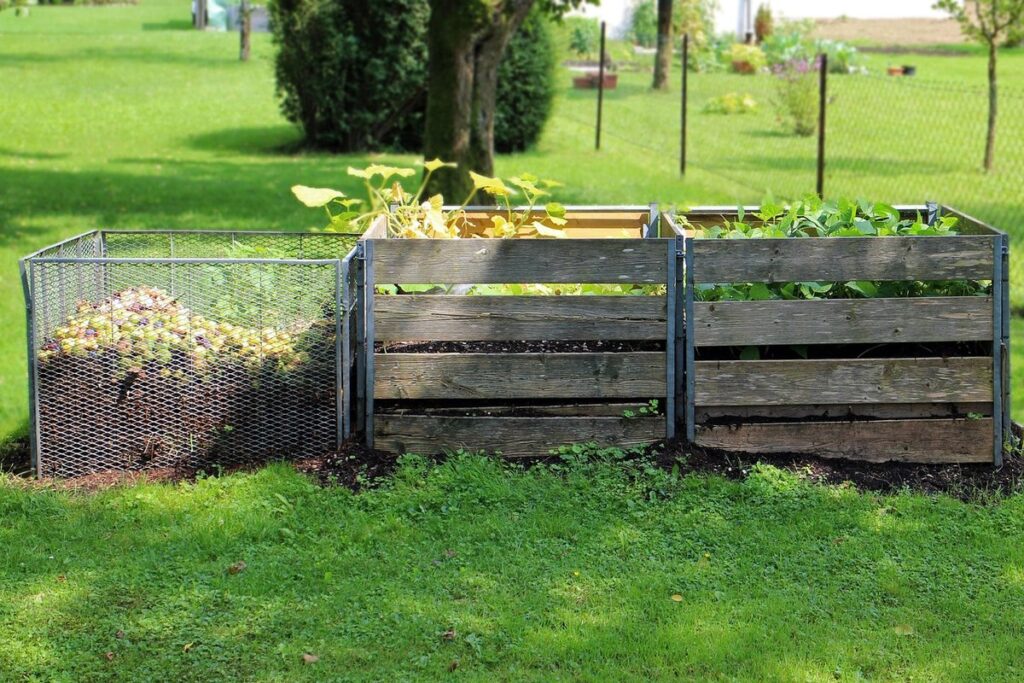
Composting is a natural process that breaks down organic materials into a nutrient-rich soil amendment. At its core, composting involves four key components: the carbon-to-nitrogen ratio, moisture levels, and aeration requirements. The ideal carbon-to-nitrogen ratio is between 25:1 to 30:1, meaning that for every part of “green” materials (high in nitrogen), you need three to four parts of “brown” materials (high in carbon).
To achieve this balance, start by adding a mix of brown materials like dried leaves, shredded newspaper, or cardboard. These provide the necessary carbon-rich ingredients. Next, add green materials such as food scraps, grass clippings, or manure. To maintain optimal moisture levels, aim for a damp, not soggy, consistency – similar to a squeezed-out sponge.
Aeration is also crucial, ensuring that oxygen reaches all areas of the pile. You can achieve this by regularly turning your compost heap, adding bulking agents like straw or wood chips, or creating a more layered structure. By understanding and balancing these fundamental principles, you’ll be well on your way to successful composting – a critical process in Bokashi vs Composting: A Comprehensive Guide.
Choosing the Right Materials for Compost
When it comes to creating a nutrient-rich compost pile, choosing the right materials is essential. You’ll want to focus on including a mix of “green” and “brown” materials. Green materials like kitchen scraps, grass clippings, and fresh leaves are high in nitrogen and will help speed up the decomposition process. These can include fruit and vegetable peels, eggshells, and coffee grounds.
On the other hand, brown materials like dried leaves, twigs, and shredded newspaper provide carbon and help balance out the nitrogen levels. Aim for a mix of 2/3 brown materials to 1/3 green materials to create an optimal composting environment.
It’s also essential to avoid adding certain items to your compost pile. These include meat, dairy products, oils, and pet waste, as they can attract pests and create unpleasant odors. Additionally, don’t add weeds with seeds, as they may sprout in the finished compost. By selecting the right materials and avoiding the wrong ones, you’ll be well on your way to creating a nutrient-rich compost that will help your garden thrive.
Troubleshooting Common Composting Issues
Composting can be a straightforward process, but sometimes issues arise that may deter you from continuing. Common problems like odors, pests, and inadequate decomposition can occur if the composting conditions are not met. For instance, if the carbon-to-nitrogen ratio is off, it can lead to unpleasant smells or attract unwanted critters.
To tackle these problems, maintain a balance of green (nitrogen-rich) and brown (carbon-rich) materials in your pile. This includes adding plenty of leaves or shredded newspaper alongside food scraps and grass clippings. Regular turning of the compost also helps ensure that air reaches all parts of the pile.
Another solution is to add an inoculant, such as effective microorganisms (EM), which can help break down organic matter quickly. Additionally, monitoring temperature levels – ideal temperatures range between 130°F and 140°F – will indicate if your compost is maturing correctly.
By staying vigilant and making adjustments as needed, you’ll be able to create nutrient-rich soil for your garden without any setbacks.
Bokashi vs Composting: Key Differences and Similarities
When it comes to turning kitchen scraps into nutrient-rich soil, you’re likely weighing two popular options: bokashi and composting. Let’s dive into the key differences between these eco-friendly methods.
Similarities Between Bokashi and Composting
At first glance, bokashi and composting may seem like vastly different processes. However, upon closer inspection, it’s clear that they share some key similarities. One of the most significant similarities between bokashi fermentation and traditional composting is their reliance on microorganisms to break down organic matter.
Just as composting relies on beneficial microbes to decompose food scraps and yard waste into nutrient-rich soil, bokashi also utilizes a specific mix of microorganisms to ferment organic materials. In both cases, the goal is to create an environment that fosters the growth and activity of these microscopic helpers, allowing them to do the heavy lifting when it comes to breaking down complex organic compounds.
But what’s particularly interesting about this similarity is how it highlights the importance of creating a conducive environment for microbial activity in both bokashi and composting. This means maintaining optimal conditions such as temperature, moisture, and oxygen levels – factors that are crucial for supporting the growth and reproduction of beneficial microbes. By understanding these shared principles, you can leverage your knowledge to fine-tune either process and get the most out of your organic waste management efforts.
Key Differences and Trade-Offs
When it comes to reducing waste and creating nutrient-rich soil, two popular options come to mind: bokashi and composting. While both methods have their benefits, they also have some key differences that set them apart.
One of the main differences between bokashi and composting is cost. Composting can be a relatively inexpensive process, as it often involves simply collecting food scraps and yard waste in a designated area. Bokashi, on the other hand, requires a specific bin and inoculant, which can add up quickly – especially for larger households or commercial operations.
Another consideration is space requirements. Composting typically requires a dedicated area with adequate airflow to facilitate decomposition. Bokashi bins, by contrast, are designed to be compact and can often fit under sinks or in small kitchens.
In terms of nutrient retention, both methods have their strengths. Composting tends to break down organic matter into a more stable form, which is ideal for long-term soil health. Bokashi, on the other hand, produces a liquid fertilizer that’s rich in nutrients – perfect for immediate use in gardens or houseplants.
Ultimately, the choice between bokashi and composting comes down to personal preference, space constraints, and your specific needs as a gardener or homeowner. By understanding these key differences, you can make an informed decision about which method works best for you.
The Environmental Impact of Bokashi vs Composting
When it comes to reducing waste and minimizing our ecological footprint, we need to consider both bokashi and composting as viable options. Let’s explore how each method affects the environment in this crucial comparison.
Carbon Footprint Comparison
When comparing bokashi and composting methods, it’s essential to consider their environmental impact. A study by the University of California, Davis found that composting generates significantly more greenhouse gas emissions than bokashi. Composting produces 1.2 times more methane and 6.8 times more nitrous oxide compared to bokashi.
This disparity is largely due to the oxygen levels required for each process. Bokashi fermentation occurs in an anaerobic environment, whereas composting relies on aerobic decomposition. The anaerobic conditions in bokashi reduce greenhouse gas emissions by 30-50% compared to composting.
Another critical factor is resource usage. Composting requires a larger area and more labor-intensive maintenance. In contrast, bokashi can be processed indoors using a compact fermenter, minimizing waste and water consumption. This difference becomes particularly significant for urban households with limited space or those prioritizing efficient resource management.
Biodiversity Benefits and Challenges
When it comes to both bokashi and composting, their impact on local ecosystems is a crucial aspect to consider. One of the primary benefits of using either method is soil enrichment. Bokashi, for instance, produces a rich liquid fertilizer that can be applied directly to plants or mixed with soil to boost its fertility. Composting, on the other hand, creates a nutrient-rich humus that enhances soil structure and supports microbial life.
However, there are also challenges associated with both methods. Pests, such as rodents and flies, can be attracted to bokashi’s fermented liquid, which may necessitate additional measures like covering or relocating the container. Composting, while generally odor-free when done correctly, can sometimes produce unpleasant smells if not aerated properly or if too many “green” materials are added.
To mitigate these issues, it’s essential to maintain proper hygiene and monitoring practices. Regularly check on both bokashi and compost piles for signs of pests or odor, and take corrective action as needed. By striking a balance between benefits and challenges, you can enjoy the rewards of using either method while minimizing their negative impacts on your local ecosystem.
Tips for Implementing a Successful Bokashi or Composting System
Now that you’ve decided on your preferred method, let’s dive into implementing it successfully, with some valuable tips and tricks to get you started right away.
Getting Started with Bokashi: Tips and Tricks
Getting started with bokashi can seem daunting, but with these practical tips and tricks, you’ll be well on your way to reducing food waste and creating a nutrient-rich fertilizer for your garden.
First things first: choose the right location for your bokashi bin. You’ll want it in a spot that’s easily accessible, yet out of sight from the rest of your kitchen. Consider placing it under the sink or in a corner near the trash cans. Just be sure to keep it away from direct sunlight and moisture.
Proper hygiene is also essential when using a bokashi system. Always wash your hands before handling the fermented mixture, and make sure to clean the bin regularly with soap and water. This will prevent any unpleasant odors or pests from taking up residence in your kitchen.
When setting up your bokashi system, start by adding 1-2 pounds of waste per day. Be mindful of what you’re putting in – avoid citrus peels, onions, and other strong-smelling foods that can disrupt the fermentation process. Also, keep an eye out for mold or sliminess on the surface of the mixture; if you notice either, it’s likely due to too much moisture. Simply reduce the amount of liquid added or adjust your bin’s aeration.
As with any new system, troubleshooting is inevitable. If you notice issues with odors, pests, or slow fermentation, refer to your bokashi manual or online resources for guidance.
Optimizing Your Compost Pile for Success
Creating an optimal compost pile is crucial for successful decomposition and nutrient-rich end products. To achieve this, you must consider three key factors: carbon-to-nitrogen ratios, moisture levels, and aeration requirements.
A balanced carbon-to-nitrogen ratio is essential for maintaining the perfect environment for microorganisms to break down organic matter. Aim for a mix of 2/3 “brown” materials (dry leaves, straw, or shredded newspaper) and 1/3 “green” materials (food scraps, grass clippings, or fresh manure). This ratio encourages beneficial bacteria growth while minimizing pathogens.
Maintaining adequate moisture levels is vital; the pile should be kept moist but not soggy. Aim for a consistency similar to a damp sponge. If it’s too dry, microorganisms will struggle to break down materials, and if it’s too wet, anaerobic conditions can occur.
Regular aeration is also necessary to prevent anaerobic environments that lead to unpleasant odors and pests. Add brown materials like dried leaves or straw on top of the pile every week or two to maintain air circulation and oxygen flow. Monitor your pile’s temperature; it should reach 130-140°F (54-60°C) within a few days, indicating optimal microbial activity. By balancing these factors, you’ll create an ideal composting environment for successful decomposition.
Frequently Asked Questions
Can I mix bokashi with composting to create a hybrid system?
You can definitely experiment with combining bokashi fermentation with traditional composting methods. This approach is often called “bokashi-composting” and allows you to leverage the benefits of both processes. However, it’s essential to ensure that your bokashi fermented materials are fully broken down before adding them to your compost pile.
How long does it take for bokashi fermentation to complete?
The fermentation process typically takes anywhere from 1-14 days, depending on factors like temperature, oxygen levels, and the type of microorganisms used. It’s crucial to monitor your bokashi system regularly to ensure that the fermentation is progressing as expected.
Can I use bokashi for composting large quantities of food waste?
While bokashi can be an excellent solution for managing kitchen scraps, it might not be the most efficient method for processing large amounts of organic matter. In such cases, traditional composting methods or more advanced systems like vermicomposting might be more suitable.
What happens if I leave my bokashi fermented materials out too long before adding them to my garden?
If you delay using your bokashi-fermented materials, the liquid they produce (often referred to as “bokashi tea”) may break down further and lose some of its beneficial properties. It’s recommended to use these materials within a few weeks of completion to ensure maximum nutrient retention.
Can I use bokashi for composting meat and dairy products?
While bokashi is generally effective at breaking down organic matter, it’s not the best method for handling high-protein foods like meat and dairy products. These can attract pests or create unpleasant odors if not managed properly. It’s recommended to separate these items from your regular kitchen waste and use a different composting method specifically designed for high-nitrogen materials.