
Making compost at home is one of the simplest and most effective ways to reduce your waste, get closer to nature, and create a nutrient-rich soil amendment for your garden. With a little effort and patience, you can turn kitchen scraps, yard trimmings, and other organic materials into a valuable resource that will improve soil health and support healthy plant growth. But where do you start? In this comprehensive guide, we’ll walk you through the basics of composting techniques, highlighting the benefits and challenges of creating your own compost at home. We’ll cover everything from setting up your compost bin to troubleshooting common issues, so you can create nutrient-rich compost that will give your plants the boost they need to thrive.
Understanding the Basics of Composting
Let’s get started on the basics: composting is a natural process that breaks down organic materials into a nutrient-rich soil amendment, and it all begins with understanding what can and cannot be composted.
What is Composting?
Composting is a natural process of breaking down organic materials into a nutrient-rich soil amendment that benefits plants and the environment. At its core, composting involves taking food scraps, yard waste, and other carbon-rich materials, and combining them with nitrogen-rich ingredients to create a balanced blend. This mix is then left to decompose, resulting in a dark, earthy-smelling humus that can be used to enrich soil, improve water retention, and support healthy plant growth.
By composting at home, you’re not only reducing your waste output but also creating a valuable resource for your garden or indoor plants. Composting is an essential aspect of sustainable living, as it helps minimize the need for synthetic fertilizers and reduces greenhouse gas emissions associated with food production. In fact, if every household in the US composted just one-third of their organic waste, we could reduce landfill waste by 30 million tons per year.
As you begin your composting journey, remember to start small and be patient – it’s a process that requires time, effort, and attention to detail.
Types of Composting Methods
Composting can be done using various methods, each with its own set of advantages and disadvantages. One of the most common methods is cold composting, where organic materials are simply piled up and allowed to break down naturally over time.
Hot composting, on the other hand, involves actively managing a compost pile to speed up the decomposition process. This method requires frequent turning of the pile to ensure oxygen flow and mixing of the materials.
Vermicomposting is another popular method that uses worms to break down organic matter into nutrient-rich compost. This method is ideal for indoor composting and can be used in small spaces.
Ultimately, the choice of composting method depends on your specific needs and environment. If you have limited space or prefer a low-maintenance approach, cold composting may be suitable. However, if you’re looking to create compost quickly, hot composting could be the way to go. For indoor composting, vermicomposting is an excellent option.
Benefits of Home Composting
Composting at home offers numerous benefits that extend beyond just reducing waste. One of the most significant advantages is the improvement of soil health. Compost acts as a natural fertilizer, rich in essential nutrients and micronutrients that promote healthy microbial activity in the soil. This leads to better water retention, increased crop yields, and improved plant growth.
By making compost at home, you can reduce your reliance on synthetic fertilizers, which not only harm the environment but also pollute groundwater sources. Composting also helps reduce greenhouse gas emissions by diverting organic waste from landfills, where it would otherwise decompose anaerobically, releasing methane – a potent climate change contributor.
Reducing waste is another critical benefit of home composting. According to the Environmental Protection Agency (EPA), approximately one-third of municipal solid waste in the United States is food scraps and yard trimmings. By composting these materials at home, you can significantly decrease your household’s contribution to landfills and conserve valuable resources.
When done correctly, home composting can have a profound impact on both your immediate environment and the broader ecosystem. By implementing this simple yet effective practice, you’ll be taking a significant step towards creating a more sustainable future for yourself and generations to come.
Choosing the Right Materials
When selecting materials for your compost pile, it’s essential to choose a mix of “green” and “brown” items that balance moisture and carbon levels. Let’s explore these crucial choices together.
Green Materials: What to Add
When it comes to making compost at home, incorporating green materials is crucial for creating a nutrient-rich blend. Green materials are high in nitrogen and will help speed up the decomposition process.
Key green materials to add to your compost pile include food scraps, grass clippings, and manure from herbivores like horses or cows. These items are rich in nitrogen and will provide essential nutrients to your plants. For example, banana peels are a great source of potassium, while eggshells are high in calcium.
To balance out the nitrogen-rich green materials, it’s essential to also include brown materials like dried leaves or shredded newspaper. Aim for a mix of 2/3 brown materials and 1/3 green materials. This will ensure your compost pile breaks down efficiently without creating anaerobic conditions.
When adding green materials, remember to balance their quantity according to the carbon-to-nitrogen ratio in your compost pile. A general rule of thumb is to maintain a mix with 25-30% nitrogen content from the green materials.
Brown Materials: Bulking Agents
When incorporating brown materials into your compost pile, you’re not just adding dry leaves or shredded newspaper for aesthetic purposes. These carbon-rich additions play a crucial role in balancing the “green” materials (nitrogen-rich) and creating a stable environment for decomposition to occur.
One of the primary functions of brown materials is to add bulk to the compost pile. This might seem counterintuitive, but having enough space between individual components allows oxygen to penetrate more easily, promoting healthy microbial activity. A general rule of thumb is to maintain a mix of 2/3 “brown” materials and 1/3 “green” materials in your compost pile.
Some common brown materials you can use include:
• Shredded newspaper or cardboard boxes
• Dry leaves or small twigs
• Straw or hay
When adding these materials, aim for a mix that balances the moisture levels. Aim for damp but not soggy conditions to prevent anaerobic decomposition and attract pests.
Avoiding Problematic Items
When it comes to creating a healthy compost pile, what you don’t add is just as important as what you do. There are certain items that can contaminate the composting process and even render your compost unusable for gardening. Let’s explore some common problematic items to avoid adding to your pile.
Plastic, synthetic materials, and certain food scraps should be kept out of your compost pile at all costs. Plastic, in particular, does not break down over time and can retain its shape even after being crushed into small pieces. This can lead to a tangled mess in your compost pile, making it difficult to turn and aerate.
Other items to steer clear of include meat, dairy products, oils, and pet waste. These materials can attract pests, create unpleasant odors, and introduce pathogens that can harm plants. Additionally, avoid adding weeds with seeds as they can sprout in your finished compost and become a nuisance in your garden. By keeping these problematic items out of your pile, you’ll be well on your way to creating nutrient-rich compost for your home garden.
Setting Up Your Compost Pile
First, let’s create a solid foundation for your compost pile by selecting the perfect location and assembling all the necessary materials. This will help ensure a healthy and thriving compost ecosystem.
Selecting a Location for Your Compost Bin
When selecting a location for your compost bin, it’s essential to consider three key factors: sunlight, accessibility, and proximity to water sources. Sunlight is crucial for the decomposition process as it provides the necessary heat for breaking down organic matter. Ideally, place your compost bin in a spot that receives direct sunlight for at least 6 hours a day.
Accessibility is another vital consideration, making sure you can easily access the bin to add materials and turn the pile. Position the bin near a walkway or path to avoid having to navigate through dense vegetation. Additionally, consider the proximity to water sources, such as a hose or rain barrel. Having easy access to water will save you time and effort when maintaining your compost.
As a general rule of thumb, place your compost bin in an area with good air circulation, ideally at least 2-3 feet away from any walls or other structures. This will help prevent moisture buildup and promote healthy decomposition.
Choosing the Right Compost Bin
When it comes to setting up your compost pile, choosing the right compost bin is crucial. Not only does it help maintain a clean and organized space, but it also plays a significant role in the overall efficiency of the composting process.
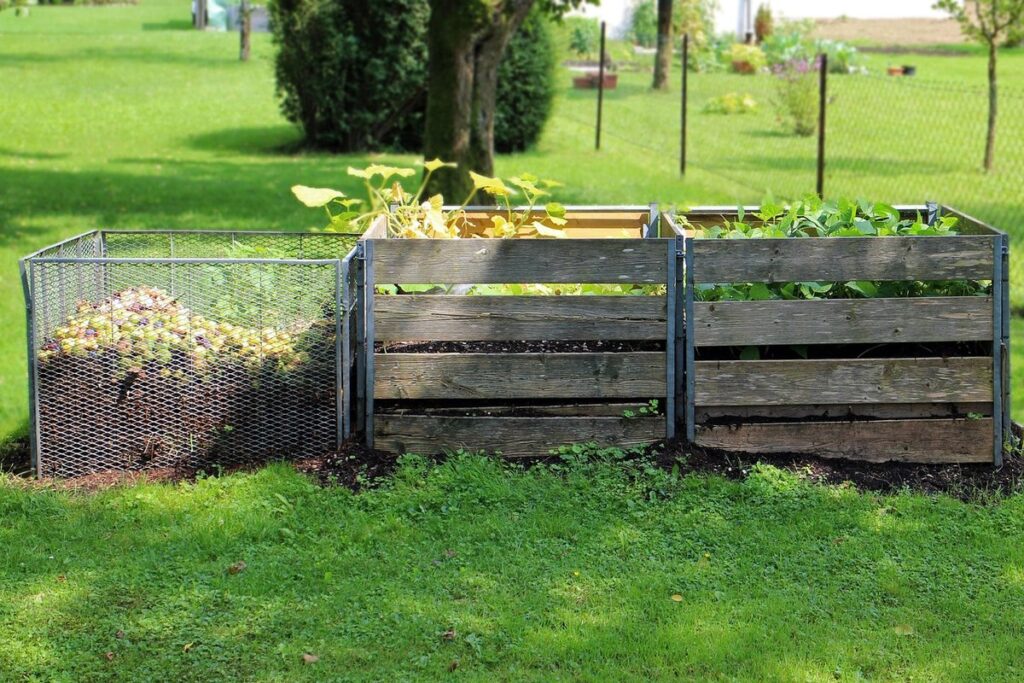
You have several options when it comes to compost bins. For a budget-friendly and eco-friendly approach, consider using wooden pallets to create a bin. This not only reduces waste but also adds a rustic touch to your garden or yard. On the other hand, plastic bins are another popular choice due to their affordability and ease of cleaning.
For those interested in vermicomposting, worm towers are an excellent option. These bins allow for optimal airflow and moisture control, creating an ideal environment for worms to break down food waste into nutrient-rich compost. Consider factors such as size, material, and aeration when selecting the perfect bin for your needs.
Layering Your Compost Pile
When layering your compost pile, it’s essential to create a balanced mix of green and brown materials. Green materials, such as food scraps and grass clippings, are high in nitrogen and will help speed up the decomposition process. Brown materials, like dried leaves and shredded newspaper, are high in carbon and will provide structure and balance out the moisture levels.
Aim for a mix that’s 2/3 brown materials to 1/3 green materials. Start with a layer of brown material at the bottom of your pile, followed by a layer of green material. Add another layer of brown, then repeat this process, ending with a layer of brown on top. This layered approach ensures even decomposition and minimizes odors.
Remember to maintain adequate moisture levels – not too wet, not too dry – and provide enough air circulation to prevent anaerobic conditions. Aim for a pile that’s about 3-4 feet high and has some space between each layer for airflow.
Maintaining Your Compost Pile
Now that you’ve created your compost pile, it’s essential to maintain it properly to ensure it continues to break down efficiently and produce nutrient-rich soil. This means monitoring moisture, aeration, and pest control regularly.
Monitoring Moisture Levels
Monitoring moisture levels is crucial to maintaining a healthy compost pile. Ideally, you want to keep it like a damp sponge – not soggy wet but not dry either. If the pile becomes too wet, it can create anaerobic conditions that lead to unpleasant odors and attract pests. To check if your pile is too wet, perform the “squeeze test”: grab a handful of compost and squeeze it tightly. If water drips out, it’s too moist.
If this happens, you’ll need to turn the pile to aerate it, which will help speed up decomposition and reduce moisture levels. You can also add dry materials like shredded newspaper or straw to absorb excess moisture.
On the other hand, if your compost is too dry, it won’t decompose efficiently. To combat this, simply sprinkle water over the pile, but avoid soaking it. Aim for a balanced mix of “green” (nitrogen-rich) and “brown” (carbon-rich) materials to maintain optimal moisture levels. Regularly checking and adjusting the moisture level will help ensure your compost piles stays healthy and productive.
Turning and Aerating Your Compost
Turning and aerating your compost pile is crucial to maintaining optimal decomposition. By doing so regularly, you’ll ensure that oxygen reaches all areas of the pile, speeding up the process and reducing odors. The frequency of turning depends on several factors: the size of your pile, the moisture level, and the type of materials being composted.
As a general rule, turn your pile every 7-10 days to maintain aerobic conditions. This is especially important during hot summer months when decomposition accelerates rapidly. For smaller piles or those with high nitrogen content (e.g., food waste), you may need to turn more frequently – every 3-5 days.
When turning your compost, use a pitchfork or shovel to gently mix the materials without compacting them. Break down any clumps and add in some fresh brown materials like shredded newspaper or dry leaves to balance out the carbon-to-nitrogen ratio.
By incorporating regular turns into your routine, you’ll notice improved decomposition rates, reduced odors, and a healthier compost pile overall. This will result in higher-quality finished compost that’s perfect for fertilizing your garden beds.
Overcoming Common Challenges
Don’t let pests, odors, and slow decomposition ruin your composting experience. Address these common challenges with our expert guidance.
Pests can be a nuisance, but they’re easily managed by balancing green and brown materials in your pile. Aim for a mix of 2/3 “brown” items like dried leaves or shredded newspaper, which provide carbon-rich nutrients, and 1/3 “green” materials such as fruit and vegetable scraps or grass clippings. This balance prevents attracting pests like rodents, flies, and ants.
To further deter pests, ensure your pile has adequate aeration by turning it regularly and keeping it moist but not soggy. For strong odors, add a 4-6 inch layer of brown materials to absorb excess moisture and neutralize smells. If you’re experiencing slow decomposition, try adding more green materials or aerating the pile more frequently.
To maintain optimal decomposition rates, aim for regular “turning” sessions every 7-10 days during warmer months. This will ensure a balanced ecosystem and prevent anaerobic conditions that lead to unpleasant odors.
Harvesting Your Compost
Now that you’ve created a nutrient-rich compost, it’s time to harvest and use your hard work in your garden. Learn how to properly collect and utilize your finished compost.
Recognizing When It’s Ready
When it comes time to harvest your compost, you’ll know it’s ready when you notice certain signs. The texture is one of the most obvious indicators – a mature compost will be dark brown and crumbly, similar to potting soil. Imagine taking a handful of compost and gently squeezing it in your hand; if it holds its shape but easily crumbles, it’s done.
Another sign is color: a healthy compost pile should have turned from an initial mix of greens and browns into a rich, earthy brown. This color change can take anywhere from 2-3 months, depending on factors like temperature, moisture, and carbon-to-nitrogen ratio.
The aroma also plays a role in determining if your compost is ready – a mature pile should have no strong odors. If it smells sour or pungent, it’s likely not finished yet.
Using Your Finished Compost
Now that you’ve harvested your finished compost, it’s time to put it to good use. The possibilities are endless, and we’ll explore some exciting ways to utilize this valuable resource.
You can start by mixing a 2-3 inch layer of compost into the top 6-8 inches of soil in your garden beds. This will improve soil structure, increase its water-holding capacity, and provide essential nutrients for healthy plant growth. For example, adding compost to your tomato plants can result in a significant increase in fruit yield – up to 20% more tomatoes per plant!
Compost is also an excellent amendment for indoor plants. A small amount of finished compost mixed into potting soil can improve drainage, reduce the risk of overwatering, and provide beneficial microorganisms that promote healthy root development.
When using compost for landscaping purposes, consider mixing it with topsoil to create a rich, loamy blend ideal for new lawn installations or garden renovations. Not only will this improve soil fertility, but it will also reduce the need for synthetic fertilizers and pesticides in the long run.
Advanced Techniques and Considerations
Now that you’ve mastered the basics of composting, it’s time to take your skills to the next level with more advanced techniques for tackling common challenges. Let’s dive into some expert strategies for optimizing your home composting process.
Worm Composting: A Detailed Look
Worm composting, also known as vermicomposting, is an advanced technique that utilizes red wiggler worms to break down organic waste into a nutrient-rich compost. This method offers several benefits over traditional composting, including faster decomposition rates and the ability to process high amounts of food waste.
To set up a worm composting system, you’ll need a container with adequate aeration and moisture levels. A 12-inch deep plastic bin or a wooden pallet-based setup works well. Add a 4-6 inch layer of bedding material, such as coconut coir or shredded newspaper, to support the worms’ movement. Introduce 1-2 pounds of red wiggler worms, which can consume up to half their body weight in food waste daily.
Maintenance involves regular feeding with vegetable scraps and fruit peels, maintaining optimal moisture levels (50-60%), and monitoring pH levels between 6.5-7.5. Harvest the worm castings after 2-3 months when they’re dark and crumbly. This vermicompost is ideal for seed starting and potting mixes due to its high nutrient content and microbe-rich properties. With proper setup and care, worm composting can be a game-changer for home gardeners looking to optimize their waste management and create a sustainable soil amendment.
Composting for Specific Environments
Composting for Specific Environments can be challenging, especially when faced with unique environmental challenges. For instance, if you live in a small apartment or have limited outdoor space, traditional composting methods may not be feasible.
One solution is to use indoor composting bins or vermicomposting (worm composting) systems. These compact units allow for efficient decomposition of organic matter within a small footprint. For example, the Worm Factory 360 system can process up to 4 pounds of food waste per week in a space roughly the size of a shoebox.
Another consideration is extreme temperatures. In areas with extremely hot or cold climates, it’s essential to choose composting methods that can tolerate these conditions. Some options include using heat-tolerant microorganisms, such as those found in certain compost teas, or incorporating shade-providing structures to mitigate temperature fluctuations.
To adapt your composting method to accommodate unique environmental challenges, consider the following tips:
• Assess your space constraints and choose a compact composting system.
• Select materials that can withstand extreme temperatures.
• Research local climate conditions and select microorganisms suitable for those conditions.
• Monitor and adjust your composting process as needed to ensure optimal decomposition.
Additional Tips and Best Practices
To ensure your compost pile remains healthy and odor-free, it’s essential to maintain a balance of “green” and “brown” materials. This means incorporating equal parts of nitrogen-rich food scraps (greens) and carbon-rich dry leaves or straw (browns) into your pile. Regularly monitoring moisture levels is also crucial – aim for a consistency similar to a damp sponge.
Another key consideration is turning your compost regularly, ideally every 7-10 days. This helps speed up the decomposition process, ensuring your compost breaks down efficiently and minimizing odors. When adding new materials, don’t overcrowd your pile; instead, add small batches to maintain airflow and prevent anaerobic conditions that can lead to unpleasant smells.
Integrating composting into your daily routine is also crucial for success. Set aside a dedicated space for collecting food scraps and yard waste, making it easy to regularly add new materials to the compost pile. By adopting these habits, you’ll be well on your way to creating nutrient-rich compost at home without unnecessary hassle or odors.
Frequently Asked Questions
How often should I turn and aerate my compost pile?
Regular turning and aeration are crucial for maintaining oxygen flow, speeding up decomposition, and preventing odors. Aim to turn your compost every 7-10 days during the active phase, using a pitchfork or shovel to gently mix the materials. This will ensure that all ingredients break down evenly and prevent matting.
Can I compost meat, dairy, and oily foods?
No, it’s not recommended to compost high-protein foods like meat, dairy, and oily items as they can attract pests, create odors, and slow down decomposition. Stick to carbon-rich materials (e.g., leaves, straw) and nitrogen-rich ingredients (e.g., vegetable scraps, grass clippings).
How long does it take for my compost to be ready?
The time frame varies depending on factors like the quality of your inputs, pile size, and temperature fluctuations. Generally, expect 2-6 months for a standard compost bin. Monitor your pile’s color (dark brown or black), texture (crumbly), and smell (earth-like) to gauge readiness.
Can I use weeds in my compost?
Weeds can be added to your compost pile, but they must first be free of seeds and roots to prevent re-growth. Remove any remaining seeds, trim the stalks, and add them along with other green materials. However, avoid adding invasive species like Japanese knotweed or autumn olive.
How do I deal with pests in my compost?
Common pests include fruit flies, rodents, and ants. To minimize infestations, maintain good airflow, balance carbon-to-nitrogen ratios, and cover your pile regularly. You can also try adding certain herbs (e.g., mint, basil) or spices to deter pests naturally. If issues persist, consider using a physical barrier or consulting local gardening experts for advice.