
Planting onion sets can be a daunting task for gardeners, but with the right guidance, you’ll be harvesting a bountiful crop in no time. Choosing the right onion sets is crucial to ensure a successful harvest, and it’s essential to select varieties that are disease-resistant and well-suited to your climate. But before we dive into choosing the perfect onion sets, let’s start from scratch: preparing the soil for planting. A well-prepared bed is key to healthy onions, and in this article, we’ll cover everything you need to know to get started – from selecting and preparing onion sets to caring for them as they grow. By following our step-by-step guide, you’ll be on your way to a thriving onion crop that will add flavor and freshness to your kitchen all season long.
Choosing the Right Onion Sets
When it comes to planting onion sets, selecting the right ones is crucial for a bountiful harvest. Let’s explore how to choose high-quality onion sets that will thrive in your garden.
What to Look for in Onion Sets
When selecting onion sets for planting, it’s essential to choose ones that are healthy and have good growth potential. Look for sets with a diameter of about 1-2 inches (2.5-5 cm) and a firm, compact shape. Avoid sets that are too large or too small, as they may not perform well in your climate.
Healthy onion sets should have a good balance between green and white tissues at the top. The base of the set should be compact and free of any visible signs of rot or disease. Be sure to inspect the sets carefully for any signs of mold, soft spots, or cracks.
Avoid sets that are too old or have been stored improperly, as they may not germinate well. Instead, opt for fresh onion sets that have been specifically grown for planting. When selecting sets, look for those with a good balance between green and white tissues at the top. This will give you the best chance of getting healthy, flavorful onions from your crop.
It’s also essential to consider the variety when choosing onion sets. Some varieties are better suited for specific climates or growing conditions, so be sure to choose one that is suitable for your area.
Types of Onion Sets Suitable for Home Gardening
When it comes to choosing onion sets for home gardening, you have several types to choose from, each with its unique characteristics and benefits. Let’s take a look at some of the most popular varieties that are ideal for small-scale gardeners.
Top Performing Varieties
Some popular onion set varieties include ‘Redwing’, ‘Stuttgarter’, and ‘Ebenezer’. These sets are known for their high yields, disease resistance, and versatility in cooking. For instance, ‘Redwing’ onions have a sweet flavor and are perfect for salads, while ‘Stuttgarter’ has a milder taste and is great for boiling.
Disease-Resistant Varieties
If you’re looking to minimize the risk of diseases such as downy mildew or botrytis, consider using sets like ‘Beltsville Bunching’ or ‘Welsh Onion’. These varieties have built-in resistance to common onion diseases and can thrive in a variety of growing conditions.
Other Types Worth Mentioning
If you’re interested in trying something different, look for heirloom or specialty onion sets like ‘Candy’, which has a sweet, mild flavor. Alternatively, try ‘Shallots’ or ‘Scallions’ for a more delicate taste and texture.
When selecting onion sets, make sure to check the packaging for any specific growing requirements or recommendations from the supplier.
Preparing the Soil
Before you start planting those onion sets, it’s essential to prepare your soil properly. This involves loosening and aerating it to create a welcoming environment for your onions’ growth.
Testing and Amending the Soil
Testing and amending the soil is crucial before planting onion sets. This step ensures that your onions have the best chance to grow and thrive. First, let’s talk about testing your soil pH and nutrient levels. You can purchase a DIY kit or send a sample to a lab for analysis. Typically, onions prefer a slightly acidic to neutral soil pH between 6.0 and 7.0.
If your results show that your soil is too alkaline or low in essential nutrients like nitrogen, phosphorus, and potassium, you’ll need to make some adjustments. One simple way to amend your soil is by adding organic matter such as compost or well-rotted manure. This will not only improve the structure but also provide a boost of nutrients.
Another option is to use fertilizers specifically formulated for onions. Follow the instructions carefully and avoid over-fertilizing, which can cause more harm than good. For instance, if your test shows low nitrogen levels, you can add a balanced fertilizer like 10-10-10 N-P-K. This will provide the necessary nutrients without overwhelming the soil.
Creating a Suitable Onion Bed
When creating an ideal onion bed, spacing is crucial to prevent overcrowding and promote healthy growth. Plant individual sets 1-2 inches apart, allowing for good air circulation between them. This distance also enables easy access for thinning or weeding without damaging nearby plants.
In terms of depth, onions prefer a relatively shallow root zone, typically around 12-18 inches deep. Dig the bed to this depth and mix in 2-3 inches of compost or well-rotted manure to improve soil structure and fertility.
Drainage is also essential for onion beds. Onions don’t like standing water, so ensure your bed has adequate drainage channels or slopes to prevent waterlogging. Add a 1-inch layer of coarse grit or sand on top of the bed to help with excess moisture evaporation.
By considering these factors, you’ll create an optimal environment for your onions to thrive in. Remember to avoid planting onions where members of the Brassica family (broccoli, cauliflower) have previously grown to minimize the risk of club root disease.
Planting Onion Sets
Now that you have selected your onion sets, it’s time to plant them in a spot with full sun and well-draining soil. Follow these steps for successful planting.
When to Plant Onion Sets
When it comes to planting onion sets, timing is everything. The optimal time to plant onion sets varies depending on your region and climate. In general, it’s best to plant onion sets when the soil can be worked in the spring, typically around 4-6 weeks before the last frost date.
In warmer regions with mild winters, you may be able to plant onion sets as early as February or March. On the other hand, if you live in an area with harsh winters, it’s best to wait until the soil has warmed up and any chance of frost has passed. In areas with cool summers, such as coastal regions, you can plant onion sets in the fall for a spring harvest.
It’s also essential to consider the temperature range suitable for onion growth. Onion sets prefer temperatures between 35°F and 75°F (2°C and 24°C). If your region experiences frequent frost or extreme heat waves, it may be best to adjust your planting schedule accordingly.
Check the specific weather forecast for your area and plan accordingly. This will ensure that your onion sets have the best chance of thriving and producing a bountiful harvest.
How to Space Onion Sets Correctly
When planting onion sets, it’s crucial to space them correctly for optimal growth and air circulation. Overcrowding can lead to a host of problems, including increased susceptibility to disease and pests. To avoid these issues, make sure to leave enough space between each set.
A good rule of thumb is to plant the sets about 4-6 inches apart in rows that are 12-18 inches wide. This allows for adequate air circulation and prevents moisture from becoming trapped between plants. Crowded conditions can foster the growth of fungal diseases like botrytis, which can quickly spread through the crop.
To achieve optimal spacing, imagine a grid pattern when planting your onion sets. Start by digging trenches or holes that are about 6-8 inches deep, depending on the variety you’re growing. Then, gently place an onion set in each hole, making sure the base of the bulb is facing upwards. Leave enough space between plants to allow for easy access and air circulation. With proper spacing, your onion sets will have room to grow without becoming congested or vulnerable to disease.
Caring for Planted Onion Sets
Once your onion sets are planted, proper care is crucial to prevent diseases and ensure a bountiful harvest. Next, we’ll cover how to keep them happy until they’re ready for eating.
Watering and Moisture Requirements
Maintaining consistent moisture levels is crucial for onion sets to establish themselves and grow. Water them as soon as you plant them, making sure the soil is damp but not waterlogged. Keep the top 2-3 inches of soil consistently moist throughout the first few weeks after planting.
You’ll start to notice green shoots emerging from the soil within a week or two, signaling that your onion sets are sprouting. This is usually when you can begin to reduce watering frequency, as they’ve now developed a decent root system. However, it’s still essential to provide them with regular moisture during periods of drought.
Watering should ideally be done in the morning or early afternoon to allow for maximum absorption by the plants before nightfall. Avoid overwatering, which can lead to fungal diseases and other issues. Instead, monitor the soil’s moisture levels by inserting your finger into the dirt up to the knuckle; if it feels dry, it’s time to water.
Onion tops will continue to grow, reaching 6-12 inches tall before forming bulbs underground. Keep an eye on their development, adjusting watering schedules accordingly as needed.
Mulching and Weeding
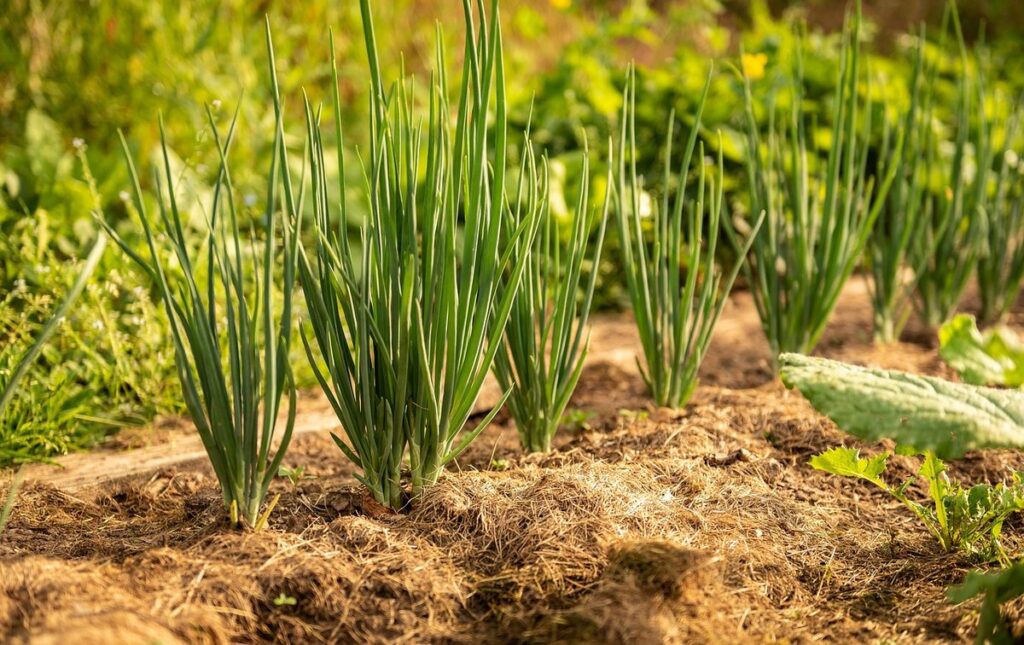
Mulching around your onion plants is an essential step in maintaining their health and promoting growth. Not only does it help suppress weeds that compete with your onions for water and nutrients, but it also regulates soil temperature, keeping the roots cooler during hot summer days and warmer during chilly spring mornings.
When choosing a mulch, opt for organic materials like straw, bark chips, or grass clippings. These won’t alter the pH level of your soil or introduce any potential toxins that could harm your onions. Apply a 2-3 inch layer of mulch around each plant, keeping it a few inches away from the base to prevent moisture buildup.
Mulching also has an added benefit: it helps retain soil moisture, reducing the need for frequent watering and minimizing evaporation. By creating a stable microclimate under the mulch, you’ll encourage your onion plants to focus their energy on growth rather than battling weeds or dealing with temperature fluctuations. Regularly replenish the mulch as needed to maintain its effectiveness and ensure a bountiful harvest of healthy onions.
Common Challenges and Pests
As you plant your onion sets, keep an eye out for common challenges and pests that can harm your crop, such as aphids and fungal diseases. These issues can be frustrating to deal with, but knowing what to expect can help you take preventative measures.
Identifying and Preventing Onion Diseases
Onion diseases can be devastating for home gardeners and professional growers alike. Downy mildew and white rot are two common fungal diseases that affect onions worldwide. To prevent these issues, it’s essential to recognize the symptoms early on.
Downy mildew appears as yellowing or pale green leaves with a whitish-gray growth on the underside. This disease thrives in humid environments, so if you notice your onion plants looking wilted or weak, check for this fungal growth. On the other hand, white rot manifests as soft, mushy areas around the neck of the bulb and can spread quickly through the soil.
Prevention is key when it comes to these diseases. Ensure good air circulation by spacing onion sets 6-8 inches apart. Avoid watering your onions in the evening, allowing excess moisture to evaporate overnight. Use crop rotation techniques and remove any affected plants promptly to prevent the disease from spreading. Consider using organic fungicides or introducing beneficial microorganisms like Trichoderma harzianum to promote a healthy soil ecosystem.
Managing Pests Like Aphids and Thrips
When planting onion sets, it’s essential to be aware of common pests that can damage your crop. Aphids and thrips are two of the most notorious ones. These tiny insects feed on the sap of onion plants, weakening them and making them susceptible to disease.
Aphids are soft-bodied, pear-shaped insects that reproduce quickly, often leading to infestations. Thrips, on the other hand, are tiny, slender insects with fringed wings. They’re often mistaken for whiteflies due to their similar appearance.
The lifecycle of these pests typically begins in early spring when temperatures rise above 50°F (10°C). As the onion plants grow, so do the aphid and thrip populations. To manage infestations organically, use neem oil or insecticidal soap to spray affected areas. You can also introduce beneficial insects like ladybugs or lacewings, which prey on these pests.
For preventive measures, ensure your soil is healthy by incorporating organic matter like compost or manure tea. This will promote a balanced ecosystem that discourages pest infestations. Planting onion sets in a location with good air circulation and adequate sunlight can also help prevent aphid and thrip populations from building up.
Harvesting and Storage
Now that you’ve successfully planted your onion sets, let’s move on to harvesting them at the right time and storing them properly to enjoy a continuous supply throughout the year. Proper storage is crucial for preserving your onions’ quality.
When to Expect Onion Harvests
When you plant onion sets in early spring, you can expect to harvest them within 90 to 120 days. However, this period can vary depending on factors such as weather conditions, soil quality, and the specific variety of onions you’re growing.
To determine when your onion set crop is ready for harvest, look for signs that indicate maturity. Check the tops of the plants; when they begin to yellow and fall over, it’s a sign that the bulbs are fully formed underground. Gently dig around one plant with a fork, being careful not to damage the onions.
If the bulb feels hard and heavy for its size, it’s ready to be harvested. If you want to check the size of your onions, carefully lift them out of the soil with your hands or a fork. For storage purposes, harvest onions when they’re mature but still dry; avoid digging them up too early, as this can cause moisture to accumulate and lead to rot.
Keep in mind that some onion varieties mature more quickly than others, so be sure to check the specific days-to-maturity for the variety you’re growing.
Storing Harvested Onions
When you’ve finally harvested your onions and they’re ready to be stored, it’s essential to preserve them correctly to maintain their quality. Proper storage is crucial not only for extending the shelf life of your onions but also for retaining their flavor and nutrients.
To start with, cured onions are ideal for long-term storage. Begin by spreading out the harvested onions in a single layer on a wire rack or tray, making sure they don’t touch each other. This allows air to circulate around them, which is vital for drying and curing. Place the rack in a warm, dry spot with good ventilation, away from direct sunlight. It may take 2-4 weeks for your onions to dry completely, depending on the weather conditions.
Once your onions are cured, you can store them in a cool, dark place such as a basement or a root cellar. Keep them in paper bags or mesh bags, making sure they’re not crushed or damaged during storage. It’s essential to keep your stored onions away from light sources and heat, as this can cause sprouting or rot.
If you don’t have a suitable location for storing cured onions, you can also dry them further by tying the tops of the bulbs together in small bunches. Hang these bunches upside down in a cool, well-ventilated area. This method is ideal for larger onion harvests and can help extend their storage life even longer.
It’s worth noting that onions stored at room temperature tend to sprout quickly due to ethylene gas production. So, store your cured onions in the refrigerator to slow down this process.
Frequently Asked Questions
What if I don’t have a large garden space, can I still grow onions?
If you’re short on space, consider growing onions in containers or even indoors using deep pots with good drainage. This will allow you to enjoy a bountiful onion crop without sacrificing valuable garden real estate.
How do I prevent common pests like aphids and thrips from damaging my onion crop?
To prevent these pesky insects, keep your onion bed free of debris and weeds, which can attract them. Regularly inspect your plants for signs of infestation, and consider using neem oil or insecticidal soap to control outbreaks.
Can I grow different types of onions together in the same bed?
While it’s technically possible, growing multiple onion varieties together may lead to overcrowding and competition for resources. For optimal results, stick with a single variety or group them by maturity date to avoid conflicts.
What happens if my onion sets rot before planting? Can I still use them?
If your onion sets show signs of rot or mold, it’s best to err on the side of caution and discard them. Rot can spread quickly through the bed, potentially ruining an entire crop. Only plant healthy sets that have a compact base and firm green growth.
How long after planting should I expect my onions to be ready for harvest?
The time between planting onion sets and harvesting mature bulbs varies depending on factors like climate, soil quality, and variety. Typically, you can expect onions to take around 100-120 days from planting to maturity in a warm, sunny location with adequate moisture.