
Hanging garlic is not just a decorative touch for your kitchen or dining area, but also a convenient way to add fresh flavor to your meals. With its numerous health benefits and versatility in cooking, it’s no wonder why many home cooks are looking for ways to grow and display hanging garlic. But what if you’re new to growing garlic? Or perhaps you’ve tried before with disappointing results? In this comprehensive guide, we’ll cover everything you need to know about growing, preparing, and displaying hanging garlic, from the benefits of different types to troubleshooting common care issues. Whether you’re a seasoned gardener or a beginner, our expert tips will help you get started on cultivating your own fresh, fragrant hanging garlic at home.
Benefits of Hanging Garlic
Hanging garlic not only adds a touch of rustic charm to your kitchen, but it also has numerous benefits that we’ll explore in more detail below. From repelling pests to improving air quality.
Why Hang Garlic?
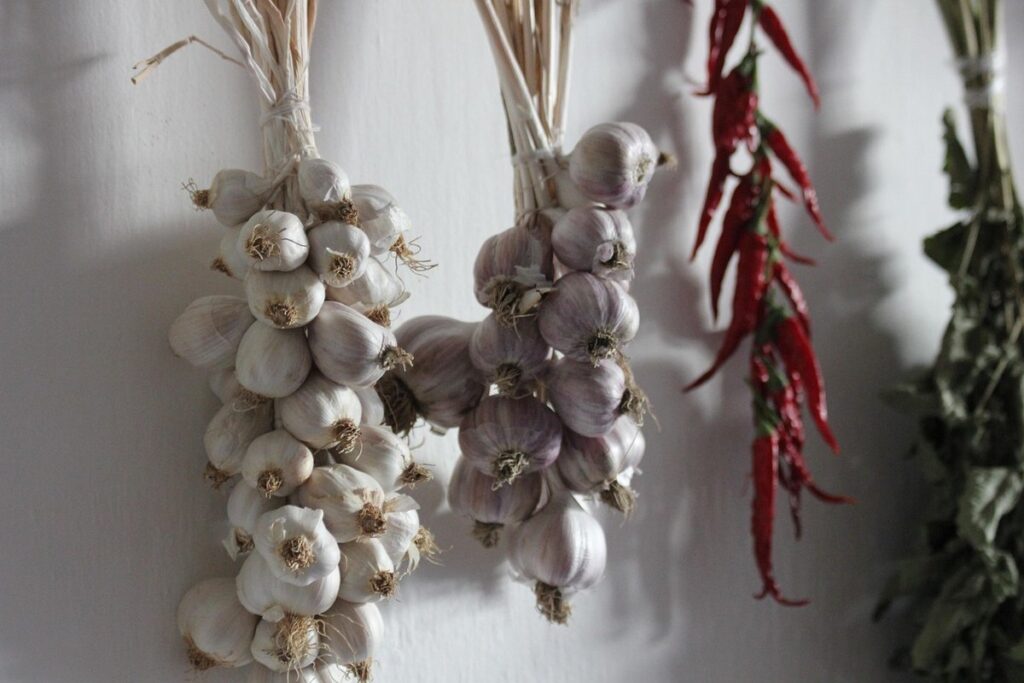
Hanging garlic offers numerous advantages that make it an excellent choice for preserving freshness, maximizing storage space, and adding a decorative touch to kitchens. By suspending bulbs from the ceiling or a hook, you can keep them away from direct sunlight, which can cause the cloves to become discolored and lose their potency.
This method also frees up valuable storage space in your pantry or cupboard, allowing you to store other kitchen essentials without sacrificing precious real estate. Plus, hanging garlic adds a decorative element to your kitchen, creating a visually appealing display that showcases your harvest.
To get the most out of this technique, choose a location with good air circulation and moderate temperature control (around 60-70°F). Avoid exposing hung garlic near direct heat sources or areas prone to moisture accumulation. With proper care, hanging garlic can remain fresh for several months, allowing you to enjoy its flavor and aroma throughout the year.
Types of Garlic Suitable for Hanging
When it comes to hanging garlic, not all varieties are created equal. While some types of garlic can be more challenging to dry and display than others, certain varieties stand out for their ease of use and aesthetic appeal.
Elephant garlic is a popular choice for hanging due to its large cloves and mild flavor. Its sturdy stems make it easy to dry and shape into attractive forms, perfect for displaying in your kitchen or as a gift. With elephant garlic, you can create stunning garlands or bundles that add a touch of elegance to any room.
Artichoke garlic is another variety well-suited for hanging. Its compact growth habit and delicate flavor make it an ideal choice for small spaces or those looking for a more subtle taste. Artichoke garlic’s stems are also relatively easy to dry, allowing you to create beautiful bunches that can be hung from your kitchen ceiling or used as a centerpiece.
Soft-neck garlic is perhaps the most commonly grown variety and is often preferred for its ease of use when it comes to hanging. Its longer stems make it simple to braid and shape into attractive forms, while its mild flavor ensures that it will complement a wide range of dishes.
Preparing Garlic for Hanging
Preparing garlic for hanging is a crucial step that requires attention to detail. First, you’ll need to dry and cure the harvested bulbs. This process helps to prevent mold and decay, ensuring that your garlic stays fresh for a longer period. Begin by spreading out the cloves in a single layer on a wire rack or paper towels, allowing air to circulate around each bulb.
Next, place the drying area in a cool, dark spot with good airflow. It’s essential to maintain a consistent temperature between 60°F and 70°F (15°C and 21°C) during this period. This process typically takes 1-2 weeks, depending on the humidity level. Once dried, gently brush off any excess debris from the bulbs.
To prepare the garlic for hanging, tie bunches of 5-7 cloves together using twine or string, leaving some slack to allow for easy airflow. You can also use paper clips or clothespins to secure the bulbs in place. This will make it easier to hang them in a dry, well-ventilated area, keeping them fresh and ready for harvest throughout the year.
Choosing the Right Location for Your Hanging Garlic
When selecting a spot for your hanging garlic, consider factors such as sunlight, air circulation, and proximity to water sources. This will ensure optimal growth and prevent damage.
Lighting Requirements
When it comes to growing hanging garlic, adequate lighting is essential for proper bulb development. Different types of light can significantly impact the size, quality, and overall health of your harvest.
Direct sunlight, which provides intense and focused rays, is ideal for hanging garlic. It stimulates photosynthesis, promoting healthy growth and encouraging the formation of larger bulbs. However, be cautious not to expose your garlic to extreme temperatures, as this can cause damage or even kill the plants. For regions with high direct sun exposure, consider providing some shade during peak hours to prevent scorching.
On the other hand, indirect sunlight is still beneficial but may result in smaller bulb sizes. Artificial lighting, such as LED grow lights, can be a reliable alternative for indoor growers or those with limited natural light. Aim for 12-14 hours of artificial light per day to mimic a normal photoperiod and promote optimal growth.
Keep in mind that the type and duration of light exposure will influence your garlic’s development. Monitor your plants’ response to lighting conditions and adjust accordingly to ensure a bountiful harvest.
Temperature Considerations
When it comes to growing hanging garlic, temperature fluctuations can significantly impact its growth and quality. Garlic is typically hardy and can thrive in a range of temperatures, but maintaining optimal temperatures between 35-50°F (2-10°C) is crucial for a healthy harvest.
Temperatures below 32°F (0°C) can cause damage to the garlic bulbs, leading to rot and decay. Conversely, temperatures above 60°F (15°C) can trigger rapid growth, resulting in an abundance of foliage but often at the expense of bulb formation.
To maintain optimal temperatures, it’s essential to provide your hanging garlic with protection from extreme temperature fluctuations. This can be achieved by placing the garlic in a shaded area during warmer periods or using mulch to insulate the soil and retain moisture. Regular monitoring of temperature is also crucial to prevent damage from frost or heat stress.
Aim for daytime temperatures between 40-50°F (4-10°C) and nighttime temperatures around 35-45°F (2-7°C). By maintaining a consistent temperature range, you’ll promote healthy growth and maximize your harvest.
Humidity Levels
When it comes to hanging garlic, maintaining optimal humidity levels is crucial for healthy growth and extended shelf life. High moisture can lead to mold and rot, causing your garlic to spoil quickly. Ideally, the relative humidity (RH) should be between 40-60% for most varieties of garlic.
However, some heirloom or specialty garlic types may require slightly higher RH, up to 70%. It’s essential to research specific needs for your particular variety. To gauge the humidity levels in your space, you can use a hygrometer – a simple and affordable device that provides an accurate reading.
To prevent excessive moisture from accumulating around your hanging garlic, ensure good air circulation by keeping some distance between bulbs or bunches. Regularly inspect your garlic for signs of mold or rot, removing any affected bulbs promptly to prevent the issue from spreading. By maintaining a stable and moderate humidity environment, you’ll be able to enjoy your harvest for longer periods and avoid common issues associated with high moisture levels.
Methods for Hanging Garlic
To display your harvested garlic in a unique and functional way, we’ll cover essential methods for hanging garlic indoors or outdoors. These techniques will help you showcase your crop while keeping it within easy reach.
Using Twine or Rope
When it comes to hanging garlic using twine or rope, you’ll want to make sure your bunches are secure and evenly spaced. Start by threading a length of twine or rope through the neck of each bulb, leaving about an inch of space between them. Tie a gentle knot at the top of each group, making sure not to wrap the string too tightly around the bulbs.
To prevent tangling, try using a soft, breathable material like cotton or hemp twine. Avoid using wire or metal clips, as they can damage the delicate skin of the garlic. You can also use a twist-tie or a small clip to secure the twine in place. To add some extra flair to your display, you can create a pattern by grouping different varieties of garlic together.
When hanging multiple bunches, make sure to space them evenly apart to prevent overcrowding and promote good air circulation. This will also help prevent moisture from accumulating and causing rot or mold to form. By following these simple steps, you’ll be able to enjoy your harvested garlic for months to come, and add a decorative touch to your kitchen or dining area.
Utilizing Garlic Hangers
Using specialized garlic hangers can take your garlic-hanging experience to the next level. These clever devices are designed specifically for hanging garlic, and they offer several benefits that make them a worthwhile investment.
For one, garlic hangers are incredibly easy to use. Simply thread the garlic stems through the loops or hooks provided, and hang the hanger in a dry, well-ventilated area. This makes it simple to keep your garlic clean and free of moisture, which is essential for maintaining its flavor and aroma.
Another advantage of garlic hangers is their space-saving design. Unlike traditional hanging baskets, garlic hangers are often compact and don’t take up much room, making them perfect for small gardens or indoor spaces. This means you can enjoy fresh garlic without sacrificing valuable storage space.
Garlic hangers also allow for optimal airflow around the bulbs, which helps to prevent rot and mildew from developing. By keeping your garlic dry and well-ventilated, you’ll be able to harvest it at its peak flavor and nutritional value.
Hanging Garlic from Rafters or Beams
When it comes to hanging garlic from rafters or beams, safety and stability are top priorities. To avoid damaging your structures, make sure to secure the garlic properly using sturdy hooks or screws that can support its weight.
First, choose a spot with good air circulation to keep the garlic dry and prevent mold growth. Then, measure the length of your rafter or beam to determine where you’ll hang the garlic, ensuring it’s evenly spaced for visual appeal. You can use twine or wire to tie the garlic cloves together in small bunches, making them easier to handle.
Next, attach a sturdy hook or screw directly into the rafter or beam, about 2-3 inches above the top of the garage door or entranceway. This will allow you to hang your garlic within easy reach while preventing it from becoming tangled or obstructing the doorway. As you hang each bunch, secure them gently but firmly to the hook to prevent swinging and damage.
Remember to check on your hanging garlic regularly to ensure it’s still stable and not causing any issues with the structure. With these simple steps, you can enjoy your harvest while keeping your rafters and beams safe from potential damage.
Caring for Your Hanging Garlic
Now that you’ve successfully harvested and hung your garlic, it’s essential to care for it properly to keep it fresh and healthy throughout the year. This involves regular maintenance tasks to prevent spoilage and preserve its flavor.
Monitoring for Pests and Diseases
Monitoring for Pests and Diseases is crucial when it comes to maintaining healthy hanging garlic plants. Common pests that affect hanging garlic include spider mites, mealybugs, and aphids, which can be identified by their characteristic white or cottony appearance on the leaves or stems.
Diseases such as powdery mildew, botrytis, and rust can also impact your harvest if left unchecked. Powdery mildew appears as a whitish coating on the leaves, while botrytis causes soft rotting of the bulbs. Rust is identified by orange or yellow spores on the underside of the leaves.
To address these issues promptly, inspect your hanging garlic plants regularly, checking for any signs of pests or diseases. If you notice any problems, use neem oil or insecticidal soap to control infestations and fungicides like copper-based products to treat fungal infections. Be sure to follow all label instructions carefully and take preventative measures such as maintaining good air circulation and watering habits.
Maintaining Optimal Moisture Levels
Maintaining optimal moisture levels is crucial for hanging garlic, as it can make all the difference between a successful harvest and a disappointing one. In ideal conditions, the soil around your garlic should be consistently moist but not waterlogged. This means checking the soil daily, especially during hot or dry spells, to ensure it’s not too dry.
In areas with high humidity, like the southeast United States, you may need to reduce watering frequency, while in drier climates, like the southwest, more frequent watering might be necessary. Be mindful of seasonal changes as well – winter months typically require less moisture than summer months when garlic is actively growing.
To adjust humidity levels based on your climate and season, start by observing the soil’s behavior: if it feels dry to the touch or crumbles easily, it’s time to water. Conversely, if water pools on the surface after watering, you’re overwatering. Adjust your schedule accordingly to keep the soil consistently moist but not waterlogged. This delicate balance will ensure a healthy and bountiful harvest of your hanging garlic.
Fertilizing Your Hanging Garlic
Fertilizing your hanging garlic is essential for promoting healthy growth, increasing yields, and enhancing the overall flavor of your harvest. By providing your plants with the necessary nutrients, you’ll be rewarded with robust, disease-resistant bulbs that will thrive throughout the season.
Organic options are an excellent choice for fertilizing hanging garlic. Compost tea, made by steeping compost in water, is a rich source of beneficial microbes that will help to improve soil structure and fertility. You can also use fish emulsion or bone meal as natural alternatives to synthetic fertilizers.
Inorganic options, such as balanced fertilizers like 10-10-10 NPK, can provide a quick boost of nutrients. However, be cautious not to over-fertilize, as this can lead to an abundance of foliage at the expense of bulb formation. A more targeted approach is to use a garlic-specific fertilizer that contains sulfur and other micronutrients essential for healthy growth.
Remember to fertilize your hanging garlic regularly, ideally once a month during the growing season. This will ensure that your plants receive a steady supply of nutrients, promoting optimal growth and development.
Displaying Your Hanging Garlic
Now that you’ve harvested your beautiful hanging garlic, let’s move on to showcasing it proudly. This section will cover creative ways to display your fragrant crop in style.
Choosing a Location with Good Air Circulation
When displaying your hanging garlic, choosing a location with good air circulation is crucial for optimal bulb development and overall health. Good air circulation helps to prevent fungal diseases that thrive in humid environments, which can be detrimental to your garlic harvest.
Consider the layout of your growing area or indoor space where you’ll be displaying your hanging garlic. Leave enough space between each plant to allow for gentle breeze movement around the bulbs. A general rule of thumb is to provide at least 6-8 inches (15-20 cm) of clearance around each plant.
Inadequate air circulation can lead to moisture buildup, causing bulbs to rot or become susceptible to pests. For instance, if you hang your garlic in a corner or against a wall where air tends to stagnate, the resulting humidity could encourage fungal growth and compromise bulb quality. Instead, opt for an area with good airflow, such as near a window or under a ceiling fan.
By providing sufficient space for air circulation, you’ll be well on your way to maintaining healthy hanging garlic that develops strong, disease-resistant bulbs.
Considering Aesthetics
When displaying your hanging garlic, aesthetics play a significant role in creating an inviting and visually appealing ambiance. Consider grouping similar varieties together to create a cohesive look, taking into account the distinct color profiles of each type. For instance, combine soft-hued varieties like ‘Silverskin’ with deeper-toned ones such as ‘Rocambole’.
To add texture and depth, intersperse hanging garlic bunches with other complementary elements like dried flowers or herbs. This can be particularly effective when combining delicate garlic types with robust, chunky displays of fresh herbs like rosemary or thyme.
Consider the overall shape and form of your display, balancing rounded shapes with more angular ones to create visual interest. For example, pairing delicate, drooping garlic clusters with upright bunches of ‘Rocambole’ can produce a striking contrast that draws the eye through the arrangement.
Incorporating decorative elements like woven baskets or wooden crates can add warmth and character to your display, while also providing a natural, earthy context for your hanging garlic.
Troubleshooting Common Issues with Hanging Garlic
Sometimes, despite our best efforts, problems can arise when growing and displaying hanging garlic. This section will help you tackle common issues and get your garlic thriving again.
Addressing Mold or Mildew
Mold and mildew can be a real issue when it comes to hanging garlic, especially if you live in a humid climate. If you notice white patches or a soft, fuzzy texture on the bulbs, don’t panic – it’s likely mold or mildew.
To identify the affected areas, take a closer look at your garlic for any signs of black spots, powdery growth, or an unpleasant odor. Remove any affected cloves immediately to prevent the mold from spreading. Gently twist and pull them off, making sure not to damage the surrounding bulbs.
Preventing future occurrences is key. Make sure your hanging area has good air circulation – try positioning it near a window or using fans to keep the air moving. You can also increase ventilation by pruning nearby plants or providing shade during hot summer months. Regularly inspecting your garlic and removing any affected areas will help prevent mold and mildew from taking over.
Dealing with Pests or Diseases
Recognizing pests or diseases on your hanging garlic is crucial to preventing them from spreading and ruining your harvest. Check for signs of infestation or infection regularly, especially during peak growing seasons. Look out for yellowing leaves, black spots, or white powdery residue, which can indicate issues like aphids, spider mites, or powdery mildew.
If you notice any problems, act quickly to prevent the issue from escalating. For example, if you’ve identified aphid infestation, use a gentle spray of soapy water to dislodge them without damaging your garlic plants. Neem oil can also be used as a more targeted solution. In cases of fungal diseases like powdery mildew, remove affected leaves and increase air circulation around the plants.
Maintain good hygiene practices when handling your hanging garlic to prevent transferring pests or diseases from one plant to another. Keep an eye out for signs of pests or diseases in neighboring plants and take action promptly to prevent the issue from spreading.
Conclusion: Maximizing Your Hanging Garlic Harvest
Now that you’ve successfully grown and harvested your hanging garlic, it’s time to maximize its full flavor potential and get creative with your bounty. Let’s explore ways to bring out the best in every clove.
Recap of Key Takeaways
To ensure you maximize your hanging garlic harvest, let’s recap the key takeaways from our comprehensive guide. Growing and displaying hanging garlic is a unique approach that requires attention to detail but offers numerous benefits.
Firstly, we discussed the importance of choosing the right variety for your hanging garlic. Look for compact or dwarf varieties specifically bred for this purpose, as they produce smaller bulbs that are easier to handle. These varieties also tend to have a stronger flavor and aroma, making them ideal for cooking.
Another crucial aspect is providing optimal growing conditions. Make sure your hanging garlic has sufficient sunlight, water, and nutrients. We also covered how to harvest your hanging garlic at the right time – when the tops begin to yellow and fall over.
In terms of displaying your harvest, we explored creative ways to showcase your hanging garlic in a visually appealing manner. From simple pots and planters to more elaborate display systems, there are plenty of options to suit any style or space constraint.
Ultimately, growing and displaying hanging garlic requires patience, dedication, and attention to detail. By following our guide’s advice and tips, you’ll be well on your way to enjoying a bountiful harvest that adds visual appeal and fresh flavor to your kitchen.
Final Tips for Success
As you’ve successfully grown and harvested your hanging garlic, it’s essential to remember that proper care and maintenance will continue to ensure a bountiful harvest for years to come. Regular watering is crucial, especially during periods of drought or high temperatures. Make sure the soil remains consistently moist but not waterlogged.
To promote healthy growth, provide your hanging garlic with adequate sunlight – at least 4-6 hours per day. Pruning and harvesting regularly will also help maintain its shape and encourage new bulb development. Avoid over-handling, as this can cause damage to the delicate foliage.
Keep in mind that a well-cared-for hanging garlic can be a perennial crop, thriving for 3-5 years or more with proper maintenance. Mulching around the base of your plants will also help retain moisture and suppress weeds. By following these simple tips, you’ll be able to enjoy an abundance of fresh, healthy garlic year after year. With minimal upkeep, your hanging garlic can become a beautiful and productive addition to your garden for years to come.
Frequently Asked Questions
Can I grow hanging garlic indoors if I don’t have a garden?
Yes, you can still enjoy the benefits of hanging garlic even without an outdoor garden. Choose a spot with bright, indirect sunlight and maintain optimal temperature conditions (around 60-70°F) for indoor growing.
What are some common pests or diseases that affect hanging garlic, and how do I prevent them?
Common issues include aphids, spider mites, and fungal infections like mold or mildew. To prevent these problems, ensure good air circulation, maintain optimal moisture levels, and inspect your plants regularly for signs of infestation.
Can I use any type of garlic for hanging, or are there specific varieties recommended?
While some garlic types work better than others for hanging, it’s not a hard and fast rule. Choose varieties that are known for their ease of storage and handling, like ‘Silverskin’ or ‘Artichoke’. Research the specific growing requirements for your chosen variety.
How do I fertilize my hanging garlic to promote healthy growth and flavor?
Fertilize your hanging garlic with a balanced, water-soluble fertilizer (10-10-10 NPK) during the growing season. Dilute the fertilizer to half the recommended strength to avoid burning the roots. Also, consider using compost tea as a natural alternative.
What’s the best way to display my harvested hanging garlic to keep it fresh and fragrant?
To preserve the flavor and aroma of your harvested garlic, store it in a cool, dry place with good air circulation. Tie the bulbs in small bunches using twine or paper bags, then hang them from a hook or the ceiling. This will help maintain optimal moisture levels and prevent drying out.