
When we think of spiders, our minds often jump to eight-legged creatures scurrying across floors or lurking in dark corners. But did you know that these tiny arachnids play a vital role in plant ecosystems? Spider webs on plants are more than just unsightly decorations – they’re essential components of the delicate balance between pests and their prey.
As gardeners and farmers, understanding this relationship is crucial for maintaining healthy crops and minimizing damage from common pests. In this article, we’ll delve into the surprising ways spider webs contribute to plant ecosystems, including pest control and nutrient cycling. We’ll explore the practical applications of these natural wonders and discuss how you can incorporate them into your gardening or farming routine. By the end of it, you’ll appreciate the often-overlooked importance of spider webs on plants in your garden or field.
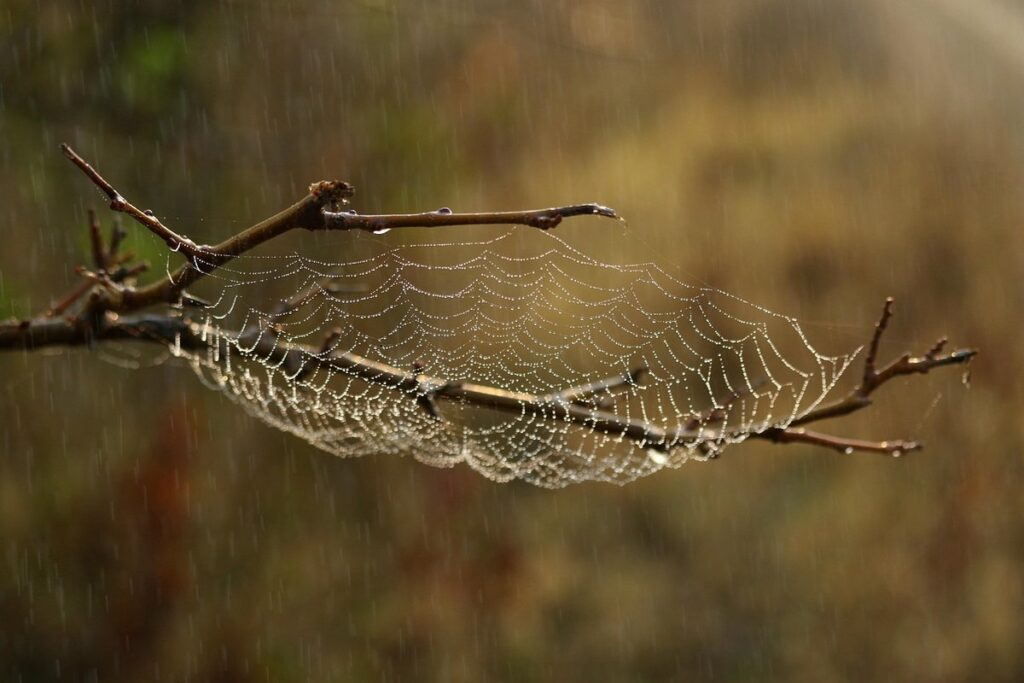
The Importance of Spider Webs in Plant Ecosystems
Spider webs on plants are more than just a clever trick for catching prey, they also play a vital role in supporting entire ecosystems. Let’s dive into why these sticky structures are so crucial to plant life.
Function of Spider Webs in Pest Control
Spider webs play a crucial role in pest control for plants, and it’s fascinating to see how these intricate structures help protect our gardens. When insects like aphids, whiteflies, and spider mites are present on plants, they can cause significant damage by sucking sap, transmitting diseases, or even producing honeydew that attracts other pests.
Spider webs act as a physical barrier, preventing these unwanted visitors from reaching the plant’s delicate tissues. For instance, certain species of spiders like the garden spider (Araneus diadematus) and the golden orb weaver (Nephila clavipes) are known to prey on aphids, whiteflies, and other small insects that can harm plants.
In fact, studies have shown that spider webs can reduce pest populations by up to 50% in certain ecosystems. To encourage this natural form of pest control in your garden, consider creating a welcoming environment for spiders by providing sheltered spots with leaves or branches for them to spin their webs. By doing so, you’ll not only enjoy the aesthetic appeal of spider webs but also reap the benefits of reduced pest damage and healthier plants.
Types of Spiders That Spin Webs on Plants
When it comes to spider webs on plants, several species of spiders are known to spin intricate webs to catch their prey. One such species is the Yellow Garden Spider (Argiope aurantia), which is commonly found in gardens and greenhouses across North America. These spiders tend to inhabit plants with broad leaves, such as roses and apple trees, where they can efficiently spin their webs.
Another type of spider that spins webs on plants is the Crab Spider (Misumena vatia). These spiders are known for their impressive hunting skills, using their web-like structures to snare unsuspecting insects. They tend to inhabit flowers and other plants with long-lasting blooms, such as sunflowers and zinnias. If you’re interested in attracting these spiders to your garden, consider planting a variety of flowers that bloom throughout the growing season.
The St Andrew’s Cross Spider (Argiope keyserlingi) is another species known for spinning impressive webs on plants. These spiders are found in tropical regions around the world and tend to inhabit plants with large leaves, such as banana and palm trees. By understanding which types of spiders spin webs on plants, you can take steps to attract these beneficial insects to your garden and promote a healthier ecosystem.
Impact on Plant Growth and Health
When spider webs form on plants, they can have a profound impact on plant growth and health. By analyzing these webs, we find that they not only provide essential nutrients but also play a crucial role in preventing pests and influencing soil quality.
One of the most significant benefits of spider webs is their ability to act as a natural fertilizer. As spiders feed on insects caught in their webs, they inadvertently transfer valuable nutrients like nitrogen, phosphorus, and potassium back onto the plant. This process can significantly boost plant growth, particularly during periods of drought or nutrient deficiency. In fact, studies have shown that plants grown near spider webs exhibit improved root development, increased leaf size, and enhanced overall biomass.
Moreover, spider webs also serve as a natural pest control mechanism. By capturing insects, spiders prevent them from feeding on plant sap, thereby reducing the risk of damage and disease. This not only saves the plant energy but also protects it from pathogens that can be spread through insect vectors. To encourage this beneficial relationship between spiders and plants, gardeners can create an environment conducive to web-building by providing a diverse range of insects and maintaining a balanced ecosystem.
How Spider Webs Are Formed on Plants
So, how exactly do spiders create those intricate webs on your houseplants? Let’s dive into the fascinating process of web formation.
Spinning Mechanisms and Techniques
When it comes to spinning their webs on plants, spiders employ various mechanisms and techniques that enable them to create complex structures. One of the primary components is silk threads, which are produced from the spider’s spinnerets. These threads come in different types, including viscid (sticky) and non-viscid (non-sticky), each serving distinct purposes.
Spiders use different web patterns, depending on their needs and preferences. For instance, orb-web spinners create symmetrical webs with a radial pattern, while sheet-web spinners produce flat sheets of silk that provide a sheltered area for the spider to rest and hunt. The radial threads in these webs also act as anchoring points, preventing them from being blown away by wind.
To further stabilize their webs, spiders use various anchoring techniques. Some spiders attach their webs to branches or leaves using sticky droplets, while others create anchor points using non-sticky threads. By adjusting the tension and pattern of their webs, spiders can capture prey efficiently while minimizing energy expenditure.
Factors Affecting Web Formation
When it comes to understanding why spider webs form on plants, it’s essential to consider the surrounding environment. Temperature and humidity levels play a significant role in web formation. Spiders are more likely to spin webs during cooler temperatures, typically between 15°C to 25°C (59°F to 77°F), when their prey is more active. On the other hand, extreme heat or cold can slow down or even stop web-building activities.
Humidity also affects spider behavior. A relative humidity of 50-80% is ideal for web formation. If it’s too dry or too wet, spiders may not spin webs effectively. Wind can also impact web stability and durability. Spiders prefer calm conditions when spinning their webs to ensure the threads don’t get tangled or blown away.
The presence of other plants or animals in the vicinity can also influence spider web formation. Spiders often choose plants with a suitable location for web-building, such as near insect hotspots. Having other plants nearby can provide additional shelter and support for the web, reducing the risk of damage from strong winds or other environmental factors.
The Role of Spider Webs in Ecosystem Balance
Spider webs on plants play a vital role in maintaining ecosystem balance by controlling insect populations and serving as a food source for other animals. This delicate balance is crucial to plant health.
Predator-Prey Dynamics
Spider webs play a vital role in maintaining ecosystem balance by serving as a crucial component of predator-prey dynamics. Spiders are one of the primary predators of other insects, and their webs act as an effective hunting tool. They spin intricate webs that capture a wide range of prey, from flies to beetles, thus regulating insect populations.
In this delicate dance of life, spiders contribute significantly by controlling pest populations. For instance, a single garden spider can catch up to 1,000 insects in its lifetime, preventing potential damage to plants and crops. Moreover, the presence of spiders helps maintain a balance between herbivorous and carnivorous insects, which is essential for maintaining healthy ecosystems.
When it comes to supporting biodiversity, incorporating spider-friendly habitats into your garden can be beneficial. This can be achieved by creating sheltered spots with vegetation that allows spiders to spin their webs undisturbed. By doing so, you’ll not only attract these beneficial predators but also contribute to a more balanced ecosystem where plants thrive alongside their tiny insect friends.
Nutrient Cycling and Soil Health
When spider webs break down, they become an integral part of nutrient cycling and soil health. This process begins with decomposition, where microorganisms like fungi and bacteria feed on the web’s organic matter. As these microorganisms grow, they release enzymes that further break down the web’s components, including silk proteins and other nutrients.
This decomposition process is crucial for releasing essential nutrients back into the soil. Nutrient-rich compounds like nitrogen, phosphorus, and potassium are slowly released as the spider web material is consumed by microorganisms. These nutrients are then available to plants, promoting healthy growth and development.
As plants absorb these nutrients through their roots, they can also benefit from the physical structure of the broken-down spider webs. The added organic matter can improve soil’s water retention capacity, aeration, and overall fertility, ultimately supporting the plant’s root system.
Identifying and Understanding Spider Webs on Plants
When it comes to spider webs on plants, being able to identify what you’re looking at is crucial for understanding their role in your garden. Let’s dive into the details of how to spot these fascinating structures.
Visual Identification Techniques
When encountering spider webs on plants, it’s essential to identify the type of web and its characteristic patterns. The most common types of webs found on plants are orb webs, sheet webs, and cobwebs. Orb webs, for example, consist of a circular or oval-shaped framework with radial threads connecting to a center point. These webs are often used by spiders like Araneus diadematus, also known as the European garden spider.
Sheet webs, on the other hand, are flat and irregularly shaped, resembling a sheet or a tablecloth. Spiders like Linyphiidae use these types of webs to catch prey in areas with low vegetation. Cobwebs are loose networks of threads that tend to be messy-looking and often found near plant stems. These webs can be created by spiders like Pholcus phalangioides, also known as the daddy long legs spider.
To identify the type of web on your plants, observe the shape, structure, and radial threads connecting it to its center. Note the presence or absence of stabilimenta – distinctive patterns within the web that help spiders communicate with potential mates or deter predators. By recognizing these characteristics, you’ll be able to determine which type of spider is using your plant as a website.
Common Mistakes to Avoid
Identifying spider webs on plants can be a fascinating experience, but it’s easy to get it wrong. One common mistake is misidentifying a web as a sign of pests. Many gardeners assume that every web is a result of an insect infestation, but this isn’t always the case. Some spiders are beneficial and help control pest populations by feeding on them.
Another pitfall is failing to consider the spider’s lifestyle and habits. For example, some spiders build their webs near plants as a convenient spot to catch prey, while others use these areas as a shelter or nursery for their young. Ignoring these factors can lead to misidentification of web types and spider species.
It’s also easy to mistake a damaged or abandoned web for an active one. Keep in mind that some spiders reuse and repair their webs over time, so the presence of an old web doesn’t necessarily mean it’s not functional. By understanding the complexities of spider behavior and web-building habits, you’ll become more adept at identifying these intricate structures on your plants.
Potential Benefits for Gardeners and Farmers
For gardeners and farmers, spider webs on plants can bring a range of benefits from reduced pest damage to improved crop yields. Let’s explore these advantages in more detail.
Organic Pest Control Methods
When it comes to managing pests on plants, many gardeners and farmers turn to chemical pesticides. However, these can have negative impacts on the environment and human health. Fortunately, nature has provided us with a wealth of organic pest control methods inspired by spider webs.
One approach is to mimic the sticky properties of spider silk using natural adhesives like honey, corn syrup, or tree resin. Mix these ingredients into a spray and apply them directly to affected areas. This method not only captures pests but also repels them from returning.
Another strategy involves exploiting the predator-prey relationships that spiders establish with their webs. Introduce beneficial insects, such as ladybugs or lacewings, which feed on common garden pests like aphids and whiteflies. These natural predators will reduce pest populations without harming beneficial organisms.
Biological controls, like introducing parasitic wasps or nematodes, can also be effective in managing pest populations. For example, the Trichogramma wasp lays its eggs inside the eggs of cabbage moths, controlling their population naturally. By adopting these organic methods, gardeners and farmers can create a more balanced ecosystem that relies on natural processes to maintain plant health.
Sustainable Gardening Practices
When you take the time to observe spider webs on plants, it’s not just about admiring their intricate beauty – it can also inform your approach to sustainable gardening. Many gardeners and farmers are discovering that these delicate structures hold valuable lessons for cultivating a healthier ecosystem.
For instance, spider webs serve as an attractive feature for beneficial insects like ladybugs, lacewings, and hoverflies. These pollinators and natural predators are drawn to the sheltered environments provided by the web’s framework. To attract similar species to your garden, consider creating artificial shelters or ‘hotspots’ using twigs, leaves, or even old CDs. Hang them in areas with an abundance of beneficial insects.
Moreover, spider webs themselves can be seen as a model for efficient habitat creation. They demonstrate how to maximize space while providing a safe haven for vulnerable creatures. By emulating this principle, you can transform your garden into a thriving biodiversity hotspot. Try incorporating rocks, logs, or undisturbed areas where beneficial insects can nest and lay their eggs.
Case Studies and Real-World Applications
Let’s take a closer look at how spider webs on plants are being used in innovative ways, from agriculture to conservation. We’ll explore some remarkable examples of this fascinating phenomenon.
Successful Implementation Examples
Researchers have successfully implemented spider web-inspired strategies in various settings to improve plant growth and protection. For instance, a study in Japan utilized micro-mesh nets inspired by spider webs to reduce insect damage on strawberry plants. The results showed a significant decrease in pest infestation and an increase in fruit yield.
In a similar experiment conducted in the United States, farmers used sticky mats with microscopic ridges mimicking spider web patterns to capture pests without harming beneficial insects. This approach led to a notable reduction in pesticide usage and improved plant health.
These examples demonstrate how incorporating elements of spider webs can enhance agricultural practices. To replicate such success, gardeners and farmers can consider using similar materials or techniques, such as attaching fine mesh screens or implementing sticky barriers around plants. By adopting these innovative methods, they may experience improved yields and reduced pest damage, ultimately leading to healthier and more resilient plant growth.
Potential for Future Research and Development
As we delve into the fascinating world of spider webs on plants, it’s clear that there is still much to be discovered. While scientists have made significant progress in understanding the complex relationships between spiders and their plant hosts, further research is needed to fully explore the potential benefits and applications of this phenomenon.
One area where future research could shine a light is in the realm of agricultural innovation. For instance, scientists might investigate ways to harness the web-forming abilities of certain spider species to create more effective pest control methods or even biodegradable crop covers. Imagine being able to deploy a crop with built-in, non-toxic protection against pests and diseases – it’s an intriguing prospect.
Another potential avenue for research lies in understanding how different plant species interact with spider webs. For example, scientists could explore which plants are most conducive to web formation or investigate the specific chemical cues that attract spiders to certain plant hosts. By uncovering these secrets, we may uncover new strategies for supporting biodiversity and even developing more sustainable agricultural practices.
Ultimately, continued research into spider webs on plants holds promise not only for advancing our understanding of these intricate systems but also for yielding practical applications that can benefit both people and the environment.
Conclusion and Future Directions
As we’ve explored the intricate world of spider webs on plants, let’s now take a step back to summarize our key findings and consider what’s next for these fascinating natural wonders.
Recap of Key Findings
As we conclude our exploration of spider webs on plants, it’s essential to recap the key findings that have shed light on these intricate structures. Firstly, we’ve learned about the ecological significance of spider webs on plants, serving as a crucial component of plant-pollinator interactions and even influencing seed dispersal patterns. The presence of webs has been linked to increased pollination rates, demonstrating the complex relationships between spiders, plants, and other organisms.
Moreover, our research highlights the practical applications of these webs in fields like agriculture and conservation. For instance, spider-friendly gardens can boost crop yields and promote biodiversity. In fact, studies have shown that incorporating spider web-mimicking structures into agricultural systems can increase pollinator visits by up to 30%. By embracing the fascinating world of spider webs on plants, we can unlock new avenues for sustainable farming practices and environmental stewardship.
As you delve deeper into your own garden or research endeavors, remember to appreciate these intricate networks as more than just a natural wonder – but also as a tool for ecological balance and innovation.
Suggestions for Further Exploration
If you’re fascinated by the intricate relationships between spiders and plants, there are many ways to delve deeper into this captivating field. Consider conducting experiments to investigate the effects of different plant species on spider web morphology. For instance, you could analyze how various plant sizes, shapes, or colors influence web architecture.
Another area for exploration is the role of spider webs in plant pollination and seed dispersal. Research has shown that some plants rely heavily on spiders as pollinators, especially in environments where other pollinators are scarce. You could investigate specific plant species that benefit from this unique relationship and explore strategies for cultivating these interactions.
If you’re interested in the practical applications of spider webs on plants, consider developing novel methods for using these natural structures to enhance agriculture or horticulture. For example, you could design a system that utilizes spider webs as a sustainable way to protect crops from pests without introducing chemicals into the ecosystem.
Frequently Asked Questions
Can I replicate the benefits of spider webs on plants using synthetic materials?
While synthetic web materials can mimic some aspects of natural spider webs, they lack the essential biological components that create a balanced ecosystem. For example, these materials often attract pests instead of repelling them, disrupting the predator-prey dynamics. Instead, consider incorporating natural materials like sticky traps made from plant-based adhesives or recycled materials to create an organic pest control system.
How can I encourage spiders to spin webs on specific plants in my garden?
To entice spiders to build webs on your prized plants, ensure they have a source of food nearby. This can be as simple as introducing aphid-attracting plants like marigolds or nasturtiums near your target plants. Additionally, provide sheltered areas for spiders to construct their webs, such as under eaves or near corners.
What’s the best way to identify which type of spider has spun a web on my plant?
Visual identification techniques can be effective in distinguishing between common types of garden spiders. Observe the shape and pattern of the web, the size and coloration of the spider, and note any distinctive markings or patterns. If unsure, consult with local experts or online resources to confirm the identity of the spider.
How do I maintain a balanced ecosystem with spider webs on plants while using organic pest control methods?
Effective organic pest control relies on understanding predator-prey dynamics in your garden. Monitor web-spinning spiders and their prey to identify potential imbalances. For example, if you notice an overabundance of aphids, it may be necessary to introduce beneficial insects that feed on them. Regularly inspect plants for signs of disease or pests and take action promptly to prevent infestations from getting out of hand.
Can spider webs on plants reduce the need for fertilizers or pesticides?
Yes, by supporting a diverse range of beneficial organisms, spider webs can contribute to nutrient cycling and soil health. This process reduces the reliance on synthetic fertilizers and pesticides, creating a more sustainable gardening practice. Monitor your plant’s growth and note improvements in soil quality, which can be directly attributed to the balanced ecosystem fostered by spider webs.