
Are you fascinated by the unique beauty of the nerve plant flower? This striking bloom may be small, but its delicate charm has captured the hearts of many indoor plant enthusiasts. As it turns out, taking care of a healthy nerve plant is more than just watering and fertilizing – there’s an art to coaxing this lovely flower to bloom.
In our comprehensive guide, we’ll take you through the ins and outs of growing and caring for your nerve plant, from choosing the right lighting conditions to mastering pruning techniques. Whether you’re new to plant parenthood or a seasoned expert, we’ve got you covered with expert tips on propagation, varieties, and breeding. With our advice, you’ll be well-equipped to create an ideal environment for your nerve plant to thrive, ensuring that gorgeous blooms appear in no time.
What are Nerve Plant Flowers?
So, you’re curious about those delicate blooms on your nerve plant? In this next part, we’ll dive into what exactly these flowers look like and how they grow.
Botanical Name and Classification
The botanical name of the nerve plant flower is Fittonia verschaffeltii. This classification places it within the family Acanthaceae, which is a large and diverse group of flowering plants commonly known as acanthus or acacia. As part of this family, nerve plants are closely related to other species such as Anisomeles and Strobilanthes.
If you’re new to botany, don’t worry if these names sound unfamiliar – understanding the scientific name can be a challenge! However, it’s essential for plant enthusiasts and those looking to grow nerve plants successfully. Understanding the classification of your plant allows you to identify potential relatives with similar growing requirements.
Some notable relatives of the nerve plant flower include Fittonia albivenis and Fittonia argyroneura. These species share similarities in their leaf patterns, but have distinct differences in their coloration and growth habits. By familiarizing yourself with these relatives, you can better understand how to provide optimal care for your nerve plants and troubleshoot any potential issues that may arise.
Unique Features of Nerve Plant Flowers
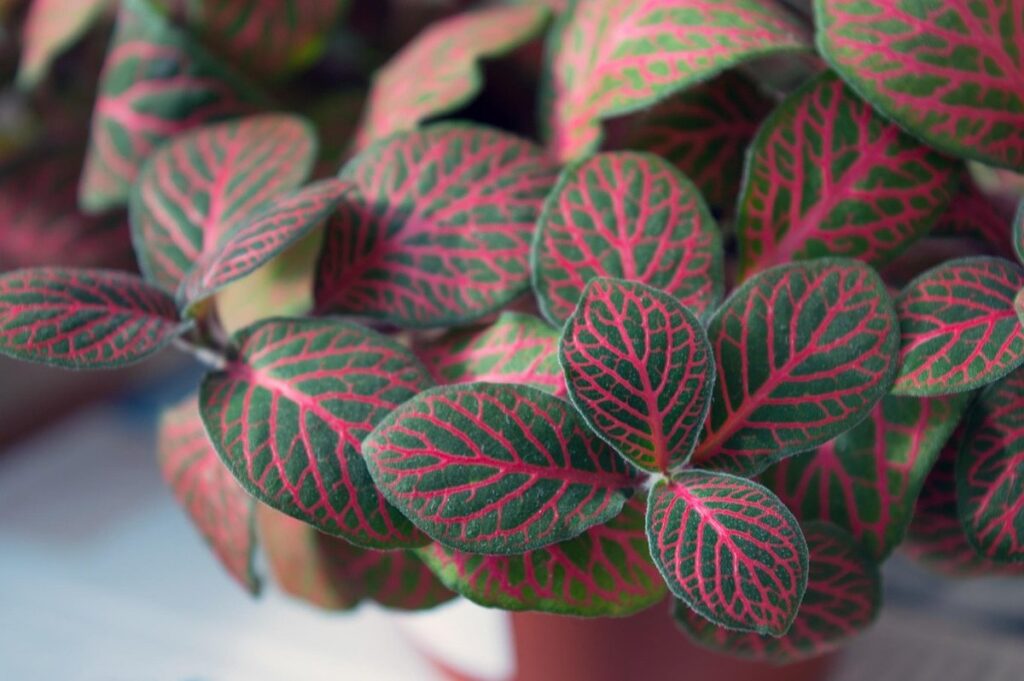
What sets nerve plant flowers apart from other plants is their unique appearance and growth habits. These fascinating flowers have delicate white veins that resemble nerves on a leaf, hence the name “nerve plant.” This striking feature makes them a standout among other houseplants.
One of the most notable things about nerve plant flowers is their ability to thrive in low-light conditions, making them perfect for rooms with limited natural light. Their leaves can even turn a beautiful shade of purple or red under certain lighting conditions, adding an extra layer of visual interest. They’re also incredibly easy to care for and require minimal maintenance, making them ideal for busy people or those new to plant parenthood.
Another distinctive feature is their ability to grow in compact spaces, making them perfect for small pots or indoor containers. Nerve plants can even propagate themselves by producing offsets at the base of the mother plant, allowing you to easily share them with friends or multiply your collection. With proper care, nerve plants can live for several years and continue to produce beautiful white flowers throughout their lifespan.
Growing Conditions for Nerve Plant Flowers
To give those nerve plant flowers of yours their best shot at thriving, it’s essential to understand the specific conditions they require. This includes factors like light, temperature, and humidity levels.
Lighting Requirements
When it comes to providing optimal growing conditions for nerve plant flowers, lighting is one of the most critical factors to consider. These beautiful blooms thrive in bright, indirectly lit environments. Direct sunlight can be detrimental to their delicate petals, causing them to become scorched and discolored.
To achieve the perfect balance, aim to provide your nerve plants with filtered or dappled light for at least 12-14 hours a day. This type of indirect lighting allows the leaves to photosynthesize efficiently while protecting the flowers from intense direct sunlight.
Consider placing your nerve plant in an east- or west-facing window, which receives gentle morning or afternoon sunbeams. Alternatively, you can use sheer curtains or blinds to diffuse harsh direct light and create a more nuanced, indirectly lit environment.
Remember that even with indirect lighting, nerve plants still require some direct light exposure to maintain their vibrant colors. A south-facing window with filtered shades or a skylight with UV protection can work well for this purpose. Experiment with different lighting setups to find the perfect balance for your specific plant’s needs and preferences.
Watering Needs
Proper watering is essential for nerve plant flowers to thrive. These delicate plants prefer well-draining soil and consistent moisture levels. Overwatering can lead to root rot, while underwatering causes the leaves to wilt and turn brown.
To determine if your nerve plant needs water, stick your finger into the soil up to the first knuckle. If the soil feels dry, it’s time to water. Water your nerve plant thoroughly until you see water dripping from the pot’s drainage holes. Then, let the top 1-2 inches of soil dry out between waterings.
For most nerve plants, watering once a week is sufficient during spring and summer months when they’re actively growing. However, this frequency may decrease to every 10-14 days during fall and winter when growth slows down. Remember that overwatering is more damaging than underwatering, so it’s better to err on the side of caution.
Monitor your nerve plant’s response to watering and adjust your schedule accordingly. If you notice the leaves perking up after a good soaking, you’re probably on the right track.
Temperature and Humidity Preferences
When it comes to growing healthy nerve plant flowers, temperature and humidity play a crucial role. These tropical plants thrive in environments with moderate temperatures and high humidity levels.
Ideally, nerve plant flowers prefer daytime temperatures between 65°F (18°C) and 75°F (24°C), while nighttime temperatures can drop to around 55°F (13°C). Avoid placing your nerve plant near drafty windows or air conditioning vents, as this can cause sudden temperature fluctuations that may stress the plant.
Maintaining a humid environment is equally important. Aim for a humidity level of at least 50% around your nerve plant. You can achieve this by placing the pot on a tray filled with water and pebbles or using a humidifier nearby. Overwatering, however, should be avoided, as it can lead to root rot and other problems.
In terms of specific conditions, nerve plants grown in greenhouses typically thrive at temperatures between 70°F (21°C) and 80°F (27°C), with humidity levels around 60-70%. By replicating these conditions in your home, you’ll be well on your way to growing vibrant and healthy nerve plant flowers.
Nerve Plant Flower Care and Maintenance
Now that you’ve learned how to propagate your nerve plant, let’s dive into the care and maintenance of these beautiful blooms to keep them thriving. Proper watering and fertilization are key to healthy flowers.
Fertilization and Soil Requirements
When it comes to fertilizing your nerve plant flowers, you have several options to consider. Organic and chemical fertilizers are two popular choices, but they serve different purposes and offer varying benefits for your plants.
Organic fertilizers, such as compost or manure, provide nutrients that promote healthy growth without burning your plant’s roots. These slow-release fertilizers also help improve soil structure and fertility over time. For example, using a balanced organic fertilizer (e.g., 5-5-5 NPK) during the growing season will encourage vibrant foliage and robust flowering.
On the other hand, chemical fertilizers like Miracle-Gro provide an instant boost of nutrients but can be harsh on your nerve plant’s delicate roots if overused. These fertilizers often contain high concentrations of nitrogen, phosphorus, or potassium that can quickly deplete soil reserves.
To ensure optimal growth, it’s essential to use well-draining potting mix and avoid waterlogged conditions, which can cause root rot in sensitive plants like the nerve plant. Regular repotting every 1-2 years will also help maintain a balanced nutrient supply by refreshing the soil with fresh fertilizer.
Pruning and Propagation
When it comes to maintaining healthy and thriving nerve plants, pruning and propagation are crucial techniques to master. Pruning helps control the plant’s size, encourages new growth, and maintains its desired shape. To prune your nerve plant effectively, start by removing any dead or damaged leaves, as these can harbor pests or diseases that might spread to other parts of the plant.
Next, cut back leggy stems to encourage branching and prevent the plant from becoming too leggy. Use a pair of clean, sharp scissors or pruning shears to avoid spreading bacteria and to make clean cuts. Cut just above a node – the point where a leaf meets the stem – as this will help the plant heal quickly and reduce the risk of infection.
To propagate your nerve plant, you can use leaf cuttings or division. Take 2-3 inch long stem sections with at least two nodes, remove lower leaves, and pot them in moistened soil. Keep the soil consistently moist but not waterlogged, as this can lead to root rot. For division, carefully separate the roots of your mature nerve plant, making sure each section has a few leaves and some roots attached. Replant these sections in fresh potting mix, keeping the soil moist until new growth appears.
Common Problems and Pests Affecting Nerve Plant Flowers
Nerve plant flowers can be susceptible to various issues, from infestations by common pests to root rot and fungal diseases that threaten their delicate health. Let’s explore some of these potential problems together.
Overwatering and Underwatering Issues
When it comes to nerve plant flowers, overwatering and underwatering are two common issues that can affect their health. Overwatering is a more common problem than you might think, as nerve plants prefer moist soil but hate being waterlogged.
Signs of overwatering include yellowing leaves, soft stems, and a slimy texture to the leaves. If left unchecked, root rot will set in, and your plant may eventually die. To correct this issue, repot your nerve plant in fresh potting mix, making sure not to compact it too much. Allow the soil to dry slightly between waterings, and reduce the frequency of watering during the winter months.
Underwatering, on the other hand, can cause crispy leaves and a general lackluster appearance. To avoid this, ensure you’re watering your nerve plant regularly, but make sure not to overdo it. Check the moisture level in the soil by sticking your finger into the soil up to the first knuckle; if it feels dry, it’s time to water.
By paying attention to these signs and making adjustments accordingly, you can keep your nerve plant flowers thriving.
Pests and Diseases to Watch Out For
Nerve plant flowers are susceptible to various pests and diseases that can cause damage and compromise their overall health. One of the most common issues is spider mites, tiny insects that feed on the sap of the plant, causing yellowing leaves and webbing. To prevent infestations, maintain good air circulation, keep the soil consistently moist but not waterlogged, and use neem oil or insecticidal soap to control populations.
Mealybugs are another common pest, appearing as white, cottony patches on the leaves and stems of the nerve plant. Regularly inspect your plants for signs of mealybugs and treat them with a gentle insecticide if necessary. Root rot is a significant threat when overwatering occurs, leading to soft, mushy stems and a foul odor. To prevent this, ensure the pot has sufficient drainage holes and avoid getting water on the leaves.
Some fungal diseases like leaf spot and root rot can also affect nerve plant flowers. Monitor your plants for any unusual discoloration or growths, and treat them promptly with fungicides if necessary. By being aware of these potential threats and taking preventative measures, you can enjoy a thriving and healthy nerve plant flower in your home or garden.
Nerve Plant Flower Varieties and Breeding
Within the vast world of nerve plant flowers, you’ll find numerous stunning varieties that showcase incredible breeding work. Let’s dive into some of these breathtaking blooms!
Common Varieties and Their Characteristics
Among the numerous varieties of nerve plant flowers, some stand out for their unique characteristics and growth habits. For instance, the popular ‘Tricolor’ variety boasts vibrant pink, white, and green stripes on its leaves, creating a stunning visual effect. On the other hand, the ‘Neon’ variety is known for its electric blue-green foliage, making it an attractive addition to any indoor space.
Another notable variety is the ‘Polka Dot’, featuring small yellow or white spots scattered across its leaves. This variety thrives in bright, indirect light and requires consistent moisture to maintain its vibrant coloration. In contrast, the ‘Silver Queen’ variety boasts stunning silver-gray foliage with delicate pink veins, requiring more stringent watering conditions.
If you’re a beginner, consider starting with the compact ‘Gold Nugget’ variety, which is relatively easy to care for and can tolerate a range of lighting conditions. No matter which variety you choose, be sure to provide your nerve plant with well-draining soil and adequate humidity to ensure optimal growth and health.
Breeding and Hybrids
Breeding and hybridization have revolutionized the world of nerve plant flowers, offering growers an incredible array of colors, patterns, and growth habits. By combining different varieties, breeders can create unique characteristics that would be impossible to achieve through traditional selection methods.
The benefits of breeding and hybridization are numerous. For instance, new hybrids may exhibit improved hardiness, increased resistance to disease, or enhanced bloom frequency. Breeders can also target specific traits such as compact growth, variegated foliage, or vibrant flower colors. This selective breeding process allows growers to tailor their nerve plant collections to suit various environments and preferences.
However, hybridization comes with its own set of challenges. Some hybrids may lose vigor over time, or exhibit reduced fertility. Furthermore, the increased complexity of hybrid genetics can make it more difficult for growers to predict how a new plant will perform in different conditions. Despite these potential drawbacks, experienced breeders continue to push the boundaries of what’s possible with nerve plant flowers, creating innovative and beautiful varieties that captivate enthusiasts worldwide.
Conclusion: Enjoying Your Nerve Plant Flowers
Now that you’ve mastered growing your nerve plant flowers, it’s time to appreciate their unique beauty and enjoy them as a stunning addition to your home. Let’s explore some tips for displaying and caring for your blooms.
Display and Arrangement Ideas
When it comes to showcasing your beautiful nerve plant flowers, you’ll want to create a display that’s as unique and charming as the blooms themselves. Consider grouping multiple stems together in a vase or container to create a lush, jungle-like atmosphere. This not only adds depth but also highlights the delicate pattern of veins on each leaf.
Alternatively, try displaying individual plants or stems in small pots or planters, allowing their natural shape and texture to take center stage. You can place them on a shelf, mantle, or even hang them from a mobile to create a visually striking arrangement.
To maximize visual impact, experiment with different heights and textures by combining nerve plants with other greenery like ferns, air plants, or succulents. For example, pair delicate nerve plant stems with chunky cacti for an eye-catching contrast of shapes and sizes. The possibilities are endless, so don’t be afraid to get creative and find the perfect display that suits your personal style!
Tips for Long-Term Success
As you’ve made it through this comprehensive guide to nerve plant flowers, it’s time to solidify your newfound knowledge and set yourself up for long-term success. To enjoy the vibrant blooms of your nerve plants for years to come, focus on consistency in care.
Firstly, stick to a regular watering schedule – overwatering can be detrimental, while underwatering will lead to wilted leaves and reduced flowering. A weekly check of soil moisture is essential to avoid these extremes. Also, ensure your nerve plants receive sufficient indirect light; direct sunlight can cause the leaves to become scorched.
Fertilize sparingly during the growing season (spring and summer) using a balanced, water-soluble fertilizer at half the recommended strength. This will promote healthy growth without burning the roots or causing an overabundance of blooms that may drop off prematurely.
Monitor your plants for pests and diseases, taking swift action if you notice any issues. By maintaining a clean environment, pruning dead leaves regularly, and providing good air circulation, you can minimize the risk of problems arising in the first place.
Frequently Asked Questions
Can I propagate my nerve plant flower using leaf cuttings?
Yes, propagating nerve plants through leaf cuttings is a popular method for sharing plants with friends or creating new ones. Simply take healthy leaves from the mother plant, remove lower stems, and pot them in moistened soil. Keep the soil consistently moist but not waterlogged until roots develop.
What are some common pests that affect nerve plant flowers?
Nerve plants can be susceptible to pests like spider mites, mealybugs, and scale insects. Regularly inspect your plants for signs of infestation, such as white powdery residue or tiny moving dots. Use neem oil or insecticidal soap to control infestations, and maintain good hygiene by cleaning tools and repotting as needed.
How do I ensure my nerve plant flower receives the right humidity levels?
Nerve plants thrive in humid environments, typically between 50-70% relative humidity. To maintain optimal humidity, place your plant on a tray filled with water and pebbles or use a humidifier nearby. You can also group plants together to create a microclimate that retains moisture.
Can I grow nerve plant flowers outdoors in my region?
Nerve plants are typically grown indoors due to their sensitive nature, but some regions with mild climates may be able to support outdoor cultivation. Research your specific climate and ensure it meets the requirements for nerve plant growth (temperatures above 55°F/13°C and moderate humidity). Even if you can grow them outdoors, consider indoor growing for better control over conditions.
How often should I fertilize my nerve plant flower?
Fertilize your nerve plant regularly to promote healthy growth and blooming. Use a balanced, water-soluble fertilizer at half the recommended strength (20-10-10 NPK). Feed your plant once a month during the growing season (spring-fall), but avoid fertilizing during winter months when plants are dormant.