
Are you ready to grow your own delicious potatoes at home? Creating a thriving potato bed is easier than you think, and with the right guidance, you’ll be harvesting bountiful yields all season long. A well-designed potato bed not only provides a haven for these tasty tubers but also adds beauty and functionality to your garden. In this ultimate guide, we’ll walk you through everything from designing an ideal potato bed layout to expert planting and harvesting techniques. You’ll learn how to create the perfect conditions for your spuds to grow, including the right soil mix, companion planting, and pest management tips. Whether you’re a seasoned gardener or just starting out, this comprehensive guide will have you growing like a pro in no time!
Understanding the Basics of Potato Beds
Let’s get started on the basics, where we’ll break down what a potato bed is and how it works, covering the essential elements to consider when designing one.
What are Potato Beds?
A potato bed is essentially a raised garden bed specifically designed for growing potatoes. These beds are typically constructed with a depth of 12-18 inches, which provides an ideal environment for the tubers to grow and spread out. The primary purpose of a potato bed is to allow for easy harvesting, as the soil can be gently loosened without damaging the delicate roots.
Potato beds offer several benefits over traditional in-ground gardening methods. For one, they provide excellent drainage, which helps prevent waterlogged conditions that are detrimental to potatoes. Additionally, raised beds warm up faster in spring, allowing you to plant earlier and get a head start on the growing season. This results in healthier plants and higher yields.
By creating a potato bed, you can also reduce soil compaction and increase aeration, which promotes healthy root growth and minimizes disease susceptibility. With proper planning and maintenance, a well-designed potato bed can become a productive and sustainable source of fresh potatoes for years to come.
Types of Potato Beds
When it comes to creating a potato bed, you have several options to choose from, each with its own unique benefits and requirements. One popular type of potato bed is the raised bed. These elevated structures are ideal for small spaces or areas with poor drainage. By placing your potatoes in a raised bed, you’ll improve soil aeration, reduce soil compaction, and make it easier to access your crops.
Another option is container gardens, which can be as simple as a large tub or bucket. This type of potato bed is perfect for balconies, patios, or any other small outdoor space. Just be sure to choose a container with good drainage holes to prevent waterlogged soil.
In-ground beds are also an excellent choice for growing potatoes. These beds are typically built into the existing ground and can provide better insulation for your plants during extreme weather conditions. Regardless of which type of potato bed you choose, make sure it receives at least six hours of direct sunlight per day and has a depth of around 8-12 inches to accommodate the full growth of your potatoes.
When selecting the type of potato bed that’s right for you, consider factors such as space constraints, climate, and the amount of time you have available for maintenance.
Advantages of Growing Potatoes in a Bed
Growing potatoes in a bed offers numerous advantages over traditional container gardening. One of the primary benefits is increased yields. By allowing the tubers to spread out horizontally, you can expect to harvest more potatoes per plant compared to growing them in containers. For instance, a well-maintained potato bed can yield up to 10-15 pounds of potatoes per square foot, which is significantly higher than what you’d get from container gardening.
Another significant advantage of using a potato bed is the reduced risk of disease. When potatoes are grown in containers, moisture tends to accumulate, creating an ideal environment for diseases like late blight and scab to thrive. In contrast, a well-drained soil mix in a potato bed helps prevent waterlogged conditions, minimizing the risk of fungal infections.
Regularly turning over the soil also improves its health and structure, making it easier for potatoes to grow. By incorporating compost or well-rotted manure into your soil mix, you’ll create an ideal environment for healthy microbial activity, resulting in robust tubers with better texture and flavor.
Designing Your Perfect Potato Bed
Now that you’ve decided on a location for your potato bed, let’s dive into designing it to maximize yields and minimize work. We’ll explore the key elements to consider when crafting your perfect potato bed setup.
Choosing the Right Location for Your Potato Bed
When selecting the perfect location for your potato bed, it’s essential to consider several key factors. First and foremost, think about sunlight. Potatoes need full sun to partial shade, but be cautious not to expose them to direct sunlight during peak hours when temperatures can soar. Aim for a spot that receives at least six hours of direct sunlight per day.
Accessibility to water is also crucial. Your potato bed should be close enough to a water source to make watering easy and convenient. This will save you time and energy, allowing you to focus on other aspects of your garden. Additionally, consider the soil quality in the area where you plan to build your potato bed. Potatoes prefer well-draining, loose soil with a pH between 4.5 and 7.0.
When evaluating potential locations, take note of any low-lying areas that might collect water and cause root rot. Avoid planting in spots where water tends to accumulate. Instead, opt for slightly raised beds or mounds to ensure good drainage. By carefully considering these factors, you can choose the ideal spot for your potato bed and set yourself up for a successful harvest.
Preparing Your Soil for Potato Growth
Preparing your soil for potato growth is crucial to ensure a bountiful harvest. Before planting, test your soil pH and adjust it if necessary. Potatoes prefer a slightly acidic to neutral soil pH between 4.5 and 7.0. If your soil is too alkaline or acidic, add elemental sulfur or limestone to balance the pH.
Fertilization is also essential for potato growth. Use a balanced fertilizer with a ratio of 10-10-10 (nitrogen-phosphorus-potassium) during the planting season. For mature plants, switch to a high-phosphorus fertilizer to promote tuber development. You can also add compost or well-rotted manure to provide nutrients and improve soil structure.
Mulching is another critical aspect of preparing your soil for potatoes. Mulch retains moisture, suppresses weeds, and regulates soil temperature. Apply a 2-3 inch layer of organic mulch like straw or grass clippings around the plants. As the season progresses, add more mulch to maintain a consistent depth.
By following these steps, you’ll create an optimal environment for your potatoes to thrive.
Design Ideas for Unique and Functional Potato Beds
When designing a potato bed, you want it to be both unique and functional. A well-designed potato bed can not only provide you with an abundance of fresh produce but also add aesthetic appeal to your garden. Here are some creative design ideas for potato beds that you may consider:
Raised Bed Designs:
Consider using wooden or metal frames to create raised beds for your potatoes. This will elevate the soil and improve drainage, reducing the risk of rot and other diseases. You can also incorporate trellises or supports to help the plants grow upwards, maximizing space.
Container Garden Ideas:
Use large containers or tubs as potato beds. This is ideal for small gardens or spaces where you want to grow potatoes without taking up too much room. Make sure the container has good drainage holes and use a well-draining potting mix to prevent waterlogged soil.
Space-Saving Solutions:
If you have limited space, consider using vertical planters or a potato tower. These compact designs allow you to grow multiple plants in a small area, making them perfect for urban gardens or small plots of land.
Planting and Maintaining Your Potato Bed
Now that you’ve designed your potato bed, it’s time to get started on planting the spuds themselves, and learn how to keep them thriving all season long. We’ll walk you through the process step by step.
Selecting the Right Variety of Potatoes for Your Bed
When it comes to selecting the right variety of potatoes for your bed, there are several factors to consider. First and foremost, you need to think about your climate and soil type. Different potato varieties perform better in different conditions, so choose a variety that’s well-suited to your local environment.
For example, if you live in a cool, moist climate, look for varieties like ‘Katahdin’ or ‘Nicola’, which are known for their high yields and resistance to disease. If you have a warmer climate, you may prefer varieties like ‘Desiree’ or ‘Charlottes’, which mature more quickly.
You should also consider the desired harvest time. Some varieties mature in as little as 70 days, while others take up to 100 days or more. Think about how often you’ll be able to check on your crop and whether you prefer a shorter or longer harvest season.
In addition to these factors, it’s also worth considering the flavor and texture of the potatoes themselves. Do you prefer waxy, smooth varieties like ‘New Potatoes’ or do you prefer high-starch varieties with fluffy interiors? With so many options available, take some time to research and find a variety that suits your needs and preferences.
Planting Potatoes in Your Bed: Tips and Tricks
When planting potatoes in your bed, it’s essential to get the basics right for a bountiful harvest. Start by choosing a sunny spot with well-draining soil that is rich in organic matter. If you’re new to growing potatoes, consider purchasing seed potatoes from a reputable supplier or garden center. These are small, whole potatoes specifically designed for planting.
For optimal growth, plant seed potatoes 2-4 inches deep and 12-18 inches apart. This spacing allows for adequate sunlight penetration and prevents overcrowding, which can lead to disease and pests. Place the seed potato in a trench with the “eyes” facing upwards – these are the small buds on the surface of the potato that will sprout into new growth.
As you fill in the soil around the seed potato, ensure it’s firm but not compacted. Leave about 2 inches of space between each seed potato to allow for easy access and maintenance. Water gently but thoroughly after planting, and continue to keep the soil consistently moist during the growing season.
Common Challenges and Solutions for Maintaining a Healthy Potato Bed
Maintaining a healthy potato bed can be challenging, but being aware of potential issues and knowing how to address them is key. Pests like aphids, slugs, and wireworms can damage your crop, while diseases such as late blight and powdery scab can decimate your entire harvest.
Regularly inspecting your potato bed for signs of pests or disease can help you catch problems early on. Keep an eye out for holes in leaves, yellowing or wilting plants, and unusual growths. Use organic pest control methods like introducing beneficial insects, hand-picking pests, or using neem oil to control infestations.
Nutrient deficiencies are another common issue. Potatoes require a balanced diet of nitrogen, phosphorus, and potassium to thrive. Regularly test your soil pH and nutrient levels to ensure you’re providing the right conditions for healthy growth. Fertilize as needed, taking care not to over-fertilize which can lead to other problems like excessive leaf growth at the expense of tuber formation.
Remember that a well-maintained potato bed is essential for a bountiful harvest. By staying on top of potential issues and addressing them promptly, you’ll be rewarded with delicious homegrown potatoes all season long.
Harvesting Your Crop: Tips and Tricks for Getting the Most from Your Potato Bed
Now that you’ve nurtured your potato bed to perfection, it’s time to reap what you’ve sown – literally! Here are some expert tips on how to harvest and enjoy your homegrown spuds.
Identifying When to Harvest Your Potatoes
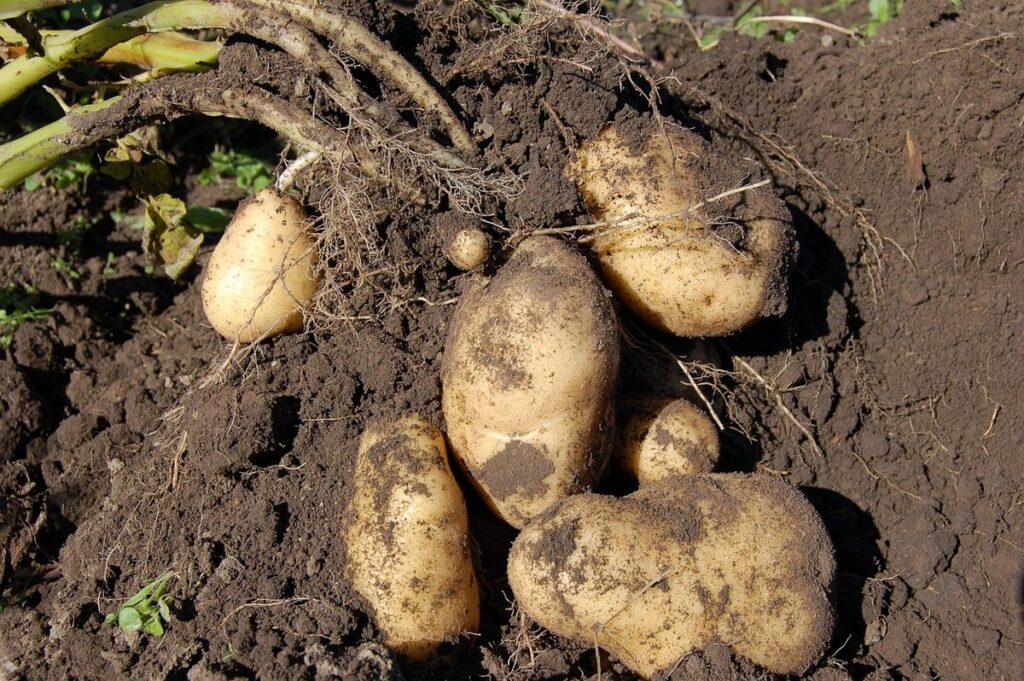
Determining when to harvest your potatoes is crucial for maximizing their flavor, texture, and yield. A key visual cue is the appearance of the plants themselves. As the tubers mature underground, the potato foliage above ground begins to yellow and die back, often starting at the tips of the stems. This signal indicates that the starches in the tubers have converted to sugars, making them sweeter.
Another way to check for readiness is by gently digging around the base of a plant with your fingers or a fork. If the tubers are exposed and their skin is smooth, they’re likely ready to be harvested. Gently dig up a few plants to inspect the size and texture of the tubers. Look for those that are around 3-5 inches in diameter, as these will have reached optimal maturity.
Regularly checking on your potatoes also allows you to avoid over-maturity, which can lead to reduced quality. Harvesting at the right time is critical – if left too long, the tubers may rot or develop a sweet but tough texture.
Techniques for Gently Digging Up Your Potatoes
When it’s time to harvest your potatoes, it’s essential to do so with care to minimize damage and maximize yields. Start by gently digging around the base of each plant, using a fork to loosen the soil without piercing the tubers.
Begin at the edge of the bed and work your way inwards, taking care not to compress the soil as you dig. This will help prevent damaging any remaining potatoes that might be buried deeper in the soil. Use a soft-bristled brush or a piece of cardboard to gently sweep away loose dirt from around each potato.
For larger beds, consider dividing them into smaller sections to make harvesting easier and less invasive. Once you’ve exposed most of the tubers, use your hands or a gentle tugging motion with your fork to carefully lift them out of the soil. Be prepared for some potatoes to be buried deeper than others – gently tease them free without applying too much pressure.
Harvesting at the right time is crucial; wait until the tops of the plants begin to yellow and die back, indicating that the tubers are mature and ready to eat.
Ideas for Preserving and Enjoying Your Freshly Harvested Potatoes
Once you’ve harvested your potatoes, it’s time to enjoy them while they’re at their best. But let’s be honest – freshly dug potatoes won’t last forever. That’s why we’ve put together some creative ways to preserve and enjoy your harvest.
For short-term storage, consider keeping your potatoes in a cool, dark place like a pantry or root cellar. This will slow down the sprouting process and keep them fresh for several weeks. If you don’t have such space, a paper bag with holes poked through it can also work. Just make sure to store them away from light and heat.
When it comes to cooking, there are countless ways to enjoy your homegrown potatoes. Try roasting them in the oven with some olive oil, salt, and pepper for a simple yet delicious side dish. Or use them as a base for a hearty potato salad, topped with chopped herbs and veggies. You can also boil or mash them up with butter, milk, and grated cheese.
In addition to these classic recipes, consider trying your hand at making gnocchi or latkes using your fresh potatoes. These dishes are sure to impress friends and family alike!
Frequently Asked Questions
How can I customize my potato bed design to suit small spaces?
You can customize your potato bed design to fit small spaces by using vertical growing techniques, such as trellises or cages, to maximize space while keeping the potatoes organized and easy to harvest. Consider using a raised bed with built-in supports for better soil retention and accessibility.
What are some common mistakes to avoid when preparing my soil for potato growth?
Common mistakes include over-tilling the soil, which can damage the delicate roots of the potatoes, and not providing enough organic matter, which can lead to nutrient deficiencies. To avoid these mistakes, focus on gently loosening the top 6-8 inches of soil and incorporating compost or well-rotted manure for added nutrients.
Can I grow multiple varieties of potatoes in the same bed?
Yes, you can grow multiple varieties of potatoes in the same bed by choosing complementary growing habits. For example, early-harvested varieties like ‘New Potatoes’ can be planted near maincrop varieties like ‘King Edward’, allowing for staggered harvesting times.
How do I prevent pests and diseases from affecting my potato crop?
To prevent pests and diseases, practice good sanitation and rotation techniques by removing weeds and debris regularly, and rotating your potato crops to avoid depleting the soil of nutrients. Consider using companion planting strategies with beneficial plants like marigolds or nasturtiums to repel pests.
Can I reuse old wood for building my potato bed?
No, you should not use pressure-treated wood or wood that has been previously used for other garden beds, as it can leach chemicals into the soil and harm your potatoes. Instead, opt for untreated wood like cedar or recycled plastic materials specifically designed for gardening to ensure a safe and healthy growing environment.