
If you’re a proud fig tree owner, you know that providing your tree with the right nutrients is crucial for healthy growth and bountiful fruiting. But, with so many fertilizers on the market, it can be overwhelming to choose the best one for your beloved tree. Fig trees have specific nutritional needs, and getting them wrong can lead to weak leaves, poor pollination, and reduced yields. In this comprehensive guide, we’ll walk you through the essential nutrients your fig tree requires, how to select the perfect fertilizer, and expert tips on when and how to apply it for optimal results. Whether you’re a seasoned gardener or just starting out, this article is your ultimate resource for fertilizing your fig tree like a pro and enjoying a lush harvest of juicy fruits.
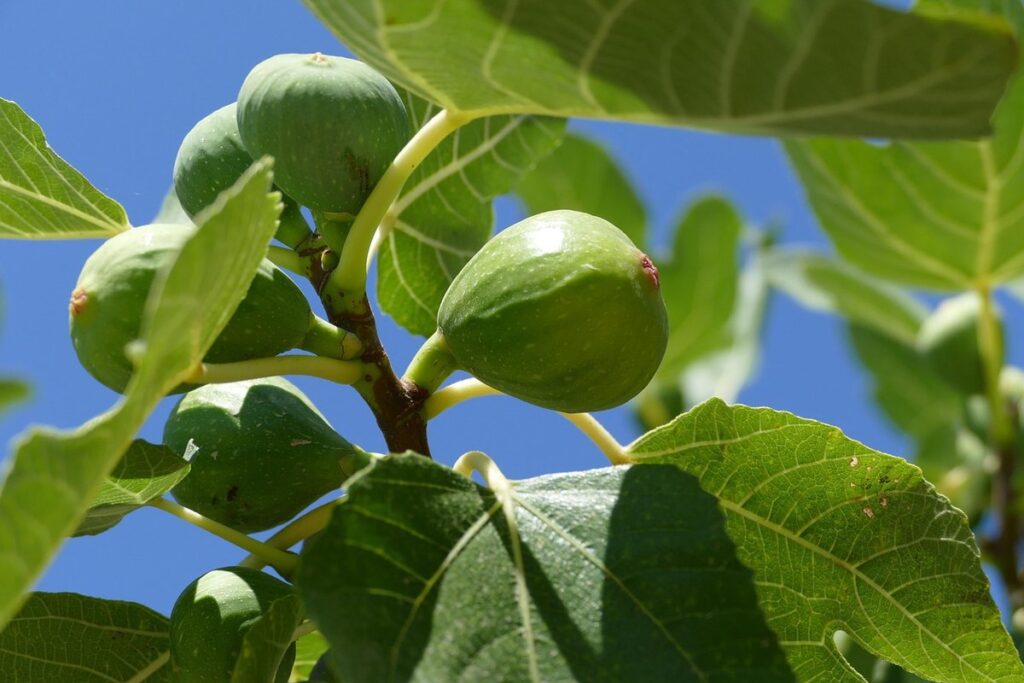
Understanding Fig Tree Nutritional Needs
To give your fig tree the best chance at thriving, it’s essential to understand its unique nutritional needs and how fertilizers can help meet them.
Soil pH and Fig Trees: What You Need to Know
Maintaining a suitable soil pH is crucial for fig trees to thrive. The ideal range for fig trees is between 6.0 and 7.0, with most varieties preferring a slightly acidic to neutral pH. If the pH level drops below 5.5 or rises above 8.0, it can lead to nutrient deficiencies and other issues.
One common problem caused by incorrect pH levels is iron chlorosis, which manifests as yellowing leaves due to the lack of available iron. Figs are particularly susceptible to this issue in alkaline soils. To address this, you’ll need to adjust your fertilizing strategy. For example, if your fig tree’s soil pH is too high, adding elemental sulfur can help lower it.
If your pH level is too low, on the other hand, applying dolomitic limestone or calcite can help raise it. Regularly monitoring your soil pH will ensure you catch any imbalances before they cause damage to your plant. Testing kits are widely available for this purpose.
Essential Nutrients for Fig Tree Growth
Fig trees require a balanced diet of essential nutrients to promote healthy growth and fruit production. Nitrogen is crucial for leaf development and overall health, while phosphorus supports root growth and flowering. Potassium helps with disease resistance and water balance. However, excessive nitrogen can lead to weak wood, making the tree more susceptible to breakage.
Micronutrients like iron and zinc are also vital for fig tree growth. Iron deficiencies often manifest as yellowing leaves or stunted growth. Zinc is essential for plant hormone regulation, which affects fruit set and growth. Other micronutrients, such as magnesium and boron, play key roles in photosynthesis and nutrient uptake.
To ensure your fig tree receives these nutrients, consider getting a soil test done to determine its pH level and nutrient content. Based on the results, choose a balanced fertilizer that contains nitrogen, phosphorus, and potassium (NPK) with micronutrients like iron and zinc. A general rule of thumb is to apply 10-10-10 NPK fertilizer in early spring, followed by a bloom-booster high in phosphorus for fruiting.
Choosing the Right Fertilizer for Your Fig Tree
When it comes to fertilizing your fig tree, choosing the right fertilizer is crucial for optimal growth and fruit production. Let’s explore the key factors to consider when selecting a fertilizer that suits your tree’s needs.
Organic vs. Synthetic Fertilizers: Which is Best?
When it comes to choosing the right fertilizer for your fig tree, one of the most pressing decisions is whether to opt for organic or synthetic options. Both types have their benefits and drawbacks, which we’ll break down below.
Organic fertilizers, derived from natural sources like animal waste, bone meal, and compost, offer several advantages. They tend to be more environmentally friendly, as they promote soil biota and don’t contribute to water pollution. Moreover, organic options are often cost-effective in the long run, as they improve soil structure and fertility over time. However, their effectiveness can vary depending on factors like application rates and soil conditions.
Synthetic fertilizers, on the other hand, provide a rapid boost of nutrients that can stimulate fig tree growth. They’re also relatively inexpensive upfront. Nevertheless, synthetic options often rely heavily on non-renewable resources, contribute to environmental degradation through runoff, and may burn out your tree’s roots if overused.
To make an informed decision, consider starting with organic fertilizers and gradually transitioning to synthetic options as needed. This approach will not only reduce your environmental impact but also promote a balanced soil ecosystem.
Understanding Fertilizer Labels and Ingredients
When it comes to choosing the right fertilizer for your fig tree, understanding the components of fertilizer labels is crucial. Fertilizer labels can be overwhelming, especially for beginners. But don’t worry, breaking down the ingredients will help you make informed decisions about your tree’s health and growth.
Look for the N-P-K ratio on the label, which stands for Nitrogen-Phosphorus-Potassium. This trio of nutrients is essential for your fig tree’s development. Nitrogen promotes leaf growth, phosphorus supports root development and fruiting, while potassium helps with overall plant health and resistance to disease. A balanced fertilizer will have a ratio of around 10-10-10, but this can vary depending on your tree’s specific needs.
Check the label for other essential ingredients like sulfur, calcium, magnesium, and boron. Sulfur helps control pests and diseases, while calcium and magnesium support fruit growth and development. Boron is crucial for overall plant health and resistance to disease. Be cautious of fertilizers with high salt levels, as these can harm your tree if overused.
When choosing a fertilizer, also consider the type of fig tree you have. For example, dwarf or compact trees require less nitrogen than larger varieties. Some fertilizers are specifically designed for fruiting plants, so be sure to choose one that meets your tree’s needs.
Best Fertilizing Practices for Fig Trees
Now that you know how to choose the right fertilizer for your fig tree, let’s dive into the best practices for fertilizing your trees at different stages of growth.
Frequency and Timing of Applications
When it comes to fertilizing your fig tree, timing and frequency are crucial factors to consider. The best time to fertilize depends on your climate and soil conditions, but generally speaking, spring is the ideal season for application.
In temperate climates with mild winters, apply a balanced fertilizer (10-10-10 NPK) in early spring, as soon as new growth begins. This will provide the necessary nutrients for healthy foliage development and fruit set. For warmer climates or regions with long growing seasons, consider applying a high-phosphorus fertilizer (15-30-15 NPK) in late winter to promote root growth and subsequent fruiting.
During the summer months, it’s best to avoid fertilizing your fig tree as this can promote excessive vegetative growth at the expense of fruit production. If you live in an area with poor soil quality or nutrient deficiencies, a slow-release fertilizer (e.g., ammonium sulfate) can be applied during the summer for continuous feed.
In fall, apply a balanced fertilizer to prepare the tree for dormancy and promote root growth over the winter months. For regions with cold winters, consider applying a specialized fig tree fertilizer containing micronutrients like boron and zinc to protect against winter damage.
Techniques for Even Distribution and Avoiding Over-Fertilization
When fertilizing your fig tree, it’s essential to ensure that the nutrients are evenly distributed around its root zone. This can be achieved by creating a shallow “fertilizer well” around the base of the tree. Dig a small hole about 6-8 inches deep and place the fertilizer in it. As you backfill the soil, gently mix the fertilizer with the surrounding earth to avoid clumps or hotspots.
Some common warning signs of over-fertilization include yellowing leaves, weakened growth, and an abundance of new shoots. These symptoms can be easily misinterpreted as a sign that your tree needs more nutrients. However, over-fertilization can actually harm your fig tree by burning its roots. To avoid this, stick to the recommended application rates for the specific fertilizer you’re using.
When fertilizing, aim for a balanced formula that contains equal parts nitrogen, phosphorus, and potassium (NPK). Avoid using high-nitrogen formulas, as they can promote weak growth and encourage your tree to focus on foliage rather than fruit production.
Popular Fertilizer Options for Fig Trees
When it comes to giving your fig tree a nutrient boost, you’ve got several popular fertilizer options to choose from, and we’ll explore them all in this section. From organic to synthetic choices, discover what works best for your tree.
Compost and Manure-Based Fertilizers
Composting and using manure-based fertilizers is an effective way to recycle organic matter into nutrient-rich soil amendments. Not only do these methods reduce waste and minimize the environmental impact of synthetic fertilizers, but they also promote healthy soil biodiversity.
When it comes to composting, you can use kitchen scraps like vegetable peels, fruit rinds, and tea bags. You can also add yard trimmings such as leaves and branches. Mix a 2:1 ratio of “brown” materials (like dry leaves) with “green” materials (like food waste). This will help speed up the composting process and create a nutrient-rich soil amendment.
For manure-based fertilizers, you can use animal droppings like horse, chicken, or cow manure. These are high in nitrogen and phosphorus, making them ideal for fig trees. Just make sure to mix 1-2 cups of manure with 10 gallons of water to avoid over-fertilizing your tree. Apply this solution at the base of the tree during spring and summer months when it’s actively growing.
By incorporating compost and manure-based fertilizers into your fig tree care routine, you can provide your tree with a steady supply of essential nutrients while promoting healthy soil habits. This approach is also cost-effective and environmentally friendly.
Synthetic Fertilizers with Essential Micronutrients
Synthetic fertilizers with essential micronutrients can provide fig trees with a balanced diet for optimal growth. One popular option is 20-20-20 fertilizer, which contains nitrogen (N), phosphorus (P), and potassium (K) at equal rates of 20%. This well-rounded formula supports overall plant health, including leaf growth, fruit production, and root development.
Another example is a micronutrient blend like Miracle-Gro Shake ‘n Feed All Purpose Plant Food. This fertilizer contains essential micronutrients such as iron, magnesium, sulfur, and zinc, which are crucial for fig tree development. When applied according to the label instructions (about 1-2 pounds per inch of trunk diameter), it can provide a steady supply of these nutrients over several months.
When using synthetic fertilizers with essential micronutrients, remember to follow the recommended application rates and timing. Over-fertilization can be detrimental to fig tree health, so start with a small dose and gradually increase as needed. Also, ensure you’re applying the fertilizer at the right time, such as during the growing season (spring-fall) when the tree is actively producing new growth.
Overcoming Common Challenges in Fig Tree Fertilization
Fig tree fertilization can be tricky, and you may encounter issues like nutrient deficiencies or over-fertilization. Let’s address these common challenges together.
Dealing with Soil Deficiencies and pH Imbalance
Soil deficiencies and pH imbalance are common challenges that can hinder your fig tree’s growth. If you notice yellowing leaves, stunted growth, or reduced fruit production, it may be a sign of nutrient deficiencies such as nitrogen or potassium shortfalls.
To address these issues, get your soil tested to determine its nutrient levels and pH balance. Based on the results, you can apply fertilizers specifically formulated for fig trees. For example, if your soil lacks nitrogen, a balanced fertilizer with a higher first number (e.g., 10-10-10 N-P-K) will provide an adequate supply of this essential macronutrient.
When it comes to pH imbalance, the ideal range for fig trees is between 6.0 and 7.0. If your soil’s pH is too high or low, you’ll need to adjust it accordingly. To lower a high pH level, add elemental sulfur or aluminum sulfate; to raise a low pH level, use lime or dolomitic limestone.
Keep in mind that frequent fertilization can lead to over-fertilization and exacerbate the problem. Therefore, follow the recommended application rates on the fertilizer label, and monitor your tree’s response to avoid any negative effects.
Managing Nutrient-Related Problems Like Leaf Drop or Yellowing
Leaf drop and yellowing leaves can be distressing issues for fig tree owners. Often, these problems are linked to nutrient deficiencies that require prompt attention to prevent further damage. To address these issues, it’s essential to identify the underlying cause.
Nutrient deficiencies can arise from over-fertilization or poor soil quality. For instance, if your fig tree is experiencing magnesium deficiency, it may exhibit yellowing leaves between leaf veins. Conversely, a nitrogen deficiency might manifest as overall yellowing of leaves, while phosphorus deficiency could result in slow growth and weak branch development.
In cases where you suspect nutrient-related problems, perform a soil test to determine the current nutrient levels. Based on the results, take corrective measures such as adjusting your fertilization schedule or using targeted supplements like magnesium sulfate for deficiencies. To prevent over-fertilization, it’s crucial to monitor your tree’s response and adjust fertilizer application accordingly.
Keep in mind that regular pruning can also help promote healthy growth and improve nutrient uptake.
Tips for Fertilizing Young Fig Trees
When fertilizing young fig trees, it’s essential to provide them with the right nutrients at the right time to promote healthy growth and development. This section shares expert advice on how to feed your young tree correctly.
Early Season Nutrition Needs for New Growth
During their first year(s) after planting, young fig trees require specific nutritional needs to support early growth and development. Nitrogen (N) is a crucial element for leaf production and overall health. A balanced fertilizer with a moderate N content (around 10-15%) will encourage leaf growth without over-promoting vegetative development at the expense of fruiting.
Phosphorus (P), on the other hand, plays a vital role in root development and flower/fruit set. As young fig trees are establishing their root system, a higher phosphorus content (around 5-10% P) can be beneficial for healthy growth. Potassium (K) helps with overall plant resilience and is essential for fruiting.
To meet these requirements, consider applying a starter fertilizer specifically formulated for young fruit trees. These fertilizers typically contain a balanced N-P-K ratio of around 10-15-5 to 15-30-10. Avoid using high-nitrogen fertilizers, as they can promote excessive leaf growth at the expense of fruiting.
Remember to always follow the product instructions and recommended application rates to avoid over-fertilizing your young fig tree.
How to Support Root Development in Young Trees
When young fig trees are given the right support, their root systems can develop robustly and efficiently, laying the foundation for a healthy tree. To promote root development in young fig trees through fertilization, irrigation management, and pruning practices, consider the following practical advice.
First, it’s essential to choose a balanced fertilizer that provides an optimal mix of nitrogen, phosphorus, and potassium (NPK). A 10-10-10 or 20-20-20 NPK ratio is suitable for young fig trees. However, avoid over-fertilizing as this can damage the tree’s roots.
Adequate irrigation management is also crucial. Young fig trees require consistent moisture, especially during their first year after planting. Water your tree deeply once a week, depending on weather conditions. You should also consider mulching around the tree to retain soil moisture and suppress weed growth.
Proper pruning practices can also support root development by directing the tree’s energy towards its roots. Remove any dead or damaged branches, as these will sap the tree’s resources without contributing to its overall health. By implementing these tips, you’ll be well on your way to fostering a robust root system in your young fig tree.
Frequently Asked Questions
Can I use a general-purpose fertilizer for my fig tree, or do I need something specifically formulated for fruit trees?
While some general-purpose fertilizers may provide essential nutrients, using one specifically formulated for fruit trees will give your fig tree the precise blend of micronutrients it needs to thrive. These specialized fertilizers are tailored to meet the unique nutritional demands of fruiting plants like figs.
How do I know if my fig tree is getting too much fertilizer?
Over-fertilization can lead to weak growth, poor pollination, and even reduced yields. To avoid this, monitor your tree’s response to fertilizing and adjust as needed. Keep an eye out for signs of excessive fertilizer application, such as scorched leaves or an overabundance of new growth.
Can I use compost tea as a substitute for traditional fertilizers?
Compost tea can be a valuable addition to your fig tree’s care routine, providing beneficial microorganisms that promote healthy soil biota. However, it shouldn’t replace traditional fertilizers entirely, especially if your tree is showing signs of nutrient deficiencies. Consider using compost tea in conjunction with a balanced fertilizer.
How often should I retest my soil pH and adjust the fertilizer accordingly?
Retest your soil pH every 6-12 months to ensure it remains within the optimal range for fig trees (6.0-7.0). Adjust the fertilizer application based on these results, keeping in mind that overcorrection can be just as damaging as undercorrection.
What’s the best way to apply fertilizer if I have a large or sprawling fig tree?
For larger trees, consider using a drip irrigation system to deliver fertilizers directly to the roots. This method reduces waste and minimizes the risk of burning leaves from excessive fertilizer application. You can also use a broadcast spreader for smaller areas, but be sure to follow the recommended application rates carefully.