
Are you tired of battling aphids in your garden with pesticides that might harm beneficial insects? It’s time to meet their natural enemies, the aphid predators. These incredible creatures are the unsung heroes of a balanced ecosystem, working tirelessly behind the scenes to keep pest populations under control. From ladybugs and lacewings to parasitic wasps and hoverflies, each predator has its unique habits and habitats that allow them to thrive in your garden. By understanding their feeding behaviors and how they interact with aphids, you can create a natural haven for these beneficial insects to flourish. In this article, we’ll delve into the world of aphid predators and explore how they can be harnessed to control garden pests without resorting to chemicals.
The Importance of Aphid Predation
When it comes to controlling aphid populations, one crucial factor is often overlooked: the role of aphid predators in maintaining a delicate balance. Let’s explore why these natural enemies are essential for a healthy ecosystem.
Benefits of Biological Control
When aphid predators are present and thriving in an ecosystem, they can have a significant impact on reducing pesticide use. By controlling aphid populations naturally, farmers and gardeners can reduce their reliance on chemical pesticides, which not only harm the environment but also pose health risks to humans. In fact, studies have shown that integrated pest management (IPM) strategies that incorporate biological control can reduce pesticide use by up to 80%.
In addition to reducing pesticide use, aphid predation plays a crucial role in maintaining ecosystem balance. When aphids are not present in large numbers, they do not provide the necessary food source for other beneficial insects and animals. For example, ladybugs and lacewings rely on aphids as their primary food source during certain times of the year. By controlling aphid populations naturally, we can promote a balanced ecosystem where all species have access to the resources they need.
By encouraging aphid predation in your garden or agricultural field, you can create a healthier environment that requires fewer pesticides and promotes biodiversity. To make this happen, consider incorporating plants that attract beneficial insects, such as marigolds and dill, into your landscape. Additionally, maintain a diverse range of species to provide habitats for different types of predators.
Common Aphid Predators Found in Gardens
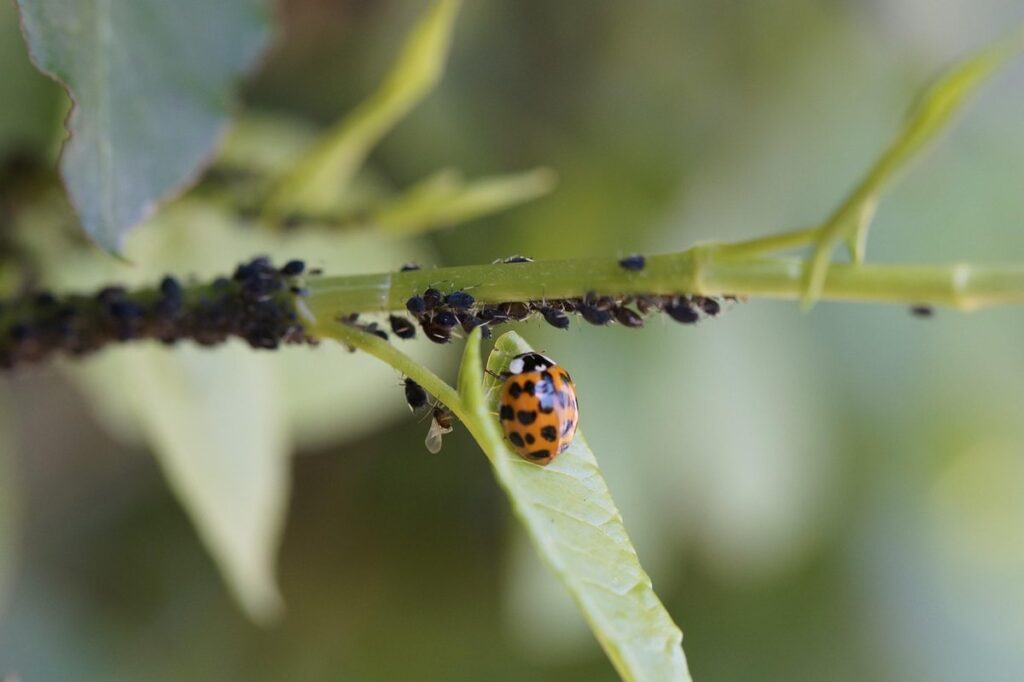
When it comes to aphid predation, many gardeners are familiar with a few key players. Ladybugs, for instance, are perhaps the most recognizable of these predators. These beetles feed on aphids and their eggs, with some species consuming up to 60 times their own body weight in aphids over the course of their lifetime.
Other beneficial insects found in gardens include lacewings and hoverflies. Lacewings are known for their distinctive wings and voracious appetite for aphids. In fact, a single adult lacewing can consume thousands of aphids throughout its lifespan. Hoverflies, meanwhile, have larvae that feed on aphids as well as other soft-bodied insects.
Parasitic wasps also play an important role in controlling aphid populations. These tiny wasps lay their eggs inside the bodies of aphids, where their larvae feed and grow before emerging as adult wasps. By introducing these beneficial insects into your garden, you can create a balanced ecosystem that relies less on pesticides to control aphid infestations.
If you’re interested in attracting more ladybugs, lacewings, hoverflies, or parasitic wasps to your garden, try planting a diverse selection of flowers and herbs that provide nectar for these beneficial insects. This will encourage them to stay and hunt the aphids in your garden.
Biology of Aphid Predation
When it comes to understanding how aphids are controlled, it’s essential to grasp the biology behind their predation. Let’s dive into the fascinating world of aphid predators and examine their unique characteristics.
Life Cycle and Development of Aphid Predators
The life cycle and development stages of aphid predators are crucial to understanding their survival and success. One key characteristic is their ability to adapt to various environments. For example, lady beetles undergo a complex life cycle that involves four stages: egg, larva, pupa, and adult. During this process, they must navigate changing temperatures, humidity levels, and food availability.
Similarly, lacewings have multiple generations per year, allowing them to quickly respond to aphid populations. They too require specific conditions for development, such as sheltered areas with adequate moisture. Hoverflies also exhibit a complex life cycle, starting as eggs that hatch into larvae before transforming into adult flies.
Understanding the unique life cycles of these predators is essential for effective management and conservation. By recognizing the specific needs and requirements of each species, gardeners and farmers can create ideal conditions for their survival and promote a balanced ecosystem. This includes providing sheltered areas with adequate food sources and maintaining optimal temperature and humidity levels.
Host-Specificity and Adaptations of Aphid Predators
Some aphid predators have evolved remarkable adaptations that enable them to target specific aphid species or habitats. This phenomenon is known as host-specificity, where a predator develops unique characteristics that enhance its ability to prey on particular aphids.
For instance, the fairyfly (Aphelinus abdominalis) is an example of a highly host-specific predator. It has evolved to specifically target the woolly apple aphid (Eriosoma lanigerum), one of the most devastating pests in apple orchards. The fairyfly’s long ovipositor and specialized eggs allow it to lay its eggs directly within the aphid’s body, ensuring the next generation is well-fed.
Other predators, like lady beetles (Coccinellidae family) and lacewings (Chrysopidae family), exhibit varying degrees of host-specificity. While they can feed on multiple aphid species, their preference for specific habitats or aphid colonies makes them efficient natural enemies in certain ecosystems. For example, the seven-spotted lady beetle is known to thrive in gardens with high aphid populations and can be encouraged through integrated pest management (IPM) practices.
By understanding these adaptations, gardeners and farmers can harness the power of host-specific predators to control aphid infestations more effectively.
Natural Enemies of Aphids: A Taxonomic Overview
Aphid predators come in many forms, and not all of them are as familiar to us as ladybugs or lacewings. Let’s take a closer look at some of their most notable natural enemies.
Hymenopteran Parasitoids (e.g., Aphidiinae, Braconidae)
Hymenopteran parasitoids are among the most important natural enemies of aphids, and include several families that specialize in preying on aphid eggs, nymphs, or adults. The Aphidiinae (aphid wasps) and Braconidae (braconid wasps) are two notable examples of hymenopteran parasitoids that target aphids.
These parasitoids have a complex life cycle, which typically begins with an adult female searching for aphid colonies to lay her eggs. The female parasitoid stings the aphid, injecting her egg into its body. Depending on the species, one or multiple eggs are laid inside the aphid’s body, often within the egg sac or among the developing nymphs.
When an aphid host is colonized by a hymenopteran parasitoid, it typically ceases to reproduce and eventually dies, while the parasitoid eggs develop inside its body. The larvae of the parasitoid feed on the aphid’s internal organs and tissues before pupating and emerging as adult wasps.
Aphidiinae and Braconidae play a crucial role in controlling aphid populations by directly attacking aphids at various stages of their life cycle. By introducing these parasitoids into an ecosystem, growers can reduce the need for pesticides and create a more balanced environment for their crops.
Dipteran Predators (e.g., Hoverflies, Flies)
Dipteran predators play a crucial role in controlling aphid populations. Among these, hoverflies (also known as flower flies) are perhaps the most iconic and effective natural enemies of aphids. These delicate-looking insects are actually voracious predators that feed on aphids, as well as other soft-bodied insects like mealybugs and whiteflies.
Hoverflies have a few notable adaptations that make them expert aphid hunters. Their large compound eyes provide exceptional vision, allowing them to spot aphid colonies from afar. They also possess long, slender proboscis that enables them to pierce the aphid’s body and inject digestive fluids. This feeding behavior is often referred to as “stinging” or “piercing-sucking.”
Other dipteran predators that feed on aphids include midges (family Chironomidae) and fruit flies (family Tephritidae). These insects are generally smaller than hoverflies but still pack a punch when it comes to aphid control.
Encouraging Aphid Predators in Gardens
To successfully manage aphid populations, it’s essential to create a welcoming environment for their natural predators. By doing so, you can harness nature’s own defense system against these pesky pests.
Creating a Predator-Friendly Environment
Creating a predator-friendly environment is crucial for encouraging aphid predation in gardens. This can be achieved by incorporating diverse flora that attract beneficial insects and using integrated pest management (IPM) techniques. One of the simplest ways to create such an environment is by planting a variety of flowers, herbs, and vegetables that are rich in nectar and pollen.
For instance, lavender, marigold, and dill are known to attract aphid predators like lady beetles and lacewings. Similarly, certain varieties of flowers like cosmos and zinnia provide a source of food for these beneficial insects. To maximize the effectiveness of such plant combinations, consider grouping them in clusters rather than isolating individual plants.
When implementing IPM techniques, remember that it’s essential to minimize the use of broad-spectrum pesticides, which can harm or kill aphid predators. Instead, opt for targeted approaches like introducing parasitic wasps or using neem oil to control aphid populations. By creating a balanced ecosystem and providing suitable habitat for beneficial insects, you’ll create an environment conducive to aphid predation, thereby reducing the need for chemical pesticides in your garden.
Examples of Effective Aphid Predator Introduction Methods
When introducing beneficial insects to your garden ecosystem, it’s essential to consider the specifics of their release. A successful introduction method involves releasing aphid predators in areas where they can thrive and effectively manage aphid populations.
For instance, lady beetles (ladybugs) are often released in a sheltered location, such as under a leaf or near a flower cluster, allowing them to acclimate before dispersing throughout the garden. Lacewings, on the other hand, tend to do well when introduced near water sources, as they require moisture for survival.
In terms of suitable habitats, consider releasing beneficial insects in areas with an abundance of their preferred food sources and shelter. For example, parasitic wasps often prefer gardens with a diverse array of flowers that provide nectar and pollen.
Population monitoring is also crucial to ensure the introduced predators are successfully managing aphid populations. This can be achieved by regularly inspecting plants for signs of aphid activity, and using tools such as sticky traps or yellow traps to monitor predator abundance. By understanding the effectiveness of your introductions, you can refine your strategies and optimize beneficial insect population dynamics in your garden ecosystem.
Challenges and Limitations of Aphid Predation
While aphid predators are incredibly effective at controlling aphid populations, they’re not foolproof. Let’s explore some of the challenges and limitations that come with relying on these natural enemies.
Factors Affecting Predator Success
The effectiveness of aphid predation can be significantly impacted by various factors. One major challenge is climate change, which alters temperature and precipitation patterns, disrupting the delicate balance between predators and prey. For instance, a warmer climate may cause aphids to reproduce more quickly, outpacing their natural enemies. Pesticide use also poses a significant threat, as it can decimate predator populations or alter their behavior, making them less effective at controlling aphid populations.
Habitat fragmentation is another critical issue, where the destruction of natural habitats isolates predators from prey, reducing their ability to hunt and feed effectively. To mitigate these challenges, gardeners can adopt sustainable practices such as using Integrated Pest Management (IPM) techniques, which combine physical barriers, biological controls, and cultural controls to minimize chemical use. By maintaining a diverse range of plants and creating habitat corridors for predators, gardeners can help maintain healthy ecosystems that support the natural balance between aphids and their predators.
Emerging Threats to Aphid Predator Populations
As we delve into the world of aphid predators, it’s essential to acknowledge emerging threats to their populations. Invasive species are one such concern. For instance, the harlequin ladybug, a non-native insect native to Asia, has been introduced to various regions and is known to prey on beneficial insects like aphid predators. This can lead to a decline in predator populations, allowing aphids to thrive unchecked.
Genetic modification is another threat that may impact aphid predator populations. The introduction of genetically modified crops designed to resist pests can inadvertently harm or kill beneficial insects, including aphid predators. For example, research has shown that certain GM corn varieties have reduced the population of lady beetles, which are crucial in controlling aphid populations.
If left unaddressed, these emerging threats could have far-reaching consequences for ecosystems. A decline in predator populations would disrupt the delicate balance between herbivores and their prey, potentially leading to increased crop damage and decreased biodiversity. It’s essential for farmers, conservationists, and policymakers to be aware of these risks and take steps to mitigate them. By adopting integrated pest management strategies and promoting beneficial insects, we can ensure the long-term health of our ecosystems.
Conclusion: Harnessing the Power of Aphid Predation
Now that we’ve explored the world of aphid predators, let’s take a closer look at how you can harness their power to control pest populations in your garden. Effective strategies and tips are outlined below.
Synthesizing Knowledge and Future Directions
As we conclude our comprehensive guide to natural enemies of aphids, it’s essential to reflect on the significance of aphid predation and its role in maintaining ecosystem balance. By harnessing the power of these predators, we can mitigate the damage caused by aphid infestations and promote a healthier environment.
Throughout this guide, we’ve explored various aspects of aphid predation, from the biology and behavior of different predators to their impact on ecosystems and potential applications for biological control. We’ve seen how aphids are preyed upon by an array of natural enemies, including ladybugs, lacewings, hoverflies, and parasitic wasps.
Now that we have a deeper understanding of these complex relationships, it’s time to look ahead and identify areas where further research or innovation can support conservation efforts. One promising area is the development of targeted biological control strategies that exploit the specific preferences and habits of different predators.
For instance, studies have shown that certain ladybug species exhibit a strong affinity for aphids in cotton fields, while others prefer wheat or other crops. By understanding these predilections, farmers can introduce the most effective predators to their fields, thereby reducing chemical inputs and preserving biodiversity.
As we move forward with conservation efforts, it’s also crucial to explore new ways of supporting beneficial insect populations. This might involve creating habitat diversity, enhancing pollinator health through agroecological practices, or even developing innovative technologies for predator-friendly agriculture.
Frequently Asked Questions
Can I attract aphid predators to my garden if it’s already infested with aphids?
Yes, while it may seem counterintuitive, introducing aphid predators can actually help control aphid populations. However, it’s essential to create a predator-friendly environment by providing shelter, food, and water sources. You can also encourage natural enemies by avoiding the use of broad-spectrum pesticides, which can harm beneficial insects.
How do I ensure that the introduced aphid predators don’t get harmed or displaced by existing garden conditions?
To minimize risks, introduce aphid predators during periods of low pesticide use and when aphid populations are moderate. Also, consider using sheltered areas for predator introduction, such as beneath a tree canopy or in a greenhouse. This will give them a chance to establish themselves before being exposed to potential threats.
Can I mix different types of aphid predators together in the same garden?
While some combinations may work well, introducing multiple species simultaneously can be challenging. It’s crucial to research and understand the specific needs, habits, and habitats of each predator. Start with one or two species and monitor their effectiveness before introducing others to avoid potential conflicts.
How long does it take for aphid predators to become established in my garden?
Establishing a thriving population of aphid predators can take several weeks to months, depending on factors such as climate, food availability, and predator introductions. Be patient and maintain a consistent environment that supports their growth and development. Monitor your garden regularly to assess the effectiveness of your efforts.
Can I use UV light traps or other methods to attract aphid predators?
While some studies suggest using UV light traps can attract beneficial insects, it’s essential to consider the broader ecosystem implications. Using such methods may inadvertently harm other non-target species or disrupt natural predator-prey interactions. Instead, focus on creating a balanced and diverse garden environment that naturally attracts and supports aphid predators.