
If you’re planning to grow your own onions, understanding the best time to plant them is crucial for a bountiful harvest. In Zone 7, the climate and temperature fluctuations can affect onion growth, making it essential to choose the right planting window. Whether you’re a seasoned gardener or just starting out, knowing when to plant onions in zone 7 will make all the difference between success and disappointment. This article will guide you through selecting the ideal variety for your region, preparing the soil for optimal growth, and providing expert tips on pest control and harvesting your crop at the perfect moment. By following these insider secrets, you’ll be well on your way to enjoying a delicious homegrown onion harvest in no time!
Understanding Your Zone and Climate
Before we dive into planting onions, let’s get familiar with your growing zone and climate so you can choose the best variety for your area. This will ensure a healthy onion crop all season long.
Section Overview
Zone 7’s climate is characterized by hot summers and cold winters, which can significantly impact onion growth. As a gardener in this region, understanding these conditions will help you make informed decisions about when to plant onions for optimal results.
The temperature fluctuations in Zone 7 can be challenging for onion bulbs, as they require a specific sequence of warm and cool periods to form properly. If planted too early or late, onions may bolt (go to seed) or experience stunted growth due to excessive heat or cold stress. Conversely, planting at the right time allows onions to establish themselves during a mild winter and then thrive in the spring.
Choosing the correct planting window is crucial for onion production in Zone 7. It’s essential to wait until the soil has cooled down after the last frost date, usually around late March or early April. This ensures that onions have a chance to develop robust roots and establish themselves before the heat of summer sets in.
Benefits of Early Planting
In zone 7, planting onions early can provide several benefits that set you up for success. By getting a head start on the growing season, you’ll have more time to nurture your onion plants before the peak summer heat sets in. This means that they’ll be better established and more resilient to pests and diseases.
One of the most significant advantages of early planting is the potential for larger harvests. Onions grown from seed can produce multiple bulbs, and when planted early, these bulbs will have a chance to mature fully before the weather becomes too hot or dry. This translates to bigger, healthier onions that are perfect for cooking and storing.
To take advantage of this benefit, consider planting onion seeds in late winter to early spring, about 4-6 weeks before the last frost date. Use high-quality seed specifically bred for your region and climate. By doing so, you’ll be well on your way to a bountiful onion harvest that will last throughout the year.
Climate Variations Within Zone 7
Zone 7 is often perceived as a relatively uniform region when it comes to climate. However, there are distinct microclimates within this zone that can significantly impact the planting schedule for onions.
These variations are largely influenced by elevation and proximity to large bodies of water. The Appalachian Mountains stretch across eastern Zone 7, creating areas with cooler temperatures and higher humidity levels compared to the surrounding regions. Conversely, areas farther away from these mountains tend to be warmer and drier.
In the western part of the zone, the Ohio River Valley can produce a microclimate that is often 5-10°F warmer than nearby areas. This means that onions planted in this region will need to be hardier or have a later planting schedule compared to other parts of Zone 7.
To adapt your onion planting schedule for these variations, keep an eye on local weather forecasts and frost dates. It’s also essential to research the specific conditions within your area, taking into account elevation, water sources, and surrounding geography when determining the best time to plant onions in Zone 7.
Choosing the Right Onion Variety
When it comes to growing onions, selecting the right variety for your climate and needs is crucial. Let’s explore some popular onion varieties suitable for zone 7 gardens.
Understanding Onion Types
When selecting an onion variety for your garden in zone 7, it’s essential to understand the different types available. Onions can be broadly categorized into three main groups: bunching onions, storage onions, and sweet onions.
Bunching onions are also known as scallions or green onions. They have a mild flavor and are harvested before the bulb forms. These onions are perfect for adding a punch of flavor to salads and stir-fries. They’re typically ready in 60-90 days and can be replanted every 4-6 weeks for continuous harvest.
Storage onions, on the other hand, form a large, dry bulb that’s meant to be stored over winter. These onions have a stronger flavor than bunching onions and are great for cooking and roasting. They require more space in your garden and take around 120-150 days to mature.
Sweet onions are a type of storage onion with a naturally sweet, mild flavor. They’re perfect for grilling or caramelizing and can be harvested in about 140 days. When choosing an onion variety, consider the climate and growing conditions in zone 7. Selecting a suitable variety will ensure you get a bountiful harvest all year round.
If you live in an area with hot summers like zone 7, it’s best to choose heat-tolerant varieties like Texas Grano or Candy. These onions can handle high temperatures and will perform well in your garden.
Disease-Resistant Varieties for Zone 7
In zone 7’s climate, onions are susceptible to various diseases that can significantly impact their yield and quality. Two of the most common issues faced by onion growers in this region are powdery mildew and downy mildew.
To minimize the risk of these diseases, consider planting disease-resistant varieties specifically bred for resistance against powdery mildew or downy mildew. Some popular options include ‘Texas Grano’ and ‘Yellow Granex’, both known for their robust defense mechanisms against these common onion pathogens.
Another excellent choice is ‘Vidalia Sweet’ onions, which have demonstrated remarkable resilience to diseases while retaining their signature sweetness. These varieties are not only more resistant but also tend to mature earlier, making them an attractive option for zone 7 gardeners who prefer a shorter growing season.
When selecting disease-resistant onion varieties, be sure to read the labels and look for specific mentions of resistance against powdery mildew or downy mildew. By choosing these hardy options, you’ll be better equipped to handle the challenges posed by zone 7’s climate, ensuring a healthier and more productive onion harvest.
Growing Sweet Onions in Zone 7
Growing sweet onions in zone 7 requires careful selection of varieties that thrive in the region’s climate. ‘Vidalia’ and ‘Texas Grano’ are popular choices for their high sugar content and mild flavor. These varieties have a shorter day length requirement, making them suitable for the longer days experienced in zone 7.
When planting sweet onions, it’s essential to choose a location with full sun and well-draining soil. Avoid areas with standing water or where water tends to collect. Sweet onions prefer a slightly acidic to neutral soil pH (5.5-7.0) and regular watering.
To achieve the best results, plant sweet onion sets 4-6 inches apart in late winter to early spring, about 2 weeks before the last frost date. You can also direct sow seeds in the same period. Keep the soil consistently moist during the germination phase (around 1-2 weeks) and reduce watering once established.
In zone 7, sweet onions are typically ready for harvest in mid-to-late summer, around June or July. Regular harvesting will encourage new growth and prevent the onions from flowering.
Preparing Your Soil and Seedlings
Before you start planting your onion seeds, it’s essential to prepare your soil properly to give them a healthy head start. This involves loosening and enriching the soil with compost and fertilizer.
Soil Requirements for Onions
Onions thrive in well-draining, fertile soil with specific pH and nutrient requirements. The ideal pH range for onion cultivation is between 6.0 and 7.0, slightly acidic to neutral. Zone 7’s native soil might be too alkaline, so testing its pH level is crucial before planting.
To amend your zone 7’s soil, mix in compost or well-rotted manure to improve fertility and drainage. Onions benefit from a balanced diet of nitrogen (N), phosphorus (P), and potassium (K) nutrients. A general-purpose fertilizer with an NPK ratio of 5-10-10 is suitable for onions.
If your soil lacks organic matter, add 2-3 inches of compost or well-rotted manure to the bed before planting. This will also help improve soil structure and water retention. For a more efficient approach, consider using a cover crop like rye or oats in the off-season to replenish nutrients and suppress weeds.
Keep in mind that onions are heavy feeders, so repeat fertilization is necessary during growth. Aim for two applications: one at planting time (balanced fertilizer) and another 2-3 weeks after emergence (nitrogen-rich fertilizer).
Sowing Onion Seeds Indoors or Directly in the Garden
Starting onion seeds indoors or directly in the garden are two popular methods for getting a head start on the growing season. Both methods have their pros and cons, which we’ll break down below.
Indoor sowing offers several advantages. For one, it allows you to control the temperature and light conditions, giving your onions a jump-start on growth. This is particularly beneficial in Zone 7’s cooler spring weather. You can sow onion seeds indoors 4-6 weeks before the last frost date, around late February or early March. Use seed starting mix and keep the soil at around 70°F (21°C). Transplant the seedlings outdoors when they have 2-3 sets of leaves, making sure to harden them off first.
On the other hand, direct seeding has its own set of benefits. It’s a low-maintenance method that eliminates the need for transplanting. Simply sow onion seeds directly in the garden bed after the last frost date, around late March or early April. Make sure to choose a location with full sun and well-draining soil.
Whether you choose to sow indoors or direct, make sure to provide your onions with at least 1 inch of water per week. Keep the soil consistently moist during the first few weeks after planting.
Planting Onions at the Right Time
When planting onions in Zone 7, timing is everything. In this next part of our guide, we’ll explore the ideal seasons for sowing onion sets and seeds outdoors.
Last Frost Date Considerations
To determine the perfect time for planting onions in Zone 7, it’s essential to know your last frost date. This will help you avoid planting too early and risking damage from frost. First, find out what your average last frost date is by checking with local nurseries, gardening clubs, or the National Weather Service (NWS) website. You can also check online resources like Old Farmer’s Almanac for specific frost dates in your area.
Once you have this information, plan accordingly. In Zone 7, the ideal time to plant onion sets or seeds is after the last frost date. For example, if your last frost date is around April 15th, wait until at least a week or two after that date to plant onions. Planting too early can lead to poor growth and reduced yields. If you’re planting onion seeds indoors, start them 4-6 weeks before the last frost date, and then transplant them outside once the danger of frost has passed. By taking these steps, you’ll be able to enjoy a healthy and productive onion harvest in Zone 7.
Using Onion Sets vs. Seeds in Zone 7
In zone 7, gardeners have two primary options for planting onions: using onion sets or seeds. While both methods can be successful, they offer distinct advantages depending on the gardener’s preferences and needs.
Using onion sets is a popular choice for many reasons. One advantage is that onion sets are already developed to a certain stage, which means they will mature more quickly than seed-grown onions. This is particularly beneficial for gardeners who want a head start on their harvest or prefer a shorter growing season. Additionally, onion sets tend to be less finicky about soil conditions and can thrive in a wider range of environments.
On the other hand, seeds offer greater flexibility and control over the planting process. By starting onions from seed, gardeners can choose specific varieties that are well-suited to their climate and growing conditions. This approach also allows for more experimental freedom, as gardeners can try new varieties or growing techniques without committing to a specific set of plants.
Ultimately, both methods have their merits, and the choice between onion sets and seeds will depend on your individual needs and preferences. If you’re looking for a quick harvest and don’t mind sacrificing some variety selection, onion sets may be the better option. However, if you enjoy experimenting with new varieties or want more control over the planting process, starting from seed could be the way to go.
Growing Tips and Maintenance
Once you’ve planted your onions, proper care and maintenance will ensure a healthy harvest. In this next part of our guide, we’ll cover key growing tips to keep in mind.
Watering and Mulching Practices
Watering and mulching practices are crucial for onion cultivation in Zone 7. Onions require about 1 inch of water per week, either from rainfall or irrigation. However, overwatering can lead to rot and other diseases. To avoid this, it’s essential to check the soil moisture by inserting your finger into the soil up to the first knuckle.
When watering, focus on the base of the plants rather than the leaves to prevent fungal diseases that thrive in moist conditions. Water deeply but infrequently to encourage deep root growth. Mulching around the plants helps retain moisture and suppress weeds, which can be a haven for pests like onion maggots and thrips.
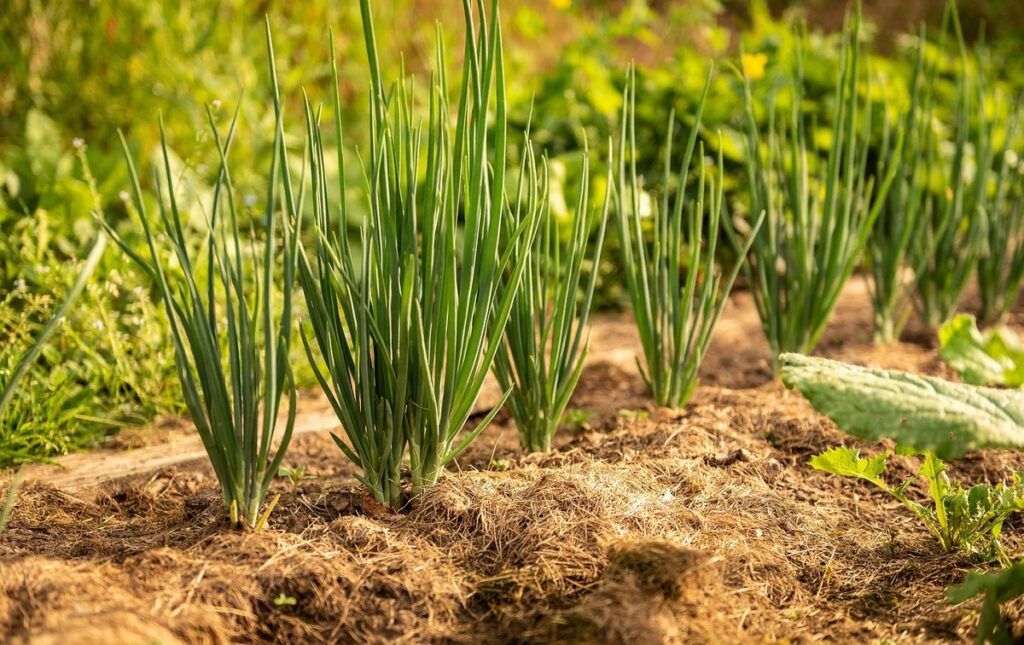
Apply 2-3 inches of organic mulch such as straw or wood chips around your onion plants. Keep the mulch layer thin at the base, about an inch from the stem, to prevent rot. Regularly inspect your plants and remove any weeds that appear, taking care not to damage the roots. By following these watering and mulching practices, you’ll be well on your way to growing healthy, pest- and disease-free onions in Zone 7.
Fertilization Schedule and Recommendations
Fertilization Schedule and Recommendations are crucial for onion growth. Onions require a balanced diet of nutrients to produce healthy bulbs and strong plants. A general-purpose fertilizer can be used, but consider using a fertilizer specifically formulated for vegetables or bulb-forming crops.
Onion fertilization should begin about 2-3 weeks after planting, when the seedlings have around two sets of leaves. At this stage, you can start with a light application of a balanced fertilizer (e.g., 10-10-10 NPK). Follow up with another application 4-6 weeks later, depending on your soil type and weather conditions.
Be cautious not to over-fertilize, as this can lead to weak bulb formation and potential issues with the crop’s overall health. Soil pH is also important; onions prefer a slightly acidic to neutral soil pH (around 6.0-7.0). Test your soil before planting to ensure it falls within this range.
Some common fertilizer types for onion cultivation include bone meal, compost tea, and fish emulsion. Bone meal provides phosphorus, which promotes bulb formation, while compost tea offers beneficial microbes that enhance soil fertility. Fish emulsion adds nitrogen, potassium, and other micronutrients essential for plant growth.
Common Challenges and Solutions in Zone 7
As you plan your onion harvest, be aware of common challenges that can arise when growing onions in Zone 7, such as disease susceptibility. We’ll address these issues and provide practical solutions for a successful crop.
Dealing with Pests, Diseases, and Weeds
Onions grown in zone 7’s climate are susceptible to various pests, diseases, and weeds that can significantly impact their health and yield. As a gardener in this region, it’s essential to be aware of the common culprits and take preventative measures to ensure a bountiful harvest.
One of the most common pests affecting onions in zone 7 is the onion maggot (Delia antiqua). These tiny insects can cause significant damage by feeding on the onion bulb, reducing its quality and size. To prevent infestation, use fine-mesh row covers over your onion beds to keep adult flies from laying eggs. You can also apply Bacillus thuringiensis (Bt) or spinosad insecticides if necessary.
Diseases such as downy mildew, powdery mildew, and pink root are common in zone 7’s humid climate. To prevent these diseases, maintain good air circulation around your onion plants by spacing them correctly and using drip irrigation to minimize moisture on the leaves. Regularly inspect your onions for signs of disease and treat promptly with fungicides like copper or neem oil.
Weeds, particularly annual weeds like foxtail and cheatgrass, can compete with your onions for water and nutrients. To control weeds, use a combination of mulch, hand-weeding, and shallow cultivation to prevent their seeds from germinating. You can also apply pre-emergent herbicides or natural weed barriers like landscape fabric.
In addition to these methods, practice good sanitation by removing and disposing of infected plants to prevent the spread of diseases. Regularly inspect your onion beds for signs of pests and diseases, and take action promptly to minimize damage. By being proactive in managing these common challenges, you can enjoy a healthy and productive onion crop in zone 7.
Harvesting Your Onions in Zone 7
Once you’ve successfully grown your onions, it’s time to harvest them at the peak of their flavor and sweetness. Learn how to check for readiness and carefully dig up your mature onions in Zone 7.
Knowing When to Harvest
Knowing when to harvest your onions is crucial for getting the best flavor and texture out of them. As your onions grow, they’ll start to mature and indicate that it’s time to be picked. One way to determine if your onions are ready is by checking their tops. When the foliage begins to yellow and fall over, it’s a sign that the onion is mature and the bulb is developing.
Another visual cue is the color of the neck, which should turn from green to brown as the onion matures. The skin will also become papery and dry. Check for a slight give when pressed gently on the top of the bulb – this indicates that the moisture level has decreased and it’s ready to be harvested.
Don’t wait too long after you’ve noticed these signs, as over-mature onions can become fibrous and less flavorful. Harvest your onions in the morning, when the soil is moist but not waterlogged, making them easier to dig up without damaging the bulb.
Tips for Storing and Preserving Your Onion Crop
Storing and preserving onions requires careful attention to prevent moisture and light from causing spoilage. Begin by curing harvested onions for 2-3 weeks in a dry, well-ventilated area with good air circulation. Tie the stems together and hang them upside down to facilitate drying.
To store cured onions, place them in a mesh bag or paper bag, not plastic, to allow for airflow. Store them in a cool, dark location like a basement or pantry. Onions will keep for several months under these conditions.
For longer-term preservation, consider freezing or dehydrating your onion crop. Freezing involves chopping the onions and spreading them out on a baking sheet lined with parchment paper, then transferring them to an airtight container or freezer bag once frozen solid. Dehydration can be done using a food dehydrator or by drying sliced onions in a low-temperature oven.
When storing onions, it’s essential to keep them away from ethylene-producing fruits like apples and bananas, as these will cause the onions to ripen more quickly.
Frequently Asked Questions
What are the essential tools I need to plant onions in Zone 7?
You’ll require a few basic gardening tools, such as a garden fork for preparing the soil, a measuring tape or ruler for spacing, and gloves to protect your hands. Additionally, consider investing in a watering can or soaker hose for efficient irrigation.
How do I prevent onion pests like aphids and spider mites from damaging my crop?
Regularly inspect your plants for signs of infestation, and use organic pest control methods like neem oil or insecticidal soap to treat affected areas. Practice good gardening hygiene by removing weeds and debris, which can attract pests.
Can I plant onions in containers if I don’t have a large garden area?
Yes, you can grow onions in containers using onion sets or seeds. Make sure the container is at least 6-8 inches deep and has good drainage holes to prevent waterlogged soil. Use a well-draining potting mix and follow the same planting instructions as for in-ground gardens.
What are some common mistakes beginners make when planting onions, and how can I avoid them?
New gardeners often plant onions too early or late, leading to bolting or poor growth. To avoid this, carefully plan your planting schedule based on the last frost date and temperature fluctuations in your area. Also, ensure you’re planting the right variety for your Zone 7 climate.
How do I know if my onion crop is ready to harvest?
Check for the correct size and color of the bulbs, usually around 3-4 inches in diameter, with a deep yellow or golden color. Gently dig around the base of the plant, being careful not to damage the bulb. Use scissors or a sharp knife to cut off the leaves, leaving about an inch of stem attached to the bulb.